Chinese people are spending the Qingming Festival holiday, which runs from April 4 to 6, in various folks customs.
The Qingming Festival, or Tomb-Sweeping Day, falls on April 5 this year. It is a traditional Chinese festival for people to pay tribute to the dead and worship their ancestors. The holiday also provides a short break for people as they engage in outdoor activities and sightseeing.
Outing is one of the traditional activities of Qingming, which is in the prime time of the year. In northwest China's Weinan City, Shaanxi Province, peach flowers in full bloom at the famous Mount Huashan drew more than 20,000 tourists on the first day of the holiday, marking a year-on-year increase of 34 percent.
Flows of tourists have also flocked to the Jinhuyang National Forest Park in Zepu County, northwest China's Xinjiang Uygur Autonomous Region, where 250,000 plants of tulips form a unique spring landscape.
"It's such a pleasant surprise to come to the Jinhu Yang today. There are so many tulips here and they are so beautiful," said Xie Wenyi, a tourist.
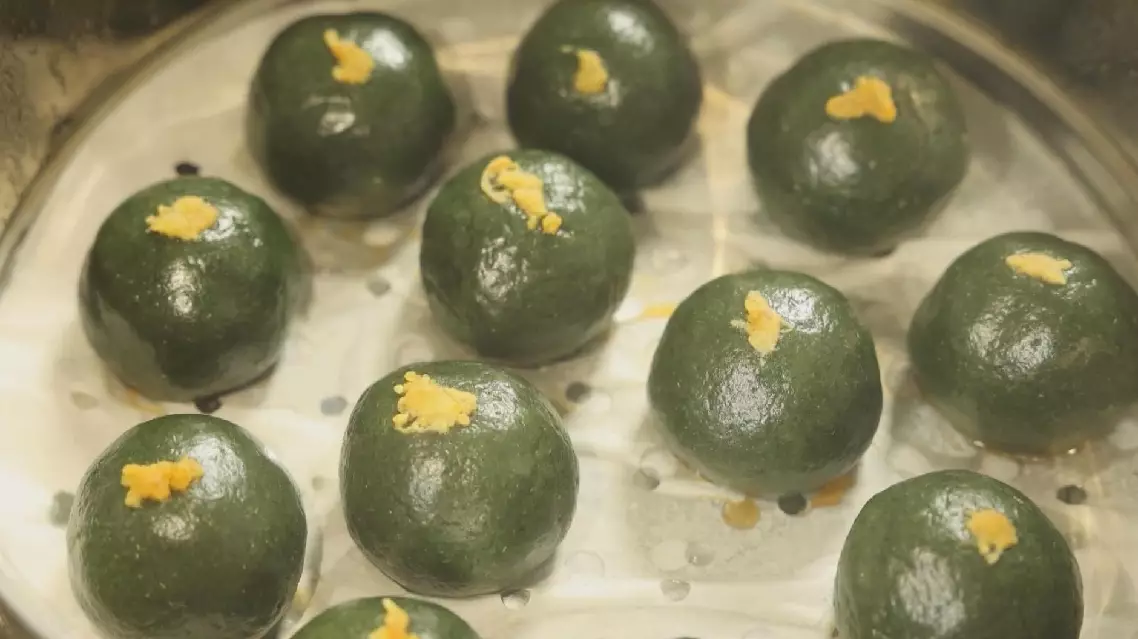
In Rongxian County, south China's Guangxi Zhuang Autonomous Region, locals are following the tradition to pick fresh mugwort leaves around the Qingming Festival to make special mugwort delicacies.
"Mugwort leaves around the Qingming Festival are the freshest and tenderest, at their best in terms of nutrition and taste. We buy fresh mugwort leaves every day to ensure that diners enjoy the most delicious mugwort-flavored delicacies," said Feng Linping, a local baker.
In Wuhu City, east China's Anhui Province, locals boil shepherd's purse with eggs around the Qingming Festival. The "Qingming eggs," as the locals name them, have special flavors that give a true taste of spring.
"We cannot do without shepherd's purse in cooking Qingming eggs. Put the eggs and the herb into cold water and bring to a boil. The cooked eggs take on the fresh fragrance of shepherd's purse, giving a true taste of spring," said Tan Wenxia, a villager of Shadun.
Chinese spend Qingming Festival in folk customs