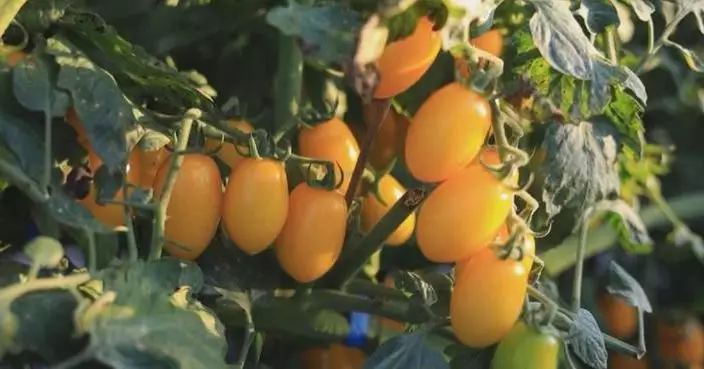
Spring flowers are in full blossom across China during Qingming Festival holiday, attracting many tourists.
Qingming Festival, or Tomb-Sweeping Day, falls on April 5 this year. It is a traditional Chinese festival in which people pay tribute to the deceased and worship their ancestors. The holiday also provides a short break for Chinese citizens, who engage in outdoor activities and sightseeing.
In Shanghai, flowers in major parks are at their peak, attracting many citizens and tourists.
"I want to record the flowers with my paintings, as they are beautiful in their shapes and colors," said a local resident surnamed Duan.
The Shanghai Pujiang Country Park has become a kingdom of fairy tales, with 15 themed art gardens featuring over 300,000 flowers, including tulips, Chinese roses and lupinus.
"I'm so happy to see such beautiful flowers in all colors," said Mao Xiaomi, a young tourist.
The city of Korla in Bayingolin Mongolian Autonomous Prefecture, northwest China's Xinjiang Uygur Autonomous Region, is renowned as "Pear City" for its massive production of fragrant pears.
Currently, the pear flowers are in full bloom, creating a vast sea of flowers across the city, from parks to urban roads.
Heze City in east China's Shandong Province, which is known as China's "peony capital" with a cultivation history spanning over 1,500 years, is attracting tourists from all over the country as the early-blooming peony varieties are now in full bloom.
To capture the beautiful scenery and their wonderful mood, many tourists choose to wear traditional Chinese attire and pose for photos amid the sea of flowers.
"I think such makeup and costumes go well with peonies, and I want to leave some memories," said a tourist surnamed Fu.
In Funan County, east China's Anhui Province, more than 330 hectares of rapeseed flowers along the Huaihe River are now in full bloom, drawing people to enjoy leisure time there by cycling, flying kites, and taking photos in the sea of flowers.

Spring flowers blooming across China, attracting more to go outdoors
The African Union (AU) and its partners have warned that the ongoing Middle East conflict poses a "serious risk" to African economies.
In a recent joint policy brief, the AU, the United Nations (UN) Economic Commission for Africa, the African Development Bank, and the UN Development Program warned that the longer the conflict lasts and the more severe the disruption of shipping routes, energy, and fertilizer supplies, the greater the risk of a significant growth slowdown across Africa.
With most African countries still growing at rates below pre-COVID levels, the brief projected a 0.2 percentage-point decline in Africa's gross domestic product growth in 2026 if the conflict lasts more than six months.
The organizations stressed that the conflict, which has already triggered a trade shock, could quickly become a "cost-of-living crisis" due to higher fuel and food prices. Rising shipping costs, insurance premiums, exchange rate pressures, and tighter fiscal conditions could further compound the crisis, with vulnerable households bearing the heaviest burden.
The Middle East accounts for 15.8 percent of Africa's imports and 10.9 percent of its exports, underscoring the critical implications of the current situation for African economies, according to the brief.
Highlighting that the fertilizer channel may prove more consequential than oil shocks for some countries, the brief noted that disruptions to Gulf liquid natural gas supply would affect ammonia and urea production, raising fertilizer costs during the crucial March-to-May planting season.
It warned that the phenomenon will put further upward pressure on food prices and hit vulnerable households hardest, with significant negative impacts on food security in Africa.
Expressing concern over potential geopolitical spillover effects that could reshape Africa's security, it also warned that a wider conflict could intensify competition for influence in Africa, with regional conflicts in Sudan, Somalia, and Libya already reflecting external sponsorship.
The brief emphasized the importance of strengthening energy security, safeguarding and restoring fiscal space, accelerating the implementation of the African Continental Free Trade Area, and establishing financial safety nets across Africa as essential strategies for building resilience.
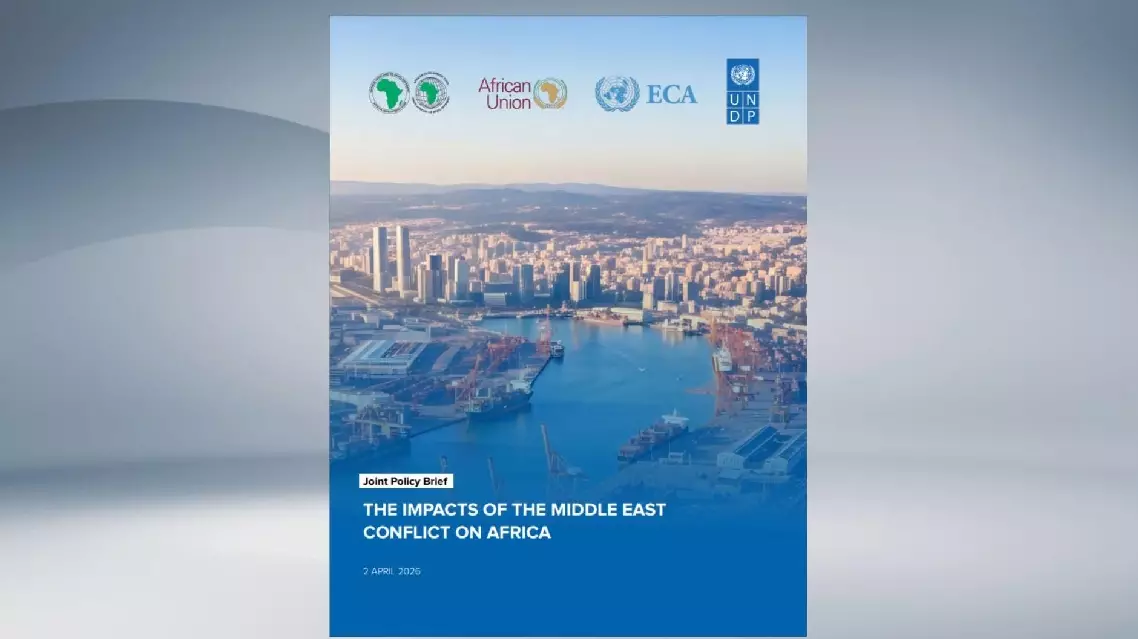
African leading organizations warn Middle East conflict poses "serious risk" to African economies