China's 42nd Antarctic expedition has set a new world record by drilling 3,413 meters into the ice sheet above the Qilin Subglacial Lake in East Antarctica, surpassing the previous international mark of 2,540 meters.
The breakthrough, achieved on February 5 by a 28-member team working 640 kilometers inland from Zhongshan Station, marks China's first successful hot-water drilling experiment in Antarctica. It demonstrates the country's capability to carry out deep drilling research across more than 90 percent of the Antarctic ice sheet and the entire Arctic ice sheet.
"The previous deepest hot-water drilling record, set by the United States and other Western countries, was about 2,500 meters. This time, China reached more than 3,400 meters in its very first project of this kind. It is a major breakthrough and now the deepest drilling record worldwide," said Guo Jingxue, leader of the subglacial lake team of the country's 42nd Antarctic expedition.
A group of photos documented the drilling process in real time, with depth milestones marked every 100 meters printed and posted inside the control cabin. Team members described the moment they surpassed the world record as "exciting," but said the greater pride came from "creating China's own history."
"We were thrilled when we broke the world record, previously. Later, we didn't feel quite as exciting at each additional 100 meters, because for us, the real meaning was that we Chinese were creating our own history," said Gong Da, a team member.
The experiment achieved efficient, stable and clean drilling, filling a domestic gap in polar hot-water drilling technology.
Researchers said the system proved resilient in extreme polar conditions and will provide crucial technical support for future scientific studies, including in-situ observations and sampling of subglacial lakes.
"From a technical perspective, our hot-water drilling system has proven through practice that it can operate reliably in the harsh polar environment. I believe this is a major innovation, providing vital technical assurance and support for future scientific research," Guo said.
Hot‑water drilling is considered a cutting‑edge method for polar research. Compared with traditional mechanical drilling, it offers faster penetration, less disturbance to the ice, and cleaner access to large-diameter boreholes. It enables scientists to reach subglacial lakes, ice-shelf undersides, and bedrock interfaces, all these are key environments for studying Earth's climate history, predicting future changes, and exploring the limits of life.
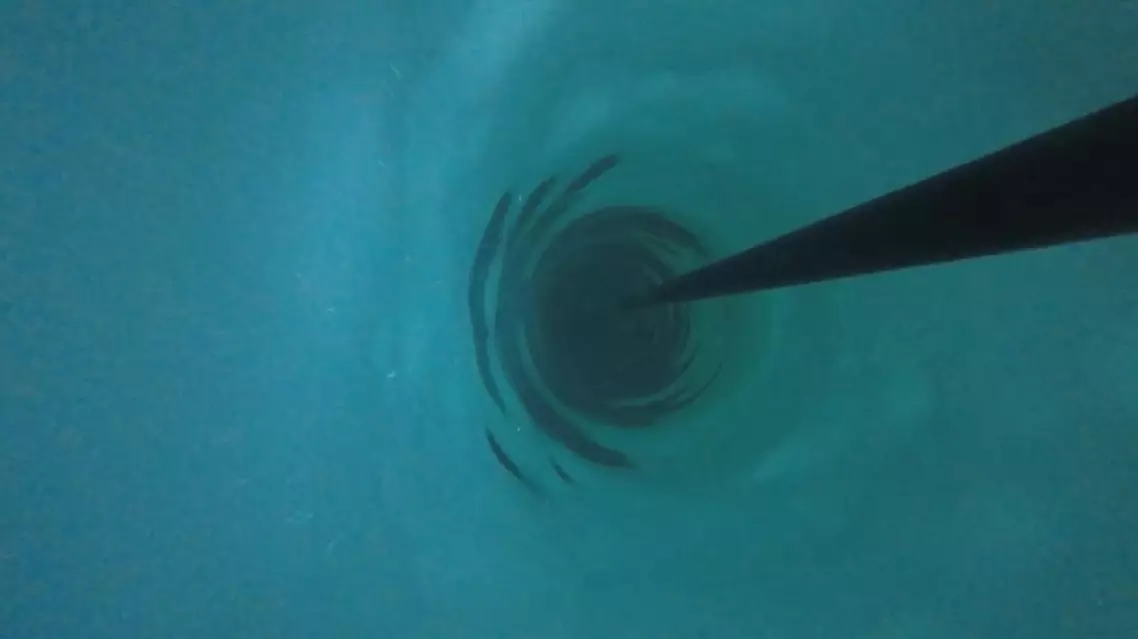
China sets world record with 3,413-meter Antarctic hot-water drilling