YAHSHOUSH, Lebanon (AP) — Church bells and bursts of gunfire echoed across the valley as hundreds gathered for funeral prayers on Tuesday for a Lebanese Christian party official known for his anti-Hezbollah stance and his wife who were killed in an Israeli airstrike over the weekend.
The case has become a touchpoint for tensions in Lebanon, which is deeply divided over the ongoing war between Israel and the Iranian-backed Lebanese militant Hezbollah group that's part of the larger Iran war spasming the Middle East and beyond.
Click to Gallery
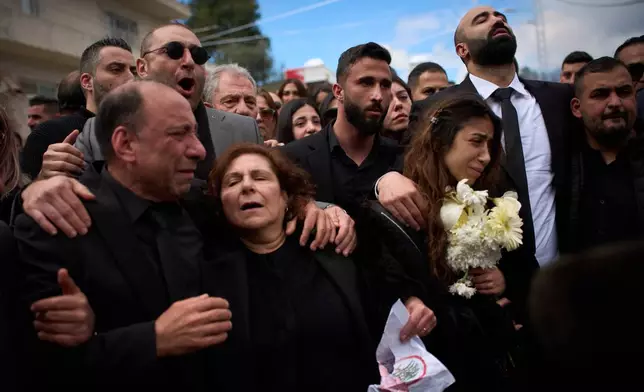
Gyal, right, daughter of Pierre Mouawad, an official with the anti-Hezbollah Lebanese Forces party, and his wife, walks as men carry the bodies of her parents during their funeral in Yahshush, Lebanon, Tuesday, April 7, 2026. (AP Photo/Emilio Morenatti)
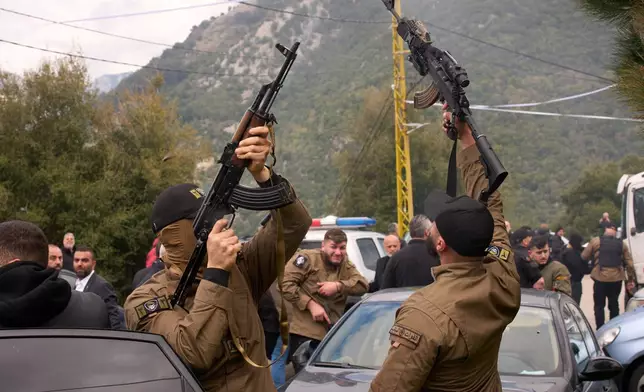
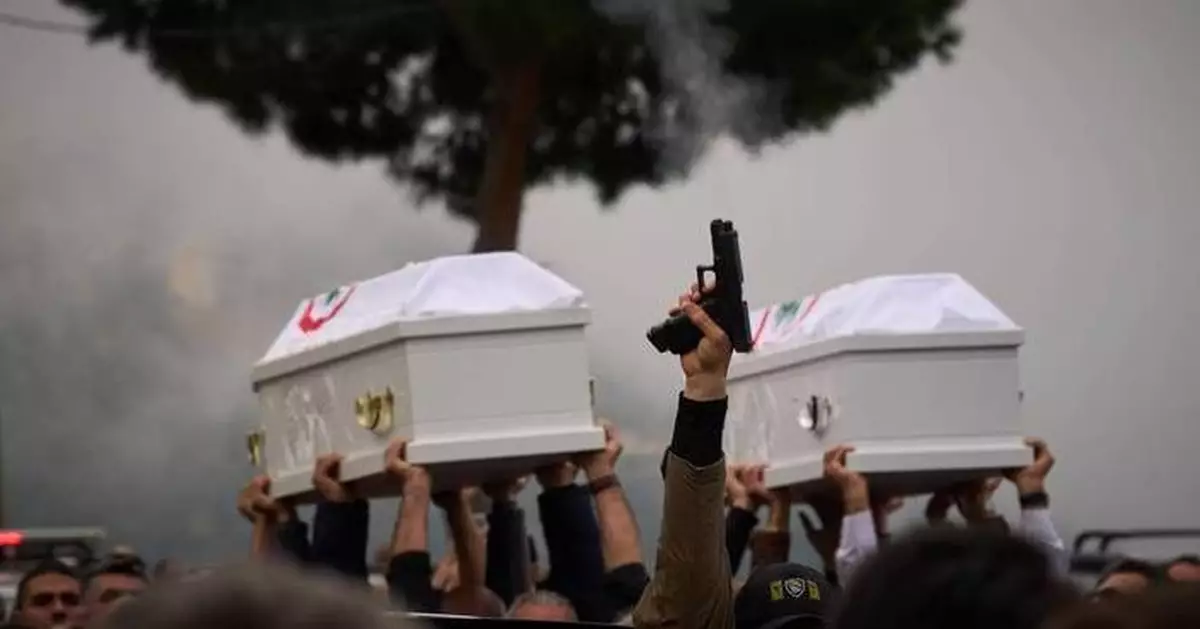
Gunmen fire their weapons as men carry the coffins with the bodies of Pierre Mouawad, an official with the anti-Hezbollah Lebanese Forces party, and his wife during their funeral in Yahshush, in Lebanon, Tuesday, April 7, 2026. (AP Photo/Emilio Morenatti)
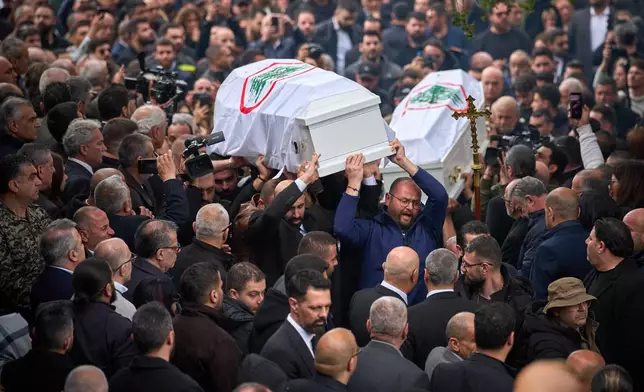
Men carry the coffins with the bodies of Pierre Mouawad, an official with the anti-Hezbollah Lebanese Forces party, and his wife during their funeral in Yahshush, Lebanon, Tuesday, April 7, 2026. (AP Photo/Emilio Morenatti)
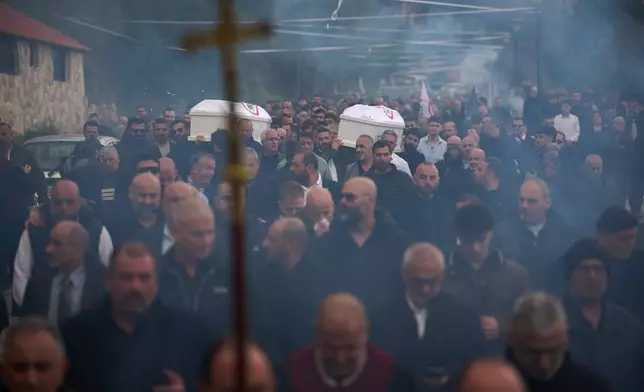
Men carry the coffins with the bodies of Pierre Mouawad, an official with the anti-Hezbollah Lebanese Forces party, and his wife during their funeral in Yahshush, in Lebanon, Tuesday, April 7, 2026. (AP Photo/Emilio Morenatti)
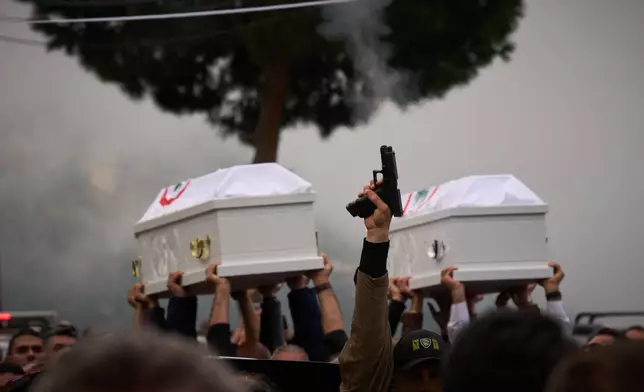
A gunman fires his gun as men carry the coffins with the bodies of Pierre Mouawad, an official with the anti-Hezbollah Lebanese Forces party, and his wife during their funeral in Yahshush, in Lebanon, Tuesday, April 7, 2026. (AP Photo/Emilio Morenatti)
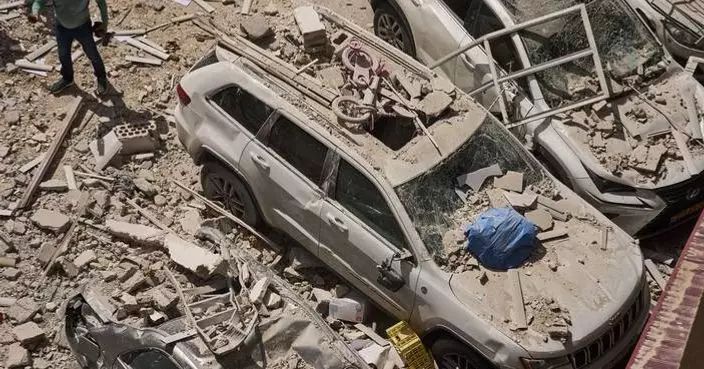
Pierre Mouawad, his wife and a woman visiting them were killed in an Israeli strike that hit an apartment above them in the town of Ain Saadeh, east of Beirut on Sunday. The Israeli military said its intention was to target a Hezbollah militant, though the circumstances of the strike remain unclear.
Mouawad was with the local branch of the Lebanese Forces, a Christian party widely considered Hezbollah’s fiercest political opponent. They have for years called or the group's disarmament and in recent weeks have blamed Hezbollah for dragging the country into another war by firing rockets at Israel in solidarity with its key ally and patron Iran.
The party has four ministers in Lebanon's government and holds the largest bloc in its parliament.
Since the Israel-Hezbollah war resumed last month, 1,530 people have been killed in Israeli strikes in tiny Lebanon, according to the country's Health Ministry. More than 1 million people have been displaced, largely from southern Lebanon and Beirut's southern suburbs, where Hezbollah has a wide base of support and influence.
As the war rages on, and Israeli forces invade Lebanon, tensions have soared in Christian, Sunni and Druze-majority areas over the presence of displaced people from the Shiite community, which forms Hezbollah's main constituency.
The residents of these host communities fear that Hezbollah members may be hiding among Shiite civilians who were displaced into their areas.
The coffins of Mouawad and his wife, draped in the white Lebanese Forces party flag, were taken into the St. Simon Church off the side of a mountain in the town of Yahshoush, north of Beirut.
Sounds of church bells, gunshots and party music blasting from loudspeakers mingled while officials, town residents and party members in large numbers attended the condolences.
“They died because Hezbollah dragged us into a war,” said Lebanese Forces legislator Pierre Bou Assi, calling the war “an Iranian decision with Hezbollah's implementation.”
“Nobody among all the Lebanese asked them to start this war," he said.
Though the Lebanese military says it is investigating the incident, and the government has last month banned Hezbollah's military activity and the presence of Iranian paramilitary Revolutionary Guard members in Lebanon, the strike in Ain Saadeh has further exacerbated tensions.
Many Lebanese who thought they would be spared from the war's toll as they had no links to Hezbollah, have been horrified as Israeli attacks have targeted Hezbollah and the Iranian Guard members renting out apartments or hotel rooms in their neighborhoods.
The landlord of the apartment above the Mouawads, the town mayor and the Lebanese military probing the attack said no one has been living there.
But the victims' relatives and Mouawad's party are adamant that someone — the intended target — was living in that apartment, putting people nearby at risk.
If that person "had died, it would have been better for us,” said Raymond Mouawad, Pierre's brother. “Instead, my brother died while he escaped.”
Associated Press video journalist Fadi Tawil in Yahsoush, Lebanon, contributed to this report.
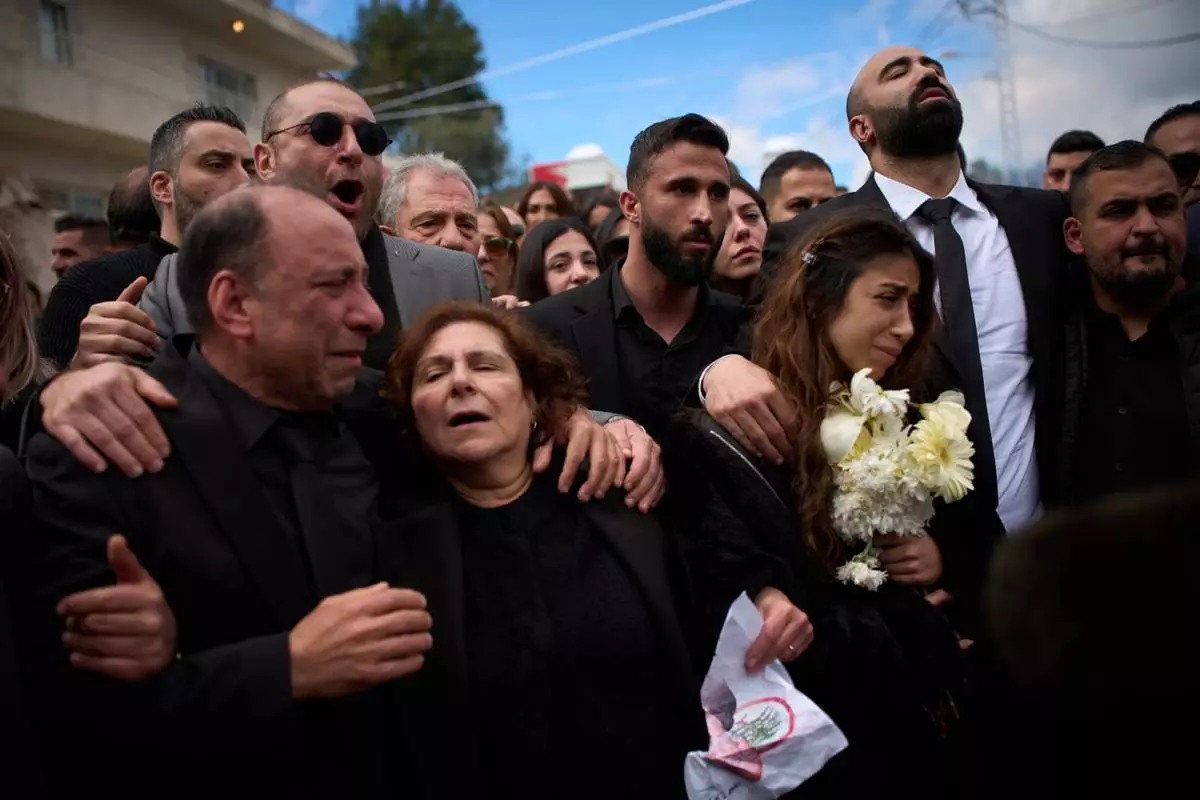
Gyal, right, daughter of Pierre Mouawad, an official with the anti-Hezbollah Lebanese Forces party, and his wife, walks as men carry the bodies of her parents during their funeral in Yahshush, Lebanon, Tuesday, April 7, 2026. (AP Photo/Emilio Morenatti)
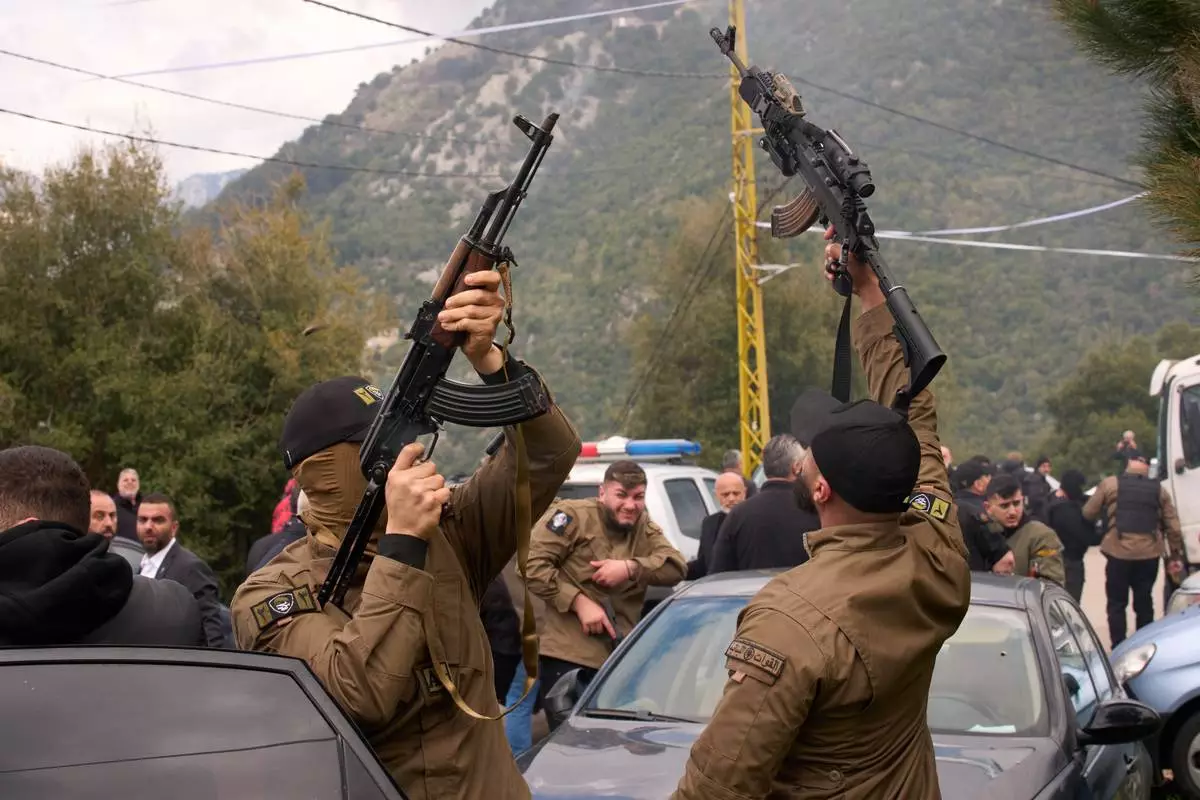
Gunmen fire their weapons as men carry the coffins with the bodies of Pierre Mouawad, an official with the anti-Hezbollah Lebanese Forces party, and his wife during their funeral in Yahshush, in Lebanon, Tuesday, April 7, 2026. (AP Photo/Emilio Morenatti)
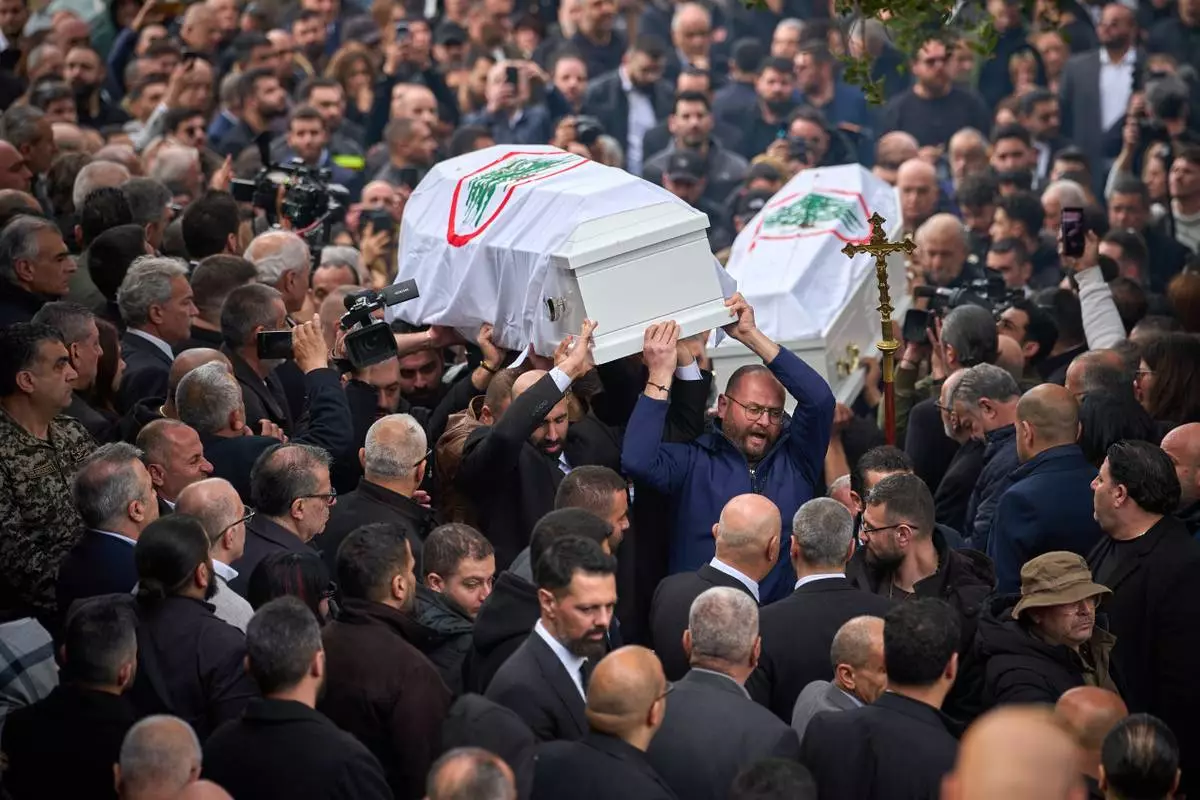
Men carry the coffins with the bodies of Pierre Mouawad, an official with the anti-Hezbollah Lebanese Forces party, and his wife during their funeral in Yahshush, Lebanon, Tuesday, April 7, 2026. (AP Photo/Emilio Morenatti)
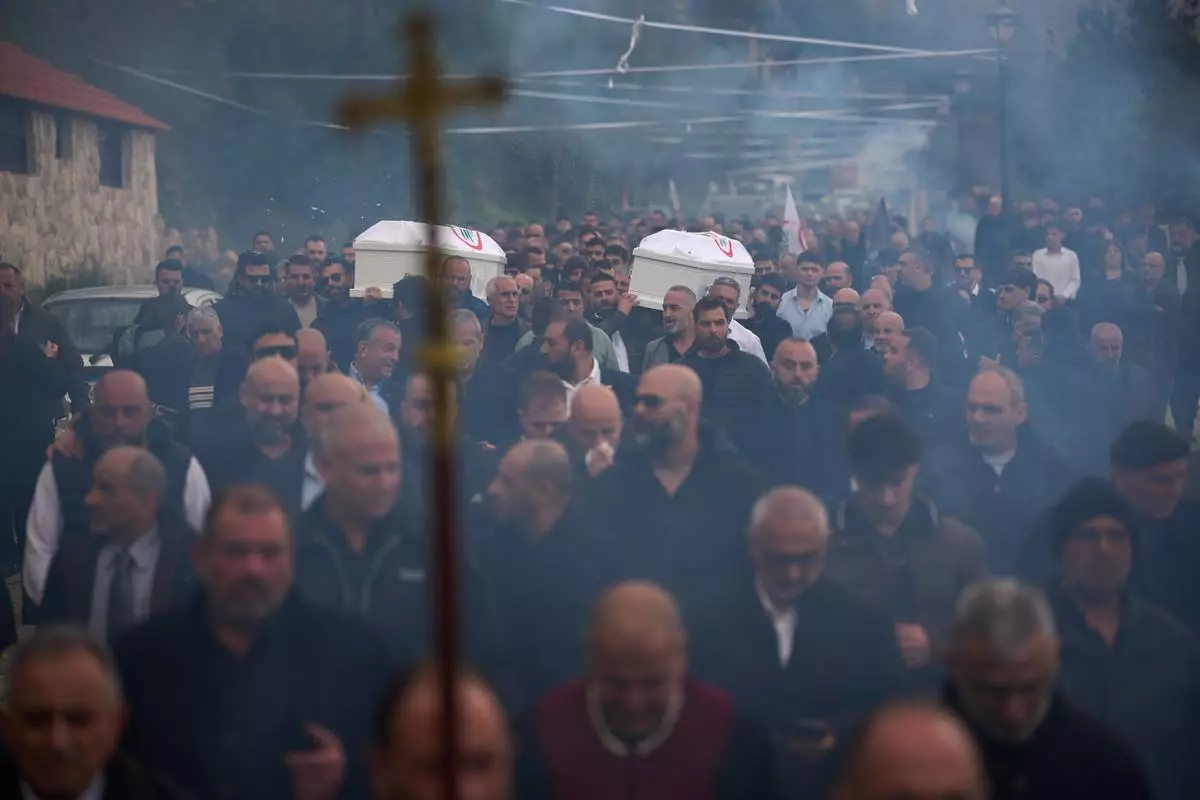
Men carry the coffins with the bodies of Pierre Mouawad, an official with the anti-Hezbollah Lebanese Forces party, and his wife during their funeral in Yahshush, in Lebanon, Tuesday, April 7, 2026. (AP Photo/Emilio Morenatti)
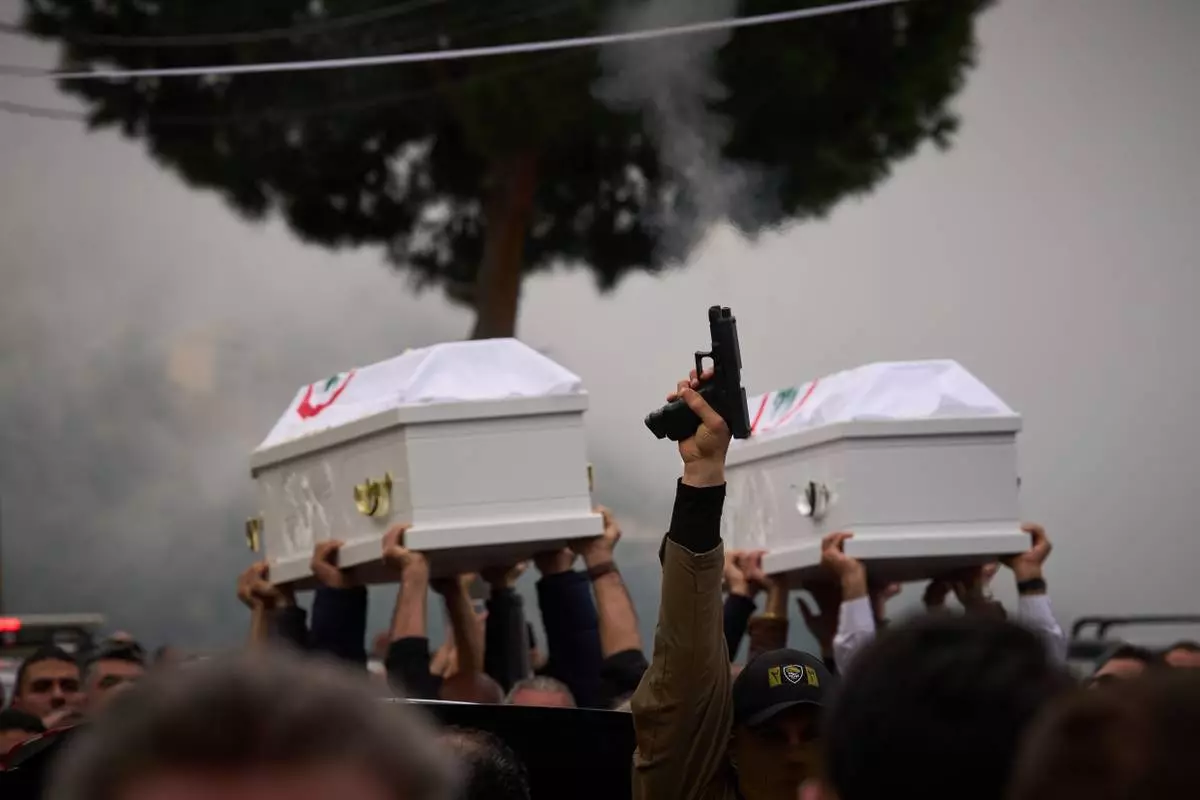
A gunman fires his gun as men carry the coffins with the bodies of Pierre Mouawad, an official with the anti-Hezbollah Lebanese Forces party, and his wife during their funeral in Yahshush, in Lebanon, Tuesday, April 7, 2026. (AP Photo/Emilio Morenatti)