Skip to Content Facebook Feature Image

Gary Woodland details PTSD struggles ahead of the Masters: 'I thought people were trying to kill me'

Sport

Gary Woodland details PTSD struggles ahead of the Masters: 'I thought people were trying to kill me'
Sport

Sport

Gary Woodland details PTSD struggles ahead of the Masters: 'I thought people were trying to kill me'

2026-04-08 04:29 Last Updated At:04:40

AUGUSTA, Ga. (AP) — Gary Woodland was playing the back nine at the Houston Open a couple of weeks ago, an event he would ultimately win to secure his return trip to the Masters, when the former U.S. Open champion began to feel what he described as “hypervigilant.”

“I battled the last 10 holes," Woodland revealed Tuesday, “thinking people were trying to kill me.”

That's not intended to be a joke. The exact opposite, in fact: a powerful admission of Woodland's mental health struggles, and one he hopes will help others dealing with trauma, anxiety and post-traumatic stress disorder in their own lives.

The inner turmoil that Woodland feels even at Augusta National, one of the most bucolic places in the world, has its roots in a scan that uncovered a lesion on his brain that had been causing him unfounded fears of dying. In September 2023, he wrote letters to his wife and kids in the event something went wrong, then had surgery to remove as much of it as possible.

The procedure involved cutting a baseball-sized hole from the side of his head, but it proved to be successful. Woodland was back on the course in January 2024, slowly working his way back into form, making enough cuts to keep him motivated.

The following year, he finished second at the Houston Open — the same tournament he would win last month, when Woodland got through his Friday bout of hypervigilance and closed with a 3-under 67 on Sunday for a five-shot win over Nicolai Hojgaard.

Few knew that Woodland was still struggling, though. He had become crippled by PTSD to the point that he would rush to bathrooms to break down in tears, and it always felt as if people were out to get him; one symptom of PTSD is a heightened state of sensory sensitivity, which causes the nervous system to continually stay in an on-guard state.

“I talked to (PGA) Tour security that night,” Woodland said of that Friday at the Houston Open, "and I told them what I was going through, and every time I looked up on the weekend, my security team was behind me. Any time I got startled on the weekend, I turn around — last year I didn't talk to Tour security. I fought this on my own. It was awful.

“Turning around and knowing I'm safe, having somebody there with me? It's the only reason I won two weeks ago.”

Well, not quite the only reason.

Woodland's ball speed was 196 mph on one tee shot, a good indication that the strength that helped carry him to the 2019 U.S. Open championship had returned. His approach play was sublime and his short game even better on the way to finishing at 21 under, giving Woodland his first win since his only major championship and the fifth victory of his career.

“We live in a world, as men and especially as an athlete, that you put your head down and you fight through it. I’ve done it my whole life,” Woodland said. “This is honestly one battle that I’m not able to do on my own. I tried, and it wasn’t working.”

So, Woodland got some help. And it has helped him immeasurably.

Never one to think about himself, Woodland quickly realized that his struggles might help somebody else, too. That is why he went public with his PTSD diagnosis in an interview with the Golf Channel, and why he was so forthcoming Tuesday at the Masters.

“The world we live in, speaking about something you would call a weakness is hard,” he said, "but speaking about it and how I feel afterwards made me a lot stronger. I didn’t know that releasing this battle was going to make me stronger, and it’s done that. I feel a lot stronger now than I did three weeks ago, I can tell you that. No matter how hard it is out here, I know I have someone I can talk to that I can have security. My team have been amazing in helping me, but I’ve turned a weakness into a strength.

“I wouldn’t even say it as a weakness, but I think that’s the stigma out there. But I feel a lot stronger after I came out for sure.”

This week will be another test for Woodland, perhaps an even tougher one. More people are sure to trail him around Augusta National after his win in Houston, and the proximity of the patrons to the players — especially on the tees — can be a matter of a few feet.

The PGA Tour has worked with the Masters to provide the security Woodland needs to feel safe.

“There’s probably not a safer golf tournament in the world, so I’m happy for that, but it’s still a battle in my head if I’m safe or not,” he said. “I don’t have control when this thing hits me, and it’s tough. It can be a fan. It can be a walking score (board holder). It can be a camera guy running by me. Just any startlement from behind me can trigger this pretty quickly. Knowing where that security is is a constant reminder that I’m safe.”

AP golf: https://apnews.com/hub/golf
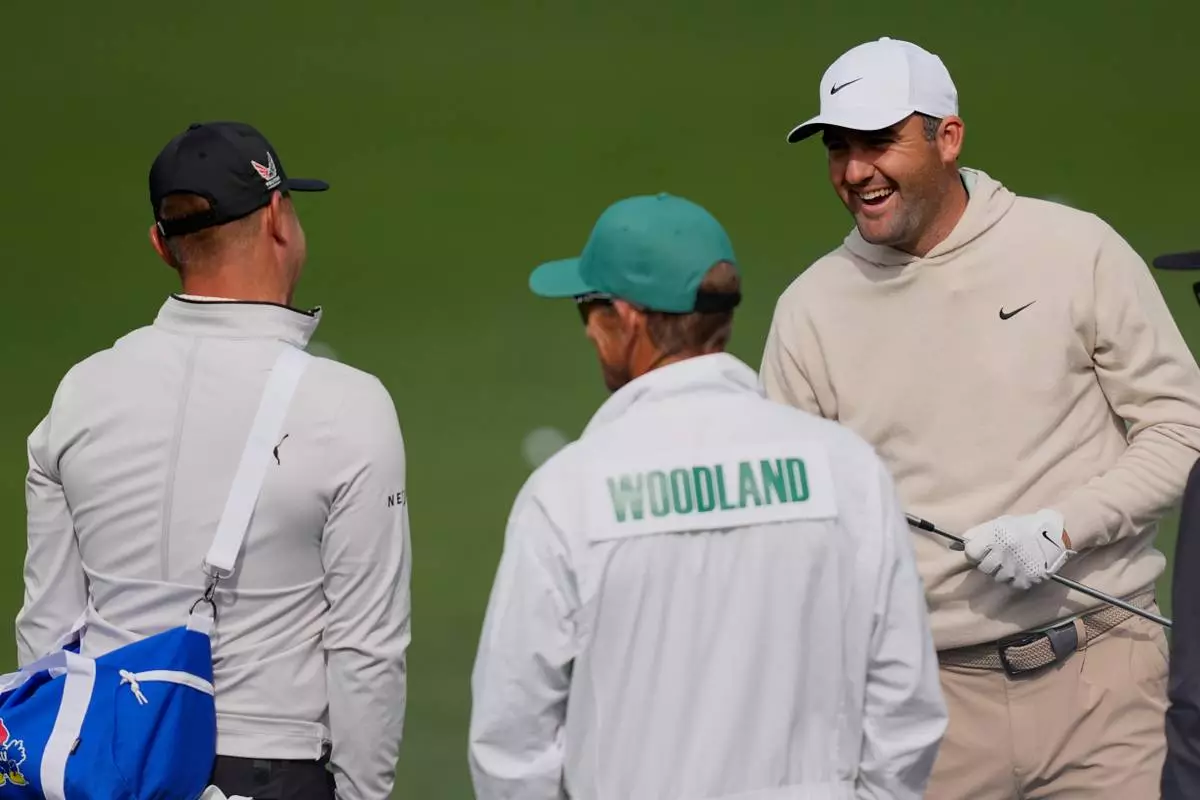
Scottie Scheffler talks with Gary Woodland one the practice tee at the Masters golf tournament at the Augusta National Golf Club, Monday, April 6, 2026, in Augusta, Ga. (AP Photo/David J. Phillip)
Scottie Scheffler talks with Gary Woodland one the practice tee at the Masters golf tournament at the Augusta National Golf Club, Monday, April 6, 2026, in Augusta, Ga. (AP Photo/David J. Phillip)

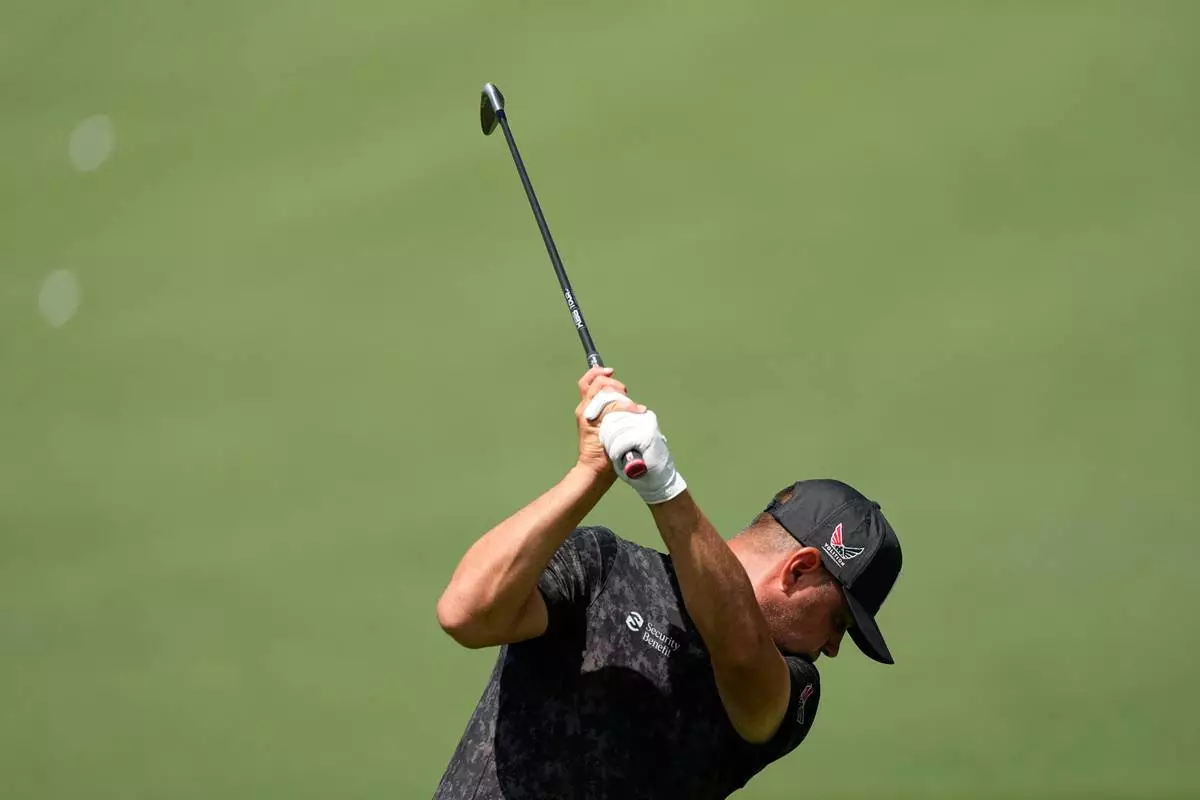
Gary Woodland warms up on the driving range before a practice round ahead of the Masters golf tournament at the Augusta National Golf Club, Tuesday, April 7, 2026, in Augusta, Ga. (AP Photo/Ashley Landis)
Gary Woodland warms up on the driving range before a practice round ahead of the Masters golf tournament at the Augusta National Golf Club, Tuesday, April 7, 2026, in Augusta, Ga. (AP Photo/Ashley Landis)
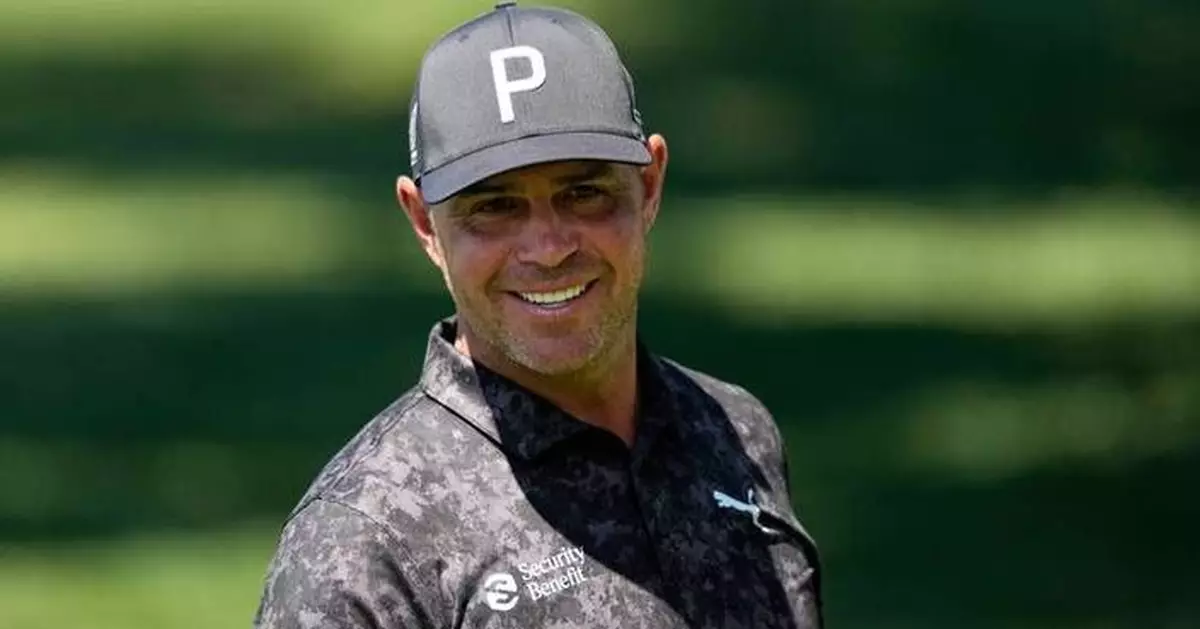
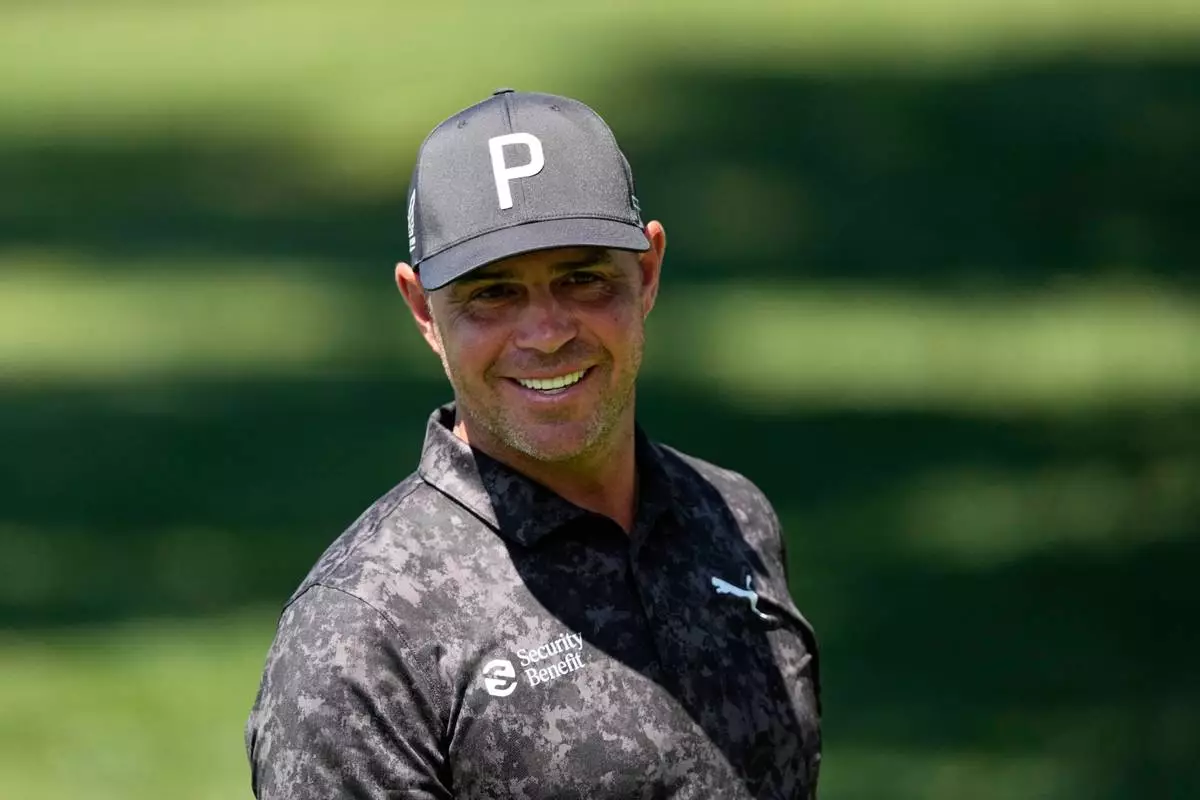
Gary Woodland smiles on the driving range before a practice round ahead of the Masters golf tournament at the Augusta National Golf Club, Tuesday, April 7, 2026, in Augusta, Ga. (AP Photo/Ashley Landis)
Gary Woodland smiles on the driving range before a practice round ahead of the Masters golf tournament at the Augusta National Golf Club, Tuesday, April 7, 2026, in Augusta, Ga. (AP Photo/Ashley Landis)
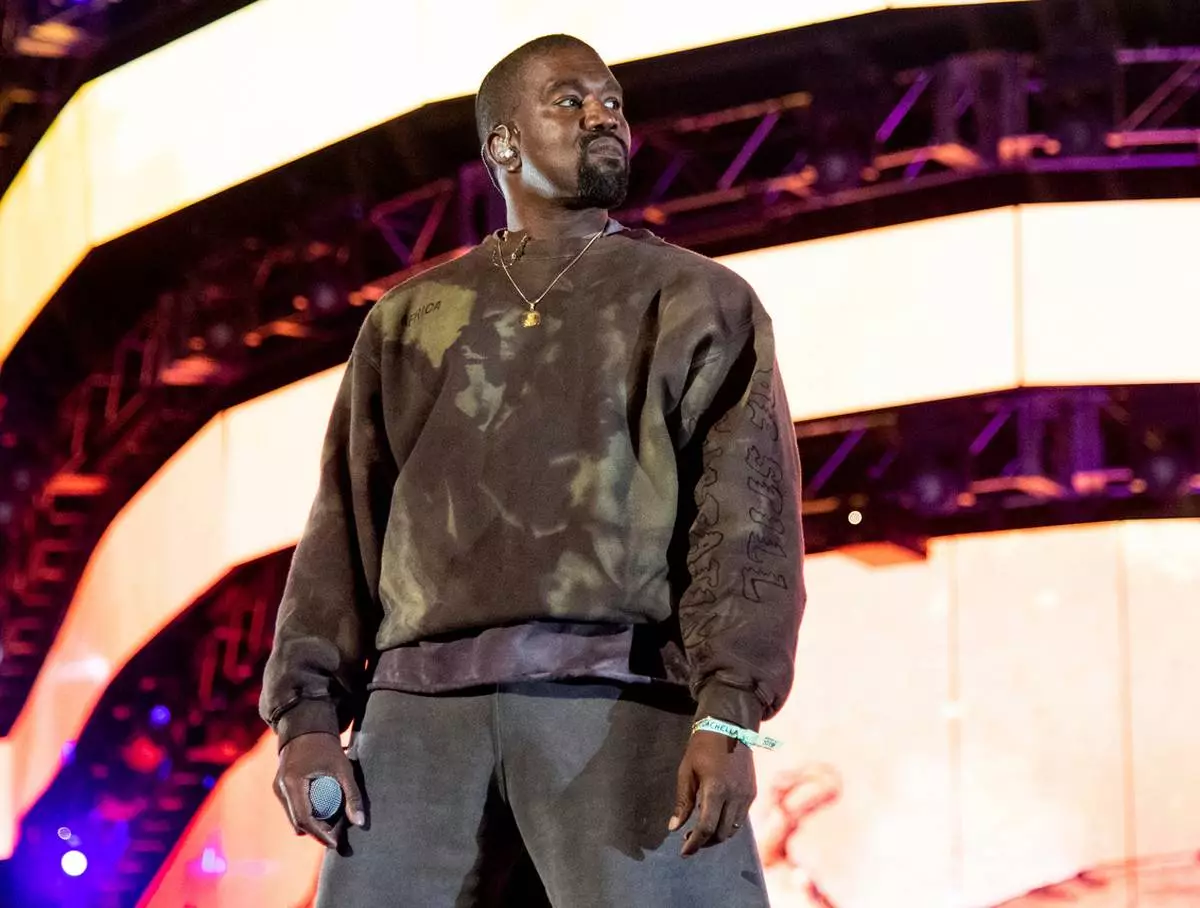
LONDON (AP) — The rapper formerly known as Kanye West was barred Tuesday from entering the U.K., where he was scheduled to headline the Wireless Festival in July, after a backlash over Ye's history of antisemitic remarks.

Festival organizers canceled the three-day outdoor event as a result of the travel ban and said those who had bought tickets would get refunds.

Ye applied for an electronic travel authorization to visit the U.K., but it was blocked by the government on the grounds that his presence in the country would not be “conducive to the public good.”

“Kanye West should never have been invited to headline Wireless,” Prime Minister Keir Starmer said in a statement posted on social media. “This government stands firmly with the Jewish community, and we will not stop in our fight to confront and defeat the poison of antisemitism. We will always take the action necessary to protect the public and uphold our values.”

The rapper, who changed his name in 2021, had been expected to play his first U.K. dates for more than a decade in front of around 150,000 revelers over three nights July 10-12 at the Wireless Festival, in London’s Finsbury Park. Other acts for the festival had not yet been announced.

The event's organizers had been under mounting pressure from sponsors and politicians to cancel the gigs by the rapper, who has drawn widespread condemnation for making antisemitic remarks and voicing admiration for Adolf Hitler.

Last year, Ye released a song called “Heil Hitler” and advertised a swastika T-shirt for sale on his website. Officials in Australia canceled the musician's visa in July after the release of the single.

The 48-year-old apologized in January with a letter, published as a full-page advertisement in The Wall Street Journal. He said his bipolar disorder led him to fall into “a four-month long, manic episode of psychotic, paranoid and impulsive behavior that destroyed my life.”

Wireless sponsors Pepsi, Rockstar Energy and Diageo pulled out of the festival since Ye was announced as the headliner.

In a statement issued Tuesday before his travel authorization was revoked, Ye said he “would be grateful for the opportunity to meet with members of the Jewish community in the U.K. in person, to listen.

“I know words aren’t enough — I’ll have to show change through my actions,” he said. “If you’re open, I’m here.”

Phil Rosenberg, president of the Board of Deputies of British Jews, had said the group would be willing to meet with the musician if he pulled out of the festival.

“The Jewish community will want to see a genuine remorse and change before believing that the appropriate place to test this sincerity is on the main stage at the Wireless Festival,” Rosenberg said.

Organizer Festival Republic had stood by Ye. In a statement issued Monday, managing director Melvin Benn urged people to offer the performer “forgiveness and hope.”

“We are not giving him a platform to extol opinion of whatever nature, only to perform the songs that are currently played on the radio stations in our country and the streaming platforms in our country and listened to and enjoyed by millions,” the statement said.

Announcing the cancellation, Festival Republic said that “multiple stakeholders were consulted in advance of booking Ye and no concerns were highlighted at the time.

“Antisemitism in all its forms is abhorrent, and we recognize the real and personal impact these issues have had,” it said in a statement. “As Ye said today, he acknowledges that words alone are not enough, and in spite of this still hopes to be given the opportunity to begin a conversation with the Jewish community in the U.K.”

The Community Security Trust, which works to protect British Jews, said the government had made the right decision.

“Anti-Jewish hatred should have no place in society and cultural leaders have a role to play in ensuring that is the case,” it said in a statement.

“People who show genuine and meaningful remorse for previous antisemitic behavior will always receive a sympathetic hearing from the Jewish community, but that process must come before this kind of public rehabilitation.”

A representative for Ye didn’t reply to a request for comment.

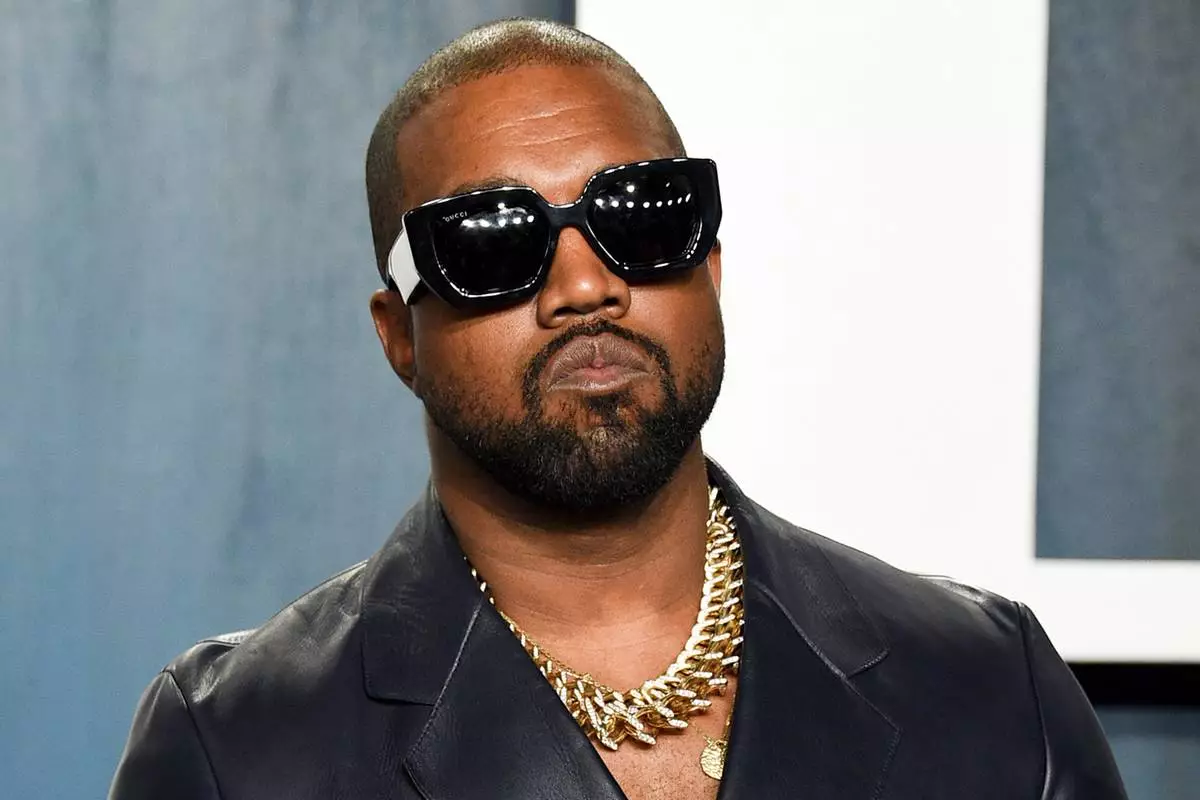
FILE - Ye, the rapper formerly known as Kanye West, arrives at the Vanity Fair Oscar Party in Beverly Hills, Calif., on Feb. 9, 2020. (Photo by Evan Agostini/Invision/AP, File)

FILE - Ye, the rapper formerly known as Kanye West, arrives at the Vanity Fair Oscar Party in Beverly Hills, Calif., on Feb. 9, 2020. (Photo by Evan Agostini/Invision/AP, File)

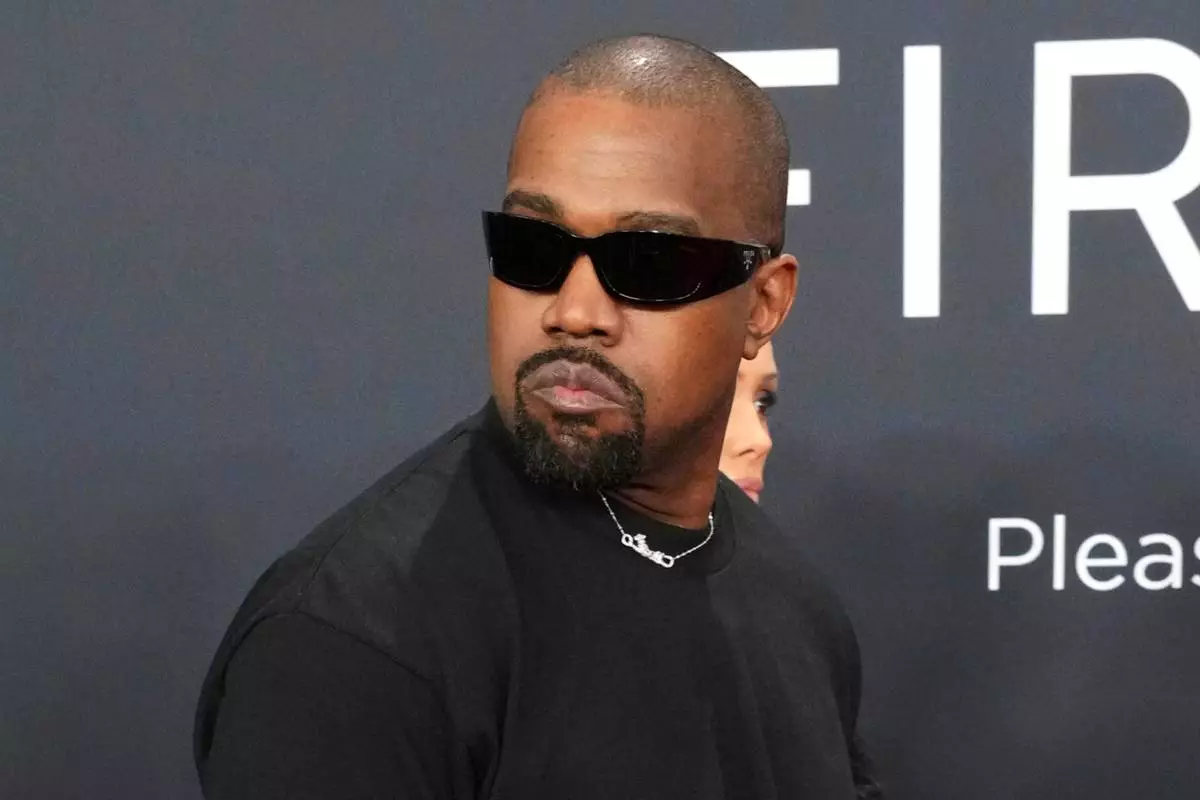
FILE - Kanye West appears at the 67th annual Grammy Awards in Los Angeles on Feb. 2, 2025. (Photo by Jordan Strauss/Invision/AP, File)

FILE - Kanye West appears at the 67th annual Grammy Awards in Los Angeles on Feb. 2, 2025. (Photo by Jordan Strauss/Invision/AP, File)

FILE - Kanye West, who changed his name to Ye in 2021, performs at the Coachella Music & Arts Festival in Indio, Calif., on April 20, 2019. . (Photo by Amy Harris/Invision/AP, File)

FILE - Kanye West, who changed his name to Ye in 2021, performs at the Coachella Music & Arts Festival in Indio, Calif., on April 20, 2019. . (Photo by Amy Harris/Invision/AP, File)

Recommended Articles