PARMA, Italy--(BUSINESS WIRE)--Apr 8, 2026--
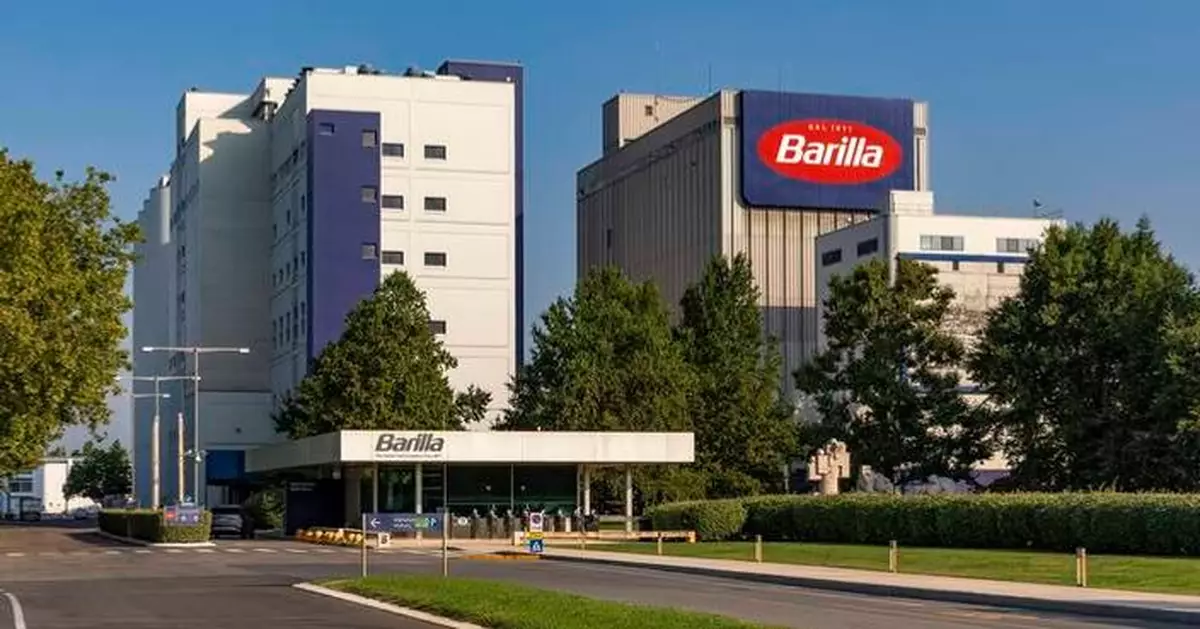
For the third year in a row, Barilla is confirmed as the world’s leading company in the food sector for reputation in the Global RepTrak® 100 ranking conducted by RepTrak, which since 1999 has annually analyzed the companies with the strongest reputations worldwide.
This press release features multimedia. View the full release here: https://www.businesswire.com/news/home/20260407912080/en/
In the 2026 ranking, the Group reaches 9th place overall, moving up 16 spots compared to 2025 (ranked at 25th) and entering the global Top 10, confirming the company’s steady reputation‑building journey developed over the years. This result reflects Barilla’s ability to combine product quality, industrial vision and social responsibility – factors that are increasingly central to the assessment of corporate reputation. The study evaluates key elements including performance, innovation, governance, sustainability and the ability to generate long‑term trust.
“In today’s turbulent macroeconomic environment, maintaining stable performance is already a positive signal,” states Sara Fargion, Vice President RepTrak, EMEA. “However, the ability to grow in this context becomes a true differentiator. The Food sector, in particular, is facing significant pressure, as ongoing waves of inflation continue to drive intense media scrutiny and shape public perception consistently across all 14 countries where we measure reputation.”
Present in over 100 countries, with 30 production sites and an annual output exceeding 2 million tons across pasta, ready‑made sauces and bakery products, Barilla continues to invest in innovation and the continuous improvement of its product offering.
This commitment is reflected in the inauguration in November, in Parma, of BITE (Barilla Innovation & Technology Experience), the new research and development center where 200 professionals – including food technologists, researchers, engineers and food designers – develop new products and improve recipes, production processes and packaging. BITE is a state‑of‑the‑art hub that integrates scientific expertise, food culture and technology to design the future of food, supported by an open‑innovation ecosystem involving universities and research centers worldwide, accelerating the development of increasingly sustainable, safe solutions aligned with evolving consumer needs.
Further confirming its ability to respond to consumer expectations, the Group has been recognized in recent years with two awards from the Product of the Year program in Italy: in 2025, Barilla Al Bronzo was awarded in the Pasta category, while in 2026 the recognition went to Barilla Protein+, both selected by more than 12,000 consumers as part of research conducted by Circana.
Barilla Group’s growth and its ability to engage with new food trends and cultures are also supported by its partnership with Formula 1®, which has brought Barilla’s core value of togetherness into the world’s premier motorsport competition. Globally, high‑impact social initiatives with organizations – such as The Food Bank and Doctors Without Borders – have mobilized thousands of volunteers and citizens, supporting social and humanitarian projects through tangible acts of participation and sharing.
At the same time, Barilla continues to advance its social and environmental commitments, integrating sustainability and energy and water efficiency at the core of its growth model. As part of this ongoing effort, in 2024, the total volume of water recycled and reused increased by 45% compared to 2022, with an even more significant improvement in water‑stressed areas, where the increase reached 164%. This commitment also extends to Barilla’s nearly 9,000 people – the true driving force behind the Group’s performance – and includes, among other initiatives, a global gender‑neutral parental leave policy guaranteeing 12 fully paid weeks for both parents, as well as the achievement, since 2020, of global gender pay equity in line with the principle of “equal pay for equal work” for all Barilla employees worldwide.
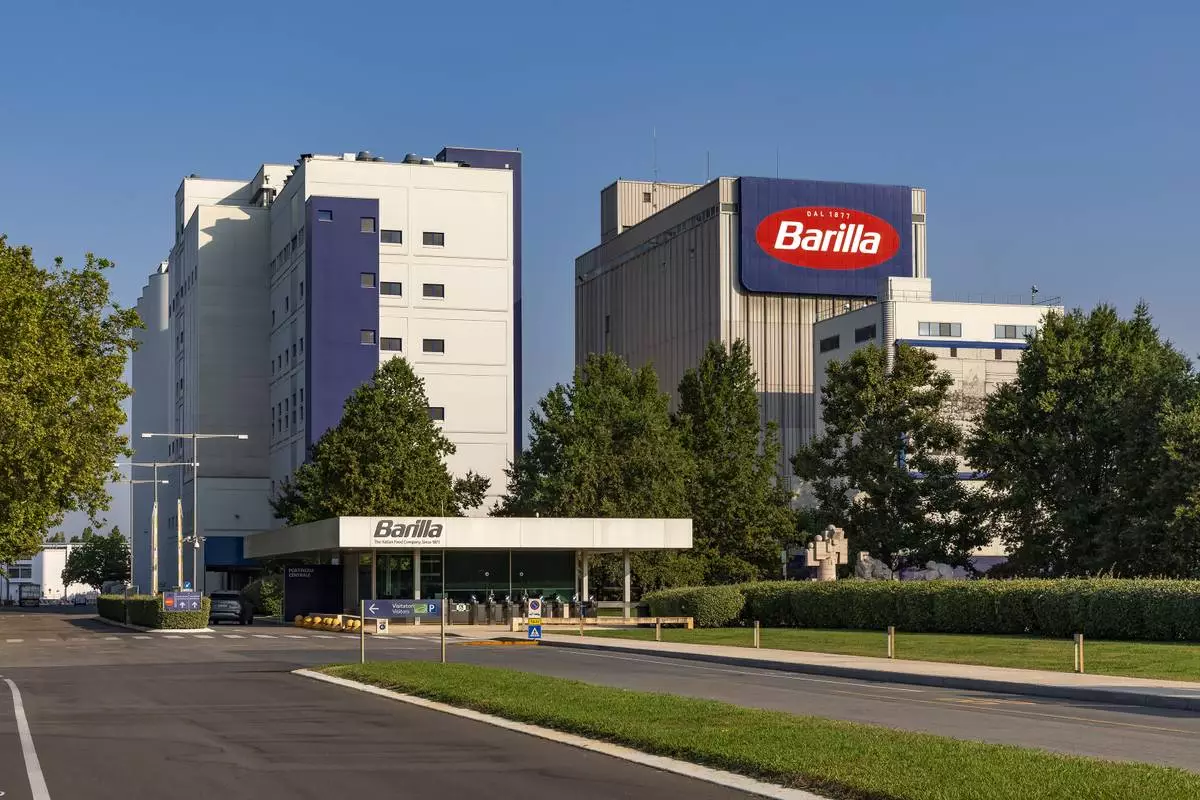
Barilla Confirmed as the World’s Leading Food Company for Reputation - Ranking 9th Overall Globally
CAIRO (AP) — Iranians began to regain internet access on Wednesday after authorities ended a monthslong shutdown. But users said service was slow and spotty in some areas, with apps like YouTube and Instagram heavily restricted, as they were before the cutoff began during nationwide protests in January.
Authorities justified the outage as a military imperative after the United States and Israel attacked Iran on Feb. 28. Their decision to lift some restrictions this week came as negotiators appeared to be closing in on a more permanent truce. But many Iranians feared access could be cut off again at a moment's notice.
Internet tracking company Netblocks said Iran’s connectivity, which measures the ability of devices to connect to the internet, is at around 86% of capacity from before the cutoff. Internet analysis firm Kentik said internet traffic, which measures the amount of data transferred and is a good illustration of usage, was at around 40%.
Amir Rashidi, an Iranian cybersecurity analyst, said there were still widespread disruptions. “It's too early to say the shutdown is over,” he wrote on X.
Iran’s roughly 90 million people have been cut off from the internet for most of 2026, one of the world’s longest and strictest national shutdowns. Young people with online careers saw their incomes evaporate. Job losses and the closure of online businesses added to the war's steep economic costs.
The cutoff made it difficult for Iranian families to communicate through months of unrest and war. At some points, phone lines were also cut off, though they were later restored.
A woman living in Tehran said that for months she was barely able to speak to her sons living abroad. She couldn't believe authorities had restored access, saying she had assumed they would find some justification to prolong the outage.
A taxi driver said service was restored but weak. He expressed hope it would improve so he could use messaging apps with family and friends. Both spoke on condition of anonymity for security reasons.
Prices spiked during the shutdown, with residents in Tehran at times paying around $7.50 per gigabyte. Prices are back down to around $2.25 for 30 gigabytes, roughly where they were before the protests.
Even then, Iran tightly controlled access to popular social media sites, leading many to rely on virtual private networks, or VPNs. The cost of those workarounds soared during the shutdown, making them unaffordable for many as the economy was battered.
Businesses have started reappearing online, announcing their return with posts on sites like Instagram and Telegram.
A gamer and tech influencer in the central city of Isfahan said the shutdown had caused him to lose a lot of his audience on YouTube and Instagram, where he had spent years building up a large following.
“All my views and interactions are way down. I’ve been erased from the algorithm,” he said in a voice note sent by WhatsApp, adding that his internet connection was still slower than before the shutdown.
“The situation is such that many content producers have had their income reduced to zero, have moved on to other jobs, or have been forced to sell their equipment to survive,” he said. He spoke on condition of anonymity for fear of reprisal.
Iranian authorities first shut down the internet in January during mass anti-government protests that were eventually stamped out in a violent crackdown. Thousands of people were killed and tens of thousands detained.
That cutoff was just starting to ease when the government imposed a complete internet blackout after the start of the war, when U.S. and Israeli strikes killed Iran's supreme leader and other top officials.
The government faced criticism for the prolonged shutdown, which caused even more harm to an economy devastated by inflation, strikes on key industries and a U.S. blockade on Iranian ports.
The internet cutoff cost an estimated $30-40 million daily, with indirect losses likely twice that much, a member of Iran’s Chamber of Commerce, Afshin Kolahi, told a local newspaper last month. About 10 million people have jobs that depend on internet connectivity, according to Communications Minister Sattar Hashemi.
Iranians still had access to a national net, but that has a far narrower reach, and users complained of poor service and heavy censorship. Senior government officials are given SIM cards granting them access to the global internet. Under pressure, the government expanded access to the SIM cards to some professions during the shutdown.
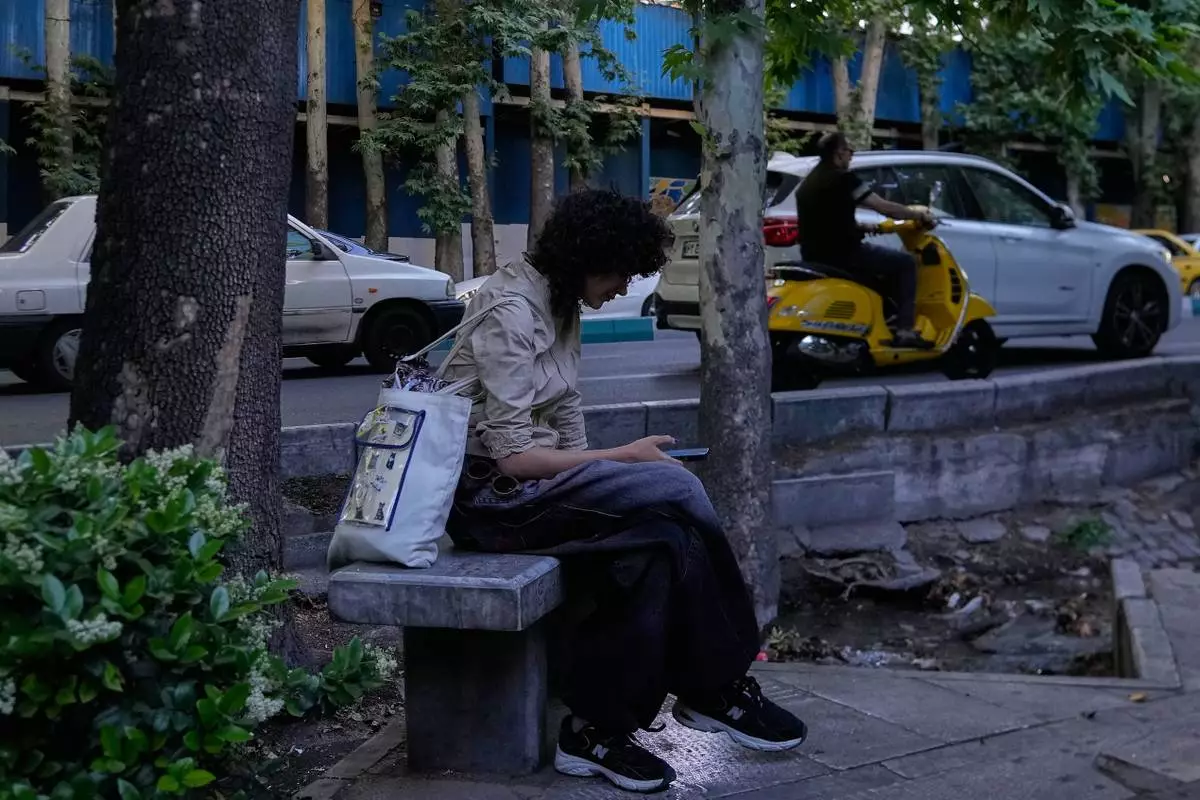
A woman checks her smartphone while sitting on a bench along a sidewalk in northern Tehran, Iran, Tuesday, May 26, 2026. (AP Photo/Vahid Salemi)