WASHINGTON (AP) — President Donald Trump’s threats to wipe out Iran, “a whole civilization,” ended the restraint that Democrats have mostly practiced when it comes to questions of removing him from office in his second term.
By the dozens, Democrats came out to say that Trump should no longer serve in the White House, either through the impeachment process or the 25th Amendment, which allows the vice president and the Cabinet to declare that a president is no longer able to perform the job.
While Trump eventually pulled back on his threat and agreed to a two-week ceasefire with Iran, the episode highlighted the growing demands for Democrats to oppose the Republican president in the strongest possible terms. Calls about Iran flooded into congressional offices, lawmakers said.
The breadth of the Democratic pushback underscored the gravity of Trump's apocalyptic threat to a country of more than 91 million people. It also served to raise the domestic political stakes for a conflict that is far from over. The Trump administration faces mounting calls to testify about the war and justify its demands for hundreds of billions of dollars in new military spending.
“We cannot excuse what the president said as a negotiating tactic," Rep. Sara Jacobs, a California Democrat told reporters at the Capitol Thursday.
“It is important that even though we were able to get this ceasefire, which I pray holds, that we hold this president accountable for what he threatened because threatening genocide is not just against international law, it’s against our federal law, too,” she added.
Still, Democratic leaders and many moderates in the party have steered clear of endorsing impeachment, and any attempt to remove Trump from office is doomed to fail so long as Republicans control Congress.
In the near term, Democratic leaders in the House and Senate are instead pushing Republicans to join them and pass legislation that would force Trump to get congressional approval before carrying out any more attacks on Iran.
A few Democrats attempted during a brief session of the House on Thursday to pass what's known as a war powers resolution on Iran, but Republicans, who control the chamber, did not acknowledge their request.
“We need Speaker Johnson to call us into session,” said Democratic Rep Emily Randall of Washington. “The American people deserve that.”
At the White House, press secretary Karoline Leavitt has defended Trump's rhetoric as effective.
“I think it was a very, very strong threat from the president of the United States that led the Iranian regime to cave to their knees and ask for a ceasefire and agree to reopening the Strait of Hormuz,” she said at a Wednesday White House press briefing.
As they press their case against Trump, Democrats are responding to the worries of their own base and constituents. Congressional offices were bombarded with phone calls and emails this week, largely from people alarmed by the president’s rhetoric.
In the House, the office of Rep. Suzan DelBene, D-Wash., received a “ton” of calls and emails Monday and Tuesday, mostly about Iran but also about impeaching Trump or removing him by deploying the 25th Amendment, said one aide who was not authorized to discuss the internal office situation and insisted on anonymity.
When her district staffers in the state office took a break Tuesday, they returned to 75 voicemails on Iran an hour later, the aide said.
“My office phones have not stopped ringing,” said Rep. Maxine Dexter, D-Ore., at a press conference in Portland, urging House colleagues to immediately return to Washington.
Dexter’s office received more calls on Tuesday, 257, than it has ever received in a 24-hour period since the first-term lawmaker’s team began keeping track.
The groundswell appeared to be organic, rather than an orchestrated campaign to pressure lawmakers to act.
While outside groups have been circulating some discussion points, including the legal details around invoking the 25th Amendment, there has not been an organized effort to flood the congressional offices with a strategic message, said one Democratic strategist familiar with the situation who insisted on anonymity to discuss the private conversations.
It was simply the “horror” of what Trump was saying, the strategist said, and the scale of the president’s threats, that appeared to have sparked the mobilization.
On the political right, several prominent figures including former Rep. Marjorie Taylor Greene of Georgia, also suggested Trump should be removed from office through the 25th Amendment.
Democrats twice impeached Trump for actions taken during his first term, but he was acquitted each time. They have tried to avoid such debates for the last 16 months as they tried to center their midterm message on kitchen table issues rather than opposing a president who narrowly won the popular vote.
Republicans also have the majority in the House and have easily fended off two previous efforts to impeach Trump in his second term. A significant number of Democrats have either joined with Republicans or voted “present” as the House blocked impeachment resolutions sponsored by Rep. Al Green, D-Texas.
Then came Trump's threat on Tuesday morning to wipe out “an entire civilization.”
“Temporary ceasefire or not, Trump already committed an impeachable offense. Congress needs to get back to work and remove him from office before he does more damage to our country and the world,” said Rep. Seth Moulton of Massachusetts, a veteran of the war in Iraq.
It’s unclear how House Democratic leader Hakeem Jeffries will handle the demands for another impeachment push. But Democratic leaders are holding a call on Friday with members of the House Judiciary Committee that is focused on “Trump administration accountability and the 25th Amendment.”
Standing on the Capitol steps Thursday, Rep. Madeleine Dean, D-Pa., said she supports impeachment, but nevertheless hit the brakes on it for now, as the Democrats are in the minority. Instead, she called on Republicans to stand up to Trump’s threats, including by invoking the 25th Amendment.
She predicted the imperative to remove Trump from office could only grow as negotiators navigate a fragile framework for a peace deal. Dean and other Democrats criticized the plan as “chaotic” and unworkable.
Yet Dean said Trump's threat to destroy Iranian civilization should have already been enough. “The president brought the entire globe to watch his madness,” she said.

President Donald Trump speaks with reporters during a news conference in the James Brady Press Briefing Room at the White House, Monday, April 6, 2026, in Washington. (AP Photo/Mark Schiefelbein)
DUBAI, United Arab Emirates (AP) — In a potential boost to Middle East ceasefire efforts, Israeli Prime Minister Benjamin Netanyahu said Thursday that he authorized direct negotiations “as soon as possible” with Lebanon aimed at disarming Iranian-backed Hezbollah militants and establishing relations between the neighbors.
The two countries have technically been at war since Israel was established in 1948.
There was no immediate response from Lebanese authorities. But Israel-Lebanon negotiations were expected to begin next week at the State Department in Washington, according to a person familiar with the plans.
The prospect of talks appeared to bolster the tentative ceasefire in the Iran war that had staggered under the weight of Israel’s bombardment of Beirut, Tehran’s continued chokehold on the Strait of Hormuz and uncertainty over whether planned peace talks can find common ground.
Netanyahu's announcement came amid disagreement over whether the ceasefire deal included a pause in fighting between Israel and Hezbollah, and a day after Israel pounded Beirut with airstrikes that resulted in the deadliest day in Lebanon since the war began on Feb. 28.
Israel has fought multiple wars and launched several major invasions over the years, most recently sending in large numbers of troops last month in response to Hezbollah fire on Israel’s northern border communities.
The launch of direct peace talks is a significant achievement, though reaching a deal will be difficult after decades of hostilities, Hezbollah’s continued presence and longstanding disagreements over the exact route of their shared border.
The talks in Washington are expected to be handled on the American side by the U.S. ambassador to Lebanon, Michel Issa, and on the Israeli side by the Israeli ambassador to the U.S., Yechiel Leiter, according to the person, who spoke on condition of anonymity due to the delicacy of the situation.
It was not immediately clear who would represent Lebanon.
Axios first reported the timing and location of the talks.
After declaring victory with the ceasefire announcement, both Iran and the U.S. appeared to apply pressure on each other. Semiofficial news agencies in Iran suggested forces have mined the Strait of Hormuz, a crucial waterway for oil that Tehran has closed. President Donald Trump warned that U.S. forces would hit Iran harder than before if it did not fulfill the agreement.
Questions also remained over what will happen to Iran’s stockpile of enriched uranium at the heart of tensions, how and when normal traffic will resume through the strait, and what happens to Iran’s ability to launch future missile attacks and support armed proxies in the region.
Despite the fragile and disputed nature of the ceasefire, it appeared to have halted weeks of missile and drone attacks by Iran on its Gulf Arab neighbors and Israel, with no new launches reported Thursday. There were no reports of strikes by the U.S. or Israel targeting Iran.
Iran’s parliament speaker, Mohammad Bagher Qalibaf, warned Thursday that continued Israeli attacks on the Iran-backed Hezbollah militant group in Lebanon would bring “explicit costs and STRONG responses” in a social media post.
Qalibaf has been discussed as a possible negotiator who could meet U.S. Vice President JD Vance this weekend in Islamabad. The White House has said Vance would lead the delegation for talks starting Saturday.
Iran had said Israel's ongoing attacks on Hezbollah were violating the ceasefire agreement. Netanyahu and Trump have said it was not.
Hours before opening the way for talks with Lebanon, Netanyahu said Israel would continue striking Hezbollah “with force, precision and determination.”
Lebanon’s health ministry said more than 300 people were killed and more than 1,000 wounded Wednesday in Israeli strikes in central Beirut and other areas of Lebanon that Israel said targeted Hezbollah, which joined the war in support of Tehran.
Israel said Thursday it killed an aide to Hezbollah leader Naim Kassem, Ali Yusuf Harshi. Hezbollah did not immediately respond to a request for comment.
A New York-based think tank warned that the ceasefire “ hovers on the verge of collapse ” following Israel's strikes Wednesday.
Lebanon’s state-run National News Agency reported that an Israeli strike overnight killed at least seven people in southern Lebanon. The Israeli military did not immediately acknowledge the strike.
Semiofficial news agencies in Iran published a chart Thursday suggesting the country’s paramilitary Revolutionary Guard put sea mines into the Strait of Hormuz during the war — a message that may be intended to pressure the United States.
The chart, released by the ISNA news agency and Tasnim, showed a large circle marked “danger zone” in Farsi over the route ships take through the strait, through which 20% of all traded oil and natural gas once passed.
Only a trickle of ships have transited since the war began after several were attacked, and Iran threatened to hit any that it deemed connected to the U.S. or Israel. Ships appeared to continue to avoid the strait even after the ceasefire.
The chart suggested that ships travel through waters closer to Iran’s mainland near Larak Island, a route that some ships were observed taking during the war. It was dated from Feb. 28 until April 9, and it was unclear if the Guard had cleared any mines since then.
Iran’s deputy foreign minister, Saeed Khatibzadeh, told the BBC that his country will allow ships to pass through the strait in accordance with “international norms and international law” once the United States ends its “aggression” in the Middle East and Israel stops attacking Lebanon.
The head of the United Arab Emirates’ major oil company, Sultan al-Jaber, said some 230 ships loaded with oil were waiting to get through the strait and must be allowed "to navigate this corridor without condition.”
The strait’s de facto closure has caused oil prices to skyrocket — affecting the cost of gasoline, food and other basics far beyond the Middle East. Oil prices fell Wednesday on news of the ceasefire but climbed again as uncertainty over the deal grew.
The spot price of Brent crude, the international standard, was around $98 Thursday, up about 35% since the war began.
Points to address in talks include whether Iran will be allowed to formalize a system of charging ships to use the strait. That would upend decades of free transit through what has been treated as an international waterway.
The fate of Iran’s missile and nuclear programs — which the U.S. and Israel sought to eliminate in going to war — also remained unclear. The U.S. insists Iran must never be able to build nuclear weapons and wants to remove Tehran’s stockpile of highly enriched uranium, which could be used to build them. Iran insists its program is peaceful.
Trump said Wednesday that the U.S. would work with Iran to remove the uranium, buried in last year's U.S. and Israeli strikes, though Iran did not confirm that. In one version of the ceasefire deal that Iran published, it said it would be allowed to continue enrichment.
The chief of Iran’s nuclear agency, Mohammad Eslami, said Thursday that protecting Tehran’s right to enrich uranium is “necessary” for any ceasefire talks.
Trump warned that U.S. warships and troops will remain around Iran “until such time as the REAL AGREEMENT reached is fully complied with.”
Corder reported from The Hague, Netherlands. Becatoros reported from Athens, Greece. Associated Press writers Chan Ho-him in Hong Kong, Zeke Miller and Matthew Lee in Washington and Kareem Chehayeb and Hussein Malla in Beirut contributed to this report.

Men inspect the damage to their home destroyed in an Israeli airstrike a day earlier in Beirut, Lebanon, Thursday, April 9, 2026. (AP Photo/Emilio Morenatti)
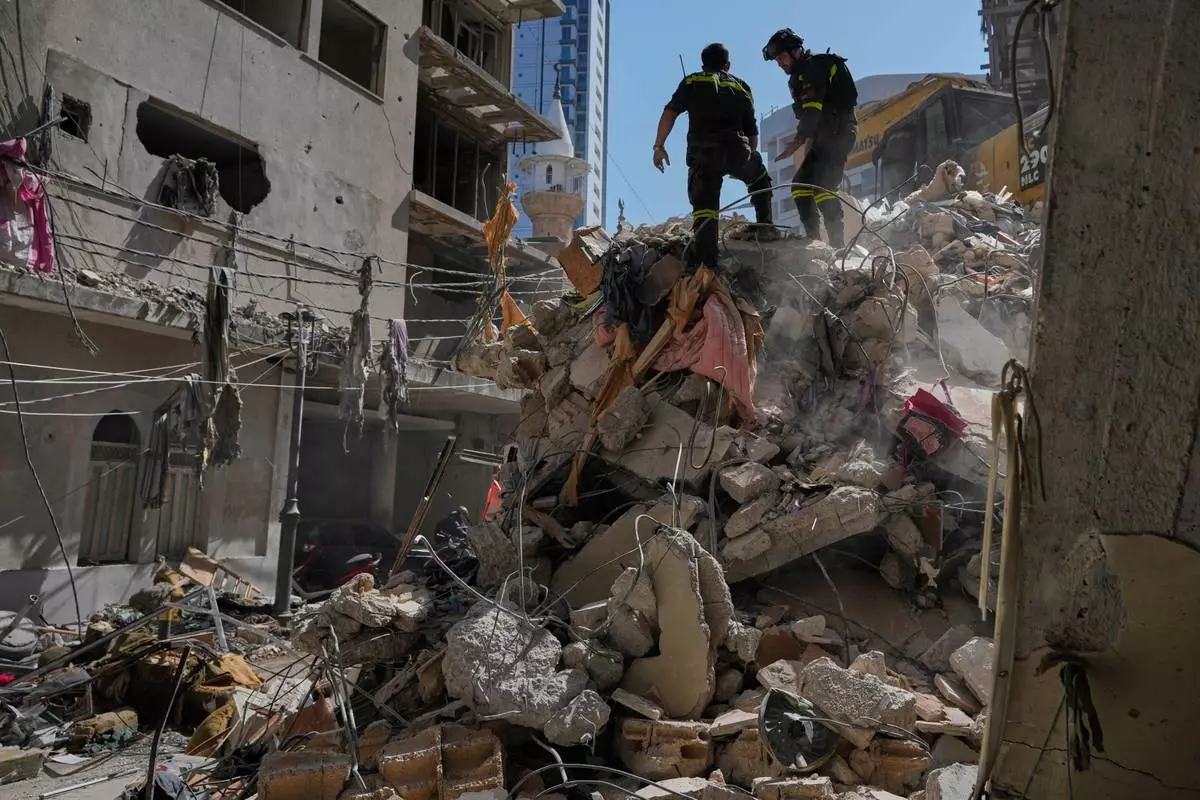
Lebanese civil defense workers inspect the rubble at the site of a building destroyed in an Israeli airstrike a day earlier in Beirut, Lebanon, Thursday, April 9, 2026. (AP Photo/Hussein Malla)
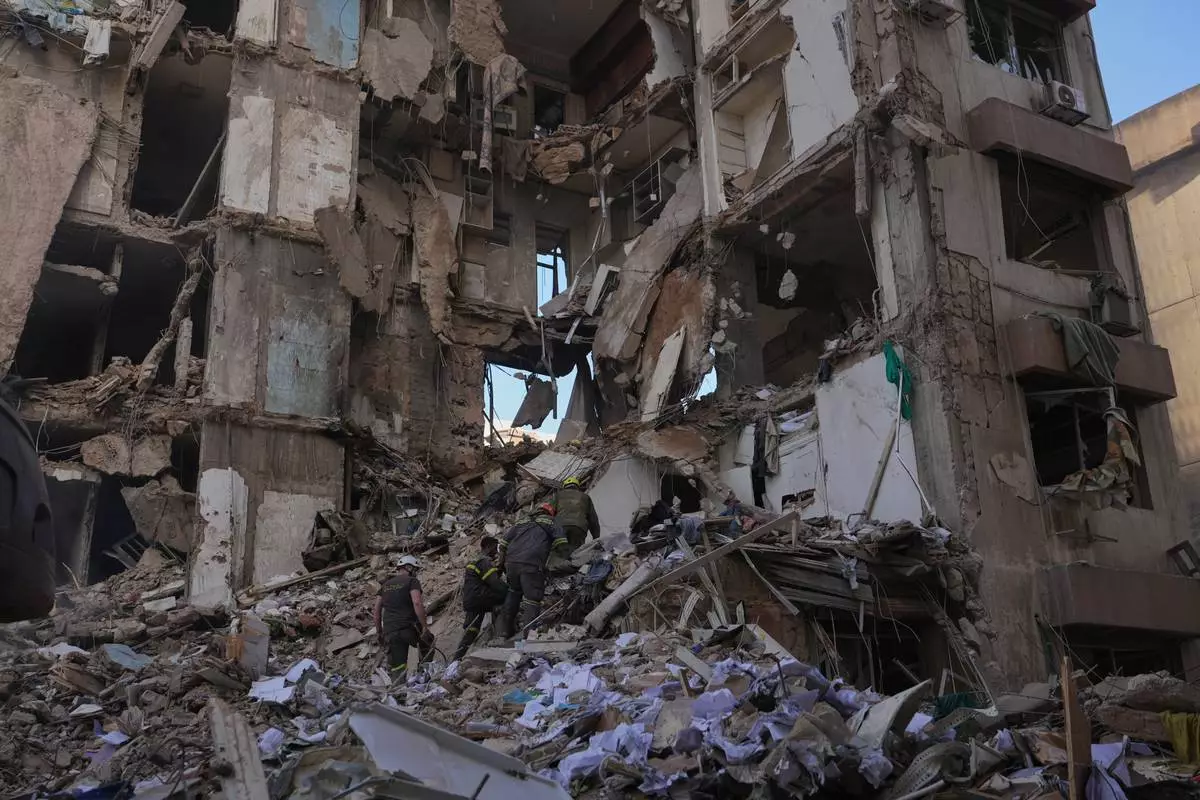
Lebanese civil defense workers search for victims in the rubble of a building destroyed in an Israeli airstrike a day earlier in central Beirut, Lebanon, Thursday, April 9, 2026. (AP Photo/Hassan Ammar)
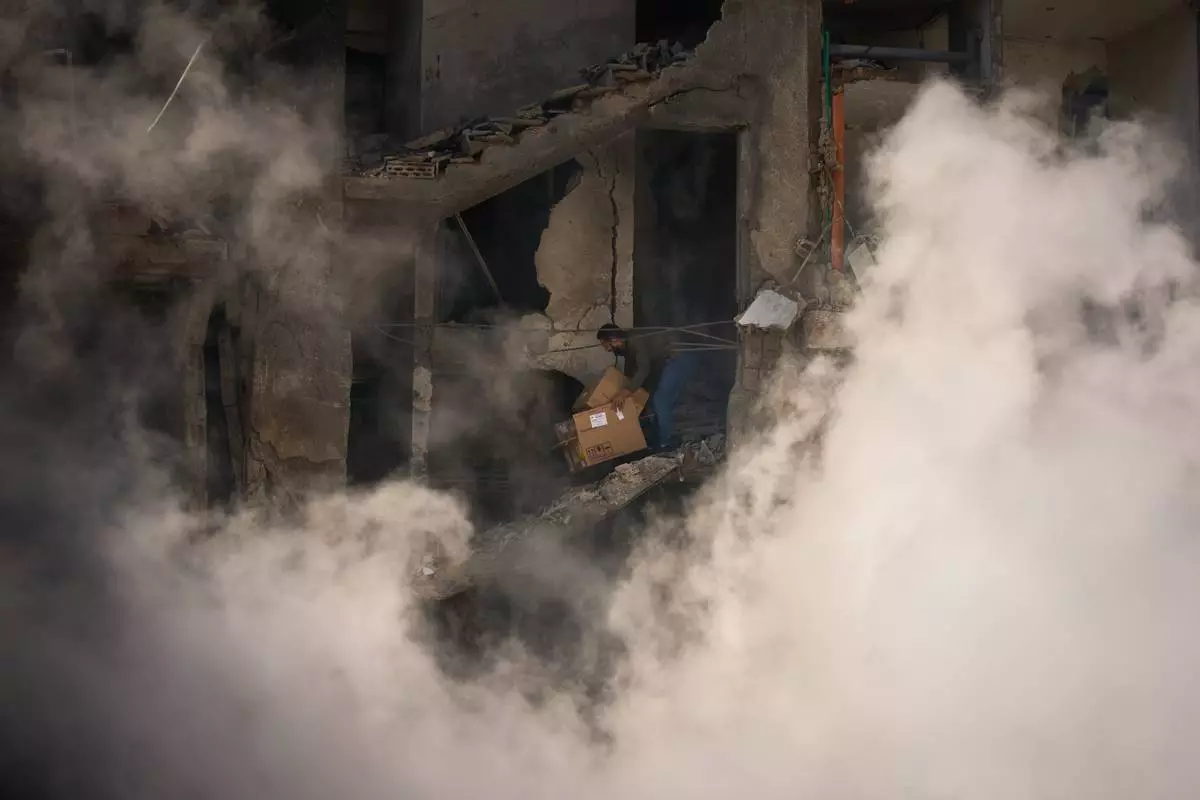
A man gathers his belongings from his home, which has been destroyed in an Israeli airstrike a day earlier in Beirut, Lebanon, Thursday, April 9, 2026. (AP Photo/Emilio Morenatti)
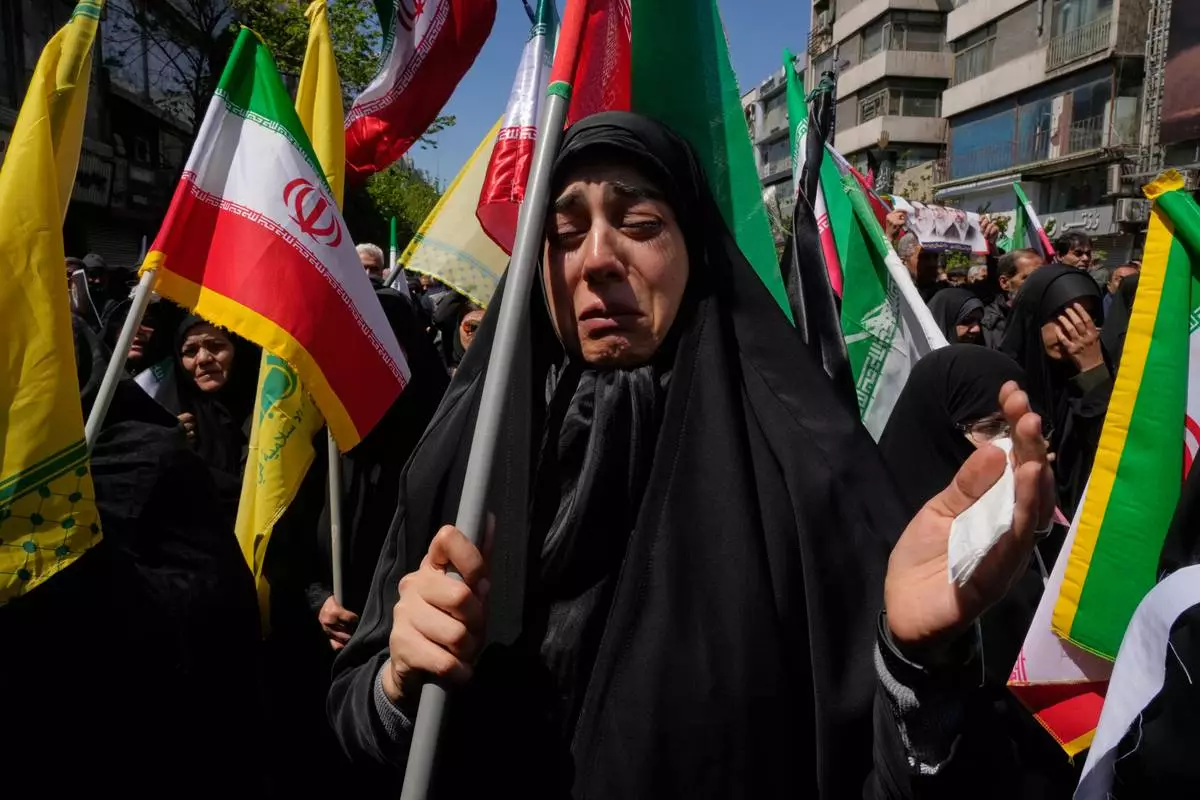
A government supporter weeps during a mourning ceremony marking the 40th day since the death of Iranian Supreme Leader Ayatollah Ali Khamenei, who was killed in the U.S. and Israel strikes in Tehran, Iran, Thursday, April 9, 2026. (AP Photo/Vahid Salemi)
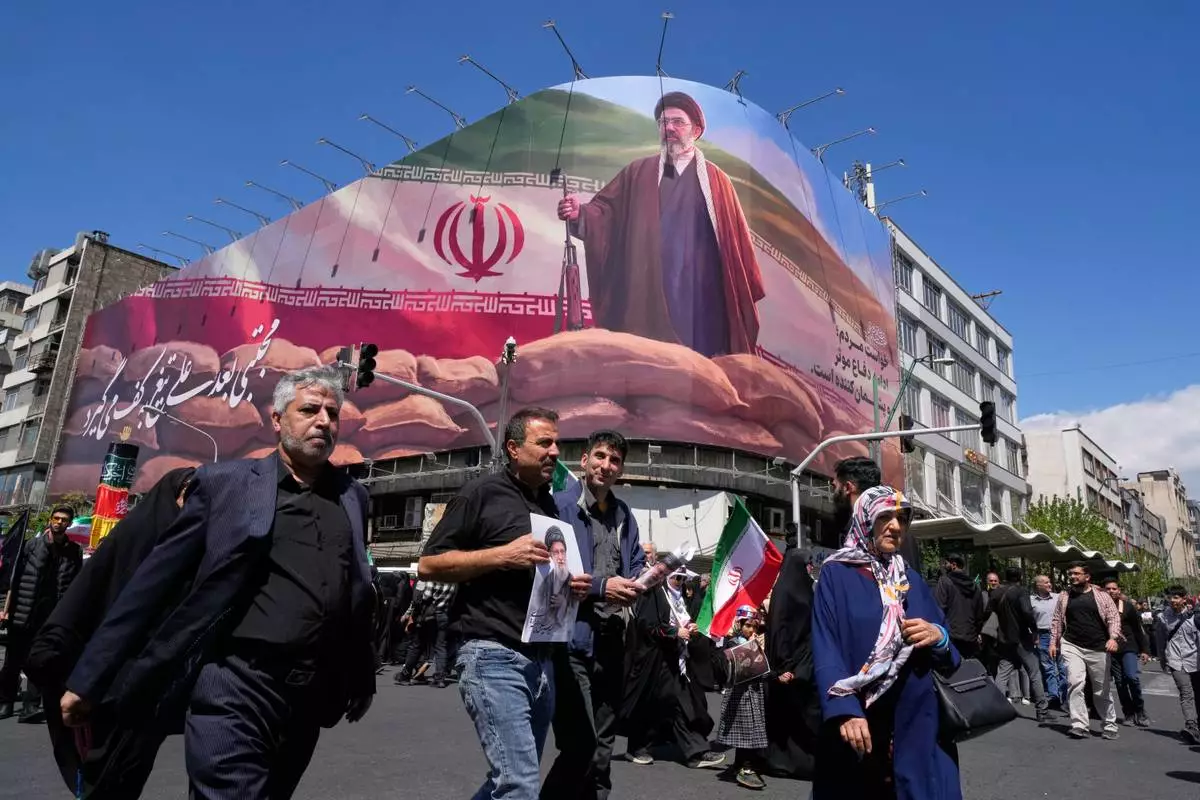
Government supporters walk past a billboard depicting Iran's Supreme Leader Mojtaba Khamenei as they gather to mark the 40th day since the killing of his father, slain Supreme Leader Ayatollah Ali Khamenei, in Tehran, Iran, Thursday, April 9, 2026. (AP Photo/Vahid Salemi)
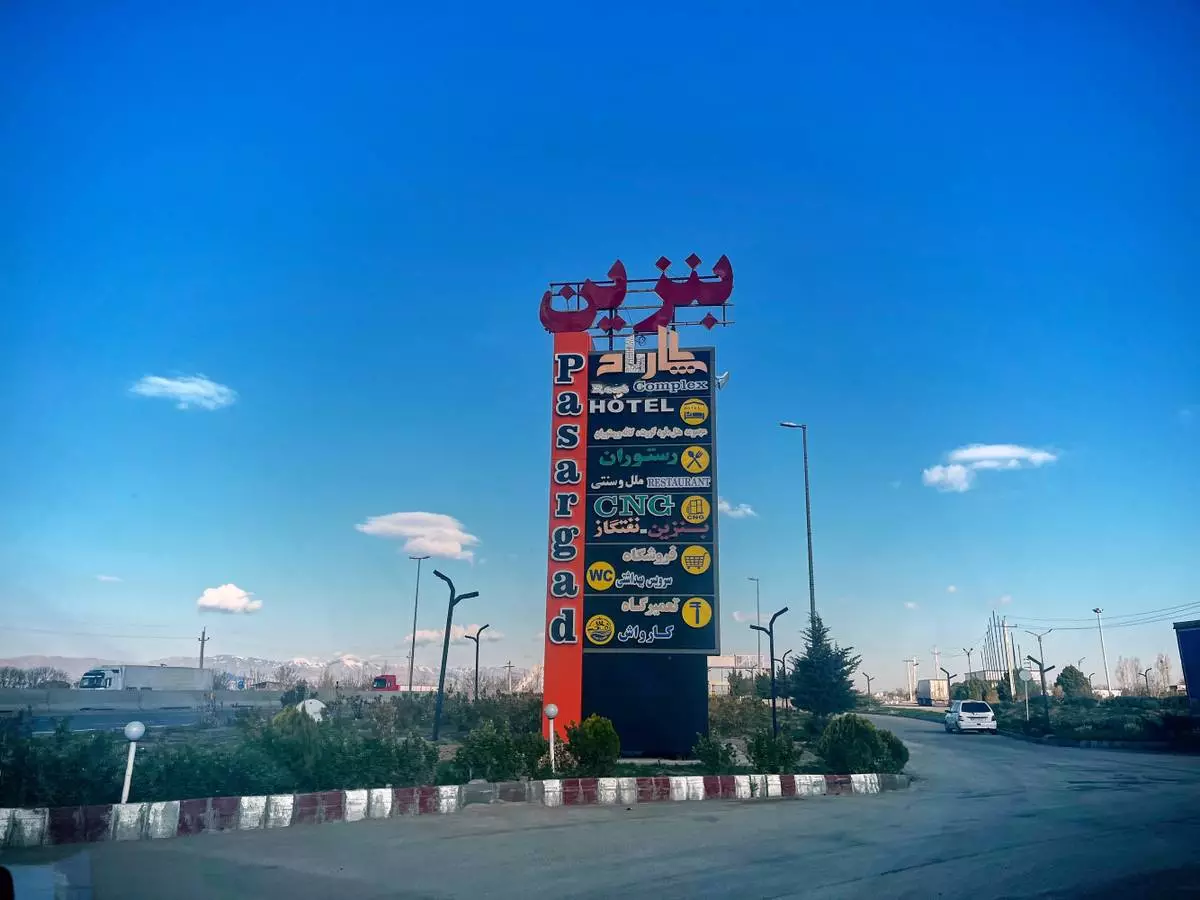
A sign for a roadside hotel is seen on Road 2 near Golhahr, Iran, Thursday, April 9, 2026. (AP Photo/Francisco Seco)
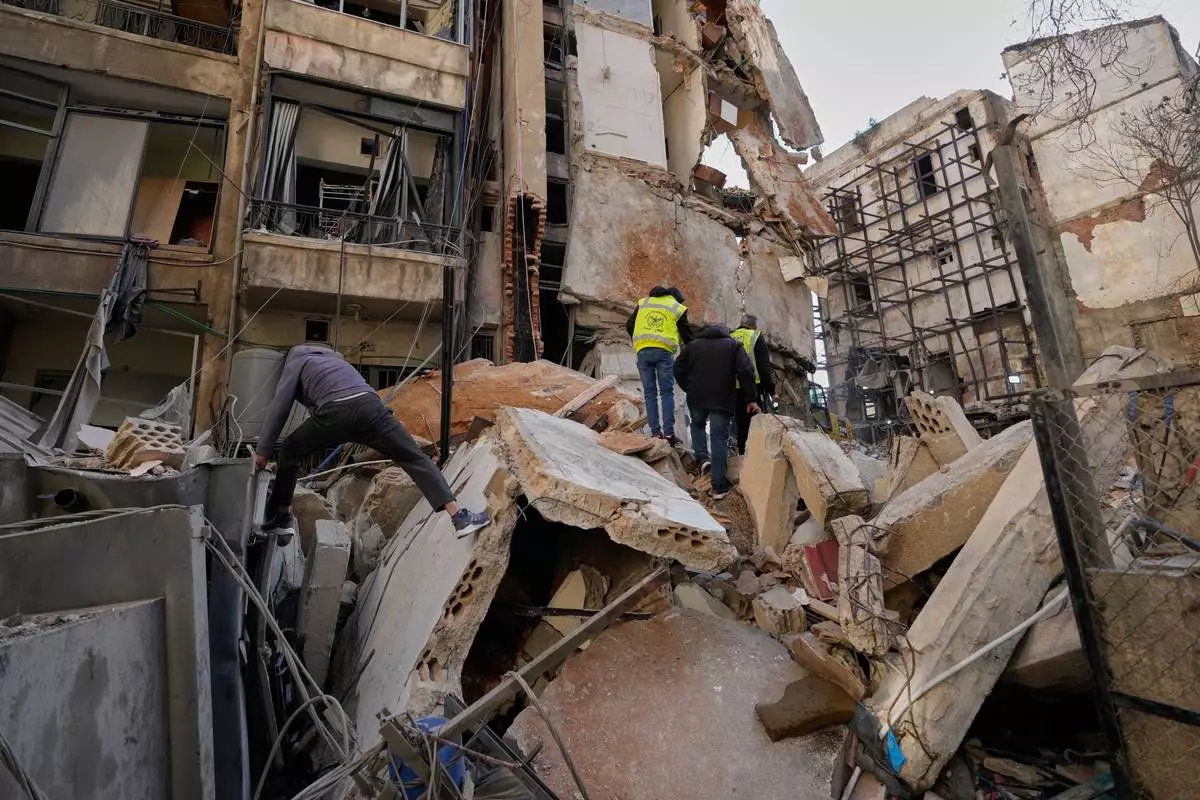
People inspect the rubble of a building destroyed in an Israeli airstrike a day earlier in Beirut, Lebanon, Thursday, April 9, 2026. (AP Photo/Hussein Malla)
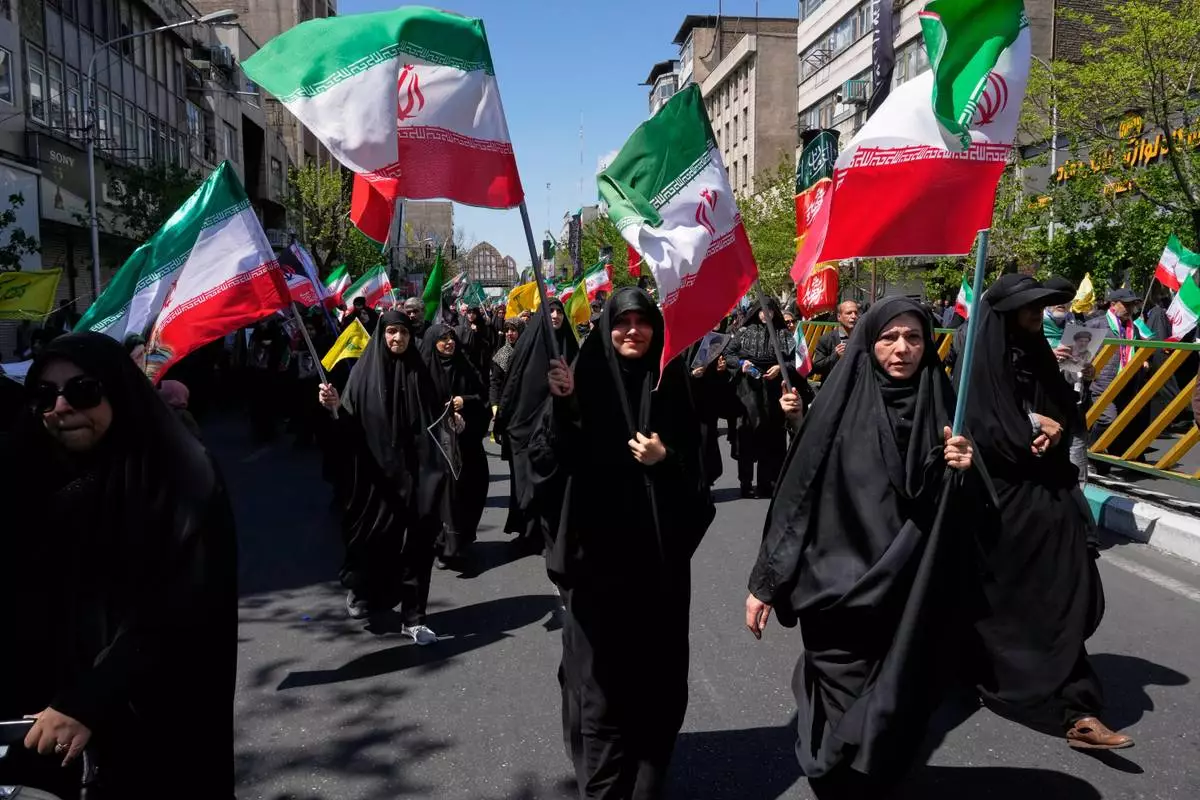
Government supporters gather to mark the 40th day since the death of Supreme Leader Ayatollah Ali Khamenei in Tehran, Iran, Thursday, April 9, 2026. (AP Photo/Vahid Salemi)
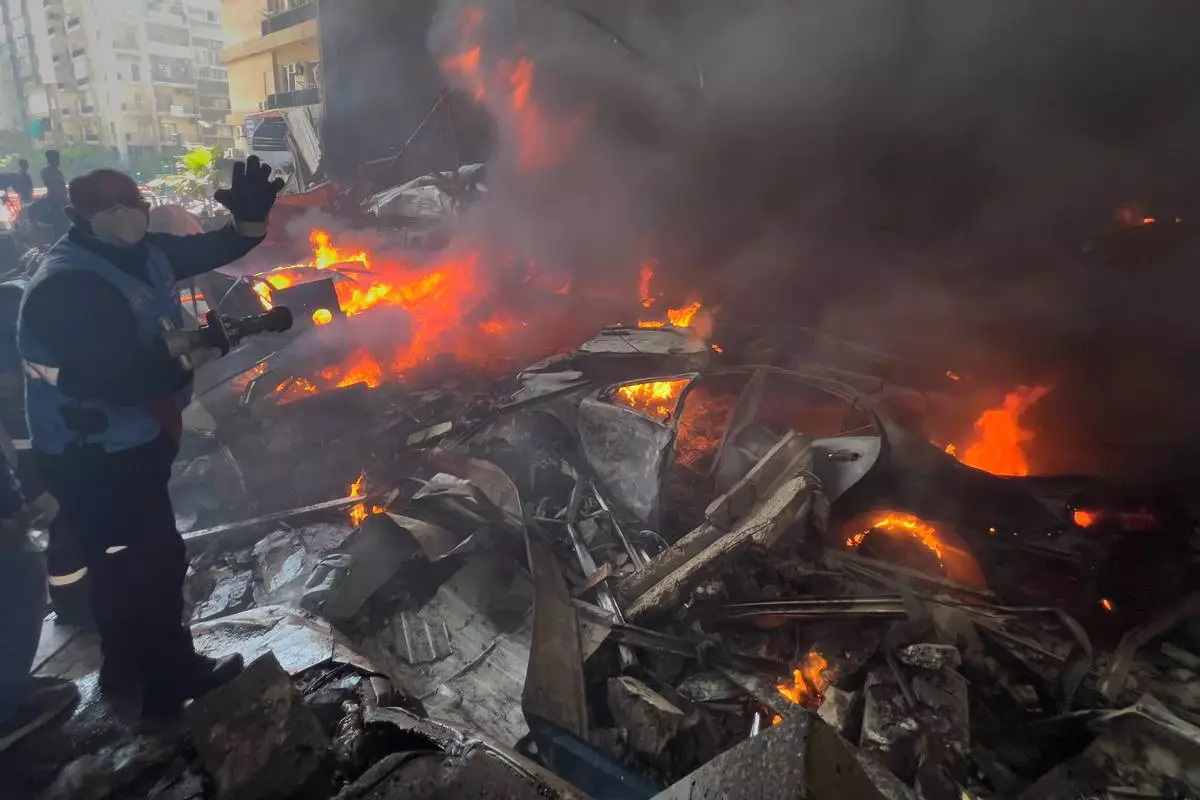
A rescue worker extinguishes burning cars at the site of an Israeli airstrike in central Beirut, Lebanon, Wednesday, April 8, 2026. (AP Photo/Hussein Malla)
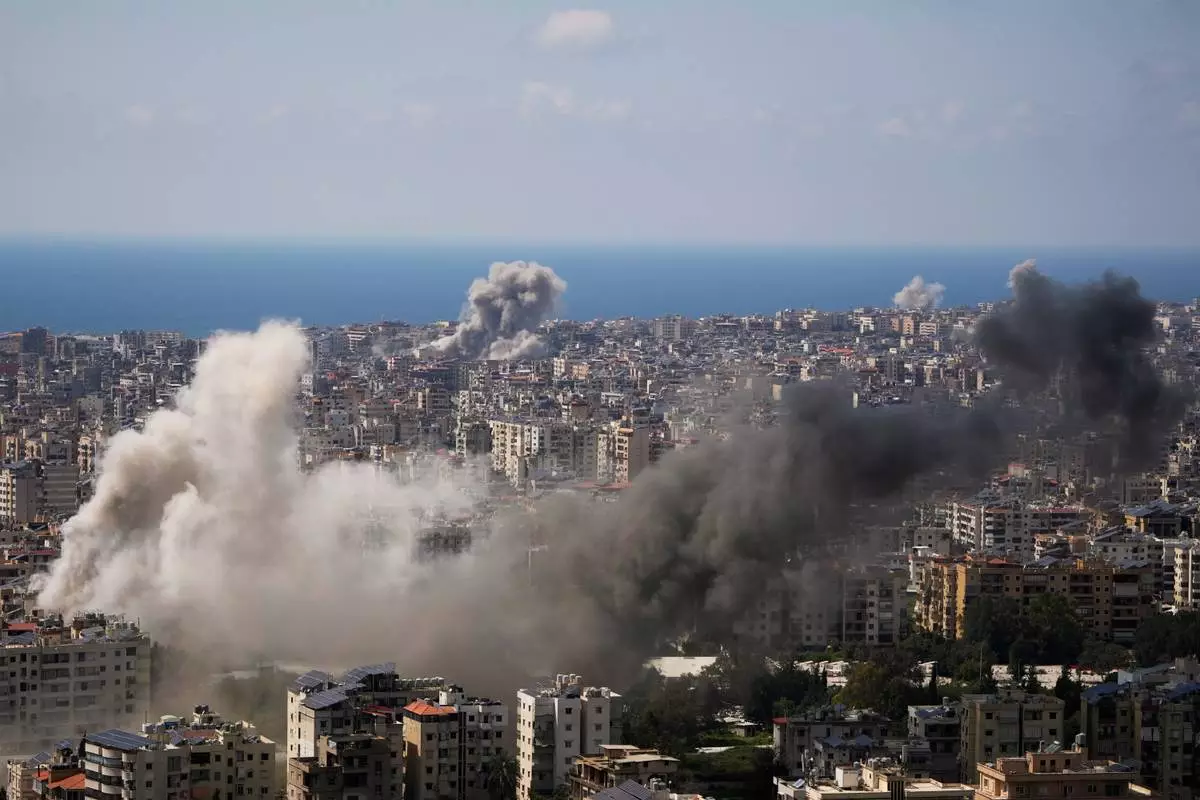
Smoke rises following several Israeli airstrikes in Beirut, Lebanon, Wednesday, April 8, 2026. (AP Photo/Hassan Ammar)

Ali, 4, holds a toy horse next to the tent his family uses as a shelter after fleeing Israeli bombardment in southern Lebanon, in Beirut, Lebanon, Wednesday, April 8, 2026. (AP Photo/Emilio Morenatti)
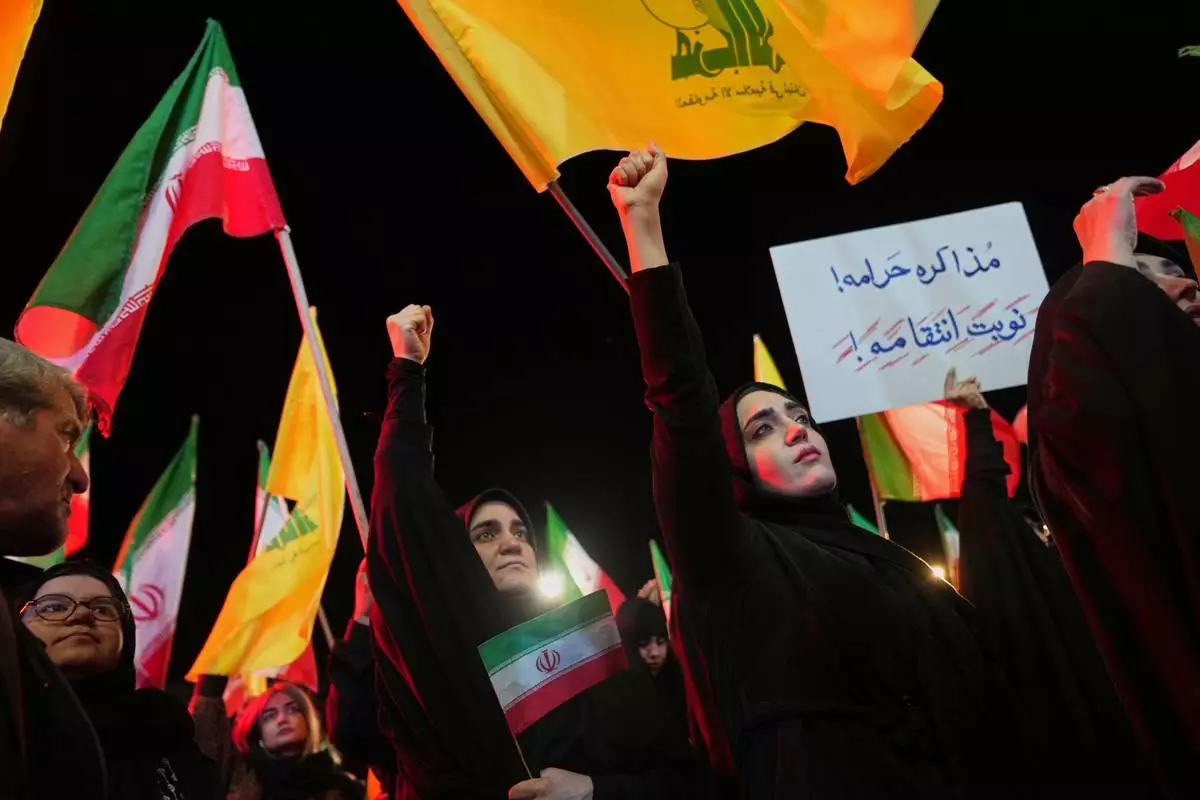
Government supporters gather ahead of the funeral procession for Maj. Gen. Majid Khademi, head of intelligence for Iran's paramilitary Revolutionary Guard, in Tehran, Iran, Wednesday, April 8, 2026. (AP Photo/Francisco Seco)
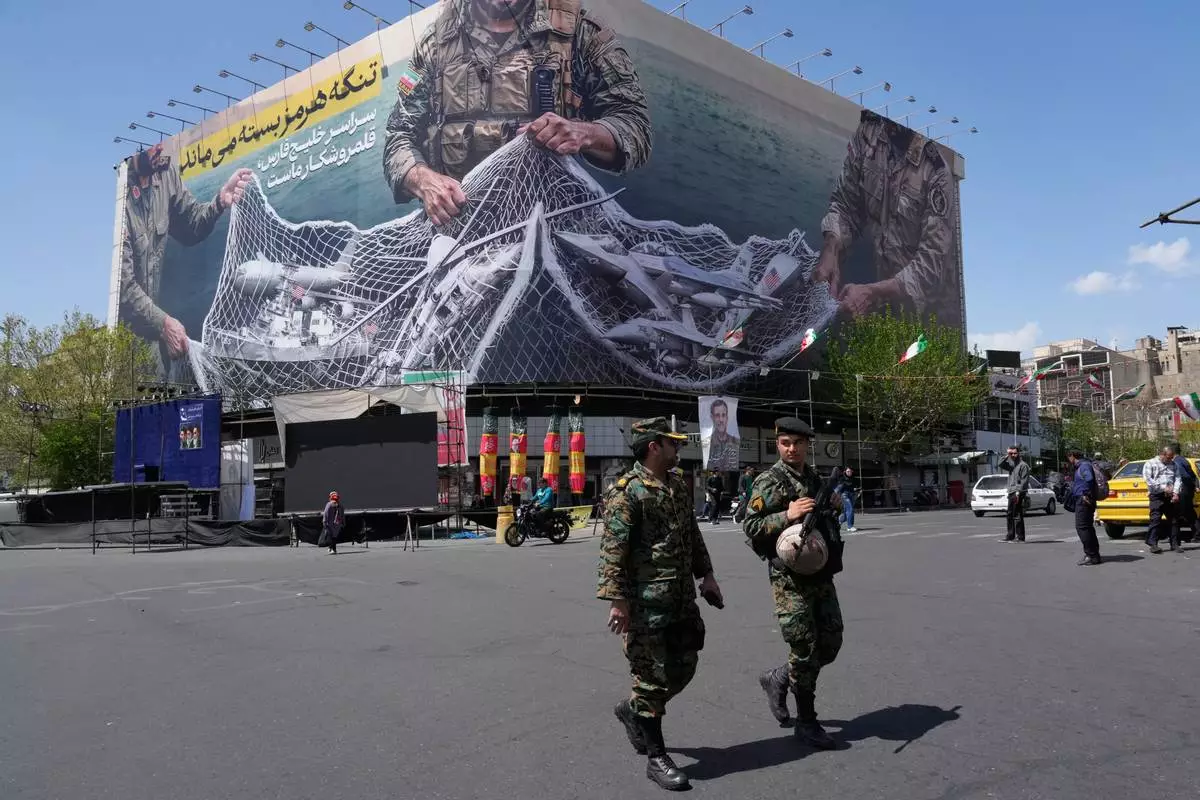
FILE - Two police officers walk in front of an anti-U.S. billboard depicting American aircraft being caught by Iranian armed forces in a fishing net beneath the words in Farsi, "The Strait of Hormuz will remain closed, The entire Persian Gulf is our hunting ground," in Tehran, Iran, Sunday, April 5, 2026. (AP Photo/Vahid Salemi, File)