LONDON (AP) — European leaders remained on the sidelines of the U.S.-Israel war with Iran on Thursday but tried to make their voices heard to help shore up a shaky ceasefire, quell fighting in Lebanon and reopen the Strait of Hormuz.
The war has put Europe in an uneasy position trying to maintain its support for the U.S. as a key NATO ally and also withstand occasional blowback from U.S. President Donald Trump for not joining in the fight and offering limited use of its military bases.
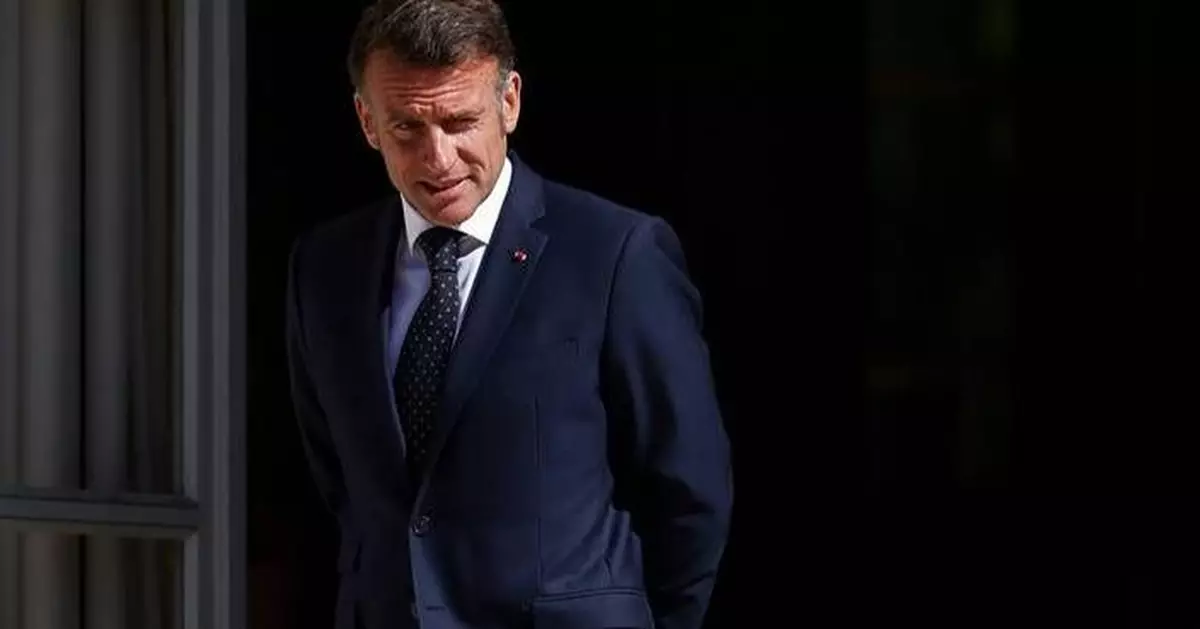
Some European leaders have been louder than others in distancing themselves from the war. French President Emmanuel Macron said last week that the U.S. can't complain about a lack of support “in an operation they chose to undertake alone” without consultation.
Trump agreed to a two-week ceasefire negotiated by Pakistan at the 11th hour Tuesday after he had been threatening that “a whole civilization will die tonight.” The deal was supposed to halt fighting and reopen the strait that is vital to world oil supplies.
But Iran has reclosed the shipping channel after Israel pounded Lebanon with air strikes as it targeted Iranian-backed Hezbollah. Iran said the ceasefire included Lebanon while Israel and the U.S. disputed that claim.
Iran has also drawn pointed criticism for demanding the right to collect tolls as a precondition for reopening the Hormuz waterway.
Here's what European leaders are saying about the most important issues:
The leaders of France, Italy, Germany, the U.K., Canada, Denmark, the Netherlands, Spain and the European Union said on Wednesday that they “strongly encourage quick progress towards a substantive negotiated settlement.” Leaders from Norway, Sweden, Greece and Finland were among others who joined in.
“This will be crucial to protect the civilian population of Iran and ensure security in the region,” they said in a joint statement, and “can avert a severe global energy crisis.”
Macron, who spoke Wednesday to both Iran President Masoud Pezeshkian and Trump, called for “each of the belligerents” to fully respect the ceasefire and open comprehensive negotiations.
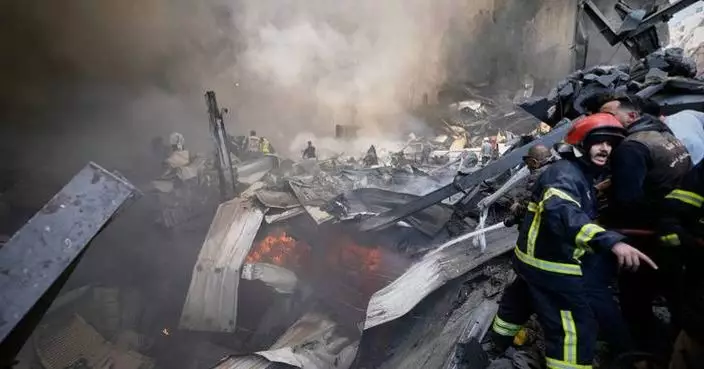
The European leaders jointly called for the ceasefire to include Lebanon after the deadliest day of fighting there Wednesday when more than 200 people were killed.
German Chancellor Friedrich Merz said that “the severity with which Israel is waging war there could cause the failure of the peace process as a whole, and that must not happen.”
British Prime Minister Keir Starmer, who was in the Middle East to build support for the ceasefire, said it was wrong of Israel to strike Lebanon regardless of the fine print of whatever agreement they had made.
“That shouldn’t be happening,” Starmer said. “That should stop. That’s my strong view. And therefore the question isn’t a technical one of whether it’s a breach of the agreement or not. The one is actually a matter of principles as far as I’m concerned.”
Spanish Prime Minster Pedro Sánchez, who has been Europe’s loudest critic of the U.S. and Israel’s military actions in the region, added that the European Union should suspend its association agreement with Israel.
“His contempt for life and international law is intolerable,” Sánchez wrote on X about Israeli Prime Minister Benjamin Netanyahu. “The international community must condemn this new violation of international law.”
French Foreign Minister Jean-Noël Barrot said Thursday that European and other partners were finalizing plans for naval vessels to escort ships through the strait once fighting effectively ends.
Macron said about 15 nations are ready to participate in such a mission.
Italian Premier Giorgia Meloni warned Parliament that any Iranian extra duties in the Strait of Hormuz would have “unpredictable economic consequences.”
“Full restoration of freedom of movement in the Strait of Hormuz is needed, and it must not be subject to any restrictions, as appears to have happened in recent hours,” she said.
British Foreign Secretary Yvette Cooper said it’s “crucial” Iran is not allowed to apply tolls in the strait.
Merz said that Germany would contribute to ensure free shipping resumed but officials wouldn’t elaborate on what that might entail.
Trump has spooked NATO members by suggesting — not for the first time — that the U.S. might leave the trans-Atlantic alliance. This time he's upset that the world’s biggest military alliance has not come to America's aid.
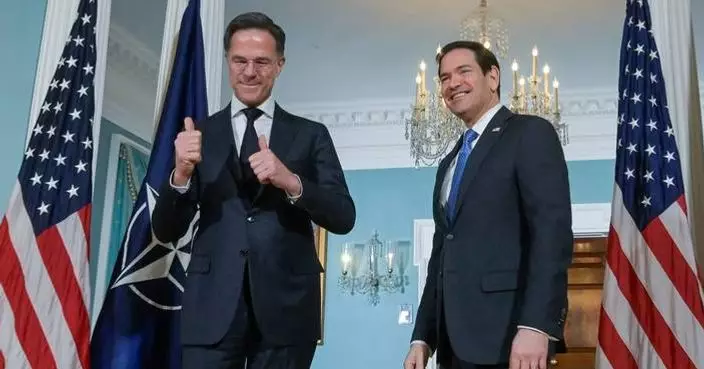
Trump dubbed allies “cowards,” and said NATO was “a paper tiger.” After meeting with NATO Secretary-General Mark Rutte on Wednesday in the White House, Trump said NATO had not been there for the U.S. and wouldn't be there again if needed.
Merz said Thursday that the war had become a “trans-Atlantic stress test” and he didn’t want it to further burden relations between the U.S. and its European NATO partners.
“We don’t want, I don’t want a split in NATO," Merz said. “NATO is a guarantor of our security, also and above all in Europe. We must continue to keep a cool head here.”
Giada Zampano in Rome, Jill Lawless in London, Sylvie Corbet in Paris and Geir Moulson in Berlin contributed to this report.
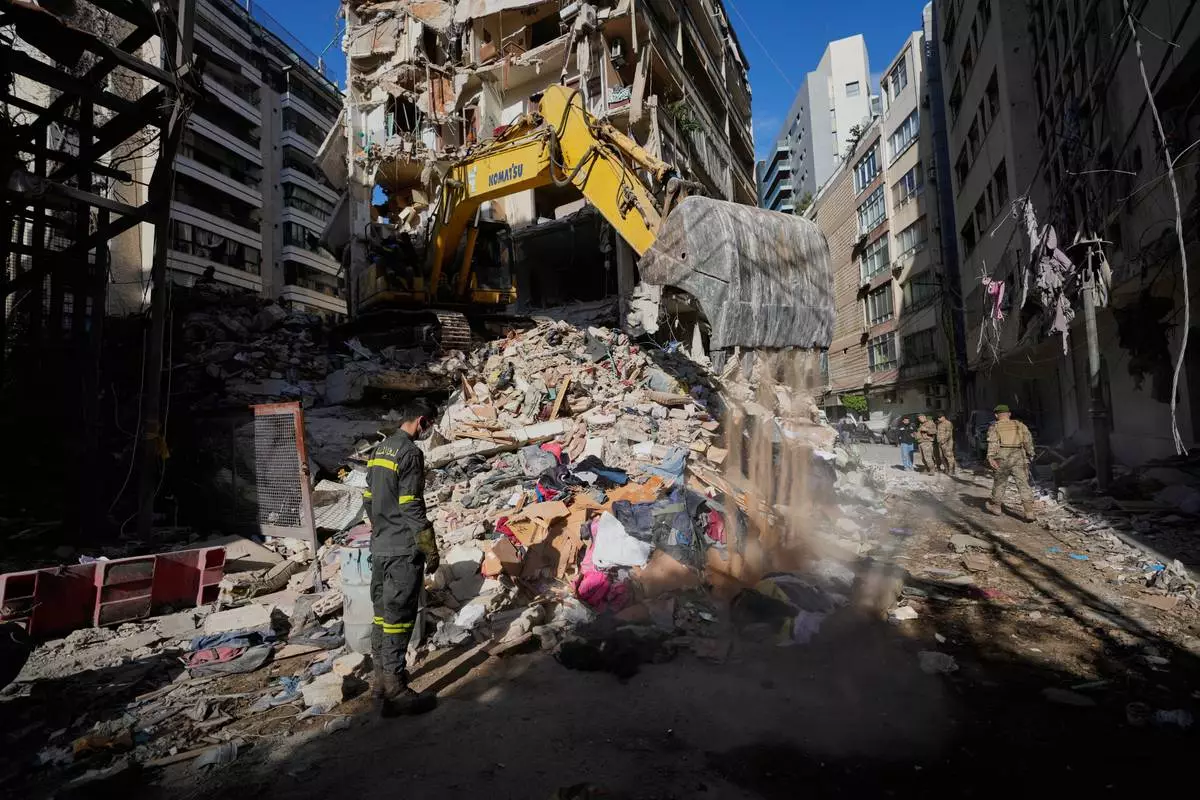
A Lebanese civil defense worker looks on as an excavator operates on the rubble of a building destroyed in an Israeli airstrike a day earlier in Beirut, Lebanon, Thursday, April 9, 2026. (AP Photo/Hussein Malla)
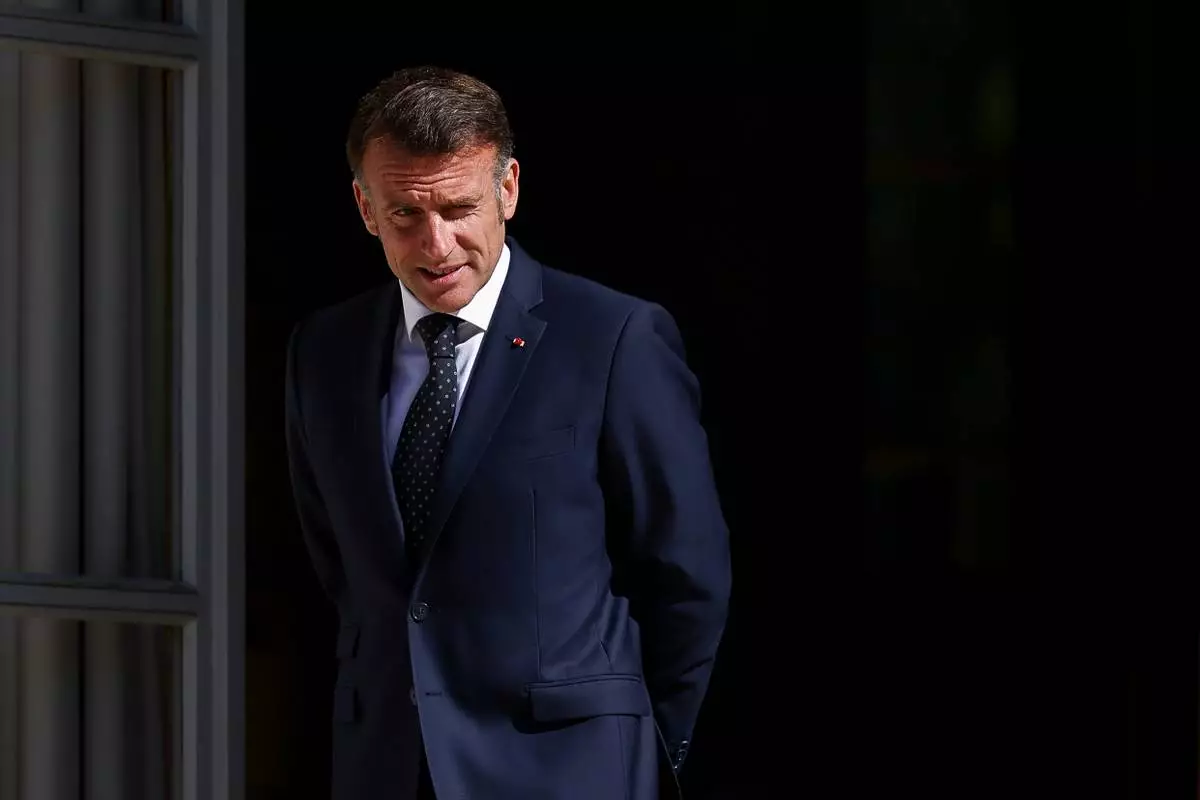
French President Emmanuel Macron walks to greet Cecile Kohler and Jacques Paris, two French nationals freed by Iran after three and a half years in detention, at the Elysee Palace in Paris, France, April 8, 2026. (Tom Nicholson/Pool Photo via AP)
DUBAI, United Arab Emirates (AP) — In a potential boost to Middle East ceasefire efforts, Israeli Prime Minister Benjamin Netanyahu said Thursday that he authorized direct negotiations “as soon as possible” with Lebanon aimed at disarming Iranian-backed Hezbollah militants and establishing relations between the neighbors.
The two countries have technically been at war since Israel was established in 1948.
There was no immediate response from Lebanese authorities. But Israel-Lebanon negotiations were expected to begin next week at the State Department in Washington, according to a person familiar with the plans.
The prospect of talks appeared to bolster the tentative ceasefire in the Iran war that had staggered under the weight of Israel’s bombardment of Beirut, Tehran’s continued chokehold on the Strait of Hormuz and uncertainty over whether planned peace talks can find common ground.
Netanyahu's announcement came amid disagreement over whether the ceasefire deal included a pause in fighting between Israel and Hezbollah, and a day after Israel pounded Beirut with airstrikes that resulted in the deadliest day in Lebanon since the war began on Feb. 28.
Israel has fought multiple wars and launched several major invasions over the years, most recently sending in large numbers of troops last month in response to Hezbollah fire on Israel’s northern border communities.
The launch of direct peace talks is a significant achievement, though reaching a deal will be difficult after decades of hostilities, Hezbollah’s continued presence and longstanding disagreements over the exact route of their shared border.
The talks in Washington are expected to be handled on the American side by the U.S. ambassador to Lebanon, Michel Issa, and on the Israeli side by the Israeli ambassador to the U.S., Yechiel Leiter, according to the person, who spoke on condition of anonymity due to the delicacy of the situation.
It was not immediately clear who would represent Lebanon.
Axios first reported the timing and location of the talks.
After declaring victory with the ceasefire announcement, both Iran and the U.S. appeared to apply pressure on each other. Semiofficial news agencies in Iran suggested forces have mined the Strait of Hormuz, a crucial waterway for oil that Tehran has closed. President Donald Trump warned that U.S. forces would hit Iran harder than before if it did not fulfill the agreement.
Questions also remained over what will happen to Iran’s stockpile of enriched uranium at the heart of tensions, how and when normal traffic will resume through the strait, and what happens to Iran’s ability to launch future missile attacks and support armed proxies in the region.
Despite the fragile and disputed nature of the ceasefire, it appeared to have halted weeks of missile and drone attacks by Iran on its Gulf Arab neighbors and Israel, with no new launches reported Thursday. There were no reports of strikes by the U.S. or Israel targeting Iran.
Iran’s parliament speaker, Mohammad Bagher Qalibaf, warned Thursday that continued Israeli attacks on the Iran-backed Hezbollah militant group in Lebanon would bring “explicit costs and STRONG responses” in a social media post.
Qalibaf has been discussed as a possible negotiator who could meet U.S. Vice President JD Vance this weekend in Islamabad. The White House has said Vance would lead the delegation for talks starting Saturday.
Iran had said Israel's ongoing attacks on Hezbollah were violating the ceasefire agreement. Netanyahu and Trump have said it was not.
Hours before opening the way for talks with Lebanon, Netanyahu said Israel would continue striking Hezbollah “with force, precision and determination.”
Lebanon’s health ministry said more than 300 people were killed and more than 1,000 wounded Wednesday in Israeli strikes in central Beirut and other areas of Lebanon that Israel said targeted Hezbollah, which joined the war in support of Tehran.
Israel said Thursday it killed an aide to Hezbollah leader Naim Kassem, Ali Yusuf Harshi. Hezbollah did not immediately respond to a request for comment.
A New York-based think tank warned that the ceasefire “ hovers on the verge of collapse ” following Israel's strikes Wednesday.
Lebanon’s state-run National News Agency reported that an Israeli strike overnight killed at least seven people in southern Lebanon. The Israeli military did not immediately acknowledge the strike.
Semiofficial news agencies in Iran published a chart Thursday suggesting the country’s paramilitary Revolutionary Guard put sea mines into the Strait of Hormuz during the war — a message that may be intended to pressure the United States.
The chart, released by the ISNA news agency and Tasnim, showed a large circle marked “danger zone” in Farsi over the route ships take through the strait, through which 20% of all traded oil and natural gas once passed.
Only a trickle of ships have transited since the war began after several were attacked, and Iran threatened to hit any that it deemed connected to the U.S. or Israel. Ships appeared to continue to avoid the strait even after the ceasefire.
The chart suggested that ships travel through waters closer to Iran’s mainland near Larak Island, a route that some ships were observed taking during the war. It was dated from Feb. 28 until April 9, and it was unclear if the Guard had cleared any mines since then.
Iran’s deputy foreign minister, Saeed Khatibzadeh, told the BBC that his country will allow ships to pass through the strait in accordance with “international norms and international law” once the United States ends its “aggression” in the Middle East and Israel stops attacking Lebanon.
The head of the United Arab Emirates’ major oil company, Sultan al-Jaber, said some 230 ships loaded with oil were waiting to get through the strait and must be allowed "to navigate this corridor without condition.”
The strait’s de facto closure has caused oil prices to skyrocket — affecting the cost of gasoline, food and other basics far beyond the Middle East. Oil prices fell Wednesday on news of the ceasefire but climbed again as uncertainty over the deal grew.
The spot price of Brent crude, the international standard, was around $98 Thursday, up about 35% since the war began.
Points to address in talks include whether Iran will be allowed to formalize a system of charging ships to use the strait. That would upend decades of free transit through what has been treated as an international waterway.
The fate of Iran’s missile and nuclear programs — which the U.S. and Israel sought to eliminate in going to war — also remained unclear. The U.S. insists Iran must never be able to build nuclear weapons and wants to remove Tehran’s stockpile of highly enriched uranium, which could be used to build them. Iran insists its program is peaceful.
Trump said Wednesday that the U.S. would work with Iran to remove the uranium, buried in last year's U.S. and Israeli strikes, though Iran did not confirm that. In one version of the ceasefire deal that Iran published, it said it would be allowed to continue enrichment.
The chief of Iran’s nuclear agency, Mohammad Eslami, said Thursday that protecting Tehran’s right to enrich uranium is “necessary” for any ceasefire talks.
Trump warned that U.S. warships and troops will remain around Iran “until such time as the REAL AGREEMENT reached is fully complied with.”
Corder reported from The Hague, Netherlands. Becatoros reported from Athens, Greece. Associated Press writers Chan Ho-him in Hong Kong, Zeke Miller and Matthew Lee in Washington and Kareem Chehayeb and Hussein Malla in Beirut contributed to this report.
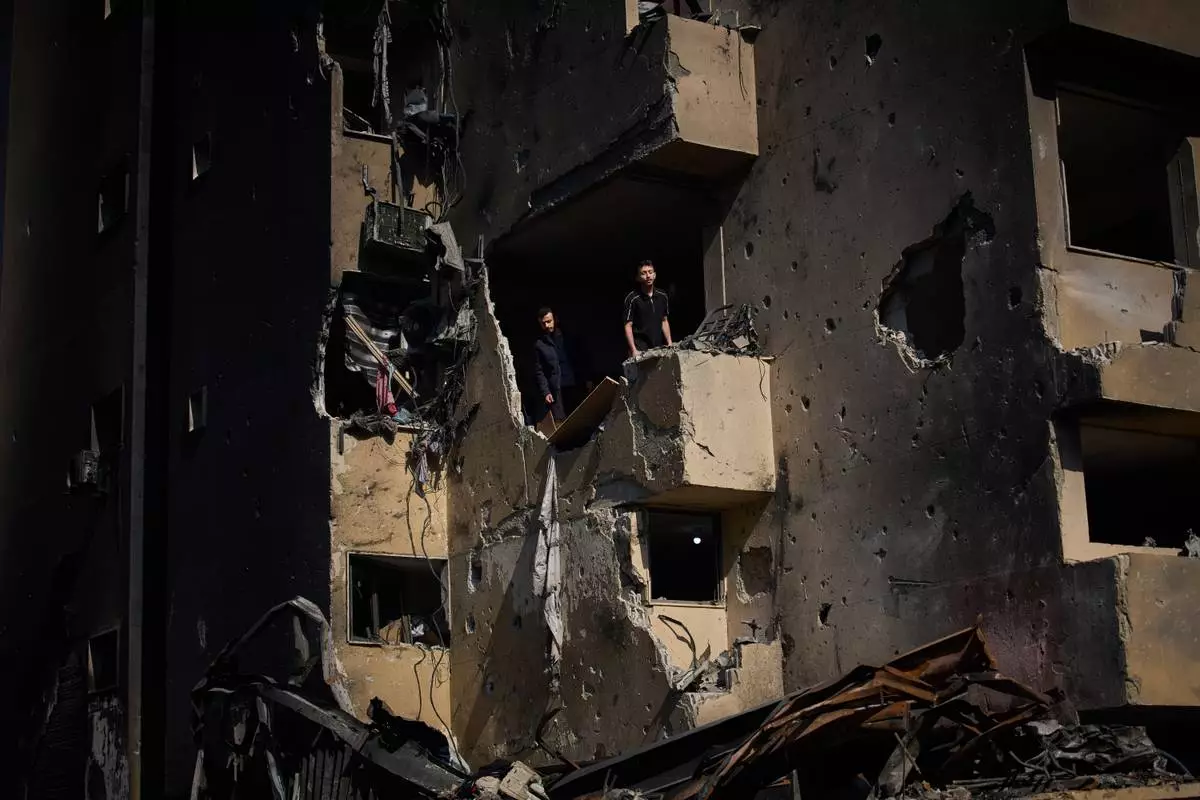
Men inspect the damage to their home destroyed in an Israeli airstrike a day earlier in Beirut, Lebanon, Thursday, April 9, 2026. (AP Photo/Emilio Morenatti)
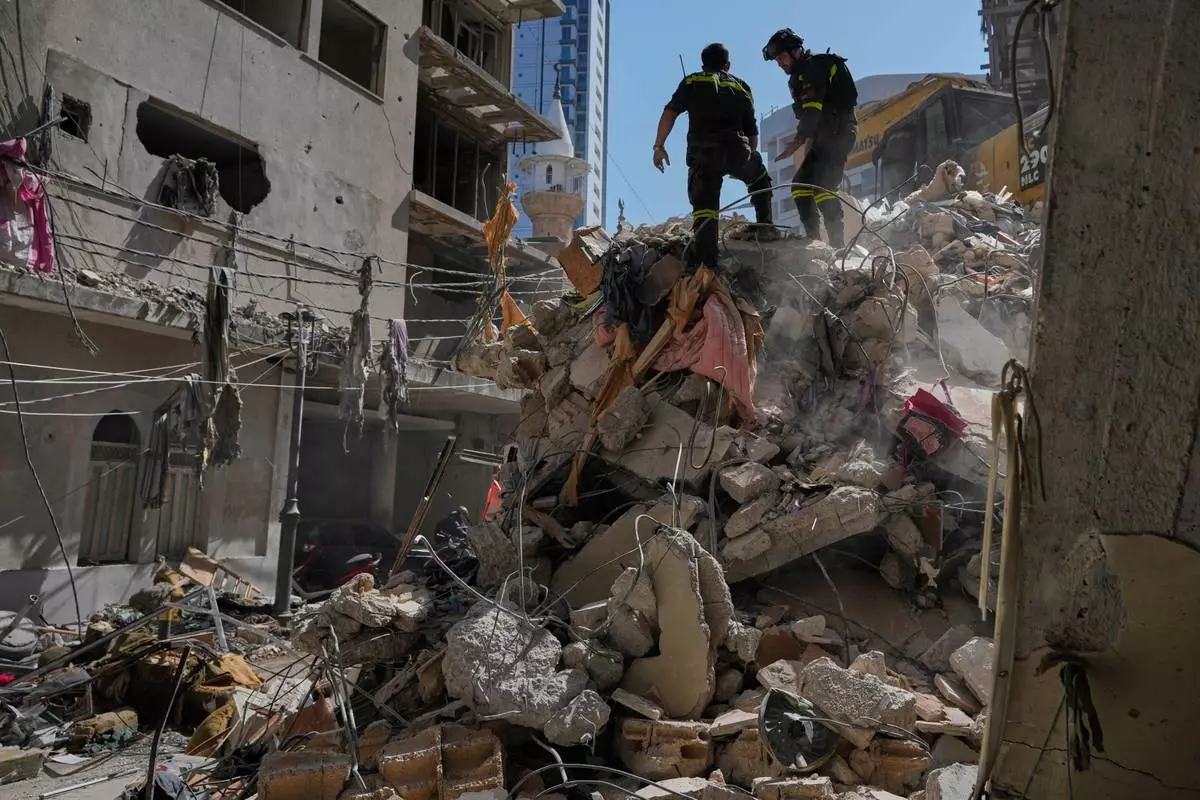
Lebanese civil defense workers inspect the rubble at the site of a building destroyed in an Israeli airstrike a day earlier in Beirut, Lebanon, Thursday, April 9, 2026. (AP Photo/Hussein Malla)
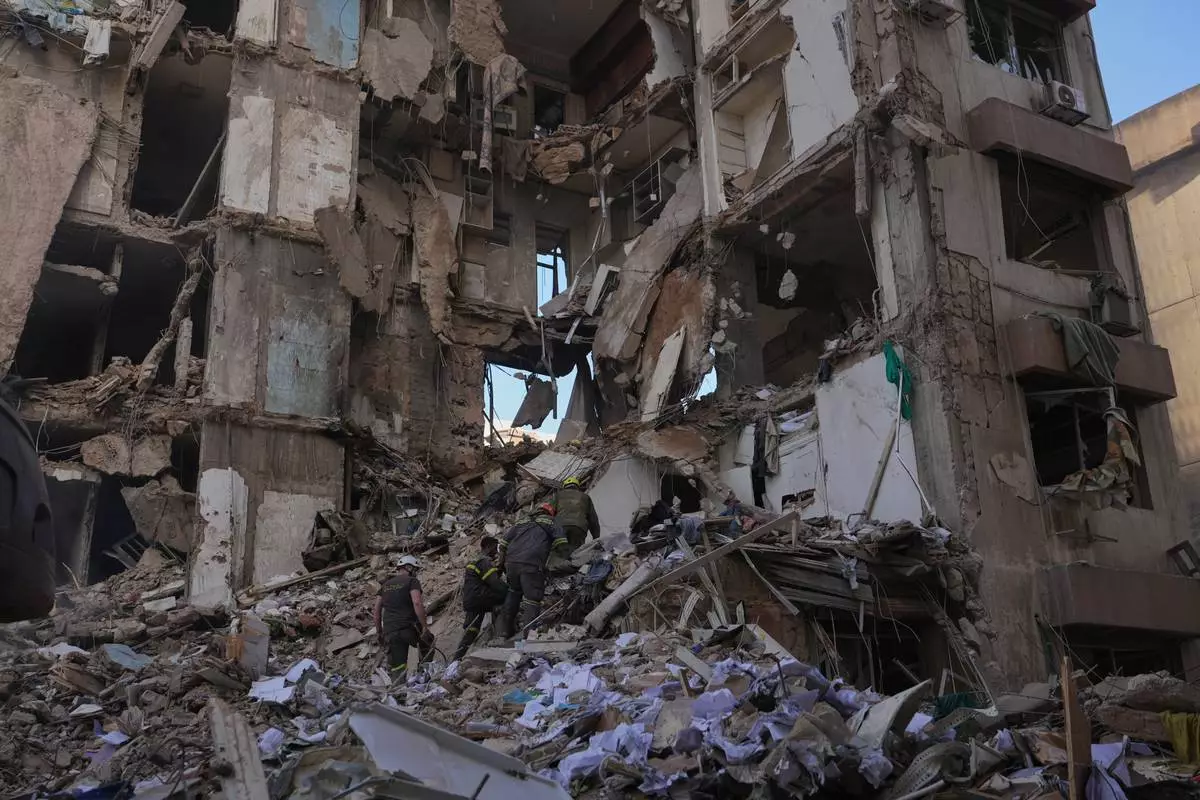
Lebanese civil defense workers search for victims in the rubble of a building destroyed in an Israeli airstrike a day earlier in central Beirut, Lebanon, Thursday, April 9, 2026. (AP Photo/Hassan Ammar)
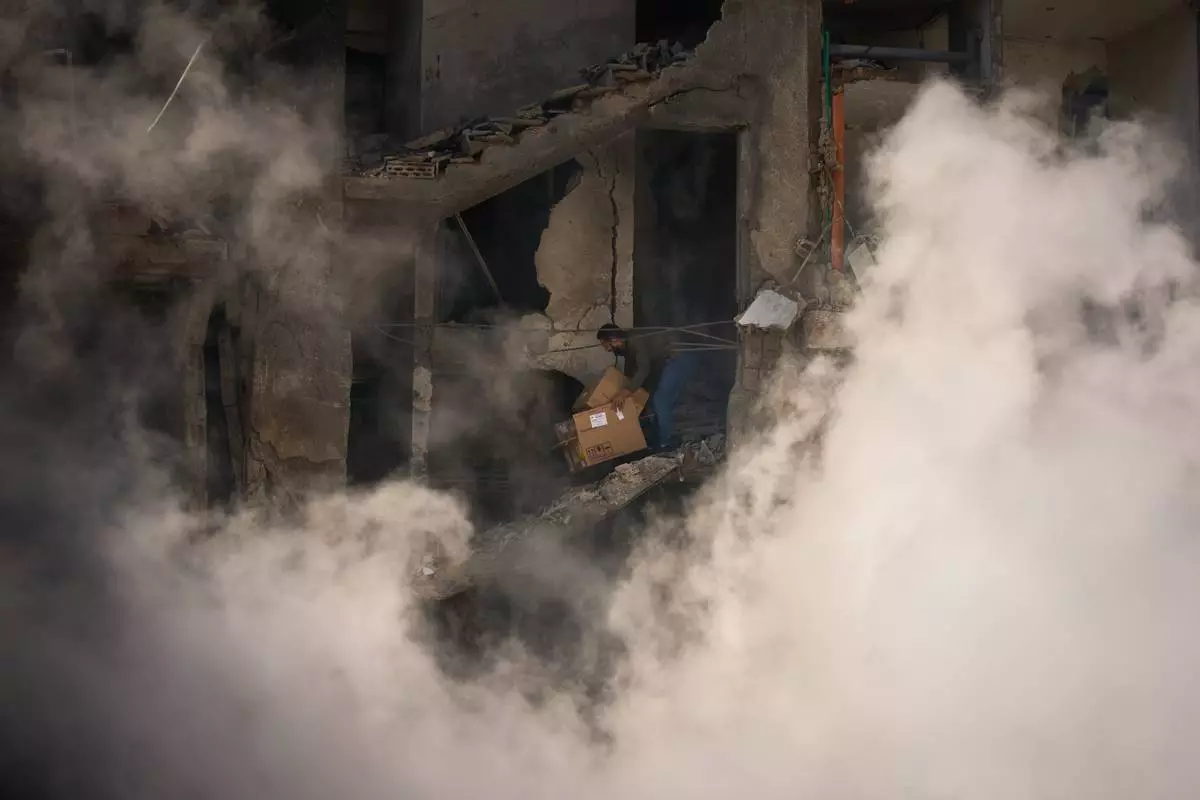
A man gathers his belongings from his home, which has been destroyed in an Israeli airstrike a day earlier in Beirut, Lebanon, Thursday, April 9, 2026. (AP Photo/Emilio Morenatti)
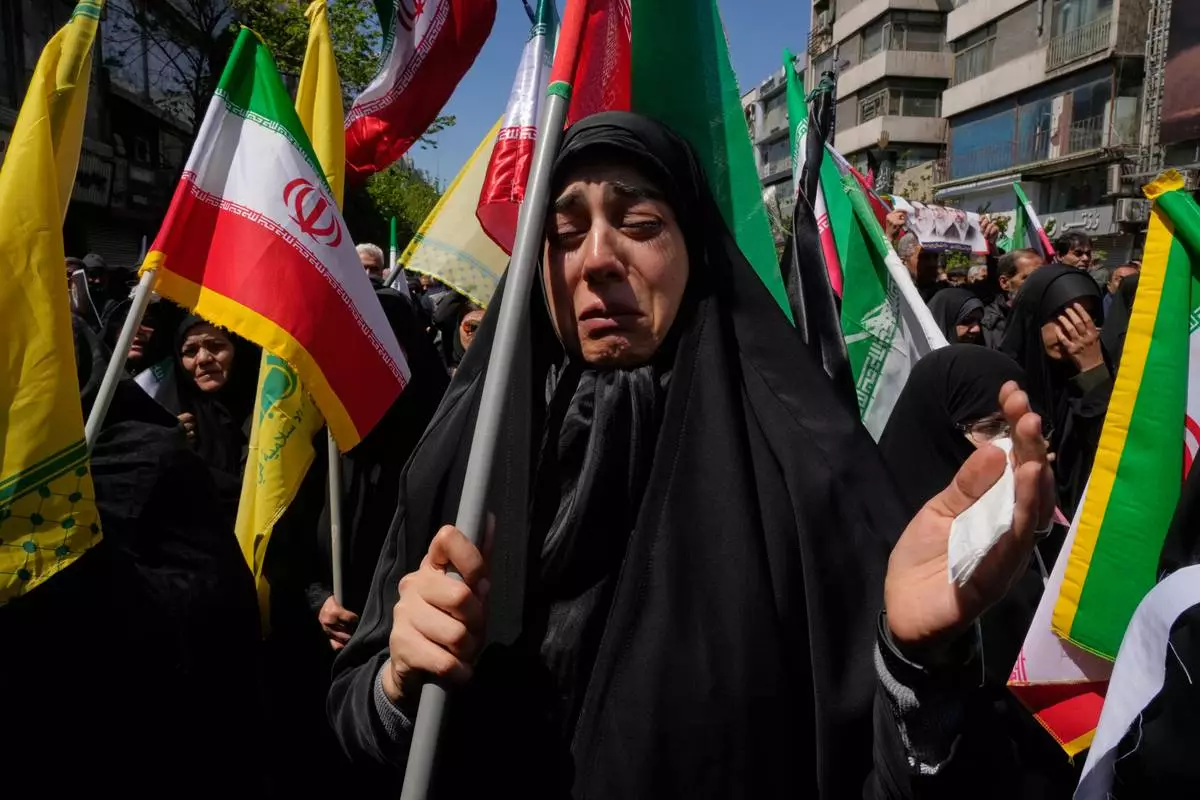
A government supporter weeps during a mourning ceremony marking the 40th day since the death of Iranian Supreme Leader Ayatollah Ali Khamenei, who was killed in the U.S. and Israel strikes in Tehran, Iran, Thursday, April 9, 2026. (AP Photo/Vahid Salemi)
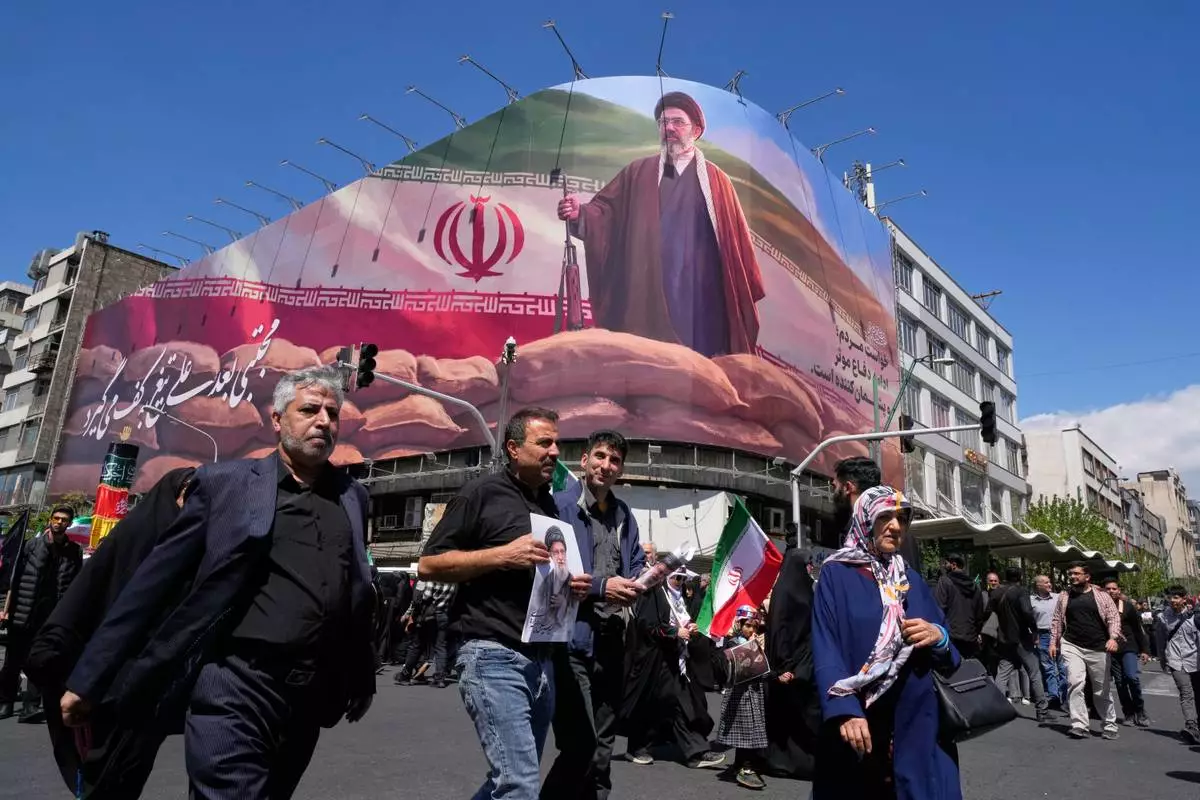
Government supporters walk past a billboard depicting Iran's Supreme Leader Mojtaba Khamenei as they gather to mark the 40th day since the killing of his father, slain Supreme Leader Ayatollah Ali Khamenei, in Tehran, Iran, Thursday, April 9, 2026. (AP Photo/Vahid Salemi)
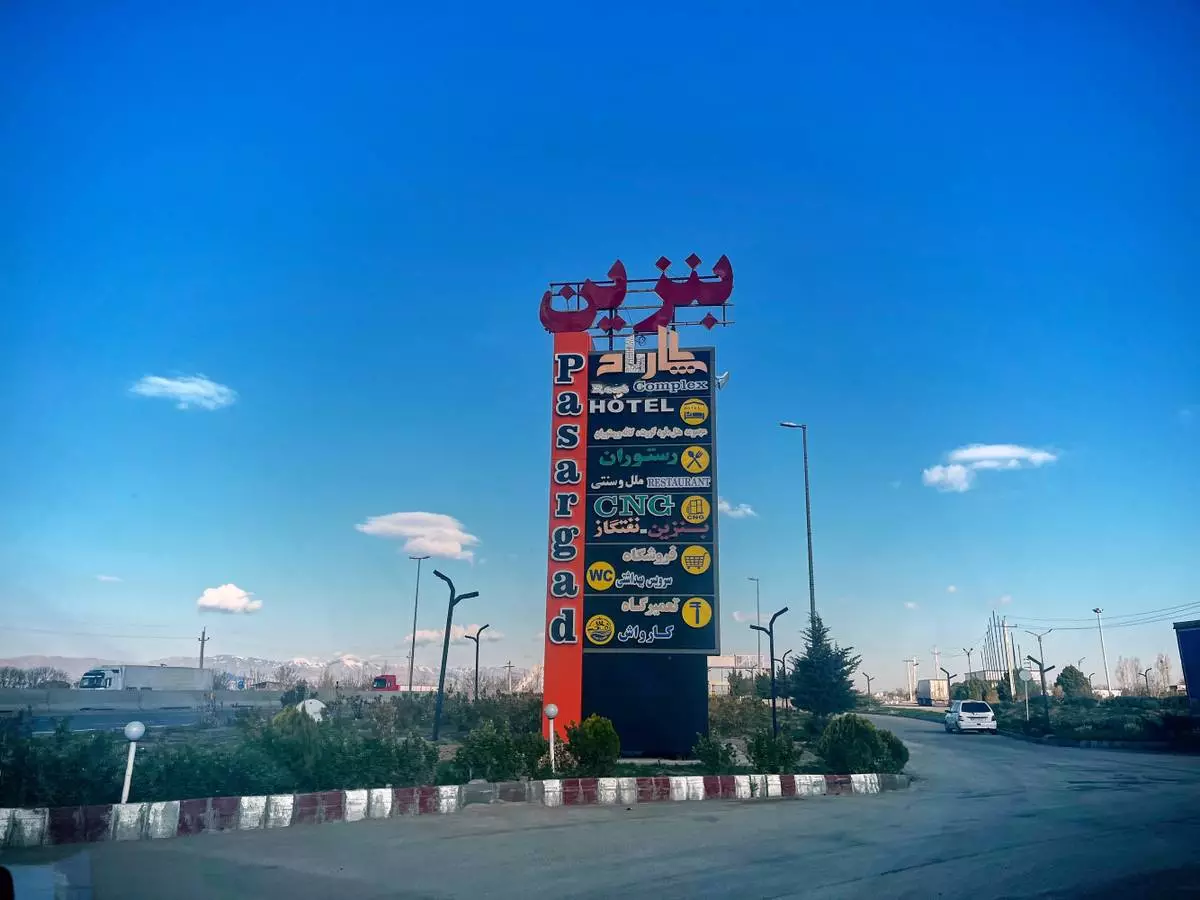
A sign for a roadside hotel is seen on Road 2 near Golhahr, Iran, Thursday, April 9, 2026. (AP Photo/Francisco Seco)
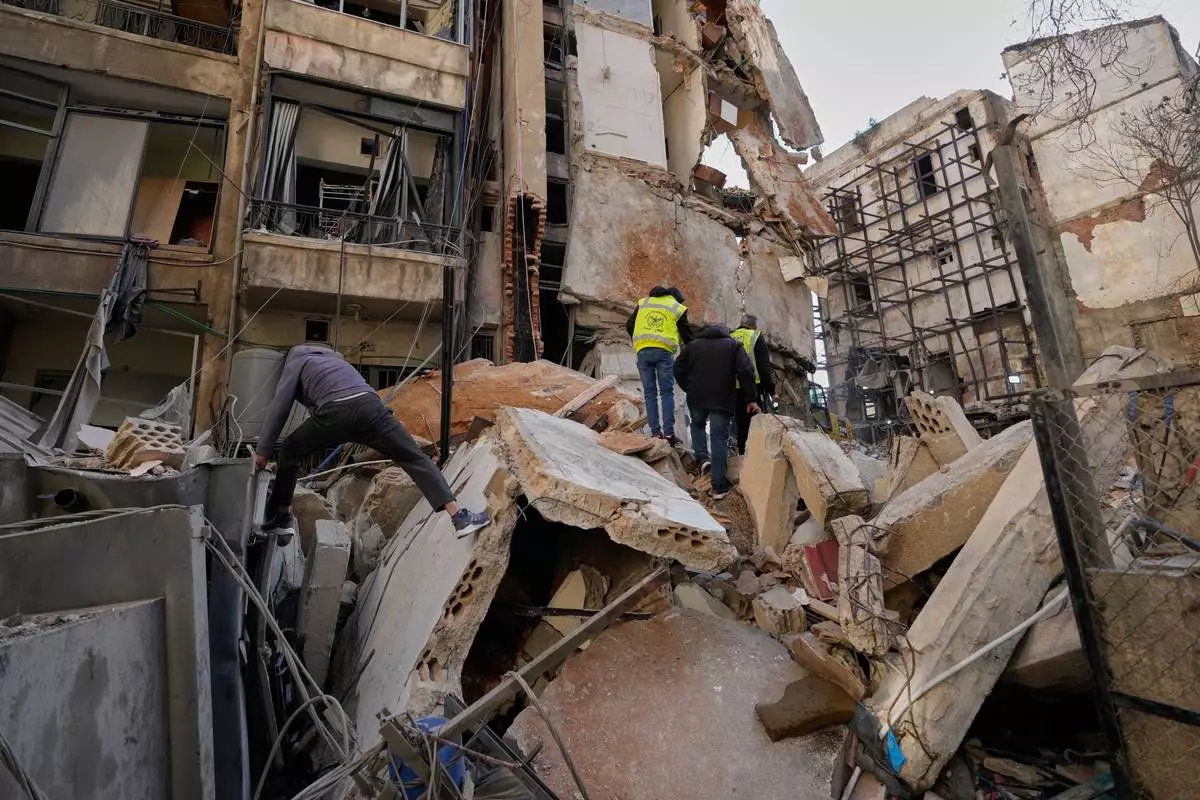
People inspect the rubble of a building destroyed in an Israeli airstrike a day earlier in Beirut, Lebanon, Thursday, April 9, 2026. (AP Photo/Hussein Malla)
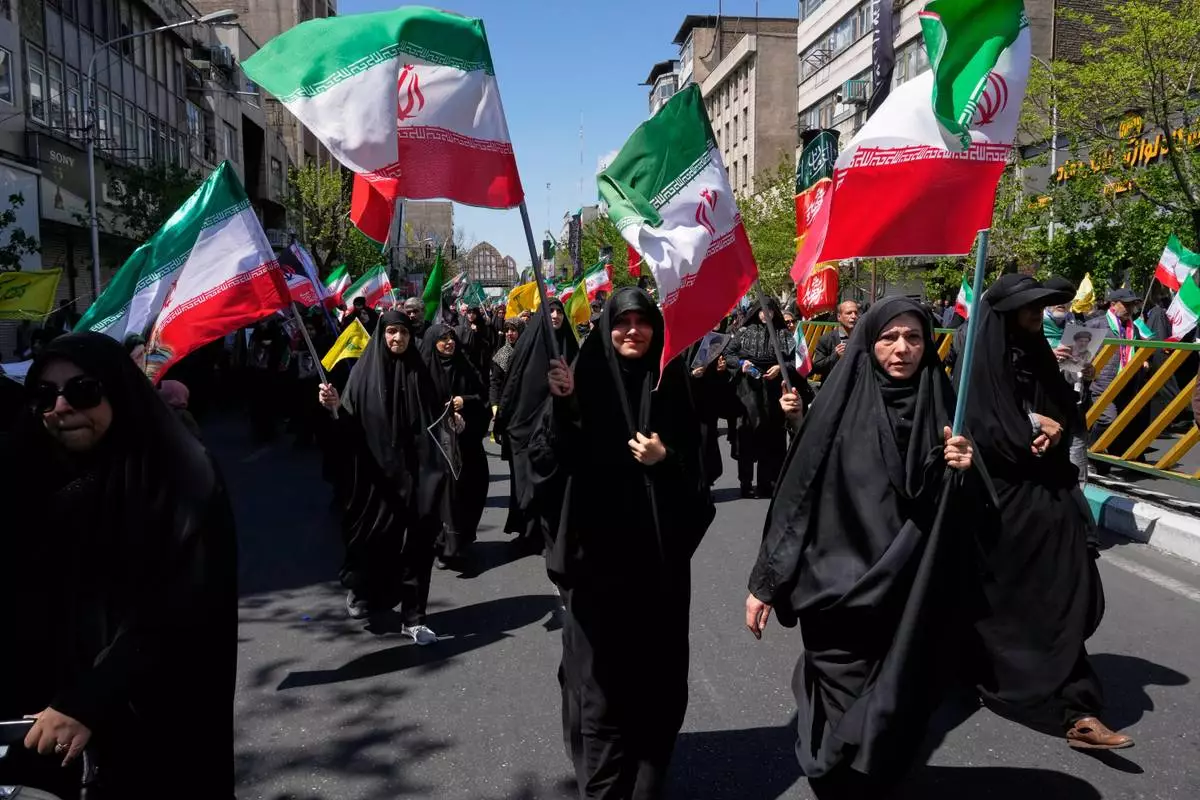
Government supporters gather to mark the 40th day since the death of Supreme Leader Ayatollah Ali Khamenei in Tehran, Iran, Thursday, April 9, 2026. (AP Photo/Vahid Salemi)
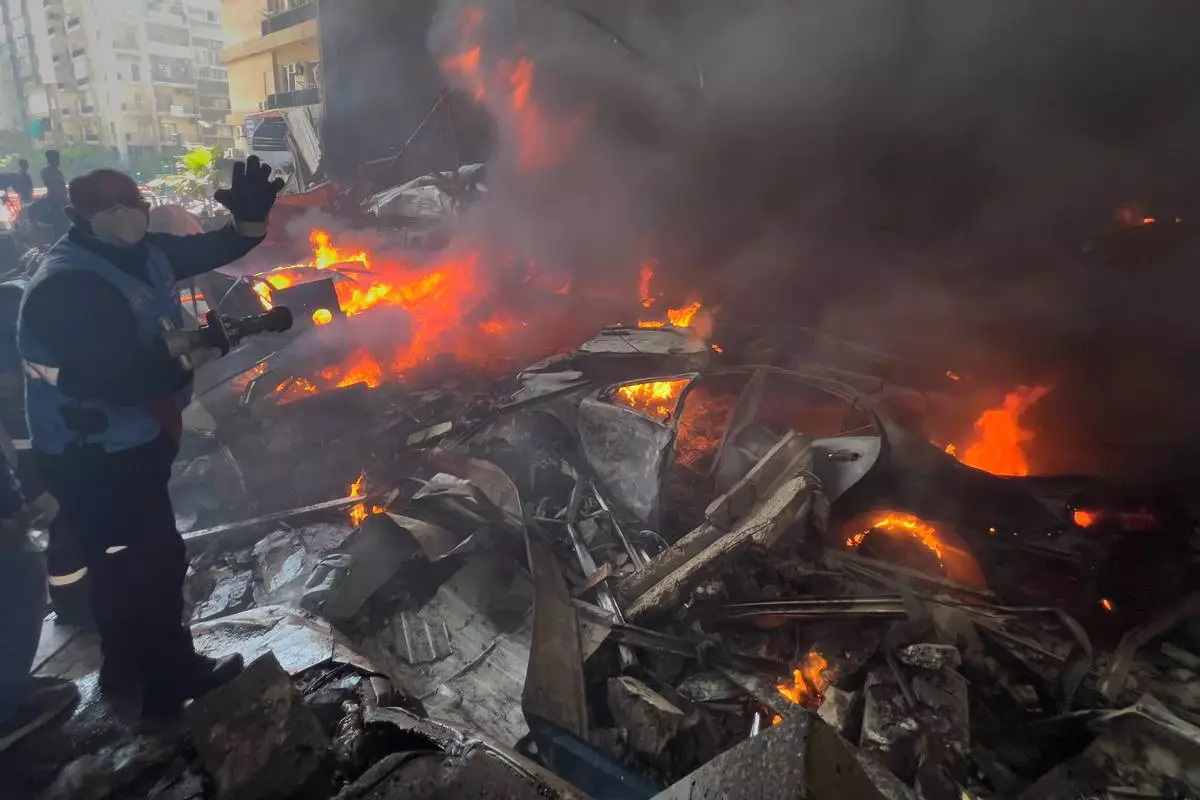
A rescue worker extinguishes burning cars at the site of an Israeli airstrike in central Beirut, Lebanon, Wednesday, April 8, 2026. (AP Photo/Hussein Malla)
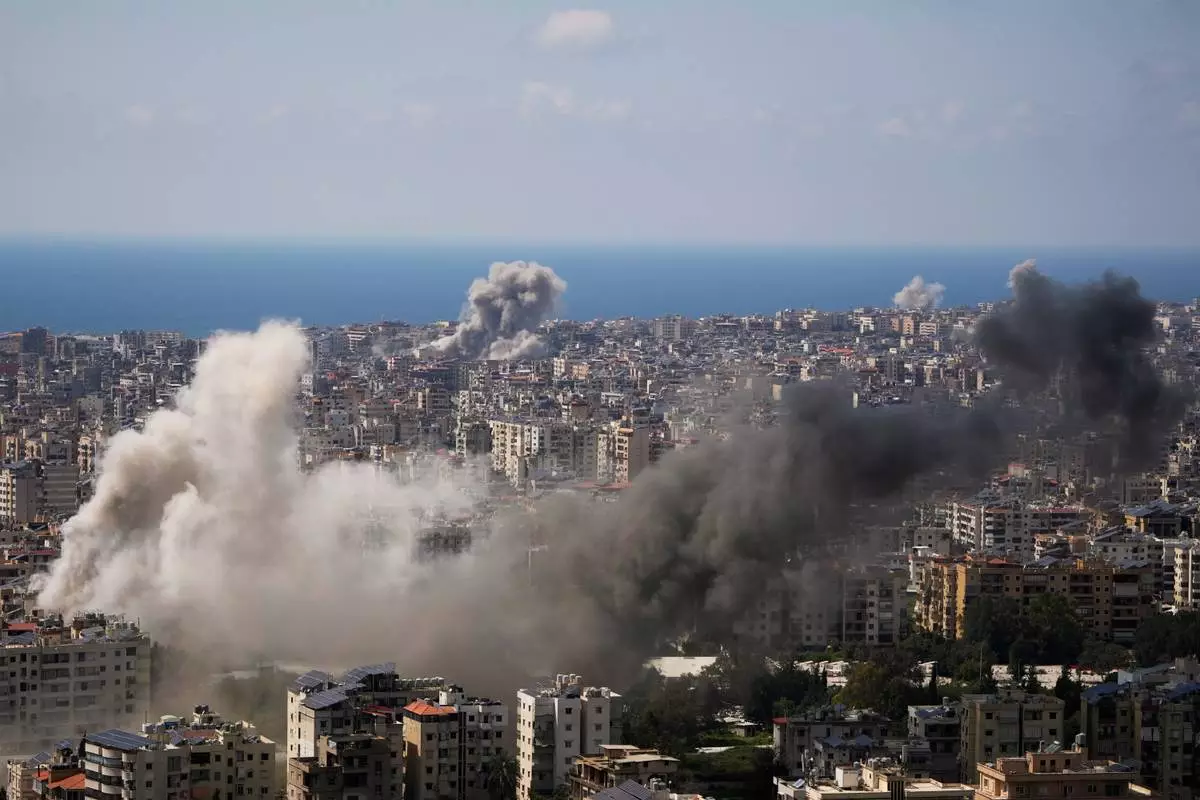
Smoke rises following several Israeli airstrikes in Beirut, Lebanon, Wednesday, April 8, 2026. (AP Photo/Hassan Ammar)
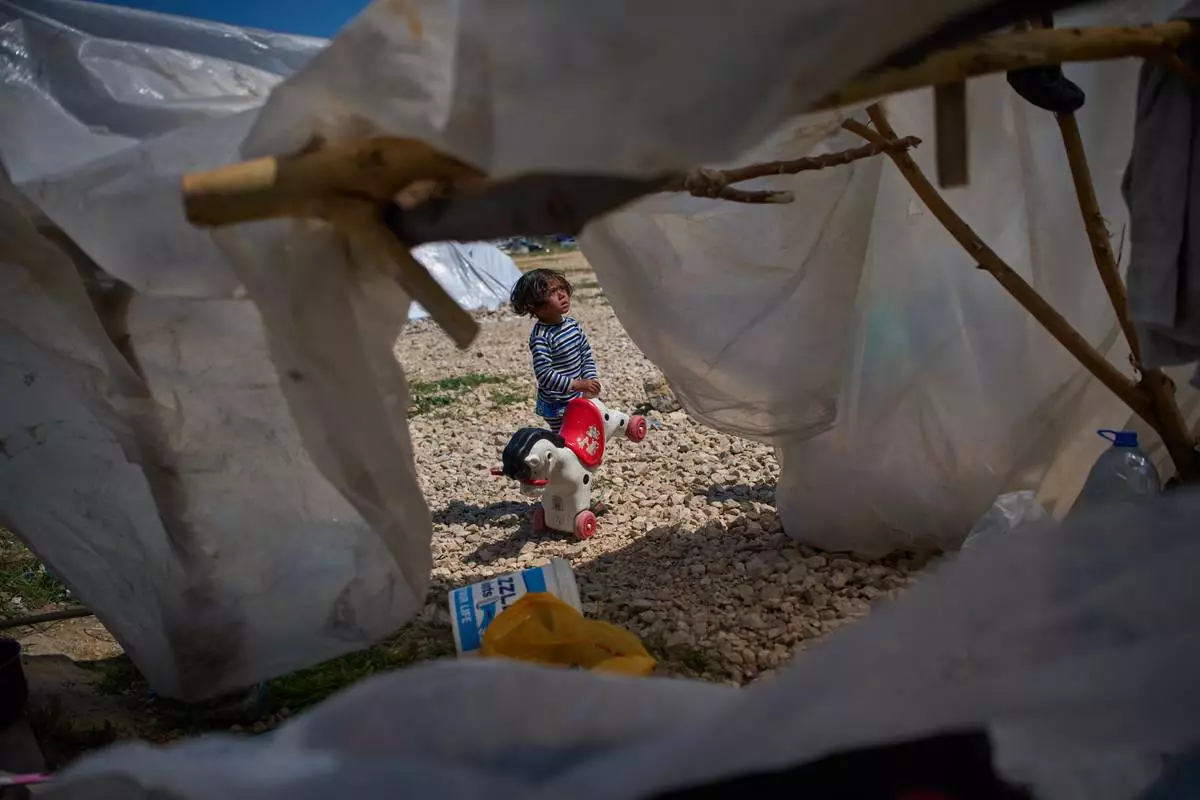
Ali, 4, holds a toy horse next to the tent his family uses as a shelter after fleeing Israeli bombardment in southern Lebanon, in Beirut, Lebanon, Wednesday, April 8, 2026. (AP Photo/Emilio Morenatti)
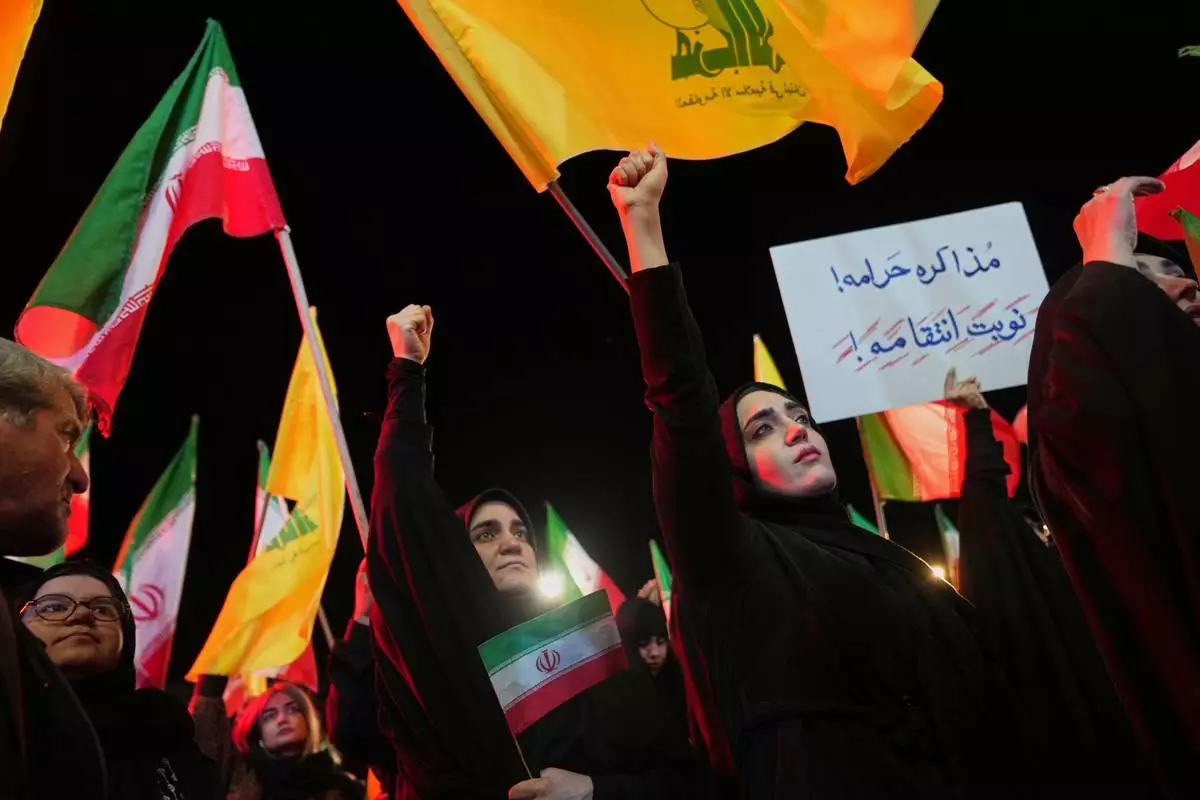
Government supporters gather ahead of the funeral procession for Maj. Gen. Majid Khademi, head of intelligence for Iran's paramilitary Revolutionary Guard, in Tehran, Iran, Wednesday, April 8, 2026. (AP Photo/Francisco Seco)
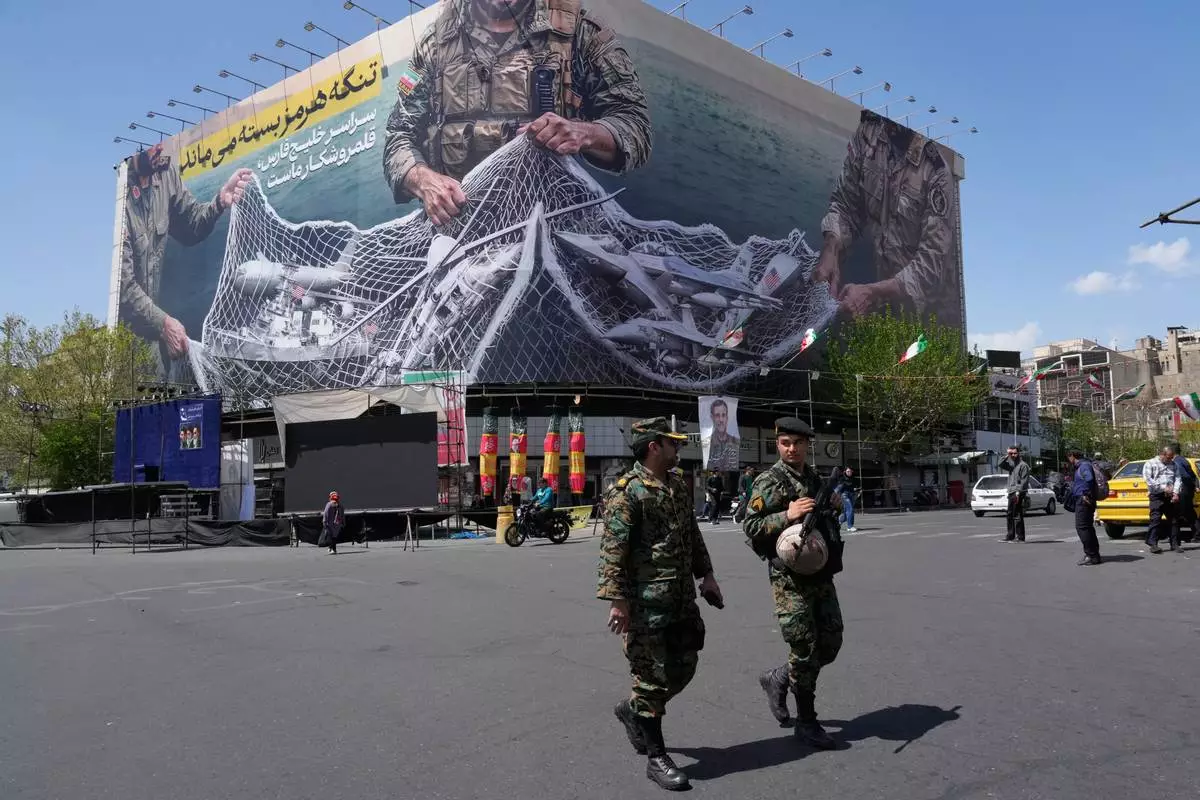
FILE - Two police officers walk in front of an anti-U.S. billboard depicting American aircraft being caught by Iranian armed forces in a fishing net beneath the words in Farsi, "The Strait of Hormuz will remain closed, The entire Persian Gulf is our hunting ground," in Tehran, Iran, Sunday, April 5, 2026. (AP Photo/Vahid Salemi, File)