Skip to Content Facebook Feature Image

War on Iran exposes divisions within NATO: Polish expert

HotTV

HotTV

HotTV

War on Iran exposes divisions within NATO: Polish expert

2026-04-09 16:45 Last Updated At:04-10 11:06

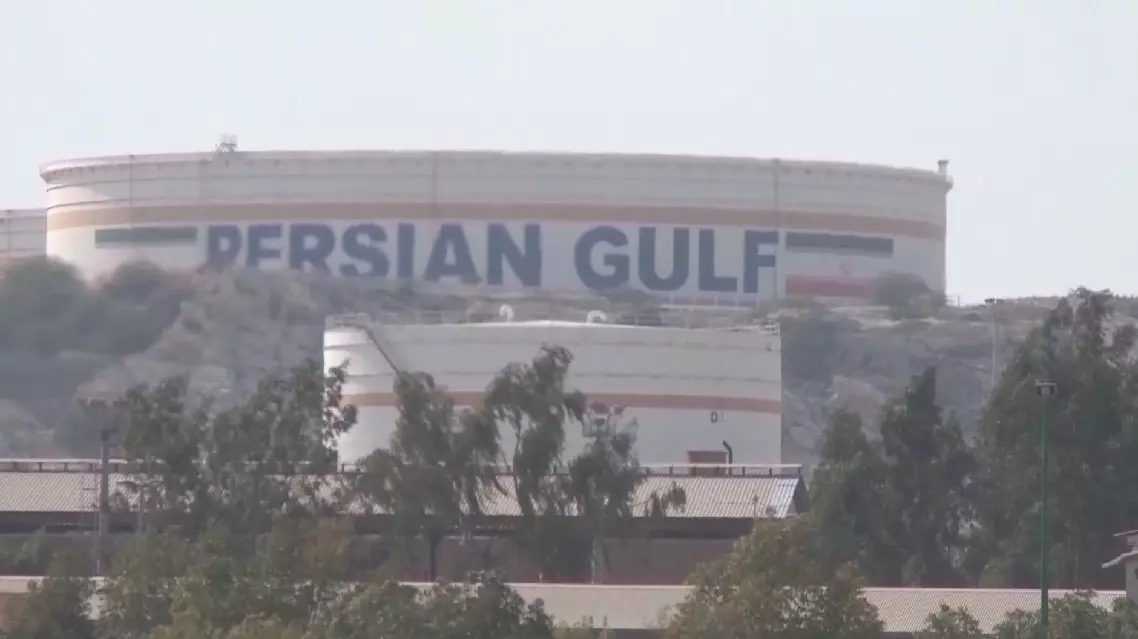
U.S. military actions against Iran have exposed divisions within the North Atlantic Treaty Organization (NATO) over security strategy and are prompting calls for greater defense independence among member states, a Polish security expert has said.

In an interview with China Media Group (CMG), Slawomir Majman, deputy director of the Institute for International Security and Development in Poland, argued that U.S. strikes lack both justification and legal basis and do not obligate NATO allies to participate.

"First of all, nobody attacked America. It's one of the conditions for NATO to act. Nobody attacked America. It cannot be proved that Iran got intention to attack America. This is the first point. The second point, America didn't bother to agree with the fellow members of NATO on the start of the war. Leaders of Europe learned about it from the newspapers. It means that there are no legal reasons for European countries, European partners of NATO to join America in the Middle East and supply them with military equipment," said Majman.

The situation also underscores long-standing differences within the alliance, with European countries generally reluctant to engage in large-scale conflicts on weak grounds.

"We cannot see any reason for such a dramatic action against Iran. Probably, we are not very fond of the idea of killing leaders of any other country. We don't think that there is a case when we should, I mean European members of NATO, use our force to be involved into this war," he said.

The war on Iran should serve as a wake-up call for other NATO members to strengthen their own defense capabilities and reduce reliance on the United States, Majman added.

"There are definitely one or two conclusions for non-American members of NATO. And the first conclusion is to rely more on ourselves. As America decided to have its own agenda, America First, it means that the other countries should reconstruct their defense industry and spend more on defense. Less dependence on the military effort of America is a truth," he said.

War on Iran exposes divisions within NATO: Polish expert
War on Iran exposes divisions within NATO: Polish expert

International Monetary Fund (IMF) Managing Director Kristalina Georgieva on Thursday called for coordinated actions to offset the Middle East War's impact on the world economy.

In a speech titled "Cushioning the Middle East War Shock" at the opening of the 2026 IMF Spring Meetings, Georgieva urged all countries to "reject go-it-alone actions, export controls, price controls, and so on" that could further disrupt global conditions.

She said that fiscal authorities should provide targeted and temporary support to the vulnerable, aligned with their medium-term fiscal frameworks.

The IMF chief also called on central banks to step in firmly with rate hikes if inflation expectations threaten to break anchor and ignite a costly price spiral, while stressing that fiscal support should remain targeted and temporary.

Furthermore, Georgieva noted that all nations must use their limited fiscal resources responsibly, and that both micro- and macro-prudential policies need to be aligned to mitigate stability risks and maintain a resilient financial system.

Since the outbreak of the U.S.-Israeli war with Iran on Feb 28, global daily oil supply has fallen by about 13 percent, while liquefied natural gas supply has dropped by roughly 20 percent, according to IMF data. Those reductions have sent international energy prices soaring.

Brent crude oil briefly jumped from 72 U.S. dollars per barrel before the conflict to 120 U.S. dollars, and while prices have since eased, they remain significantly higher than pre-war levels. The cost of accessing energy has risen sharply for many nations.

Georgieva pledged support to members with financing through the fog of uncertainty, expecting near-term demand for IMF balance-of-payments support to rise to somewhere between 20 billion and 50 billion U.S. dollars, given the spillovers of the Middle East War.

IMF chief urges coordinated actions to offset Middle East War's impact on world economy

IMF chief urges coordinated actions to offset Middle East War's impact on world economy

Recommended Articles