TALLINN, Estonia--(BUSINESS WIRE)--Apr 9, 2026--
Wildix, a global leader in AI‑powered Unified Communications solutions, has announced the appointment of Michael Bubernack as its first-ever official Spokesperson. The move makes Wildix one of the few technology vendors worldwide to hand its public voice directly to a channel partner — a concrete step in backing the company’s 100% channel-only business model with action.
This press release features multimedia. View the full release here: https://www.businesswire.com/news/home/20260409649085/en/
Bubernack is the Co-CEO of ET&T, a 20-person managed services provider serving more than 250 clients across Pennsylvania, New Jersey, and Delaware. A Wildix partner since 2020, ET&T specialises in serving state and local government, education, hospitality, logistics, and transportation organizations.
A self-described “ old school PBX guy who has been around the industry for four decades,” Bubernack represents a generation of telecom professionals who built their careers on premise-based systems and are now leading the transition to cloud-native, AI-powered communications.
“We saw the light during our company’s expansion into the MSP space,” said Bubernack. “I was fascinated with the Wildix solution, mainly with CLASSOUND. Suddenly, after 40 years of selling and maintaining premise-based equipment, I realised we could become the phone company for our customers. This would not be possible without the cloud-native platform built and supported by Wildix.”
Giving the Channel a Real Voice
The Wildix Spokesperson Program was created to put a real partner — not a corporate executive — at the centre of Wildix’s global communications. For one year, Bubernack will represent the Wildix partner community in media interviews, global events, press coverage, and social campaigns, sharing real-world client success stories and his perspective on what it means to sell growth, not just communication technology.
“For years, we’ve said we’re 100% channel-only. This is us proving it,” said Emiliano Tomasoni - CMO, Wildix. “We’re giving the channel a real voice, not a scripted one. Michael was chosen because he embodies what our partner ecosystem is all about: decades of hands-on experience, a willingness to embrace new technology, and a track record of solving real problems for real customers.”
Bubernack will also be speaking at Channel Partners Conference & Expo in Las Vegas on April 15, leading a deep dive session titled " Accelerating Sales Success: How Vendors Can Help Partners Close More Deals " — a topic rooted in four decades of helping businesses turn communication infrastructure into a competitive edge.
From 350 Calls in Three Days to 5,000 in Two Weeks: The DelGo AI Deployment
Bubernack's appointment comes on the back of a standout AI deployment that illustrates the kind of partner-driven innovation Wildix is built to enable.
Delaware County's public transit service — branded as DelGo — operates up to 21 hours a day, serving an elderly population that relies on phone-based scheduling to reach medical appointments and essential services. With only four to five agents handling all incoming calls, wait times were climbing and abandoned calls were mounting.
ET&T took a phased approach. First, Bubernack's team deployed Wildix x-caracal analytics and a callback queue to measure the full scope of the problem — call volumes, average wait times, and abandonment rates. When that data confirmed the scale of the issue, they implemented Wildix's agentic AI voice agent, to handle ride scheduling, cancellations, status checks, and changes.
The rollout was deliberately cautious. Callers were initially given the option to speak with the AI agent rather than being routed to it by default. Within the first three days, the AI handled 350 calls with a 95% success rate. Based on those results, DelGo moved the AI to the front of the call flow. In the following two weeks, it processed over 5,000 calls.
The measurable impact across DelGo's operations has been significant: abandoned calls dropped by 38.7%, overall call volume requiring human intervention decreased by 37.4%, and average hold time was reduced by four minutes. During morning peak hours — the most demanding window for a transit service — response rates improved by 74%. The maximum number of simultaneous callers waiting for service dropped from 81 to fewer than 40, and the AI voice bot now enables riders to cancel trips around the clock, 365 days a year.
Why It Matters
The DelGo deployment demonstrates how Wildix’s agentic AI platform, Wilma AI, can be deployed by channel partners to solve operational bottlenecks in industries where reliable communication is not a nice-to-have, it’s essential. For a transit service catering to elderly riders who depend on phone access, reducing wait times has a direct impact on quality of life.
It also reflects the broader Wildix model: technology that empowers partners to deliver measurable outcomes, not just install phone systems. Bubernack’s journey from legacy PBX to AI-powered voice agents mirrors the transformation Wildix is driving across its 800+ partner ecosystem in more than 135 countries. To learn more about Wildix's agentic AI, visit wildix.com/wilma-ai.
About Wildix
Wildix is a global UCaaS provider dedicated to redefining business communication. With a suite of AI‑driven tools and a steadfast channel-first philosophy, Wildix empowers partners to deliver secure, scalable, and outcome-focused solutions across industries. Recognized for five consecutive years in Gartner’s Magic Quadrant for UCaaS, Wildix continues to help organizations streamline workflows, strengthen customer engagement, and unlock new growth in an increasingly digital world.
About ET&T
ET&T is a managed services provider based in the greater Philadelphia area, serving more than 250 clients across Pennsylvania, New Jersey, and Delaware. With expertise spanning state and local government, education, hospitality, logistics, and transportation, ET&T has been a Wildix certified partner since 2020. For more information, visit et-t.com.

Michael Bubernack, Co-CEO - ET&T
WASHINGTON (AP) — Before Donald Trump returned to the White House, the Biden administration and many electric utilities were building a future dominated by renewable energy. They aimed to replace coal, slashing greenhouse gases and reducing air pollution that kills more than a thousand people annually.
Dozens of coal plants — emitting as much planet-warming pollution as 27 million cars — were expected to be retired during Trump's second term. Now there may not be any more coal plants closing until after Trump leaves office, according to officials and the energy analysis company Enverus.
The United States is undergoing a dramatic shift in energy policy as Trump wields government's sweeping powers to benefit coal and suppress cleaner alternatives. It could lead to more expensive electricity and dirtier air and set back efforts to curb climate change, according to an Associated Press review of government data and interviews with experts.
Trump officials are using emergency powers to prevent five coal plants from closing. That’s raising ratepayer bills: Keeping one Michigan plant open for about seven months cost $135 million. They are using millions of dollars of taxpayer money to make repairs and extend the lives of other coal plants. They’re also slashing pollution limits to make it easier for plants to keep operating without costly upgrades.
Interior Secretary Doug Burgum has said the goal for coal plants “is 100% stay open, no more retirements, no more shutting down.”
The actions far exceed Trump’s coal advocacy in his first term, when he relaxed some environmental regulations to give it a short-lived boost. The administration argues that coal produces badly needed power even during extreme weather, giving it an advantage over renewables that it says the Biden administration unwisely subsidized in the name of climate change.
“The Trump administration this time around is much more organized and strategic in trying to bring about a revival of coal,” said Robert Lifset, a University of Oklahoma professor of energy history. “You’re seeing almost like a whole-of-government approach.”
It's happening as electricity demand surges due to the colossal growth of data centers. One Indiana community oversaw construction of vast solar fields on farmland ahead of an expected retirement of the Schahfer Generating Station, a coal plant in Wheatfield, Indiana. Now the Trump administration is keeping that plant open, saying its power is critical.
“I was really emotional about it because finally they weren’t going to be a threat to our air and to our water anymore,” said Barbara Deardorff, an activist who grew up about 2 miles from the plant. “Since then, everything’s gone upside down.”
After World War II, U.S. electricity use rose alongside economic growth. The two trends split after the 2008 recession: The economy grew again, but electricity demand stayed flat, thanks in part to improved efficiency, said Seth Feaster with the Institute for Energy Economics and Financial Analysis, which promotes renewable energy.
Utilities retired costly old plants in droves, replacing them with more efficient natural gas and renewables. Coal’s share of U.S. power generation dropped by more than half.
Schahfer's smokestacks had been a familiar backdrop among northern Indiana's fields since it was built in the 1970s. Then, in 2023, its operator foresaw a new future: the Northern Indiana Public Service Company said it would cut coal from 73% of its energy production to zero as it pursued renewables. Schahfer would be shut down.
As that date neared, the surrounding community was transforming. Solar panels were built on hundreds of acres of farmland nearby, a change in local character some regretted but others welcomed for the cleaner energy and new tax revenue.
Then in December, the Trump administration issued an emergency order to keep Schahfer operational, saying it's coal-generated power was essential to meet demand from extreme weather.
“Today, the policies that get in the way of a reasonable energy development and mess up the math are things focused around climate change,” Energy Secretary Chris Wright said in February during a news conference about electric grid reliability.
Not only is the coal plant remaining online, but Amazon has proposed a multibillion-dollar data center complex nearby powered by gas generators that would produce more than twice the power of the old coal facility. NIPSCO said an agreement with Amazon would protect customers.
“It's been a complete 180,” said Deardorff, who said her family will no longer be able to farm on land it has long leased near the plant.
Stopping retirements completely, as Burgum has suggested, would keep online some 34 gigawatts of coal power that was set to retire before 2029. That threatens to stall a decades-long decline in pollution from coal that sharply reduced deaths as plants retired or installed new equipment. Coal plants scheduled to retire under Trump emitted more than 130 million tons of carbon dioxide last year, plus tens of thousands of tons of health-damaging sulfur dioxide and nitrogen oxides.
“If we retire all the coal plants we could avoid those 2,000 deaths per year from coal. And if we keep the plants online and they keep burning coal, then we’re going to get those emissions and see those same health impacts,” said George Mason University environmental engineer Lucas Henneman, who led a government study of deaths from coal pollution.
Beyond the five plants ordered to stay open, the administration spent $175 million on upgrades to extend the lives of seven other plants. It's considering applications for $350 million in similar spending.
Enverus principal analyst Juan Arteaga said the spending — along with coal’s reliability — make it unlikely any plants retire until at least 2030.
Modernizing the aging fleet of U.S. coal plants to keep them afloat, make them more affordable and with fewer emissions ultimately could cost $1 billion annually, said Michelle Bloodworth of the industry group America's Power. She said the spending is justified, considering “billions and billions” went to renewables.
The administration has broad discretion in deciding whether an emergency exists and can “order almost any change in operation of the electricity system,” the Congressional Research Service said in February.
That hasn't stopped legal challenges from five Democratic-led led states — Washington, Illinois, Minnesota, Michigan and Colorado.
Colorado Attorney General Phil Weiser said the Trump administration orders burden consumers with higher prices and obstruct sustainable energy.
“We are going from a trajectory where we were going to lead the world on clean energy to one where we are becoming an isolated petrostate,” said Bob Keefe, with the renewable energy tracking group E2. “It's costing jobs, it is costing investments, it is hurting us in the global marketplace and by the way it is resulting in higher electricity prices.”
Economists are skeptical coal's revival will last. Aging coal plants don't make sense when solar is cheap, said Tufts University associate professor Steve Cicala. No large U.S. coal plant has been built since 2013, although one is planned in Alaska.
Parts of Trump's agenda already have faltered. The largest federal coal lease sale in more than a decade flopped, and courts rejected some of Trump's attempts to block wind power.
Yet industry executives remain bullish.
“It's our time,” said CEO Jimmy Brock with Core Natural Resources, one of the nation’s largest coal mining companies.
Associated Press journalists Mead Gruver in Cheyenne, Wyoming, and M.K. Wildeman in Hartford, Connecticut, contributed.
The Associated Press receives support from the Walton Family Foundation for coverage of water and environmental policy. The AP is solely responsible for all content. For all of AP’s environmental coverage, visit https://apnews.com/hub/climate-and-environment
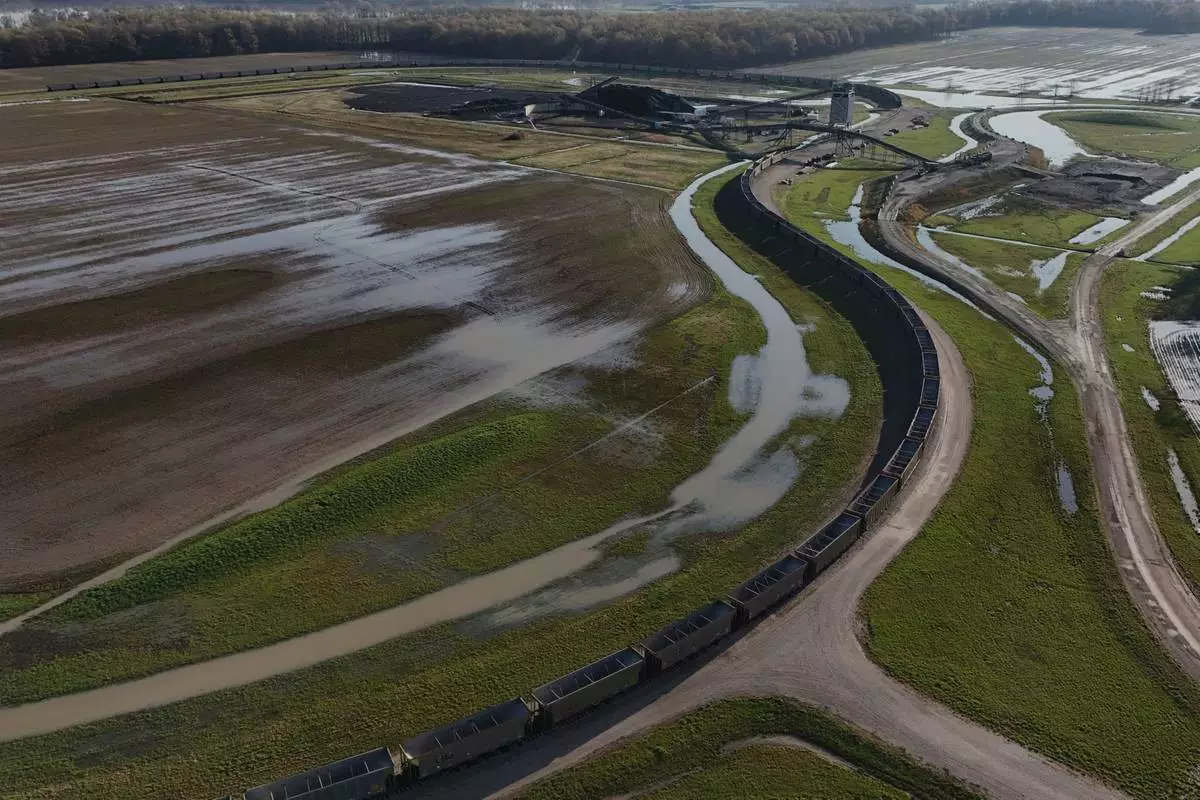
FILE - A train sits near a coal pile, April 10, 2025, in Princeton, Ind. (AP Photo/Joshua A. Bickel, File)
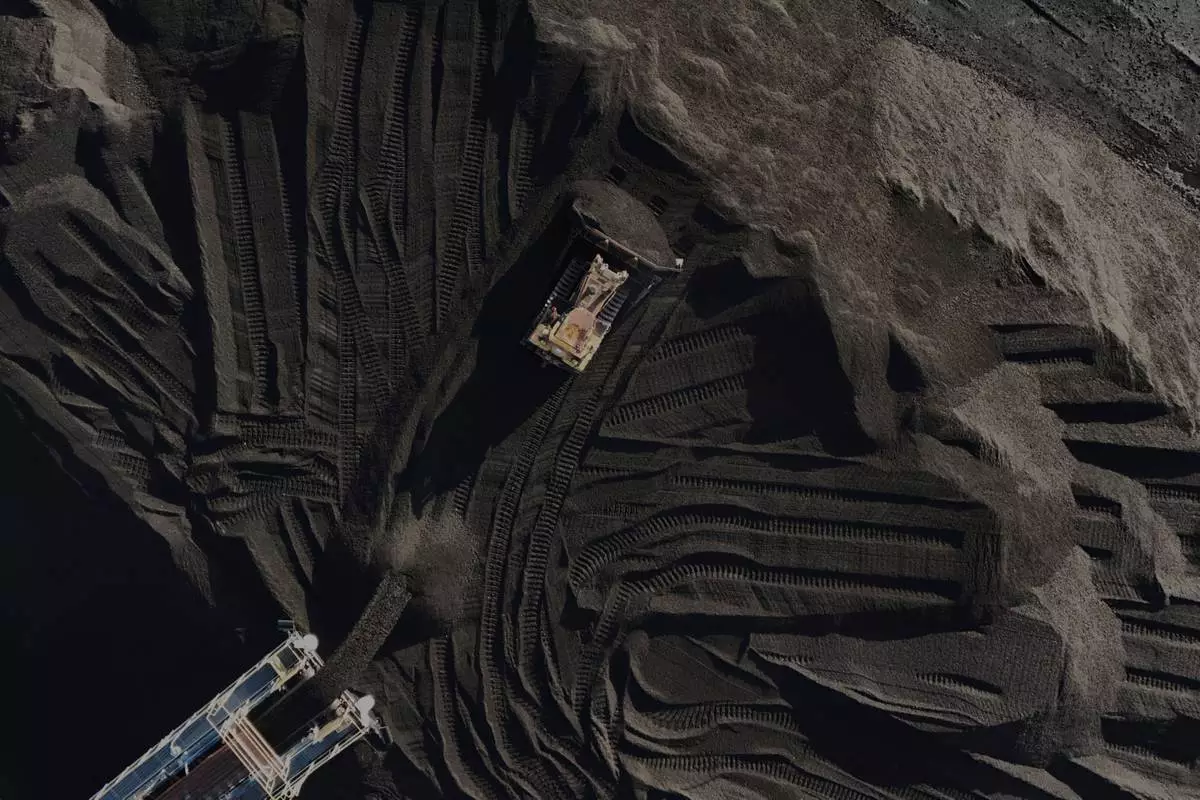
FILE - A bulldozer moves coal, April 10, 2025, in Princeton, Ind. (AP Photo/Joshua A. Bickel, File)
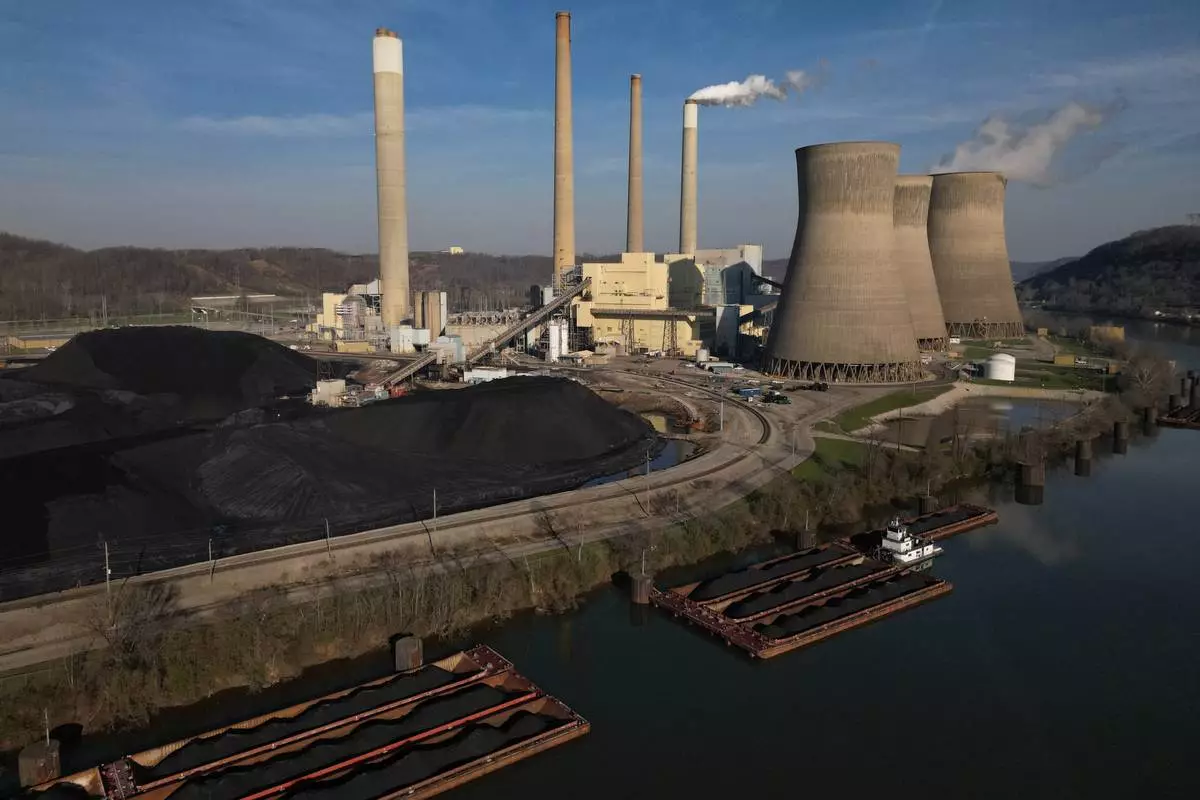
FILE - American Electric Power's John Amos coal-fired power plant in Winfield, W.Va., is seen on the banks of the Kanawha River, March 22, 2026. (AP Photo/Carolyn Kaster, File)