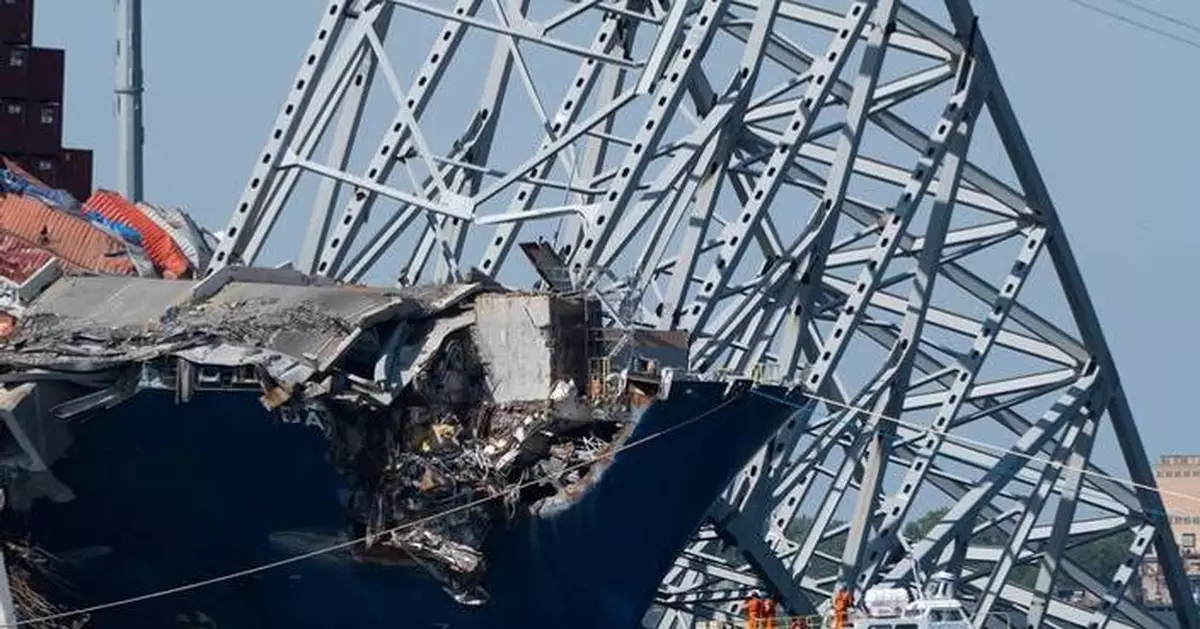
ANNAPOLIS, Md. (AP) — Maryland has reached a settlement with the owner and operator of the massive cargo ship that crashed into a Baltimore bridge two years ago, causing its deadly collapse, state officials announced Thursday.
The settlement in principle was reached with Grace Ocean Private Limited and Synergy Marine Pte Ltd, owner and operator of the M/V Dali, Attorney General Anthony Brown said. The settlement resolves a portion of the state's claims arising from the ship's March 26, 2024, crash into the Francis Scott Key Bridge.
“For two years, Maryland workers, families, and communities have carried the weight of a disaster that should never have happened," Brown said in a news release. It did not give details of the settlement.
The attorney general noted that the Dali's crash into the bridge "disrupted the Port of Baltimore, devastated livelihoods, and sent economic shockwaves across our State that are still being felt today.”
“Our work is not finished, but this settlement is an important step toward making Maryland whole," Brown said.
The companies confirmed in a joint statement that significant progress has been made in resolving claims. Within the past week, the statement said, they have reached “two pivotal settlement agreements with the State of Maryland and ACE American Insurance Company that underscore their commitment to a reasonable and structured outcome to this unfortunate incident.”
The $350 million settlement with the insurance company matched the amount ACE paid to Maryland, an amount that represented the limit of the state's policy.
“These agreements represent a significant step towards resolving the complex litigation surrounding this event and Owners and Managers remain open to negotiating in good faith to reach equitable settlements with other involved parties holding meritorious claims,” the joint statement said.
The Maryland Transportation Authority late last year estimated the price range of a new bridge alone to be between $4.3 billion and $5.2 billion, with an anticipated open-to-traffic date in late 2030.
The settlement does not resolve any claims the state may have against the shipbuilder, Hyundai, the attorney general's office said.
The ship was leaving Baltimore for Sri Lanka when its steering failed because of a power loss. Six men on a road crew, who were filling potholes during an overnight shift, fell to their deaths when the bridge collapsed.
The state’s claims, filed in federal court in Maryland in September 2024, alleged that the disaster was the result of negligence, mismanagement, and the reckless operation of a vessel that was not seaworthy and should never have left port.
The state sought damages on behalf of its agencies for the destruction of the bridge, harm to the Patapsco River and surrounding environment, lost revenues, and the wide-ranging economic losses sustained by Maryland and its residents.
The collapse brought shipping at the Port of Baltimore to a complete halt, disrupted the livelihoods of thousands of workers, rerouted traffic through communities already bearing disproportionate burdens, and triggered economic ripple effects still being felt across the state, the attorney general's office noted.
The bridge, a longstanding Baltimore landmark, was a vital piece of transportation infrastructure that allowed drivers to easily bypass downtown. The original 1.6-mile (2.6-kilometer) steel span took five years to construct and opened to traffic in 1977. It was particularly important for the city’s port operations.
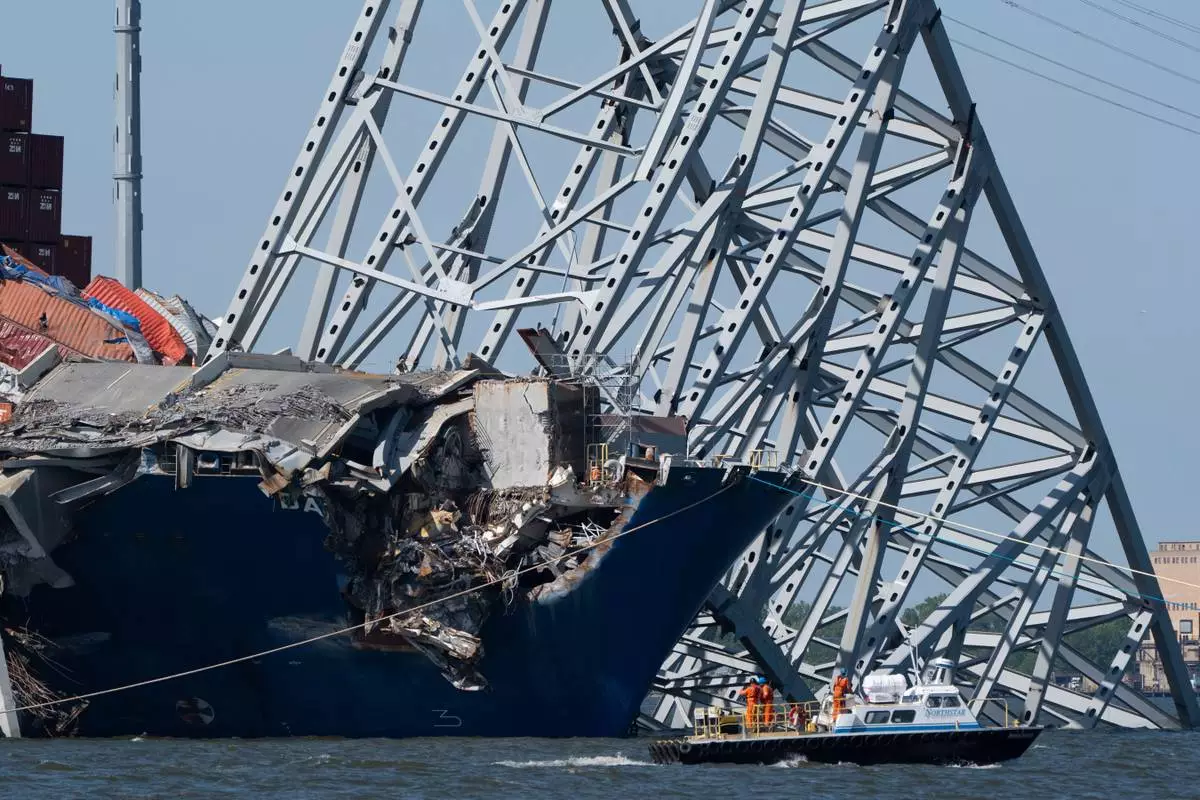
FILE - A boat moves past the bow of the container ship Dali prior to the detonation of explosive charges to bring down sections of the collapsed Francis Scott Key Bridge resting on the Dali, May 13, 2024, in Baltimore. (AP Photo/Mark Schiefelbein,File)
BEIRUT (AP) — Lebanon reeled Thursday after the deadliest day of the renewed war between Israel and the Iranian-backed Hezbollah militant group, with the death toll exceeding 300 people as more remains were pulled from rubble and bodies identified at hospitals. Meanwhile, Israel made the surprise announcement of authorizing direct talks with Lebanon, despite their lack of diplomatic ties. Israeli attacks continued.
The Health Ministry said that 1,150 people were also wounded in the widespread strikes that rocked Lebanon on Wednesday, including in busy parts of Beirut.
There was no immediate response to the Israeli announcement from Lebanon, which had repeatedly proposed talks to end the war, or from Hezbollah. Israeli Prime Minister Benjamin Netanyahu said that talks would focus on disarming Hezbollah and “establishing peaceful relations” between the countries.
Negotiations are expected to begin next week at the State Department in Washington, according to a person familiar with the plans. The talks are expected to be handled on the American side by U.S. Ambassador to Lebanon Michel Issa, and on the Israeli side by Israel’s Ambassador to the U.S. Yechiel Leiter, according to the person, who spoke on condition of anonymity due to the delicacy of the situation.
A Lebanese diplomatic official familiar with the developments said that the country has not yet appointed someone to lead talks from Beirut, but Lebanese President Joseph Aoun is keen to have a temporary ceasefire when talks commence in parallel with those taking place between the United States and Iran mediated by Pakistan. The official spoke on condition of anonymity in line with regulations.
Israel's announcement came hours after it had warned of escalation and said that it had killed an aide and nephew of Hezbollah leader Naim Kassem, Ali Yusuf Harshi.
Iran’s parliament speaker, Mohammad Bagher Qalibaf, earlier said that continued Israeli attacks on Lebanon would bring “explicit costs and STRONG responses,” while insisting that a two-week ceasefire in the Iran war extended to Lebanon. Israel has disagreed.
Israeli strikes on Wednesday, without warning, killed at least 203 people and wounded more than 1,000, Lebanon’s Health Ministry said. Israel's military said that it targeted Hezbollah sites, but several strikes hit densely packed commercial and residential areas during rush hour, leading to widespread civilian casualties. Lebanese President Joseph Aoun called the attacks “barbaric.”
U.S. Vice President JD Vance on Wednesday said that Washington asked Israel to scale back attacks on Lebanon to ensure negotiations with Iran are successful.
In Beirut, people waited anxiously on the ragged edges of search and rescue work, shielding their faces from the dust. Exhausted firefighters sat on a charred car amid collapsed buildings.
Lebanese Civil Defense spokesperson Elie Khairallah told The Associated Press that a wounded woman was found alive overnight in the seaside neighborhood of Ain Mreisseh, and a man was found alive in his collapsed apartment building in the southern suburbs.
Mohammad Chehab, a Syrian man from Deir el-Zour, said that six of his 10 family members had been found dead in a destroyed building.
“They’ve been searching all day” for the rest, he said.
At hospitals, survivors and doctors described the carnage, while relatives gathered to identify bodies.
Abdul Rahman Mohammad, a Syrian who lost five relatives in the Hay al-Sellom neighborhood, waited at Rafik Hariri Hospital to retrieve the bodies of his mother, two sisters, brother and brother-in-law.
“They were struck without any warning. This is Israeli brutality,” he said.
Dr. Mohamad El Zaatari, director of the public hospital, said that it had treated 45 wounded people, including 10 cases in intensive care.
At the Makassed hospital, Rabee Koshok lay on his bed.
“I thought I was dead. What happened?" he recalled. “A big flash of light struck my face and eyes, and I found someone flying over and landing next to me. He was dead.”
Koshok had been in the commercial district of Corniche al Mazraa when a strike hit a nearby building.
Dr. Wael Jarrosh said that the hospital received around 70 wounded patients within 10 minutes of the blasts. Two people died and five remained hospitalized, including three in intensive care.
“This has destroyed us psychologically,” the doctor said.
Netanyahu earlier had said that strikes would proceed “with force, precision and determination." Israel's military has accused Hezbollah members of moving out of the group’s main areas of influence in southern Lebanon and Beirut’s southern suburbs, known as Dahiyeh, and blending into civilian areas.
Lebanese Prime Minister Nawaf Salam said that his country would file an urgent complaint with the U.N. Security Council, calling the attacks a “blatant violation” of international and humanitarian law.
In a Cabinet session earlier Thursday, the Lebanese government announced a plan to demilitarize Beirut and deploy larger numbers of security patrols.
Even before the renewed war, Lebanon's government had sought Hezbollah's disarmament. The issue has inflamed tensions among Lebanese who are deeply divided over Hezbollah and its arsenal.
Melhem Khalaf, a reformist legislator representing Beirut, was critical of Israel’s strikes, but also of Hezbollah for dragging Lebanon back into war.
“All the targeted areas are safe residential Lebanese areas,” Khalaf said, while watching a bulldozer clear rubble. “What we are witnessing is a massacre against civilians."
More than a million people have been displaced by the war, many from the south and Dahiyeh. Israel's military has issued warnings for the population to leave those areas, followed by heavy bombardment.
Israel has also launched a ground invasion in the border region. The death toll in Lebanon has reached 1,739, the health ministry said, with 5,873 wounded.
Meanwhile, the main border crossing between Lebanon and Syria returned to service Thursday, five days after the Israeli military warned of plans to strike it, alleging that Hezbollah was using it to smuggle military equipment. Lebanese and Syrian authorities denied the claim.
More than 200,000 people have fled Lebanon into Syria since the war resumed.
Sally Abou AlJoud reported from Beirut. Ali Sharafeddine and Hussein Malla in Beirut, and Ghaith AlSayed in Jdeidet Yabous, Syria, and Matthew Lee in Washington contributed to this report.
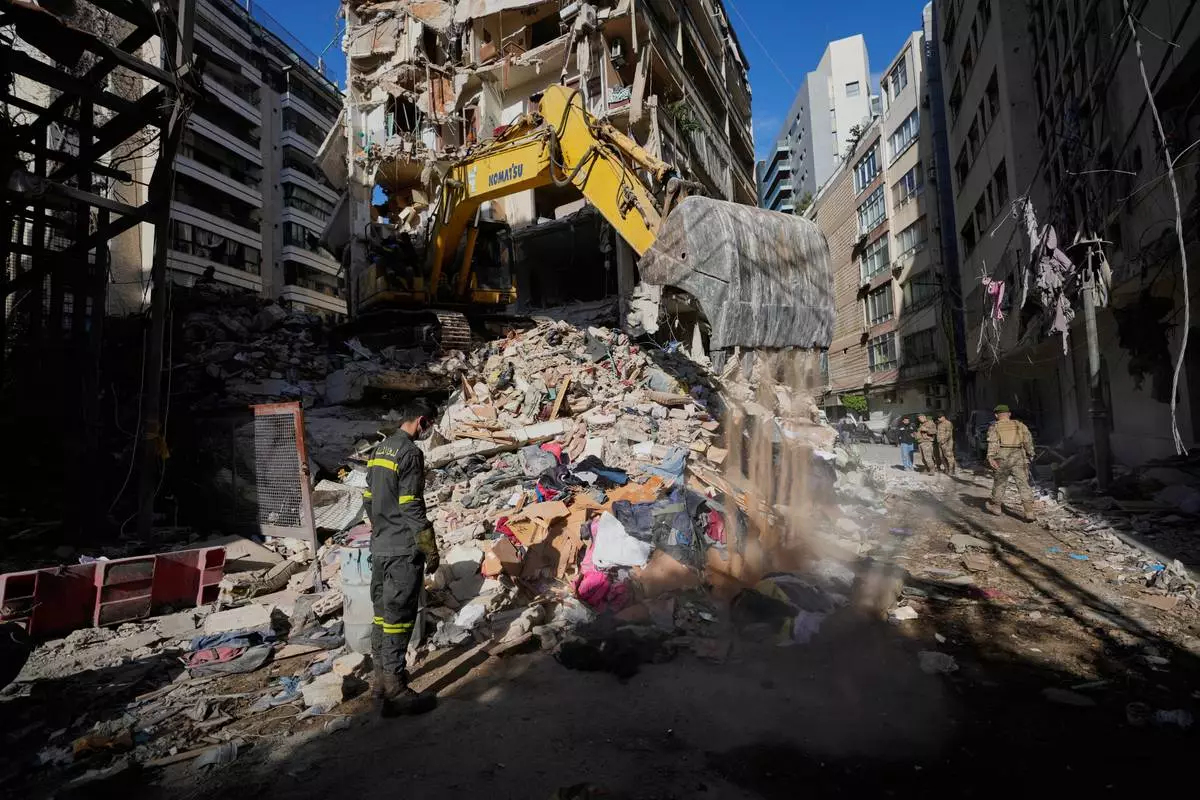
A Lebanese civil defense worker looks on as an excavator operates on the rubble of a building destroyed in an Israeli airstrike a day earlier in Beirut, Lebanon, Thursday, April 9, 2026. (AP Photo/Hussein Malla)
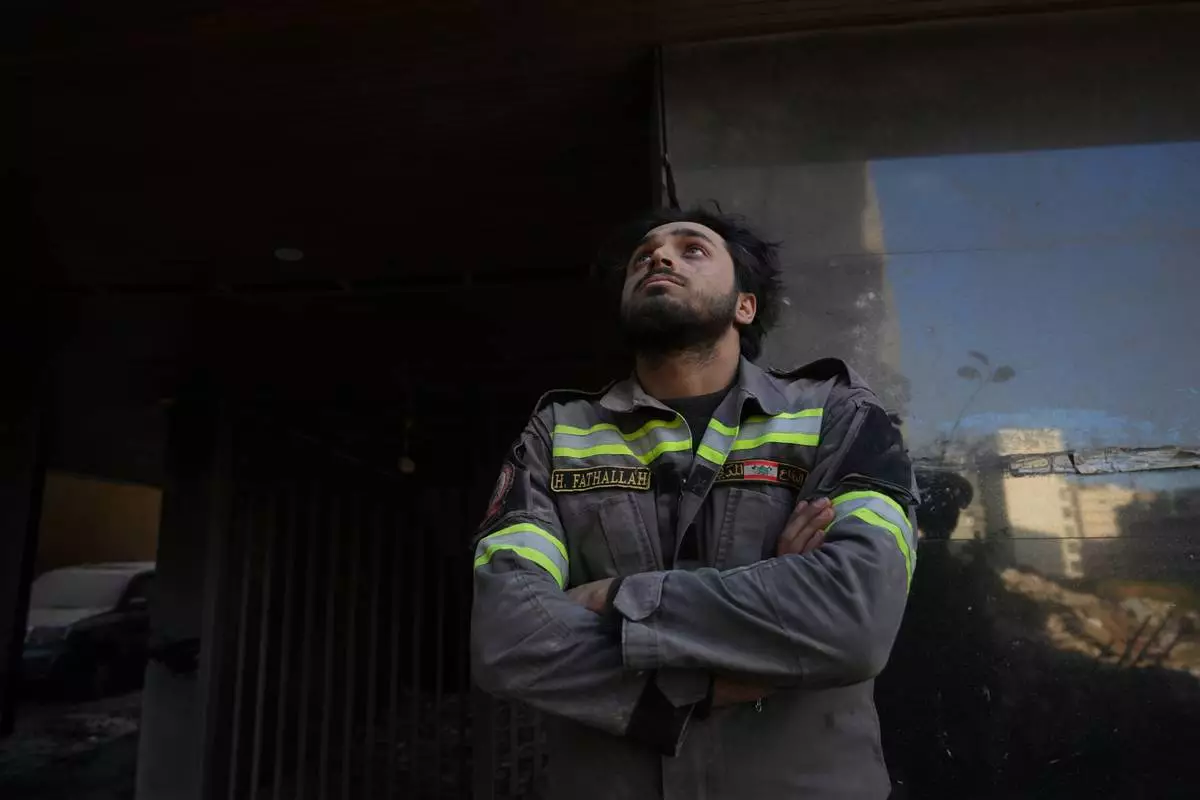
A Lebanese civil defense worker looks upward near the site of a building destroyed in an Israeli airstrike a day earlier in central Beirut, Lebanon, Thursday, April 9, 2026. (AP Photo/Hassan Ammar)
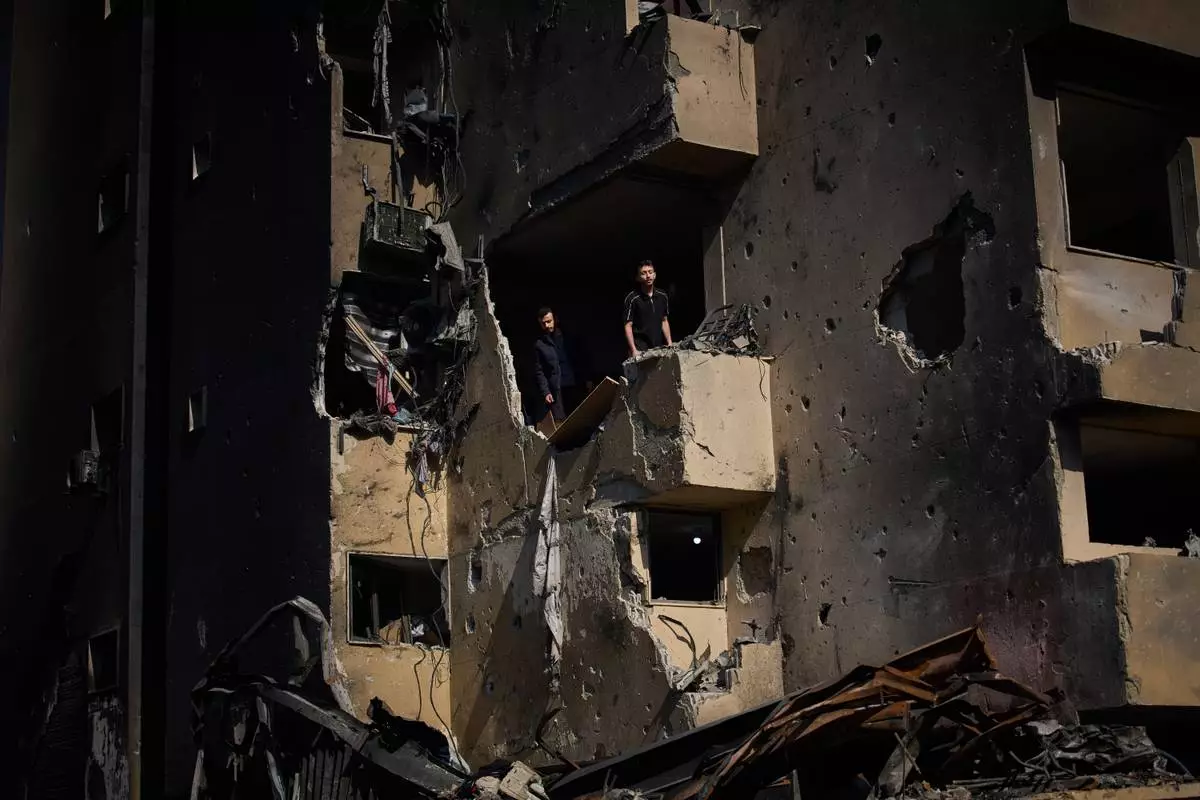
Men inspect the damage to their home destroyed in an Israeli airstrike a day earlier in Beirut, Lebanon, Thursday, April 9, 2026. (AP Photo/Emilio Morenatti)
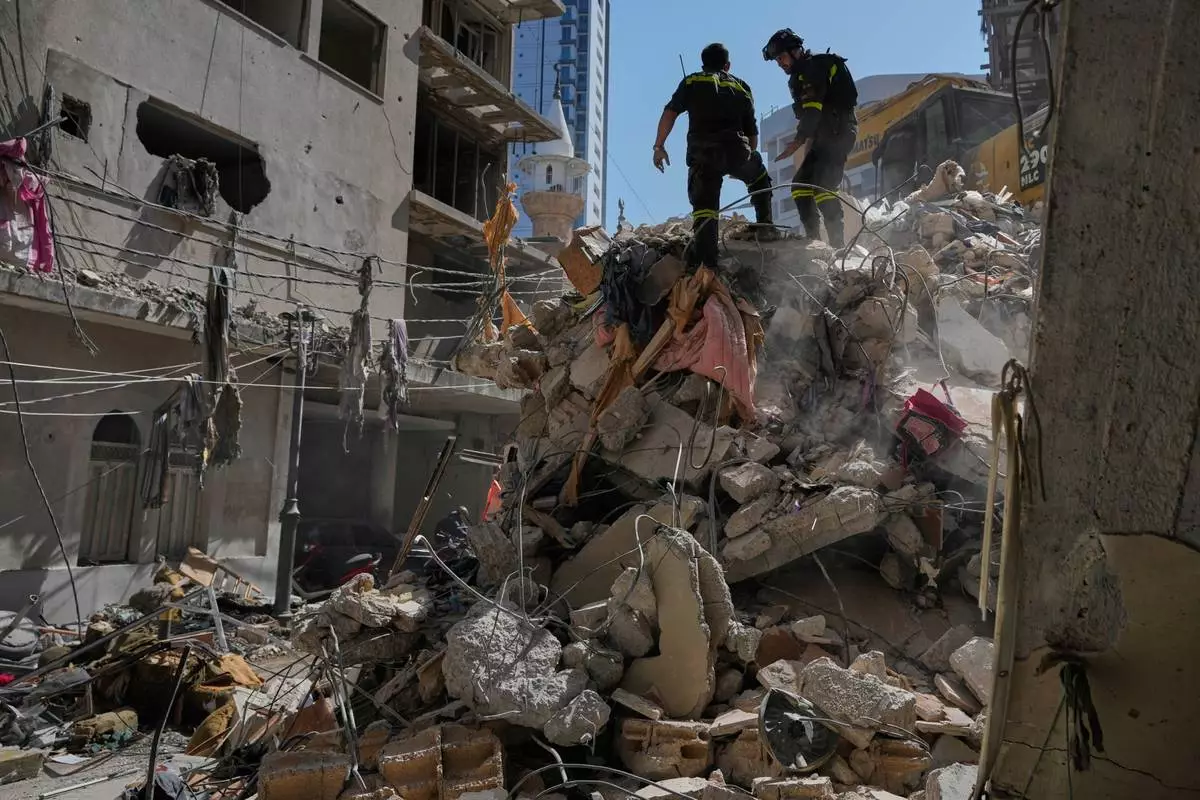
Lebanese civil defense workers inspect the rubble at the site of a building destroyed in an Israeli airstrike a day earlier in Beirut, Lebanon, Thursday, April 9, 2026. (AP Photo/Hussein Malla)
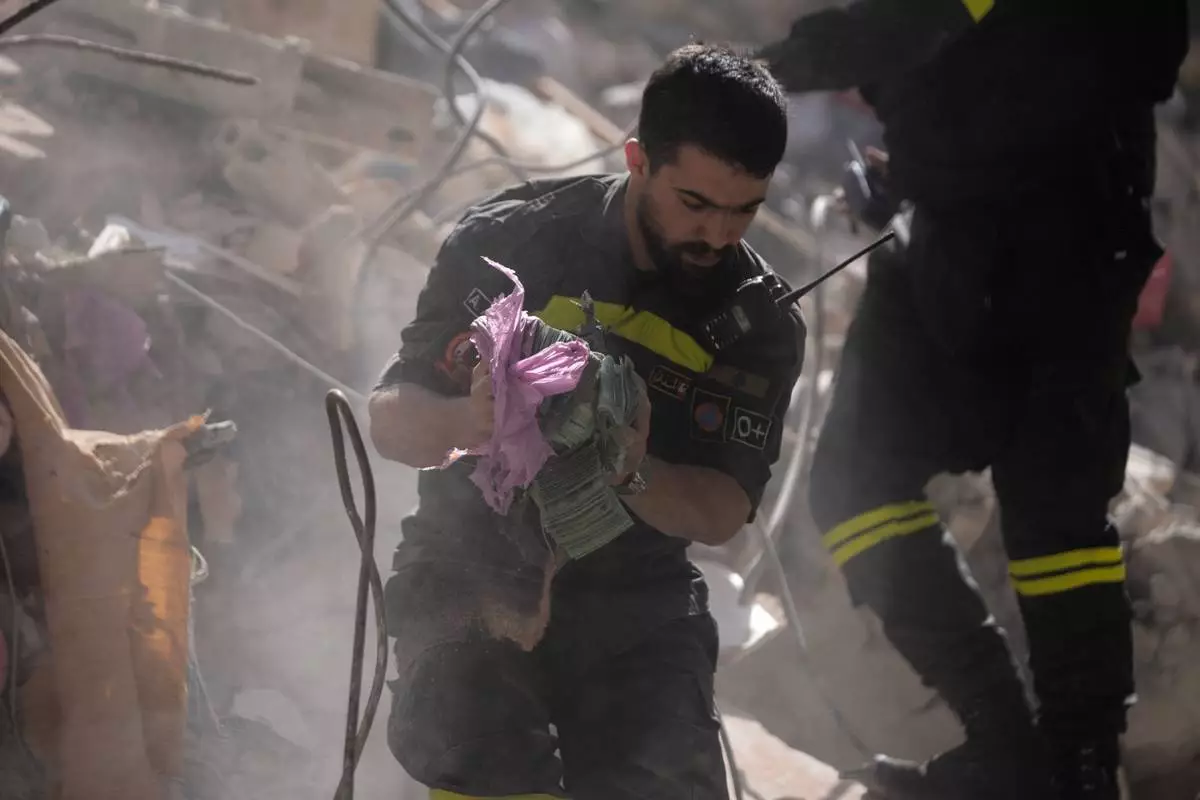
A rescue worker holds money recovered from the rubble of a destroyed building that was hit a day ahead in an Israeli airstrike in central Beirut, Lebanon, Thursday, April 9, 2026. (AP Photo/Hussein Malla)