The Justice Department is investigating the NFL for potential anticompetitive practices, according to a government official.
The official, who was not authorized to discuss an ongoing investigation by name and spoke on condition of anonymity Thursday, said the investigation is “about affordability for consumers and creating an even playing field for providers.”
The investigation was first reported by The Wall Street Journal.
The NFL has not received a notification that the league is being investigated, according to two other people with knowledge of the situation. Those people spoke on condition of anonymity because they are not authorized to speak on possible legal matters.
The investigation comes amid increasing federal scrutiny of the amount of money fans are paying to watch sports on television. The Federal Communications Commission, for example, is seeking public comments on the ongoing shift of live sports from broadcast channels to streaming services.
The NFL said in a statement Thursday that over 87% of its games are available on broadcast television, including all that are played in a team's local market.
“The NFL’s media distribution model is the most fan and broadcaster-friendly in the entire sports and entertainment industry. The 2025 season was our most viewed since 1989 and reflects the strength of the NFL distribution model and its wide availability to all fans,” the league said in its statement.
Utah Sen. Mike Lee, chair of the Senate judiciary subcommittee on antitrust, competition policy, and consumer rights, wrote a letter to the Justice Department and the Federal Trade Commission on March 3 urging them to review whether the NFL’s distribution methods are in line with the Sports Broadcasting Act, which grants limited antitrust immunity to allow teams to collectively license game broadcasts to national networks.
“The modern distribution environment differs substantially from the conditions that precipitated this exemption. Instead of a small number of free broadcast networks, the NFL now licenses games simultaneously to subscription streaming platforms, premium cable networks, and technology companies operating under different business models,” the Republican senator wrote. “To the extent collectively licensed game packages are placed behind subscription paywalls, these arrangements may no longer align with the statutory concept of sponsored telecasting or the consumer-access rationale underlying the antitrust exemption.”
Lee said in his letter that football fans spent almost $1,000 on cable and streaming subscriptions. Forbes estimated the cost of watching every NFL game via streaming last season at $765.
The NFL aired games last season on CBS, NBC, ABC/ESPN/ESPN+, Fox, NFL Network, Amazon Prime Video, Netflix and YouTube TV.
The league averages nearly $11 billion per season in revenue from its media deals. That could increase since the sale of Paramount to Skydance Media allows the league to renegotiate its deal with CBS.
The rights deals go through 2033 with most outlets and 2034 with ESPN. The league has an opt-out clause after the 2029 season, which it is likely to exercise since 83 of the top 100 broadcasts last year were NFL games, according to Nielsen.
The Sports Broadcasting Act exemption passed in 1961 applies only to broadcast television. Courts have ruled in the past that it does not apply to other media, including cable, satellite and streaming.
The law includes a rule allowing blackouts of local games, which still applies to out-of-market packages sold by the league. The NFL ended local TV blackouts, which applied to games within 75 miles of a team’s market if they did not sell out 72 hours before kickoff, after the 2014 season.
Last year, the House Judiciary Committee requested briefings from the NFL, NBA, NHL and MLB on whether antitrust exemptions should still be granted for coordinating their broadcast television rights.
All four of the major North American professional sports leagues have deals with streaming platforms.
In 2024, a jury in U.S. District Court in Los Angeles ruled the NFL violated antitrust laws in distributing out-of-market Sunday afternoon games on a premium subscription service and awarded $4.7 billion in damages.
A federal judge overturned the verdict in the class-action lawsuit because the testimony of two witnesses for the subscribers had flawed methodologies and should have been excluded.
The lawsuit covered 2.4 million residential subscribers and 48,000 businesses in the United States who paid for the “Sunday Ticket” package on DirecTV of out-of-market games from the 2011 through 2022 seasons.
Because damages can be tripled under federal antitrust laws, the NFL could have been liable for $14,121,779,833.92.
AP NFL: https://apnews.com/hub/nfl
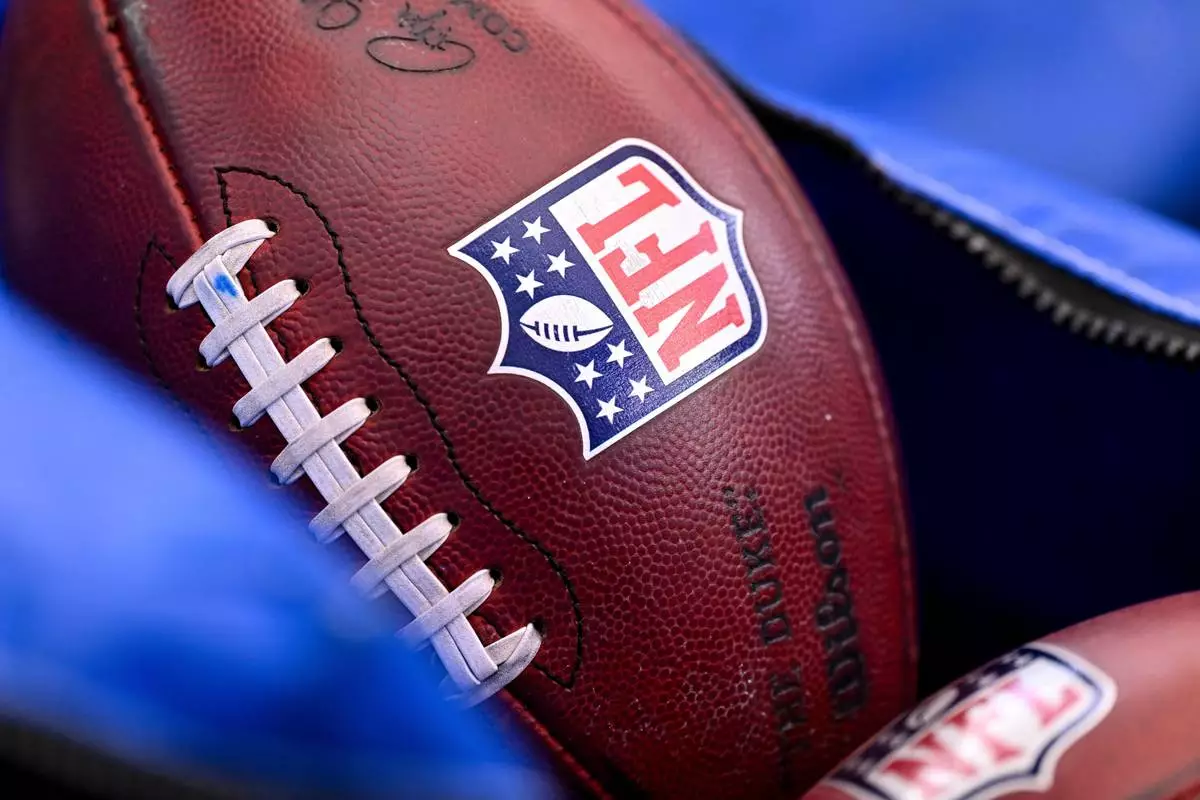
FILE - A detail view of the NFL shield on a football prior to an NFL football game between the Houston Texans and the Indianapolis Colts on Jan. 4, 2026, in Houston. (AP Photo/Maria Lysaker, File)
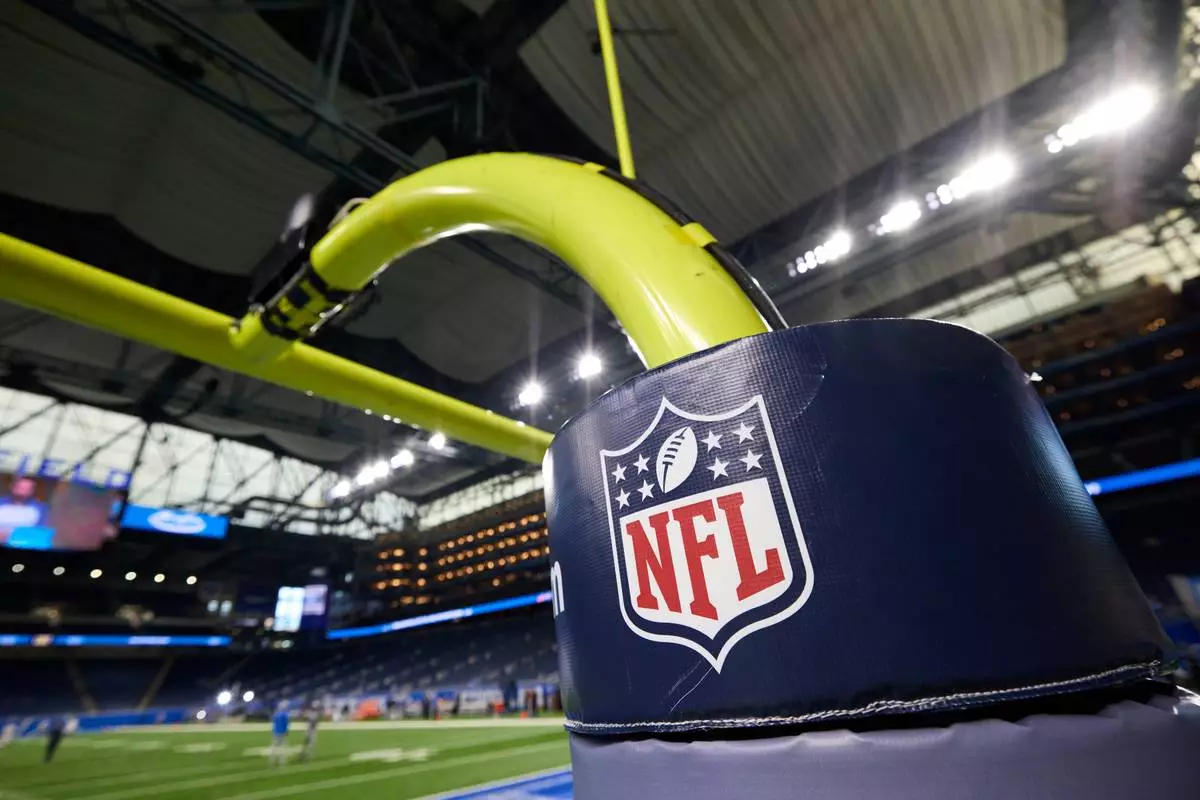
FILE - In this Aug. 13, 2021, file photo, an NFL logo is displayed on a goal post pad during an NFL preseason football game between the Buffalo Bills and Detroit Lions in Detroit. (AP Photo/Rick Osentoski, File)
A new reality is setting in for travelers worldwide: rising fares and fees, fewer flight options and difficult decisions about whether a trip is worth the cost.
The culprit is volatile oil and jet fuel prices, which have spiked sharply since the war in the Middle East began and fighting near the Strait of Hormuz created a chokepoint for global oil supplies.
“Volatility is the real story here,” said Shye Gilad, a former airline captain who now teaches at Georgetown University's business school. “Right now, the airlines are trying to make bets on what they think will happen in the future."
Airlines are responding cautiously, trimming schedules and adjusting prices in ways that experts say will ripple unevenly across the market but ultimately affect nearly every type of traveler.
Budget airlines and the customers who rely on them are likely to feel the pinch first and most acutely, experts say, but even travelers in premium cabins won’t escape the higher prices and less convenient schedules.
Oil prices have swung wildly in recent weeks, briefly topping $119 a barrel at one point, plunging Wednesday below $95 on news of a two-week ceasefire that temporarily reopened the Strait of Hormuz, and then climbing back toward $100 on Thursday as uncertainty over the fragile deal grew. Iran again closed the key artery for global oil shipments in response to Israeli strikes Wednesday in Lebanon.
“When prices move quickly in both directions, it’s very hard for airlines to make predictions,” Gilad said.
In other words, even when oil prices drop, travelers may not see relief right away.
“At this level of fuel, it’s hard to call anything temporary," Delta Air Lines CEO Ed Bastian told reporters this week after the Atlanta-based carrier raised its checked baggage fees.
Bastian said Wednesday as Delta kicked off the earnings season for U.S. airlines that the higher fuel prices are expected to add $2 billion in operating expenses in the second quarter alone. United Airlines CEO Scott Kirby said in a recent memo to staff that if fuel prices stay elevated, it could add $11 billion in annual costs.
“For perspective,” Kirby wrote, “in United’s best year ever, we made less than $5B.”
According to the International Air Transport Association, the average global jet fuel price rose to $209 per barrel last week, up from roughly $99 at the end of February when the war started. Travelers from the U.S. to Hong Kong and New Delhi are paying the price.
U.S. carriers are embedding the higher operating costs into ticket prices and add-on fees. Delta, United, American Airlines, Southwest Airlines and JetBlue have all increased checked baggage fees.
Both United and American are also moving beyond add-ons to adjust pricing. United said last week it is bringing the “pay for what you want” approach already standard in economy to its premium cabins, turning perks like advanced seat selection and fully refundable tickets into optional extras.
American announced Thursday that passengers in basic economy will have to pay extra to pick their seat beginning May 18, including elite-tier loyalty members. And later this year, basic economy passengers without elite status or an eligible co-branded credit card will be assigned to boarding Group 7, while those with higher status will still board earlier even when purchasing the lowest fare.
Hong Kong’s Cathay Pacific recently bumped fuel surcharges by roughly 34% across all routes, while Air India on Monday added up to $280 in fees to some flights. Emirates, Lufthansa and KLM have also adjusted fees or fares to keep pace with the price volatility.
Experts say flexibility and careful planning can help offset these costs. Fare-tracking sites can alert travelers to price changes and help them compare multiple options in one place. Booking early and checking nearby airports can lock in better prices, while refundable tickets make it easier to cancel and rebook if fares drop. Traveling light with just a carry-on can also help avoid the rising bag fees.
For business travelers, the costs are already shaping their decisions. Bill Moorehouse, a solutions director who flies for work every four to six weeks, said the uncertainty may keep him closer to home for now.
“When you have business trips and you have a carefully coordinated schedule, you don’t want unknowns and disruptions. And right now, it just feels like it’s more likely that things could go wrong and throw your trip off course,” the Cupertino, California, resident said.
Richard Groberg, an investment banker from Las Vegas who visits clients around the U.S., said he plans to book as early as possible to lock in the best fares.
“There's sometimes no substitute for in-person meetings and building relationships,” he said. “As travel becomes more expensive, that becomes a tougher decision to make those investments.”
Even family visits are on his mind. Groberg's brother hopes he'll stop in Vermont next time he's in New York for work, but Groberg admits, “I start thinking maybe I should drive instead because this is getting so expensive.”
Airlines, meanwhile, are also adjusting how much they fly.
BNP Paribas estimates that global schedules for April have been cut roughly 5% compared with earlier plans. Most reductions are in the Middle East, the global investment bank said, though smaller cuts were also emerging in Europe, Asia and North America.
United Airlines is cutting about 5% of its planned flights in the near term, trimming less profitable routes and suspending some international service temporarily rather than “burning cash” on trips that can’t absorb the more expensive fuel costs. The airline's CEO said the cuts will target redeye flights and routes on historically slower travel days such as Tuesday, Wednesday and Saturday.
Delta is scrapping plans to add more flights and seats in June, leaving about 3.5% fewer seats than originally planned.
These moves show why major carriers are better positioned to weather the spike in fuel prices than budget carriers, whose “no frills” model leaves them with less flexibility. Bigger airlines can lean on dynamic pricing, sell more seats at higher fares or swap in larger planes on certain routes, letting them cut flights without losing overall capacity.
“Leisure travelers and budget conscious travelers are going to absolutely feel it first because it may make the difference between going and not going,” Gilad said.
It's already made the difference for Anna Del Vecchio. The 36-year-old Seattle resident has made it an annual springtime tradition to visit family in Philadelphia before flying to Paris to see friends she's known since she was a teenager.
Her credit card points typically cover the roundtrip flight, but ticket prices now hover around $1,400 — about double what she has paid in past years.
“It wasn’t even scratching the surface for the flight this time," she said, “so I decided to delay the trip.”
But if airfare tops $1,500, she might not be able to make a journey she hasn't missed in years.
“It might be the kind of thing where it just ends up being that I have to travel less.”
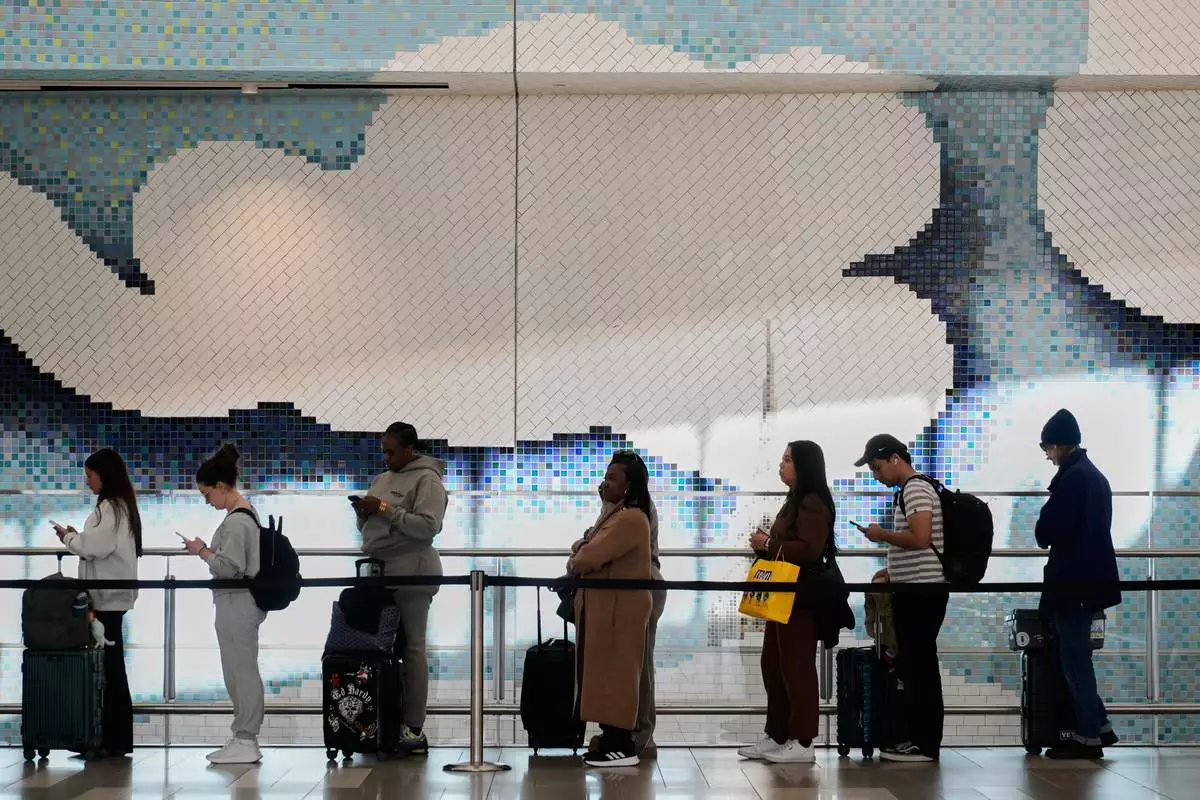
Travelers wait in a lines to get through security at LaGuardia Airport in New York, Monday, March 30, 2026. (AP Photo/Seth Wenig)
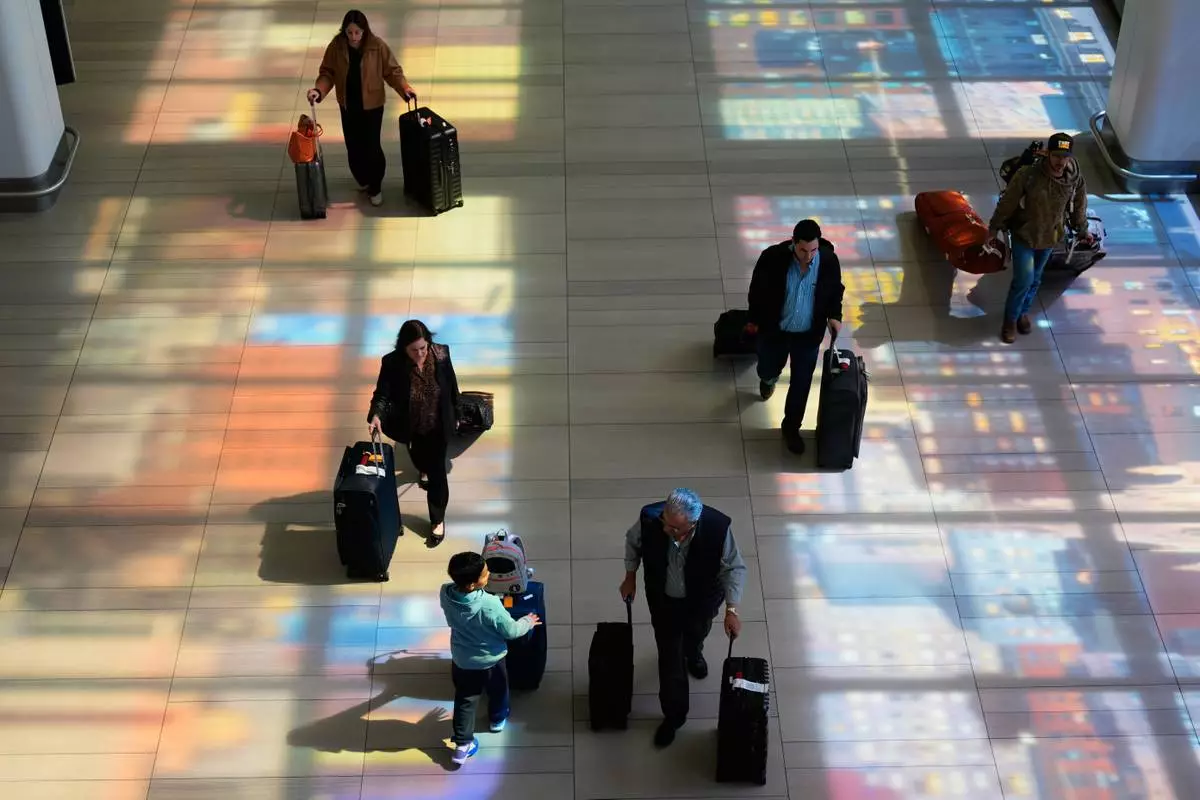
Stained-glass windows cast colorful shadows on the floor as travelers walk through LaGuardia Airport in New York, Monday, March 30, 2026. (AP Photo/Seth Wenig)