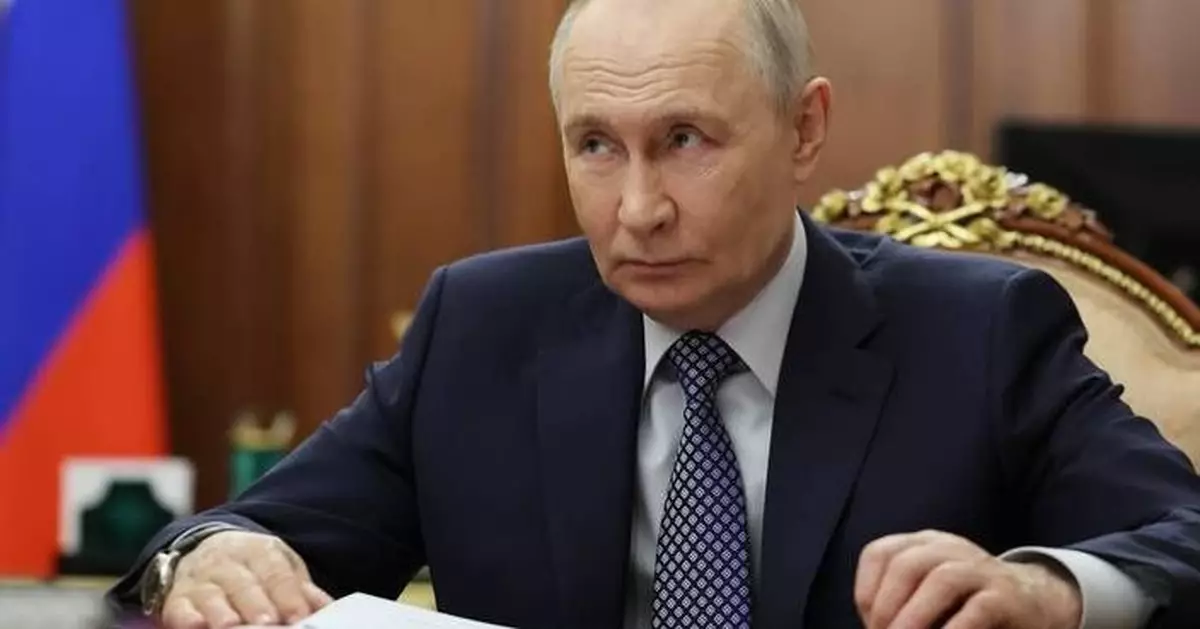
Russian President Vladimir Putin on Thursday declared a 32-hour ceasefire in Ukraine over the Orthodox Easter weekend, following an earlier call from Ukrainian President Volodymyr Zelenskyy for a pause in some of the hostilities to observe the holiday.
Putin’s decree, released by the Kremlin, orders Russian forces to observe a ceasefire starting on 4 p.m. Saturday and lasting until the end of Sunday.
Zelenskyy proposed earlier in the week that each side stop targeting each other’s energy infrastructure over the holiday, saying he made the offer through the United States, which has been mediating talks between delegations from Moscow and Kyiv as Russia’s invasion stretches into a fifth year.
There was no immediate reaction from Kyiv to Putin’s announcement.
Previous attempts to secure ceasefires have had little or no impact. Putin unilaterally declared a 30-hour ceasefire last Easter, but each side accused the other of breaking it.
The Kremlin statement announcing the ceasefire said that “orders have been issued for this period to cease hostilities in all directions,” adding that “troops are to be prepared to counter any possible provocations by the enemy, as well as any aggressive actions.”
“We assume that the Ukrainian side will follow the example of the Russian Federation,” it said.
Russia has effectively rejected a 30-day unconditional truce proposed last year by the U.S. and Ukraine as a step toward peace, insisting instead on a comprehensive settlement, but Moscow has announced several short, unilateral ceasefires.
The U.S.-led talks have made no progress on key issues, and Washington’s attention has switched to the Middle East conflict while the Russian and Ukrainian armies remain locked in battle on the roughly 1,250-kilometer (800-mile) front line.
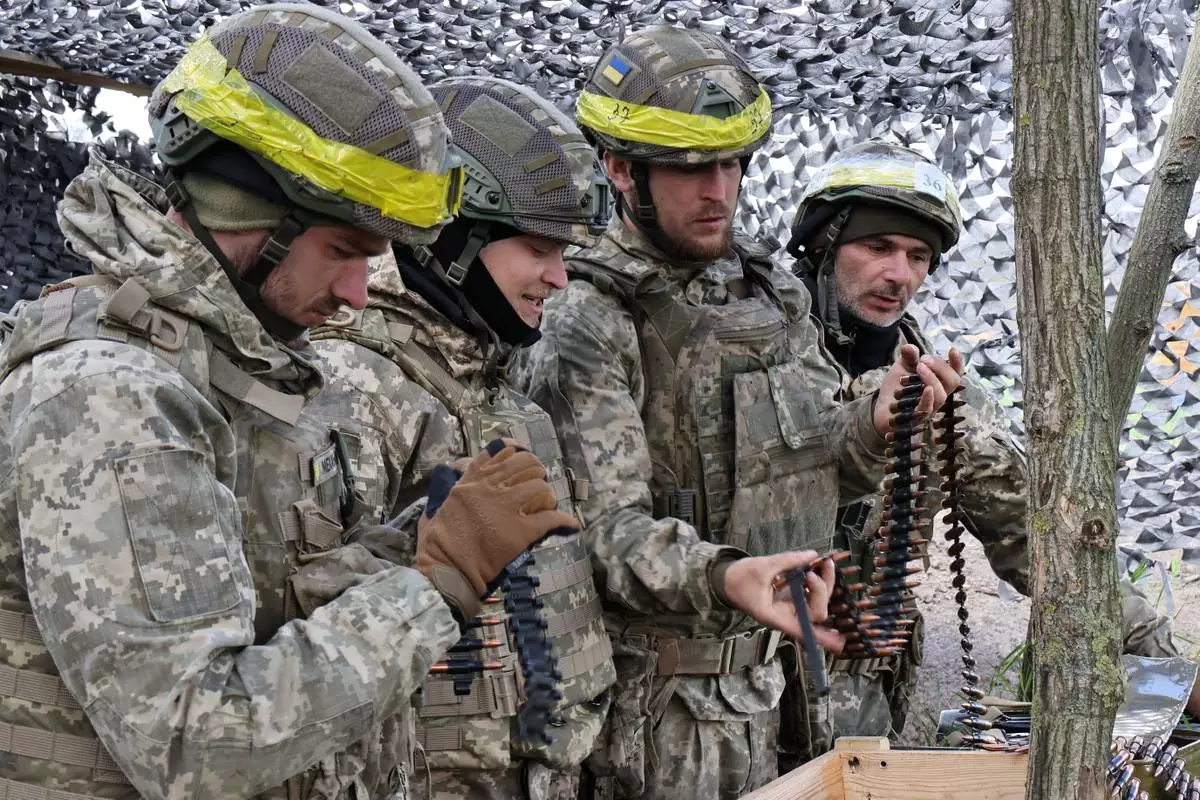
In this photo provided by Ukraine's 65th Mechanized Brigade press service, recruits practice military skills at a training ground near the frontline in the Zaporizhzhia region, Ukraine, Wednesday, April 8, 2026. (Andriy Andriyenko/Ukraine's 65th Mechanized Brigade via AP)
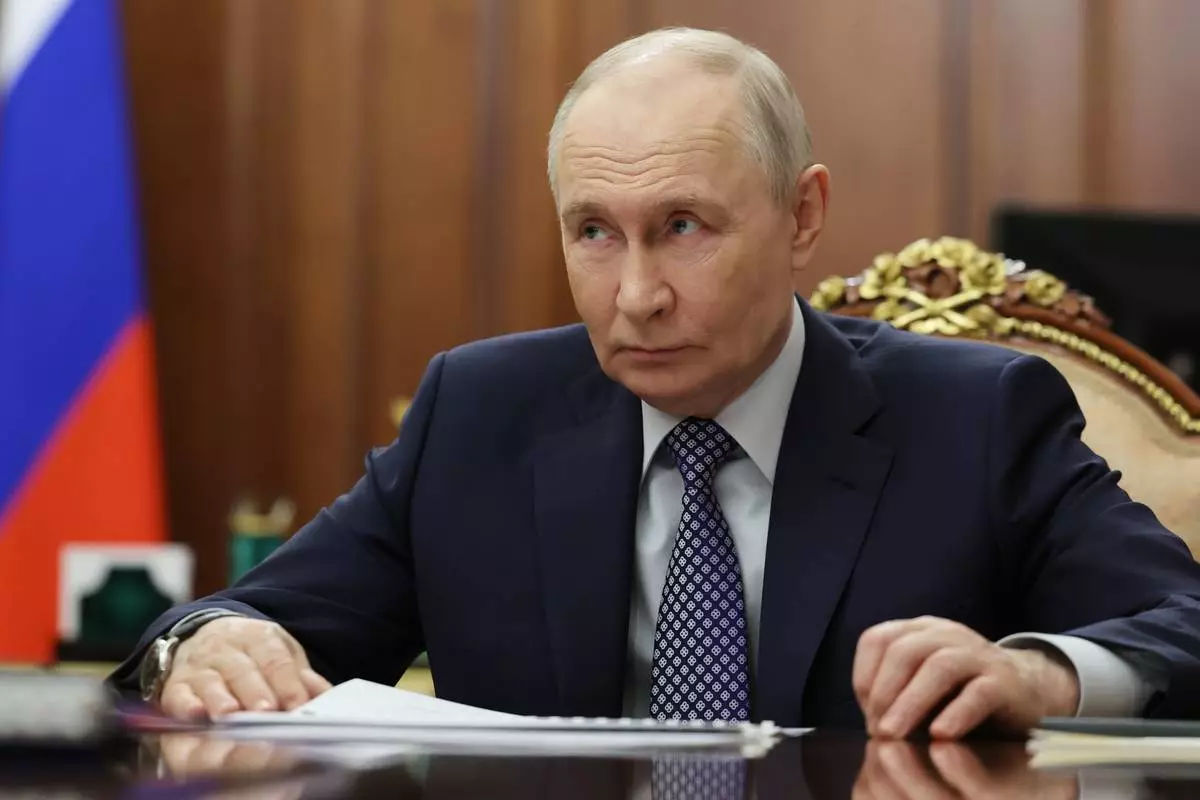
Russian President Vladimir Putin listens to Deputy Prime Minister, Chief of the Government Staff Dmitry Grigorenko during their meeting at the Kremlin, in Moscow, Thursday, April 9, 2026. (Alexander Kazakov/Sputnik, Kremlin Pool Photo via AP)
NEW YORK (AP) — U.S. stocks rose, even though oil prices did too, as financial markets moved more modestly a day after surging on optimism about a ceasefire in the war with Iran. After beginning Thursday with moderate losses following drops for Asian and European stocks, the S&P 500 erased its dip and rose 0.6%. The Dow Jones Industrial Average climbed 0.6%, and the Nasdaq composite added 0.8% after Israel’s prime minister authorized direct negotiations with Lebanon. That eased worries that the two-week ceasefire announced late Tuesday may already be in trouble. Oil prices pared some of their earlier gains but nevertheless remained higher.
THIS IS A BREAKING NEWS UPDATE. AP’s earlier story follows below.
NEW YORK (AP) — U.S. stocks rose Thursday, even though oil prices did too, as financial markets moved more modestly a day after surging on optimism about a ceasefire in the war with Iran.
The morning began with modest losses for Wall Street following drops for Asian and European stocks. But the S&P 500 erased its dip and was up by 0.5% in late trading after Israel's prime minister authorized direct negotiations with Lebanon. That eased worries that the two-week ceasefire announced late Tuesday may already be in trouble because of Israel's bombardment of Lebanon.
The Dow Jones Industrial Average was up by 273 points, or 0.5%, with an hour remaining in trading, and the Nasdaq composite was 0.6% higher after both indexes likewise recovered from early losses.
Crude oil prices pared some of their gains, but they nevertheless remained higher for the day on continued uncertainty about when oil tankers can start fully flowing through the Strait of Hormuz. The narrow waterway has been at the center of President Donald Trump’s demands of Iran, and blockages there have kept oil and natural gas stuck in the Persian Gulf and away from customers worldwide.
The price for a barrel of benchmark U.S. crude rose 3.7% to settle at $97.87 after briefly nearing $103 in the morning. Brent crude, the international standard, added 1.2% to $95.92 per barrel.
Given how far apart the United States and Iran seem to be in their demands, upward pressure on oil prices may be “here to stay for a while” according to strategists at Macquarie led by Thierry Wizman. Risks remain for renewed fighting, which could cause customers worldwide to hoard whatever oil supplies they do get. That could itself keep oil off the market, much like actual fighting targeting pipelines or oil tankers.
Oil prices have been swinging through sharp and sudden reversals for weeks with hopes for the Strait of Hormuz to fully reopen and allow production of oil and natural gas to kick back into gear. Brent oil has gone from roughly $70 per barrel before the war in late February to more than $119 at times.
Despite all the swings, the U.S. stock index at the heart of many 401(k) accounts isn't far from its all-time high. The S&P 500 is just 2.3% below its record set in January.
Constellation Brands climbed 7.9% for one of the index's biggest gains on Thursday after reporting stronger results for the latest quarter than analysts expected. The company, which sells Modelo beer and Robert Mondavi wines, said it saw encouraging trends heading into its new fiscal year. But it pulled its financial forecasts for the following fiscal year because of “limited near-term visibility” and other factors.
CoreWeave rallied 3.1% after announcing an expanded, $21 billion deal with Meta Platforms to provide AI cloud capacity through December 2032. Meta rose 2.5%.
On the losing end of Wall Street was Simply Good Foods, which sank 20.7% after reporting a worse drop in revenue than analysts expected. CEO Joe Scalzo called the results unsatisfactory and said the company behind the Quest and Atkins brands is making immediate changes to turn around its performance.
Mixed reports on the U.S. economy also helped keep Wall Street in check. One said an underlying measure of inflation that the Federal Reserve considers important was slightly hotter in February than economists expected. It decelerated before the war with Iran began, but not by as much as economists expected.
A separate report said that more U.S. workers applied for unemployment benefits last week than economists expected. The number was not very high compared with history, but it could indicate an acceleration in layoffs.
Treasury yields swiveled up and down in the bond market following the reports before pulling back close to where they were the day before.
The yield on the 10-year Treasury remained at 4.29%, where it late Wednesday. It's still well above its 3.97% level from before the war, which has sent rates up for mortgages and other kinds of loans going to U.S. households and businesses.
If oil prices stay high and keep upward pressure on inflation, the Federal Reserve would have a tough time resuming its cuts to interest rates to help the slowing economy, even if the job market weakens. A growing number of Fed officials seem to be considering the possibility of a hike in rates, according to minutes of their latest meeting released on Wednesday.
In stock markets abroad, South Korea’s Kospi fell 1.6%, and Germany’s DAX lost 1.1% for two of the world’s biggest moves.
AP Writers Chan Ho-him, Matt Ott and Aniruddha Ghosal contributed to this report.
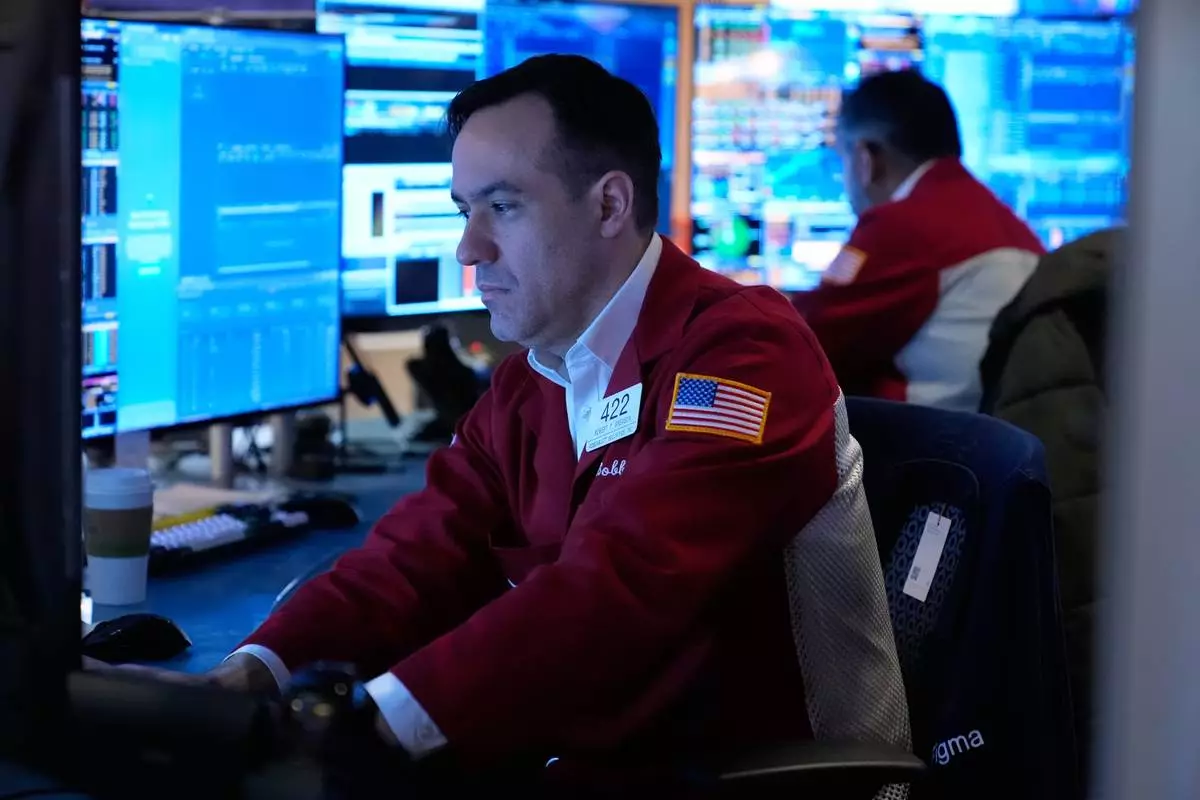
Robert Greason works on the floor at the New York Stock Exchange in New York, Tuesday, April 7, 2026. (AP Photo/Seth Wenig)
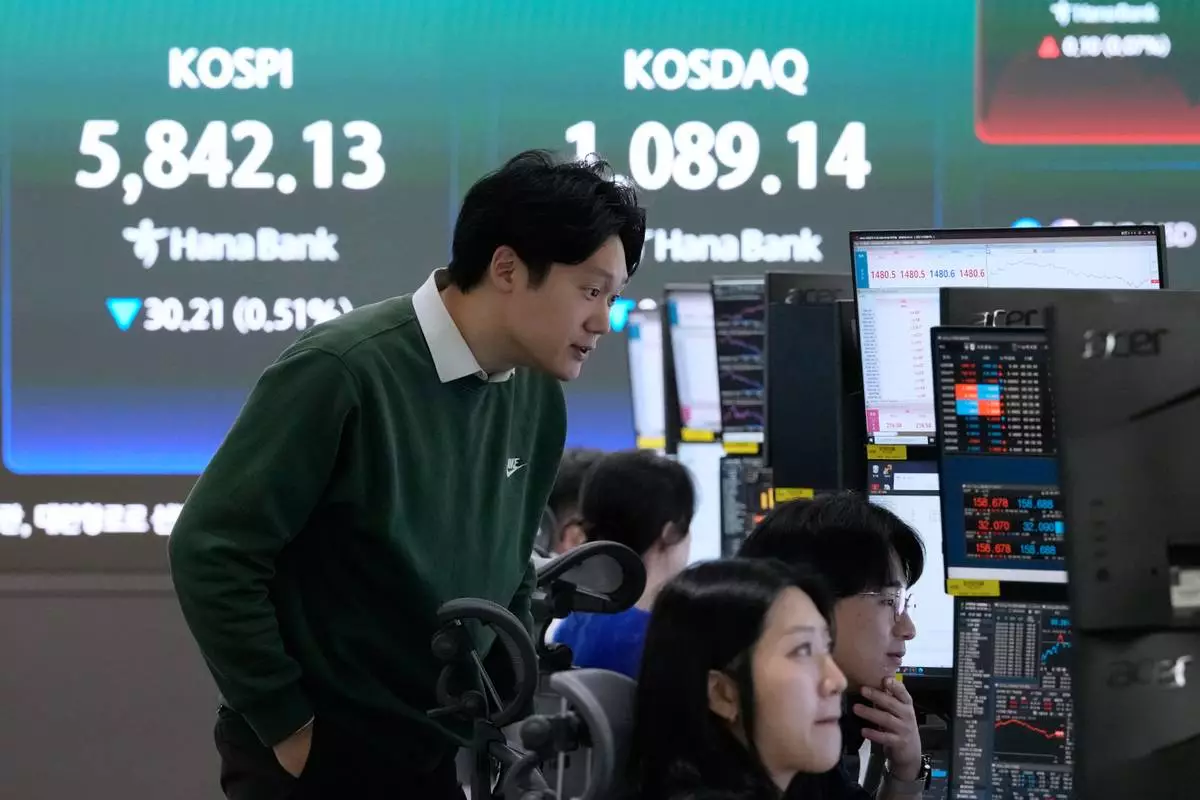
Currency traders watch monitors near a screen showing the Korea Composite Stock Price Index (KOSPI), top left, at the foreign exchange dealing room of the Hana Bank headquarters in Seoul, South Korea, Thursday, April 9, 2026. (AP Photo/Ahn Young-joon)

Currency traders work near a screen showing the Korea Composite Stock Price Index (KOSPI), top center, and the foreign exchange rate between U.S. dollar and South Korean won, top center left, at the foreign exchange dealing room of the Hana Bank headquarters in Seoul, South Korea, Thursday, April 9, 2026. (AP Photo/Ahn Young-joon)

A currency trader works near a screen showing international oil prices at the foreign exchange dealing room of the Hana Bank headquarters in Seoul, South Korea, Thursday, April 9, 2026. (AP Photo/Ahn Young-joon)