Skip to Content Facebook Feature Image

Vance warns Iran not to 'play' the US as he departs for negotiations aimed at ending the war

News

Vance warns Iran not to 'play' the US as he departs for negotiations aimed at ending the war
News

News

Vance warns Iran not to 'play' the US as he departs for negotiations aimed at ending the war

2026-04-11 06:00 Last Updated At:06:10

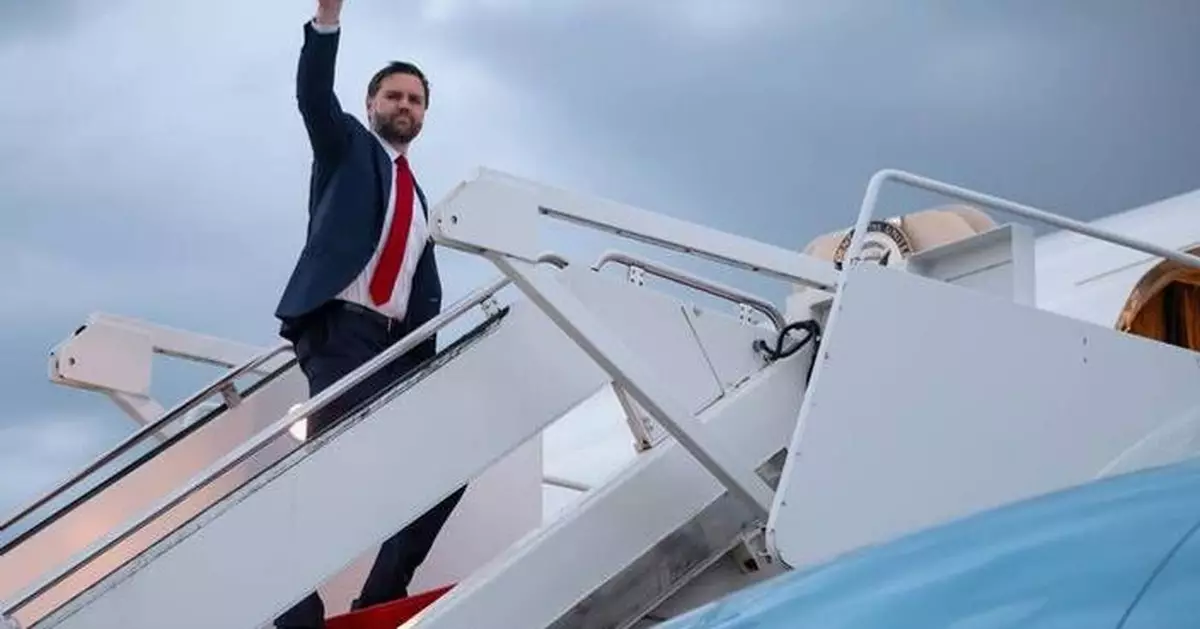
WASHINGTON (AP) — Vice President JD Vance on Friday warned Iran not to “play” the U.S. as he headed overseas for negotiations aimed at ending the war.

President Donald Trump has tasked the member of his inner circle who has seemed to be the most reluctant defender of the 6-week-old conflict with Iran to now find a resolution and stave off the U.S. president's astonishing threat to wipe out its “whole civilization.”

More Images
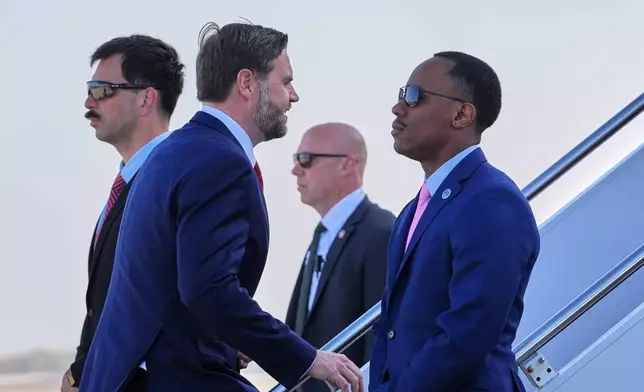
Vice President JD Vance boards Air Force Two, Friday, April 10, 2026, at Joint Base Andrews, Md., for expected departure to Pakistan, for talks on Iran. (AP Photo/Jacquelyn Martin, pool)
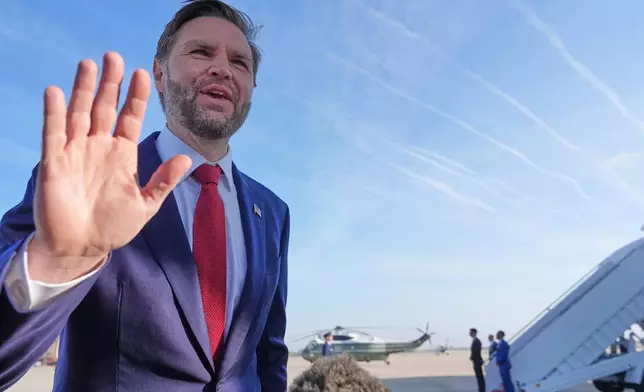
Vice President JD Vance boards Air Force Two, Friday, April 10, 2026, at Joint Base Andrews, Md., for expected departure to Pakistan, for talks on Iran. (AP Photo/Jacquelyn Martin, pool)
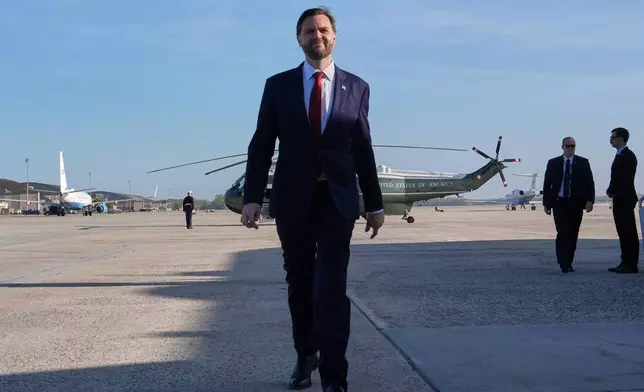
Vice President JD Vance speaks to the press before boarding Air Force Two, Friday, April 10, 2026, at Joint Base Andrews, Md., for expected departure to Pakistan, for talks on Iran. (AP Photo/Jacquelyn Martin, pool)
Vice President JD Vance speaks to the press before boarding Air Force Two, Friday, April 10, 2026, at Joint Base Andrews, Md., for expected departure to Pakistan, for talks on Iran. (AP Photo/Jacquelyn Martin, pool)

Vice President JD Vance walks to speak with the Press before boarding Air Force Two, Friday, April 10, 2026, at Joint Base Andrews, Md., for expected departure to Pakistan, for talks on Iran. (AP Photo/Jacquelyn Martin, pool)

Vice President JD Vance walks to speak with the Press before boarding Air Force Two, Friday, April 10, 2026, at Joint Base Andrews, Md., for expected departure to Pakistan, for talks on Iran. (AP Photo/Jacquelyn Martin, pool)

Vice President JD Vance aboard, walking far left, arrives, Friday, April 10, 2026, at Joint Base Andrews, Md., where Vance will board Air Force Two, seal right, and depart to Pakistan, for talks on Iran. (AP Photo/Jacquelyn Martin, pool)
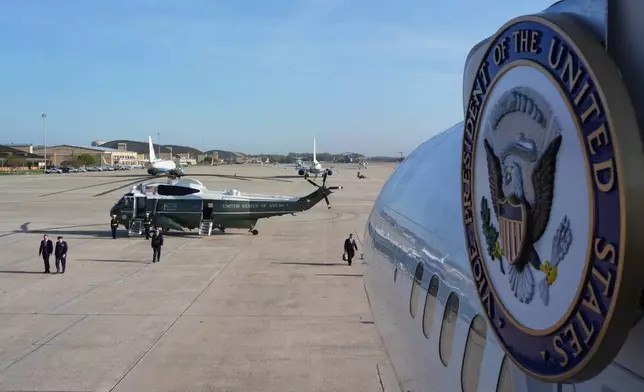
Vice President JD Vance aboard, walking far left, arrives, Friday, April 10, 2026, at Joint Base Andrews, Md., where Vance will board Air Force Two, seal right, and depart to Pakistan, for talks on Iran. (AP Photo/Jacquelyn Martin, pool)

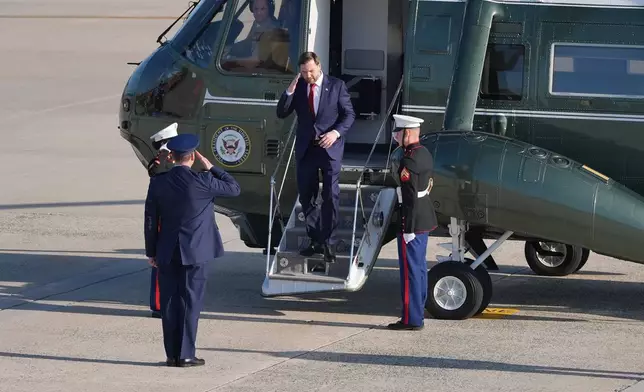
Vice President JD Vance walks off Marine Two to walk and board Air Force Two, Friday, April 10, 2026, at Joint Base Andrews, Md., for expected departure to Pakistan, for talks on Iran. (AP Photo/Jacquelyn Martin, pool)
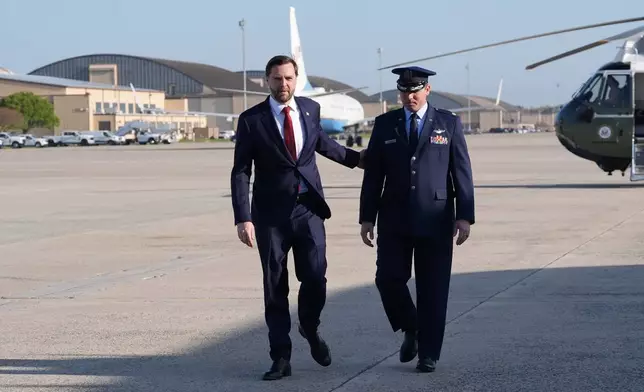
Vice President JD Vance walks off Marine Two to walk and board Air Force Two, Friday, April 10, 2026, at Joint Base Andrews, Md., for expected departure to Pakistan, for talks on Iran. (AP Photo/Jacquelyn Martin, pool)
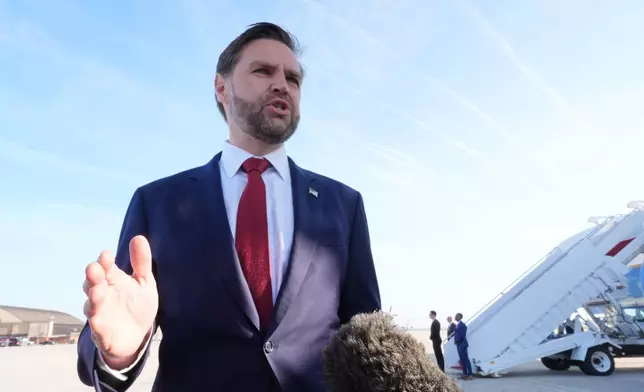
Vice President JD Vance walks to board Air Force Two, Friday, April 10, 2026, at Joint Base Andrews, Md., for expected departure to Pakistan, for talks on Iran. (AP Photo/Jacquelyn Martin, pool)
Vice President JD Vance walks to board Air Force Two, Friday, April 10, 2026, at Joint Base Andrews, Md., for expected departure to Pakistan, for talks on Iran. (AP Photo/Jacquelyn Martin, pool)

Vice President JD Vance speaks to the press before boarding Air Force Two, Friday, April 10, 2026, at Joint Base Andrews, Md., for expected departure to Pakistan, for talks on Iran. (AP Photo/Jacquelyn Martin, pool)

Vice President JD Vance speaks to the press before boarding Air Force Two, Friday, April 10, 2026, at Joint Base Andrews, Md., for expected departure to Pakistan, for talks on Iran. (AP Photo/Jacquelyn Martin, pool)

Vice President JD Vance, left, and Secretary of State Marco Rubio attend a meeting in the Oval Office at the White House, March 3, 2026, in Washington. (AP Photo/Mark Schiefelbein, file)
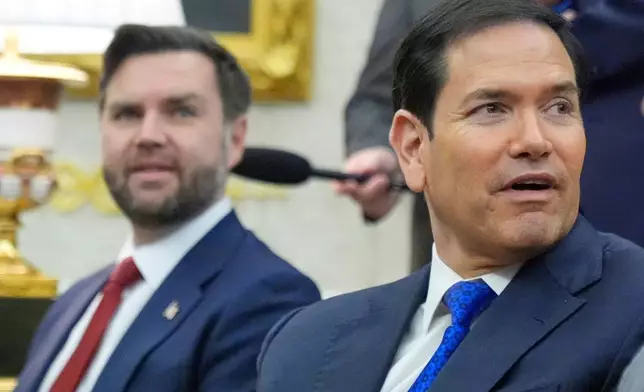
Vice President JD Vance, left, and Secretary of State Marco Rubio attend a meeting in the Oval Office at the White House, March 3, 2026, in Washington. (AP Photo/Mark Schiefelbein, file)

Vice President JD Vance speaks to reporters before boarding Air Force Two to return to Washington, at Budapest Ferenc Liszt International Airport in Budapest, Hungary, Wednesday, April 8, 2026. (Jonathan Ernst/Pool via AP)
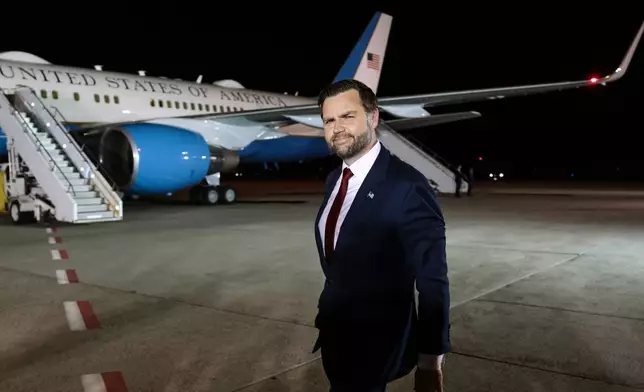
Vice President JD Vance speaks to reporters before boarding Air Force Two to return to Washington, at Budapest Ferenc Liszt International Airport in Budapest, Hungary, Wednesday, April 8, 2026. (Jonathan Ernst/Pool via AP)
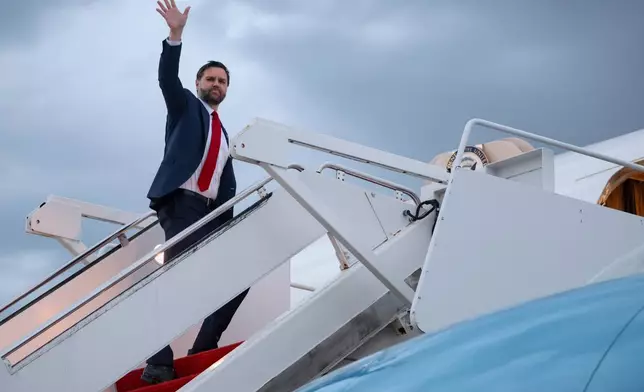
Vice President JD Vance pauses after speaking to reporters before boarding Air Force Two to return to Washington, at Budapest Ferenc Liszt International Airport in Budapest, Hungary, Wednesday, April 8, 2026. (Jonathan Ernst/Pool via AP)

Vice President JD Vance pauses after speaking to reporters before boarding Air Force Two to return to Washington, at Budapest Ferenc Liszt International Airport in Budapest, Hungary, Wednesday, April 8, 2026. (Jonathan Ernst/Pool via AP)

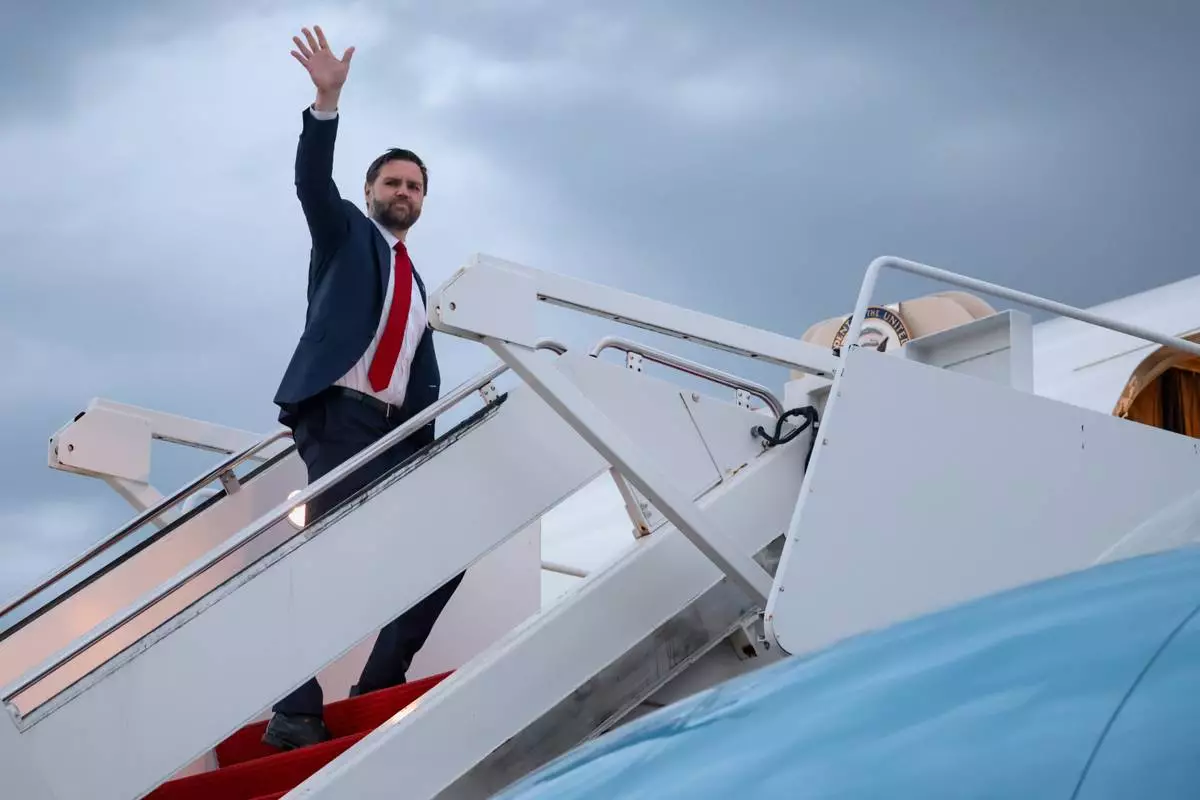
Vice President JD Vance waves as he boards Air Force Two to depart for Budapest, at Joint Base Andrews, Md., Monday, April 6, 2026. (Jonathan Ernst/Pool via AP)

Vice President JD Vance waves as he boards Air Force Two to depart for Budapest, at Joint Base Andrews, Md., Monday, April 6, 2026. (Jonathan Ernst/Pool via AP)

Vance, who has long been skeptical of foreign military interventions and outspoken about the prospect of sending troops into open-ended conflicts, set off Friday to lead mediated talks with Iran in the Pakistani capital of Islamabad.

“If the Iranians are willing to negotiate in good faith, we’re certainly willing to extend the open hand,” Vance told reporters before boarding Air Force Two to make his way to the talks in Pakistan. But he added, “If they’re gonna try and play us, then they’re gonna find that the negotiating team is not that receptive.”

Vance's trip comes as a tenuous, temporary ceasefire appears to be on the precipice of collapsing. The chasm between Iran’s public demands and those from the U.S. and its partner Israel seems irreconcilable. And in the U.S., where Vance might ask voters in two years’ time to make him the next president, there is growing political and economic pressure to wrap it up.

As Vance made his way to the Pakistani capital of Islamabad, Iran's parliament speaker Mohammad Bagher Qalibaf said in a social media post that a ceasefire in Lebanon, where Israel is targeting Iran-backed Hezbollah militants, and the release of blocked Iranian assets “must be fulfilled before negotiations begin.” He did not elaborate further.

Qalibaf and other senior Iranian officials arrived in Islamabad, Pakistan, later on Friday ahead of Vance. The Iranian delegation for the talks, which is slated to begin Saturday, also includes Foreign Minister Abbas Araghchi, Ali Akbar Ahmadian, secretary of the Supreme National Defense Council, Central Bank Governor Abdolnasser Hemmati, and several lawmakers. It was received at the airport by Pakistan’s Foreign Minister Ishaq Dar and other senior Pakistani government officials.

Pakistani Prime Minister Shehbaz Sharif, in a televised address to his nation on Friday, described the talks as a “make-or-break moment” for the two sides.

Vance is joined by Trump's special envoy Steve Witkoff and Trump's son-in-law Jared Kushner, who took part in three rounds of indirect talks with Iranian negotiators aimed at settling U.S. concerns about Tehran’s nuclear and ballistic weapons programs and its support for armed proxy groups in the Middle East before Trump and Israel launched the war against Iran on Feb. 28.

The White House has provided scant detail about the format of the talks — whether they will be direct or indirect — and has not provided specific expectations for the meeting.

But the arrival of Vance for negotiations marks a rare moment of high-level U.S. government engagement with the Iranian government. Since the Islamic Revolution in 1979, the most direct contact had been when President Barack Obama, a Democrat, in September 2013 called newly elected Iranian President Hassan Rouhani to discuss Iran’s nuclear program.

Almost immediately after the White House and Iran announced a temporary ceasefire Tuesday evening, the sides found themselves at odds over the terms of the truce.

Iran insisted that an end to the Israeli war in Lebanon was part of the ceasefire. But Israeli Prime Minister Benjamin Netanyahu and Trump said the truce did not cover Lebanon, and the Israeli operations there continued.

The U.S., meanwhile, demanded that Iran make good on reopening the Strait of Hormuz. The Islamic Republic had closed the critical shipping waterway in response to Israel’s intensifying attacks against the Hezbollah militant group in Lebanon.

“The Iranians don’t seem to realize they have no cards, other than a short-term extortion of the World by using International Waterways,” Trump posted on social media on Friday. “The only reason they are alive today is to negotiate!”

Iran’s effective shuttering of the waterway has had a major impact on the U.S. and global economies. In the United States, consumer prices rose 3.3% in March from a year earlier, the Labor Department reported Friday. The largest monthly jump in gas prices in six decades spurred the sharp spike in inflation.

Still, Trump expressed confidence in an exchange with reporters on Friday evening about the U.S. position going into the talks. He predicted that the strait will soon be reopened “with or without” Tehran's cooperation.

It’s the highest-stakes moment thus far for Vance, who spent much of last year as more of a background player in the Trump White House, especially as others like Elon Musk and Secretary of State Marco Rubio took turns as ever-present advisers for the president.

“I wished him luck. He’s got a big thing,” Trump said of his parting message to Vance before he began his journey to Islamabad.

Vance’s portfolio is fattening fast, first with a mission to root out fraud in government programs at home and now to help solve a U.S. war in the Middle East, where complicated doesn’t even begin to describe things.

Vance, who served in the Iraq War while in the Marines and spent two years as a U.S. senator for Ohio and a little more than one as vice president, has little diplomatic experience.

On Wednesday, he dismissed speculation that the Iranians requested that he join the talks, telling reporters: “I don’t know that. I would be surprised if that was true. But, you know, I wanted to be involved because I thought I could make a difference.”

Jonathan Schanzer, a former Treasury Department official who is now executive director of the Foundation for Defense of Democracies, a hawkish Washington think tank, said Vance, with little experience on Iran policy, is an interesting choice to lead the delegation.

Trump has noted his vice president was “less enthusiastic” than other top senior officials in the Republican administration, making Vance an intriguing interlocutor for the Iranian side, Schanzer said.

“I think they probably prefer him knowing that his perspective on foreign intervention is one of skepticism,” Schanzer said of the Iranians. “I do think that he’s going to need some help. I don’t think he’s ever been engaged in negotiations with this kind of weight, this kind of seriousness. This is as serious as it gets.”

The White House has pushed back against the characterization that Iran wanted Vance in the talks, casting it as an effort to hurt negotiations.

Vance and Rubio are seen as the Republican Party’s strongest potential 2028 presidential contenders, though neither has given a clear answer about whether he intends to run.

As vice president, Vance inherently would carry any baggage of the administration if he eventually runs for president, said Joel Goldstein, a professor of law at Saint Louis University, who is an expert on the history of the vice presidency. Stepping in to lead negotiations even further ties him to the conflict.

“The fact that he’s involved in the negotiations in a very visible way, that means that, if things go south, that people will be pointing fingers at him,” Goldstein said.

He added, “If things go well, then it will be something that he could point to.”

AP writer Munir Ahmed in Islamabad, Pakistan, contributed reporting.
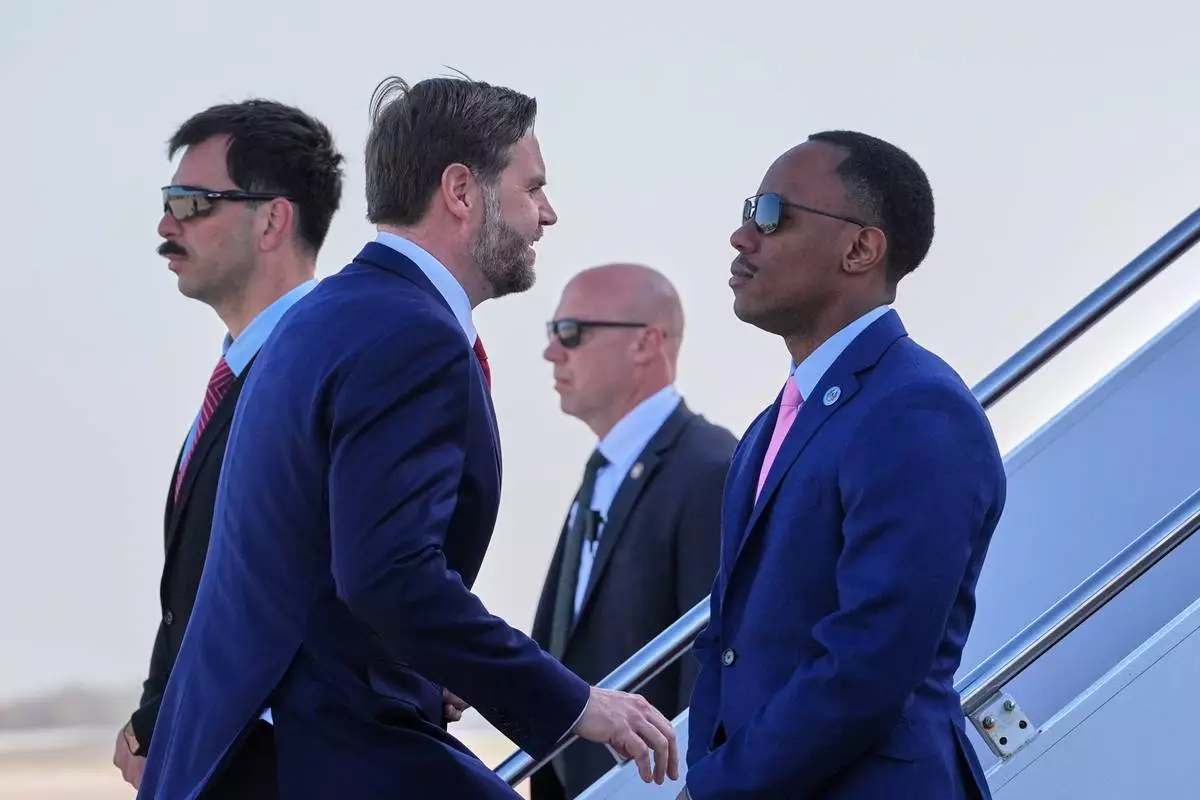
Vice President JD Vance boards Air Force Two, Friday, April 10, 2026, at Joint Base Andrews, Md., for expected departure to Pakistan, for talks on Iran. (AP Photo/Jacquelyn Martin, pool)
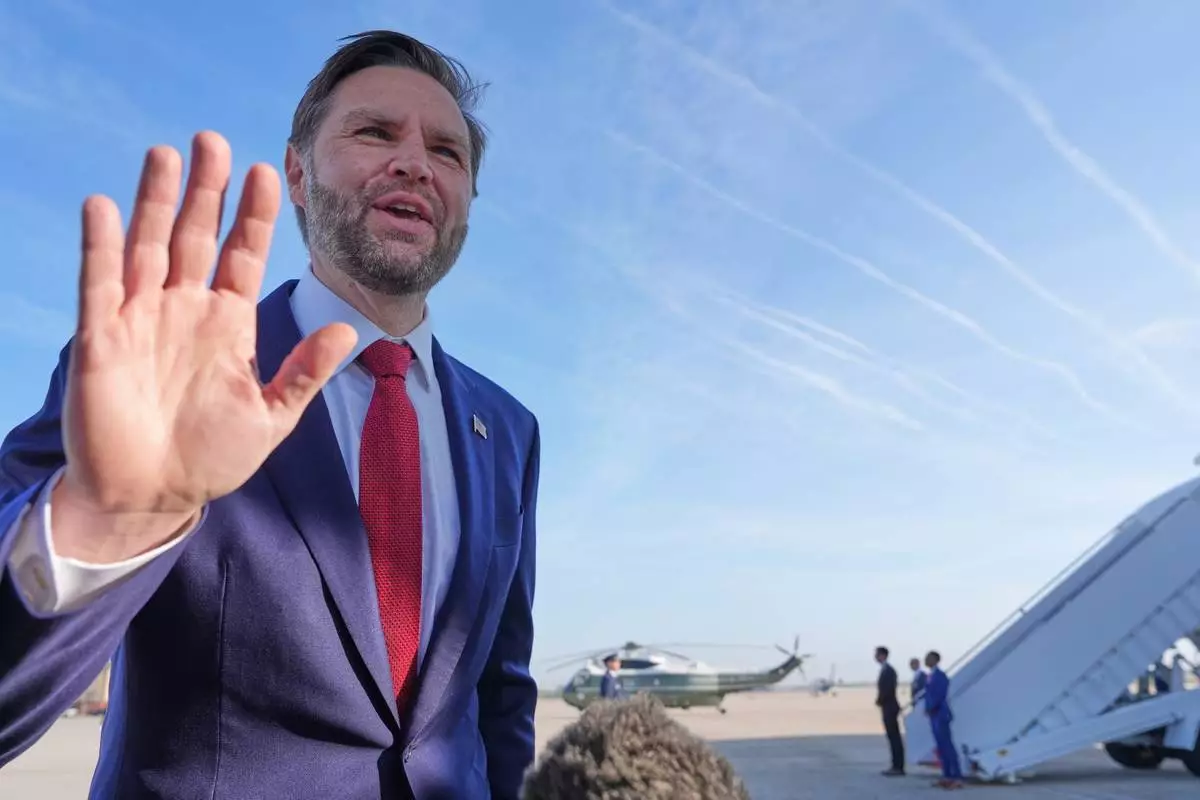
Vice President JD Vance boards Air Force Two, Friday, April 10, 2026, at Joint Base Andrews, Md., for expected departure to Pakistan, for talks on Iran. (AP Photo/Jacquelyn Martin, pool)
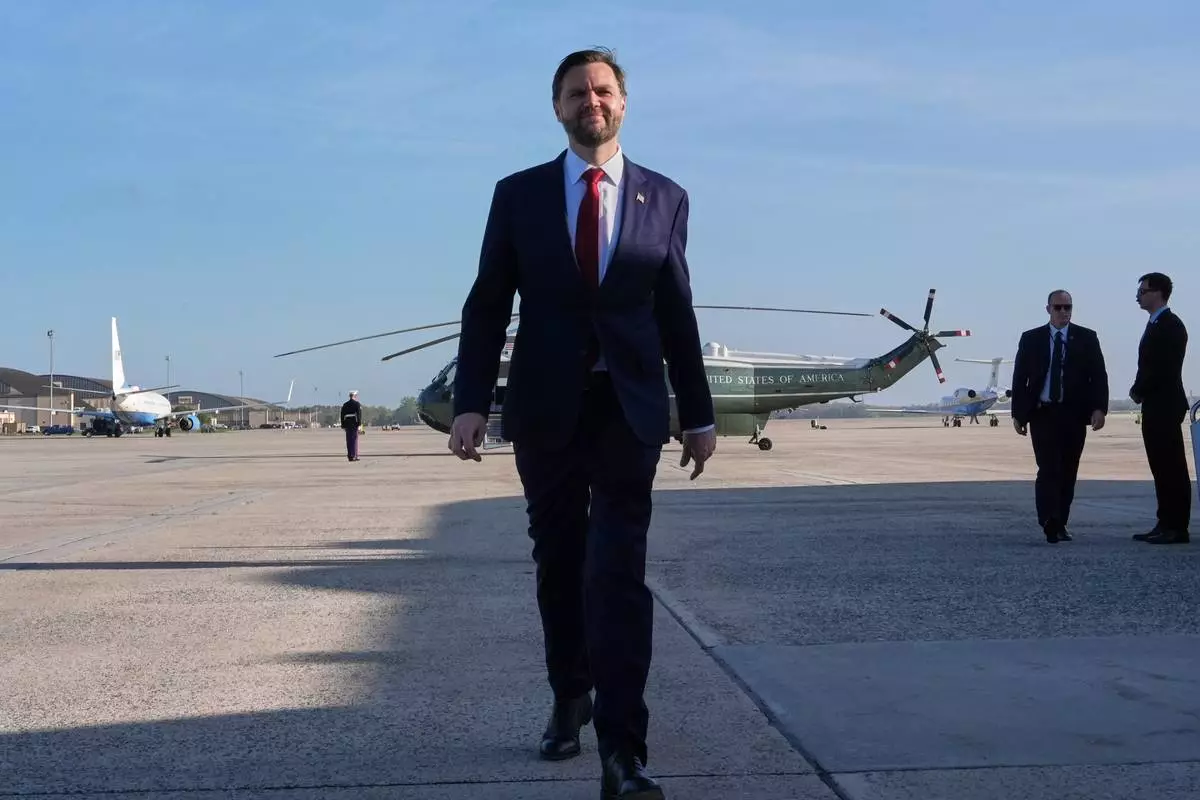
Vice President JD Vance speaks to the press before boarding Air Force Two, Friday, April 10, 2026, at Joint Base Andrews, Md., for expected departure to Pakistan, for talks on Iran. (AP Photo/Jacquelyn Martin, pool)
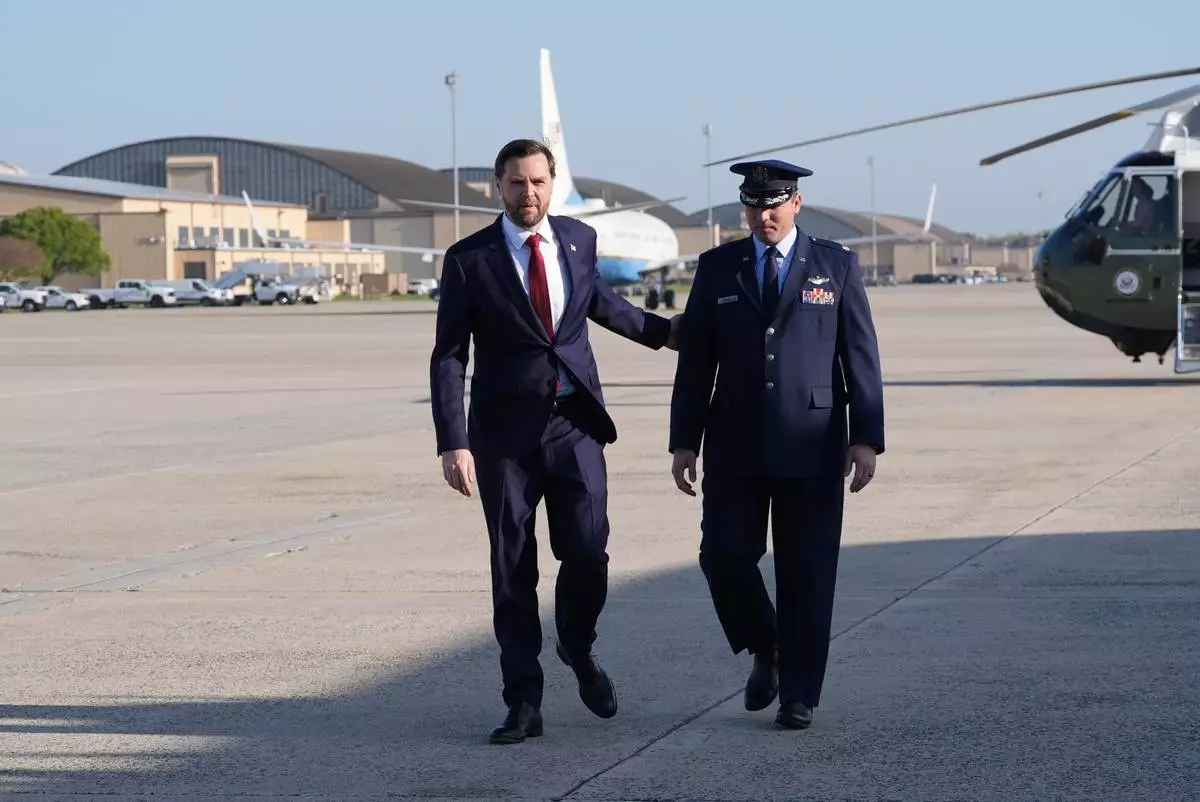
Vice President JD Vance speaks to the press before boarding Air Force Two, Friday, April 10, 2026, at Joint Base Andrews, Md., for expected departure to Pakistan, for talks on Iran. (AP Photo/Jacquelyn Martin, pool)

Vice President JD Vance walks to speak with the Press before boarding Air Force Two, Friday, April 10, 2026, at Joint Base Andrews, Md., for expected departure to Pakistan, for talks on Iran. (AP Photo/Jacquelyn Martin, pool)

Vice President JD Vance walks to speak with the Press before boarding Air Force Two, Friday, April 10, 2026, at Joint Base Andrews, Md., for expected departure to Pakistan, for talks on Iran. (AP Photo/Jacquelyn Martin, pool)

Vice President JD Vance aboard, walking far left, arrives, Friday, April 10, 2026, at Joint Base Andrews, Md., where Vance will board Air Force Two, seal right, and depart to Pakistan, for talks on Iran. (AP Photo/Jacquelyn Martin, pool)
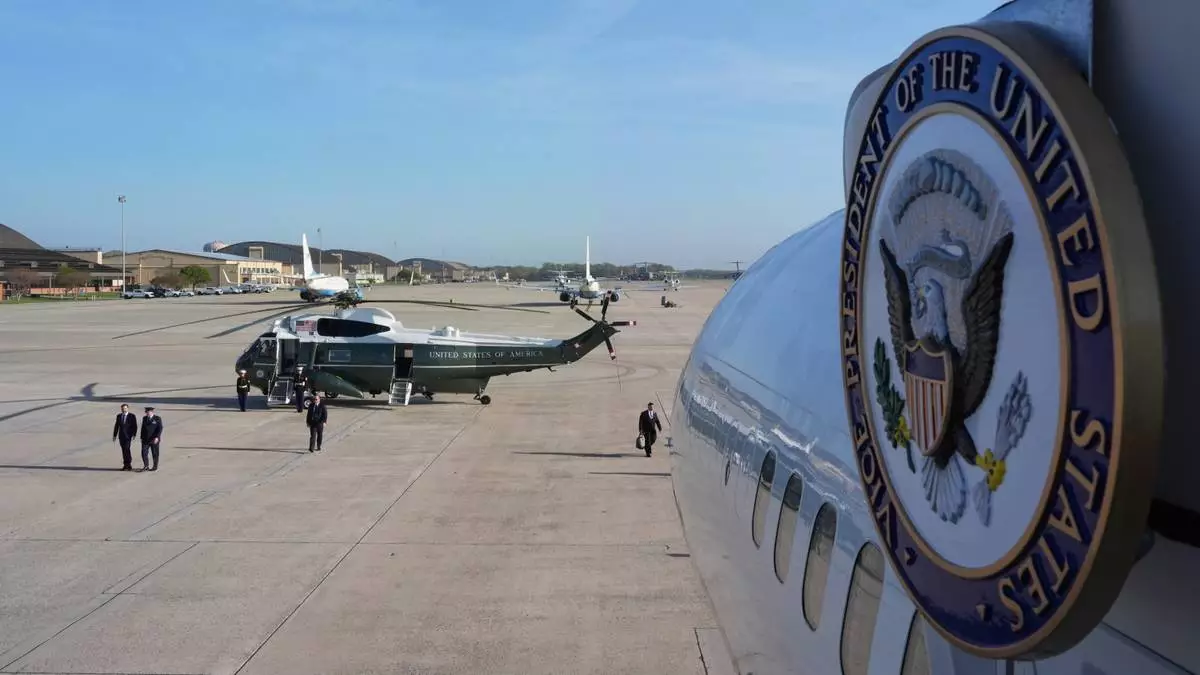
Vice President JD Vance aboard, walking far left, arrives, Friday, April 10, 2026, at Joint Base Andrews, Md., where Vance will board Air Force Two, seal right, and depart to Pakistan, for talks on Iran. (AP Photo/Jacquelyn Martin, pool)

Vice President JD Vance walks off Marine Two to walk and board Air Force Two, Friday, April 10, 2026, at Joint Base Andrews, Md., for expected departure to Pakistan, for talks on Iran. (AP Photo/Jacquelyn Martin, pool)
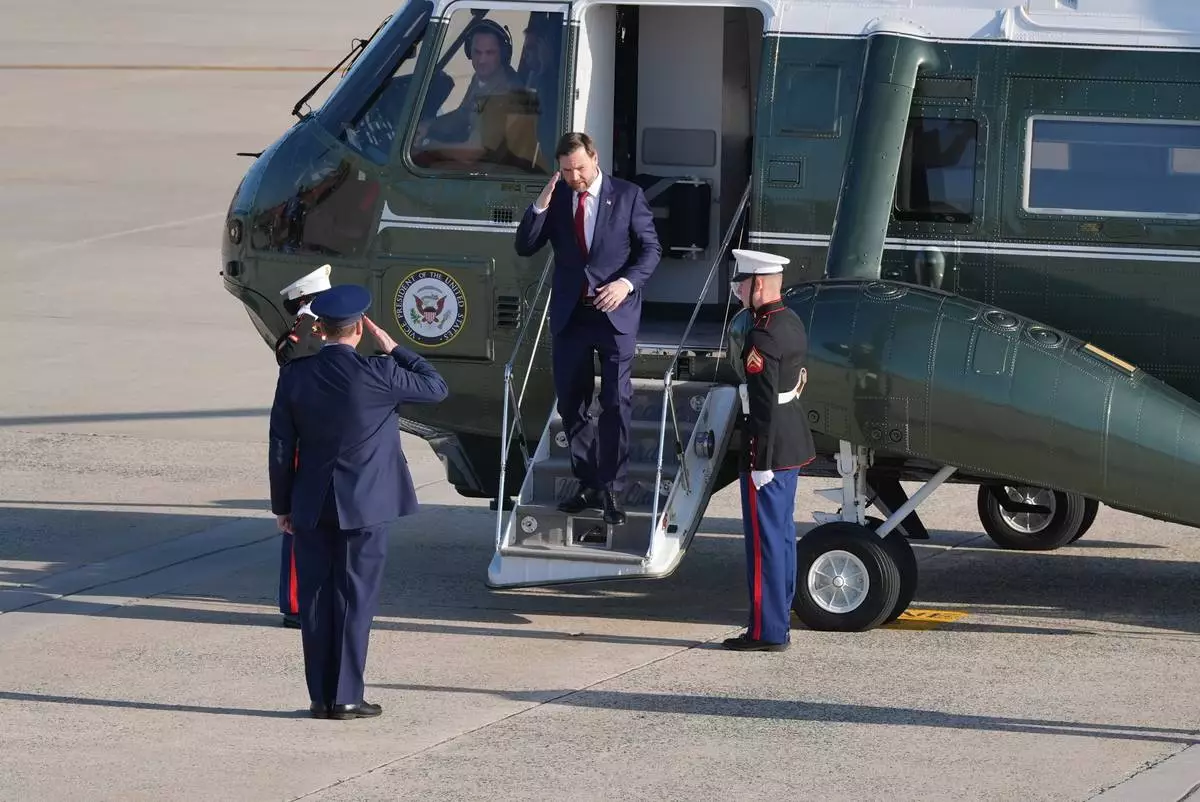
Vice President JD Vance walks off Marine Two to walk and board Air Force Two, Friday, April 10, 2026, at Joint Base Andrews, Md., for expected departure to Pakistan, for talks on Iran. (AP Photo/Jacquelyn Martin, pool)
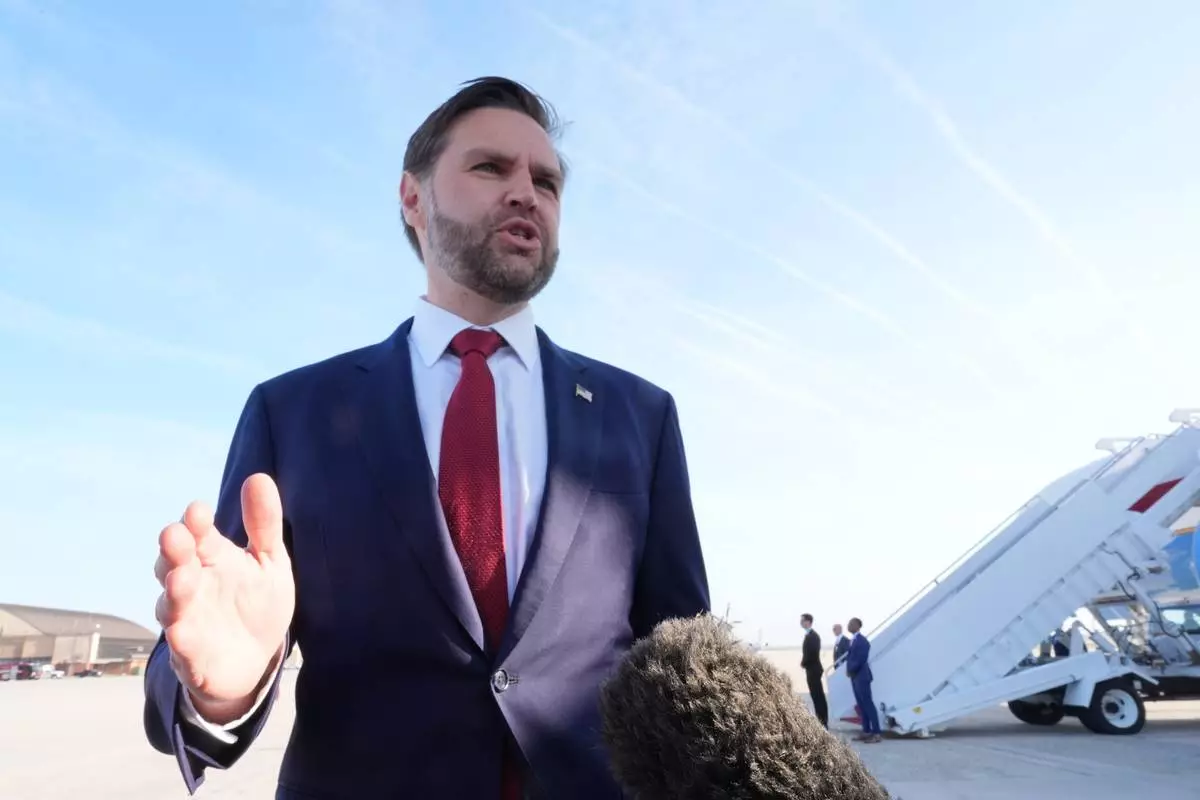
Vice President JD Vance walks to board Air Force Two, Friday, April 10, 2026, at Joint Base Andrews, Md., for expected departure to Pakistan, for talks on Iran. (AP Photo/Jacquelyn Martin, pool)
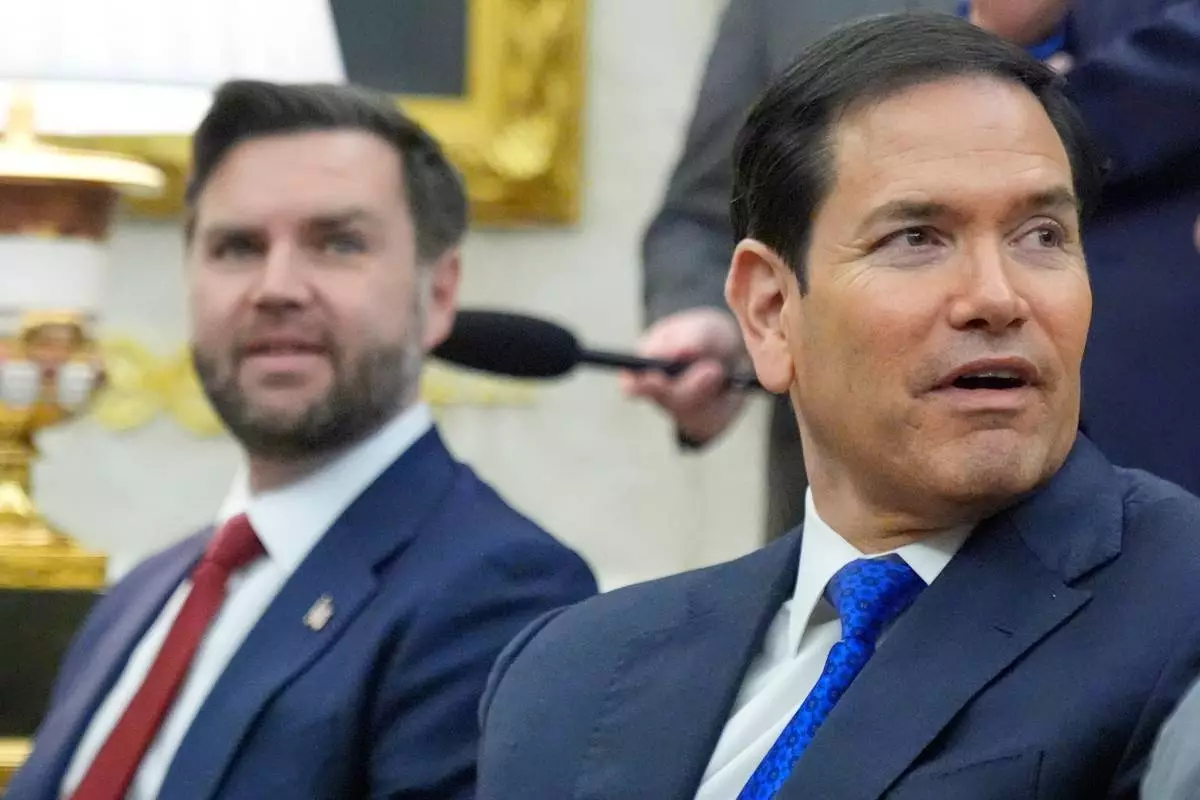
Vice President JD Vance walks to board Air Force Two, Friday, April 10, 2026, at Joint Base Andrews, Md., for expected departure to Pakistan, for talks on Iran. (AP Photo/Jacquelyn Martin, pool)

Vice President JD Vance speaks to the press before boarding Air Force Two, Friday, April 10, 2026, at Joint Base Andrews, Md., for expected departure to Pakistan, for talks on Iran. (AP Photo/Jacquelyn Martin, pool)

Vice President JD Vance speaks to the press before boarding Air Force Two, Friday, April 10, 2026, at Joint Base Andrews, Md., for expected departure to Pakistan, for talks on Iran. (AP Photo/Jacquelyn Martin, pool)

Vice President JD Vance, left, and Secretary of State Marco Rubio attend a meeting in the Oval Office at the White House, March 3, 2026, in Washington. (AP Photo/Mark Schiefelbein, file)
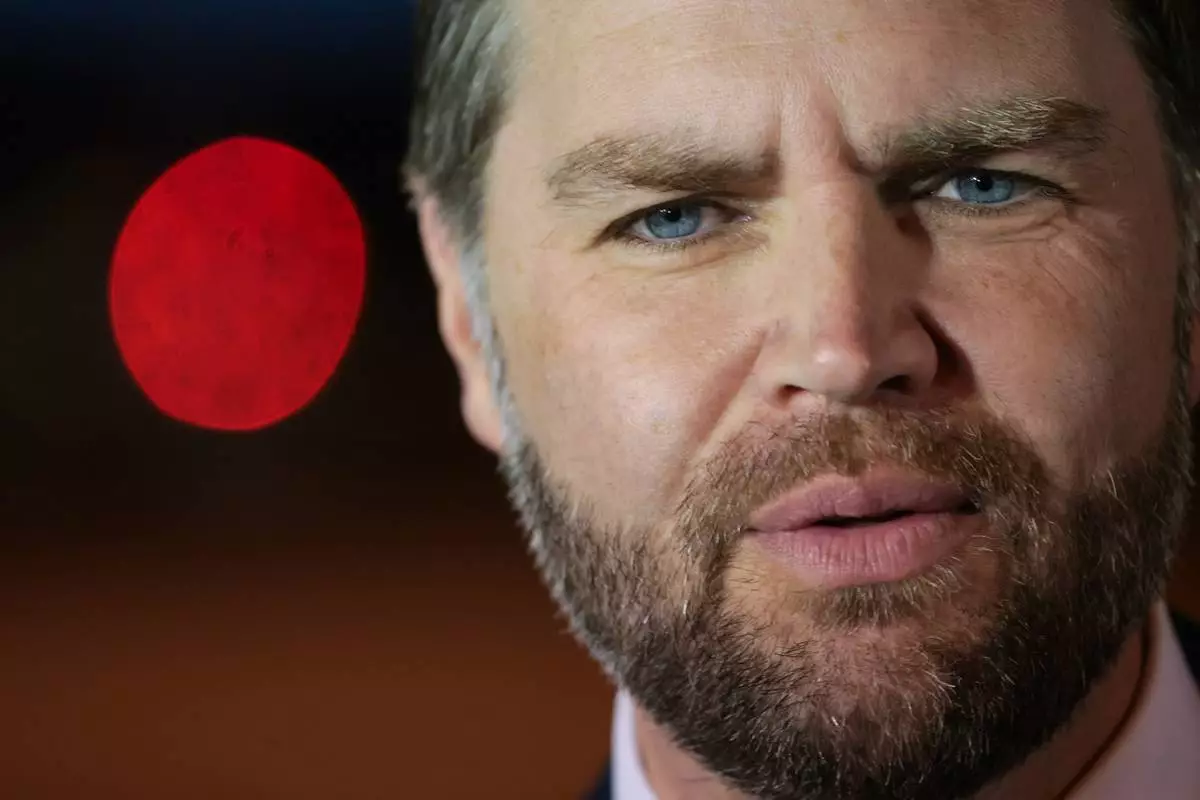
Vice President JD Vance, left, and Secretary of State Marco Rubio attend a meeting in the Oval Office at the White House, March 3, 2026, in Washington. (AP Photo/Mark Schiefelbein, file)

Vice President JD Vance speaks to reporters before boarding Air Force Two to return to Washington, at Budapest Ferenc Liszt International Airport in Budapest, Hungary, Wednesday, April 8, 2026. (Jonathan Ernst/Pool via AP)
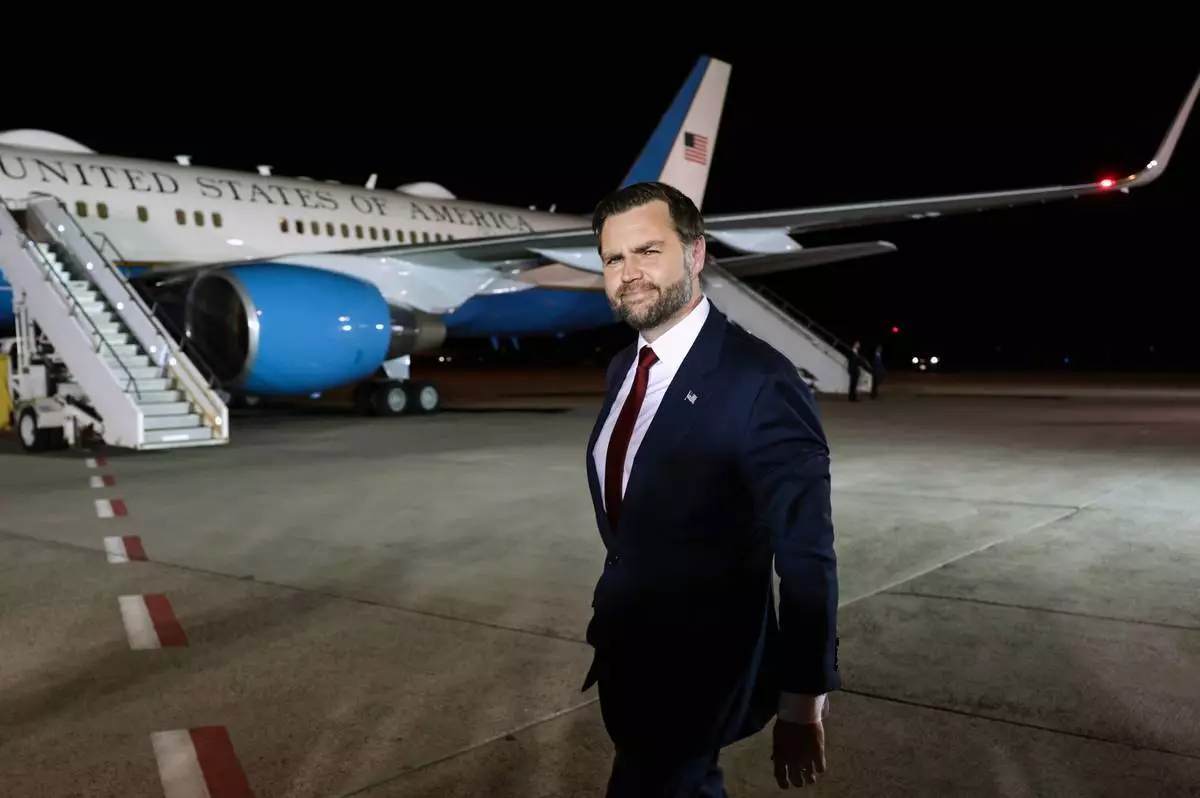
Vice President JD Vance speaks to reporters before boarding Air Force Two to return to Washington, at Budapest Ferenc Liszt International Airport in Budapest, Hungary, Wednesday, April 8, 2026. (Jonathan Ernst/Pool via AP)
Vice President JD Vance pauses after speaking to reporters before boarding Air Force Two to return to Washington, at Budapest Ferenc Liszt International Airport in Budapest, Hungary, Wednesday, April 8, 2026. (Jonathan Ernst/Pool via AP)

Vice President JD Vance pauses after speaking to reporters before boarding Air Force Two to return to Washington, at Budapest Ferenc Liszt International Airport in Budapest, Hungary, Wednesday, April 8, 2026. (Jonathan Ernst/Pool via AP)

Vice President JD Vance waves as he boards Air Force Two to depart for Budapest, at Joint Base Andrews, Md., Monday, April 6, 2026. (Jonathan Ernst/Pool via AP)
Vice President JD Vance waves as he boards Air Force Two to depart for Budapest, at Joint Base Andrews, Md., Monday, April 6, 2026. (Jonathan Ernst/Pool via AP)
BEIRUT (AP) — Attacks intensified Friday between Israel and the Lebanese militant group Hezbollah ahead of direct talks between the Lebanese government and Israel set to begin next week.

The talks are set to begin Tuesday in Washington and will be mediated by U.S. diplomats, Lebanese President Joseph Aoun's office said in a statement, citing the outcome of a call Friday among Israeli, Lebanese and U.S. ambassadors. The statement reiterated Beirut's position that the talks be held under a ceasefire or truce.

Israeli Ambassador to the U.S. Yechiel Leiter later issued a statement describing next Tuesday's talks as “formal peace negotiations," but said a ceasefire was not on the agenda, in a stark contradiction to Aoun's remarks.

“Israel refused to discuss a ceasefire with the Hezbollah terrorist organization, which continues to attack Israel and is the main obstacle to peace between the two countries,” the statement read.

At least 13 members of Lebanon's State Security forces were killed in an Israeli strike in southern Lebanon on Friday, while Hezbollah claimed an attack targeting a naval base in the Israeli port city of Ashdod some 145 kilometers (90 miles) from the border.

Israel launched strikes across several towns in southern Lebanon, including one on a government building in the southern city of Nabatieh that killed the government security personnel. Hezbollah claimed 31 other attacks on northern Israel and on Israeli ground troops that have invaded southern Lebanon.

Israel launched its latest aerial campaign and a ground invasion of southern Lebanon after Hezbollah fired rockets toward northern Israel in solidarity with Iran, its key ally and patron, on March 2.

At least 1,953 people in Lebanon have been killed in Israeli strikes, according to the Health Ministry. At least 303 were killed in a rapid series of 100 strikes that hit the country — including multiple areas in dense residential and commercial areas in central Beirut — in 10 minutes on Wednesday, the bloodiest day in the latest war between the two sides. Civil Defense first responders are still searching for bodies trapped under the rubble in the Lebanese capital.

Meanwhile, officials at Beirut's main government-run hospital on the southern edge of the capital fear it could be in the line of fire after the Israeli military issued an evacuation warning for the surrounding suburbs, including the busy neighborhood of Jnah where the hospital is located. Israel has launched attacks in Jnah, both with and without warning.

The World Health Organization has since called for the Rafik Hariri University Hospital to be spared from attacks and not to evacuate, and WHO officials said Friday that they received assurances that it would not be struck. The hospital has not evacuated, though staff are fearful, as getting to work now requires them to drive on roads that can be struck at any time says Dr. Mohammad Cheaito, who heads the emergency department.

“The entire zone around the hospital was threatened and deemed dangerous,” he told The Associated Press. “But at the end of the day, we have a humanitarian duty.”

Lebanon's authorities have not yet commented on Israeli Prime Minister Benjamin Netanyahu's announcement on Thursday of the decision to go ahead with talks. Netanyahu said the talks would revolve around disarming Hezbollah and establishing “peaceful relations” between the two countries.

A Lebanese official in government familiar with the developments said that a halt in the fighting is a critical condition for the country to engage in direct talks with Israel, similar to the one between the U.S. and Iran. It has yet to appoint a representative for negotiations. They spoke on condition of anonymity in line with regulations.

Aoun had initially proposed the direct talks early on in the war on similar terms, at the time hoping for Israel to stop an escalation in airstrikes and to not invade the country. At the time, with only the backing of France, that failed.

On Wednesday, the U.S. and Iran announced a temporary ceasefire in the war that began on Feb. 28. It included Lebanon and other countries impacted in the wider regional conflict, mediator Pakistan announced. However, Israel — and later the United States — denied this. They want to separate the diplomatic tracks of the two wars.

Hezbollah considers Israel's attacks on Lebanon to be a violation of the ceasefire, while Beirut, in a bid to disarm Hezbollah and assert its full sovereignty over the country, says it wants to be included in talks related to Lebanon.

Hezbollah Secretary-General Naim Kassem in a statement broadcast Thursday did not directly mention the prospect of Israel-Lebanon talks, but called on the Lebanese government to “stop giving free concessions” to Israel.

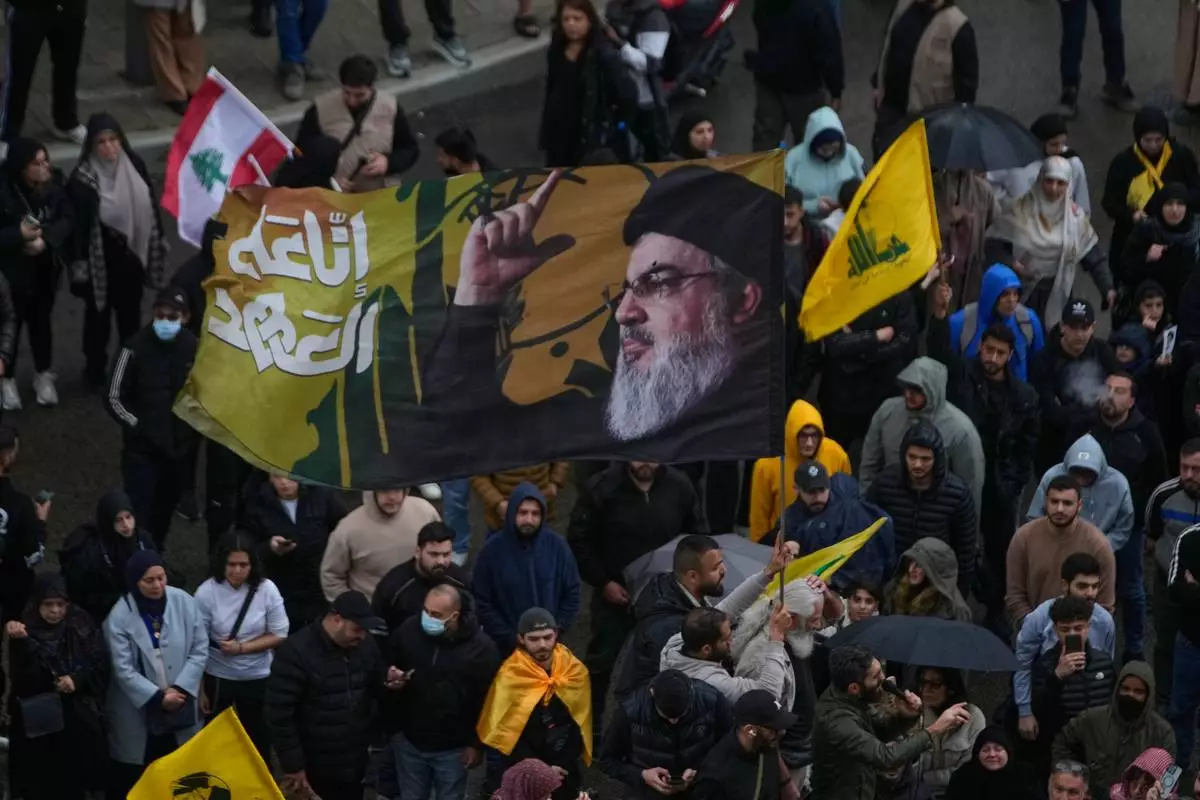
Dozens of supporters of the Iran-backed group protested outside of the Lebanese prime minister's office in central Beirut. They see the scheduled direct talks as a surrender to Israel, which says its troops will stay in the country indefinitely.

“Our blood has been spilled on this land, and our state is conspiring against us,” said protester Hassan Shuaib. “Our state wants to kill us; our state wants to strip us of our weapons.”

———

Associated Press producer Malak Harb and video journalist Fadi Tawil in Beirut, and Matthew Lee in Washington contributed to this report.

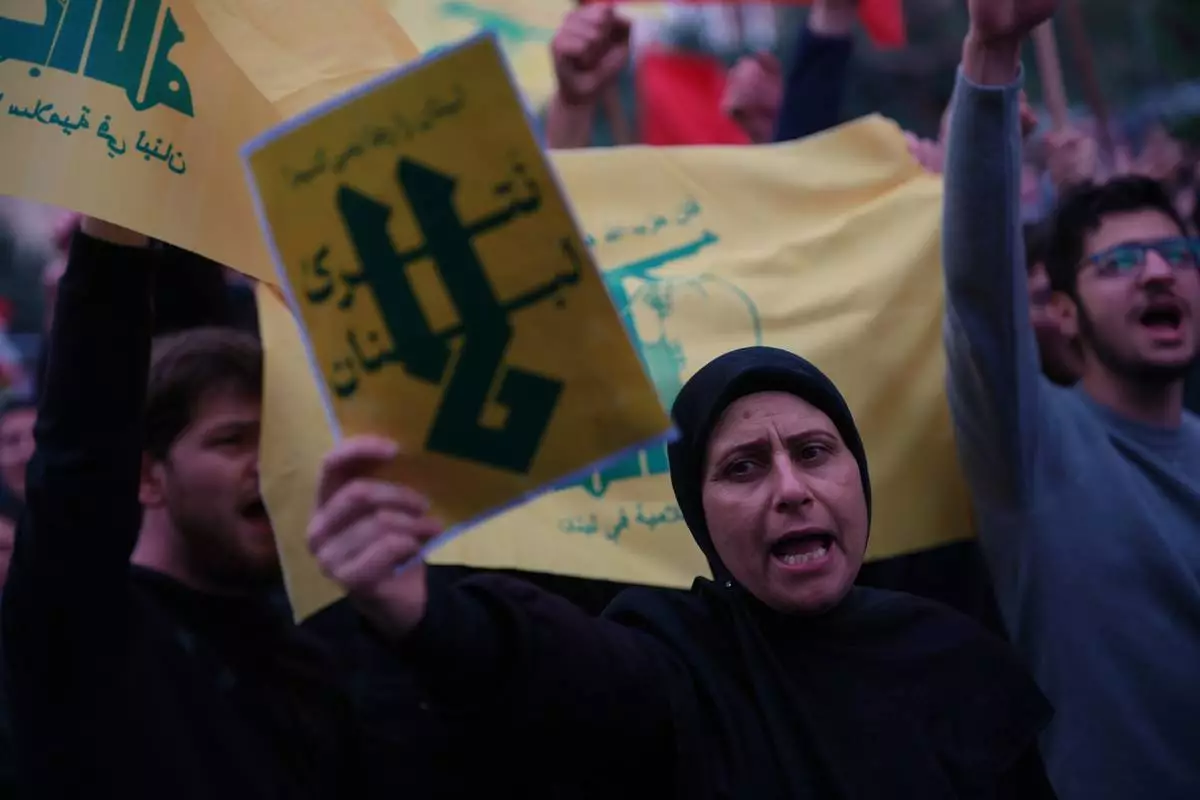
A Hezbollah supporter shouts slogans during a protest against the Lebanese Prime Minister Nawaf Salam, in front the government palace in Beirut, Lebanon, Friday, April 10, 2026. (AP Photo/Emilio Morenatti)

A Hezbollah supporter shouts slogans during a protest against the Lebanese Prime Minister Nawaf Salam, in front the government palace in Beirut, Lebanon, Friday, April 10, 2026. (AP Photo/Emilio Morenatti)

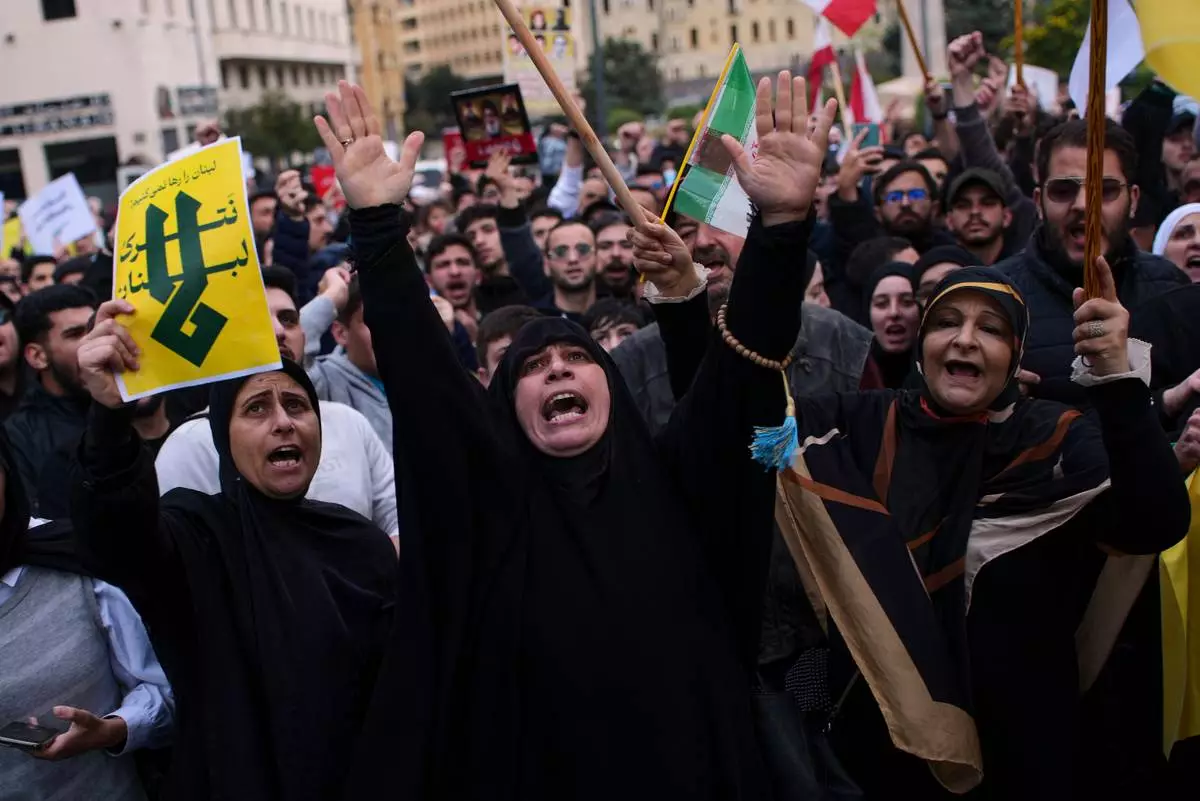
Hezbollah supporters shout slogans during a protest against the Lebanese Prime Minister Nawaf Salam, in front the government palace in Beirut, Lebanon, Friday, April 10, 2026. (AP Photo/Emilio Morenatti)

Hezbollah supporters shout slogans during a protest against the Lebanese Prime Minister Nawaf Salam, in front the government palace in Beirut, Lebanon, Friday, April 10, 2026. (AP Photo/Emilio Morenatti)

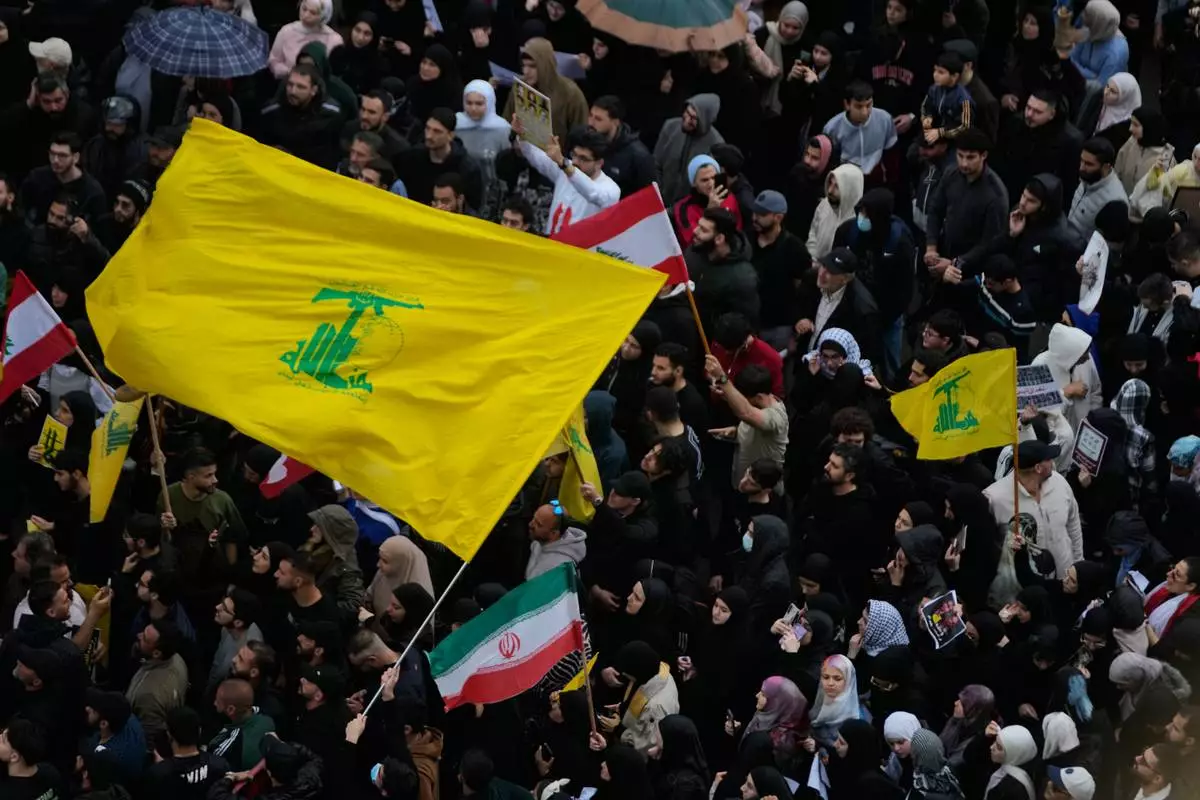
Protesters wave Hezbollah and Iran's flags during a protest against the Lebanese Prime Minister Nawaf Salam, in front the government palace in Beirut, Lebanon, Friday, April 10, 2026. (AP Photo/Hussein Malla)

Protesters wave Hezbollah and Iran's flags during a protest against the Lebanese Prime Minister Nawaf Salam, in front the government palace in Beirut, Lebanon, Friday, April 10, 2026. (AP Photo/Hussein Malla)

A Hezbollah supporter waves a flag with the portrait of the late Hezbollah leader Sayyed Hassan Nasrallah during a protest against the Lebanese Prime Minister Nawaf Salam, in front the government palace in Beirut, Lebanon, Friday, April 10, 2026. (AP Photo/Hussein Malla)

A Hezbollah supporter waves a flag with the portrait of the late Hezbollah leader Sayyed Hassan Nasrallah during a protest against the Lebanese Prime Minister Nawaf Salam, in front the government palace in Beirut, Lebanon, Friday, April 10, 2026. (AP Photo/Hussein Malla)

Recommended Articles