The International Monetary Fund (IMF) will lower global growth forecasts due to the ongoing conflict in the Middle East, Managing Director Kristalina Georgieva said on Thursday, warning of the conflict's "scarring effects."
In a speech titled "Cushioning the Middle East War Shock," which marked the opening of the 2026 IMF Spring Meetings, Georgieva said the world economy is being tested by the war in the Middle East.
The conflict has tremendously affected the supply sector, spreading globally and causing varying effects on all parties.
The supply interruptions have had, and will for some time continue to have, ripple effects, such as oil refinery disruptions, shortages of refined products and food insecurity, she said.
The shock will play out through three main channels, namely, the price impact and supply shortages, rising inflation expectations and tightened financial conditions, she said.
Given the spillovers of the war, it is expected that the near-term demand for IMF balance-of-payments support will rise by 20 billion U.S. dollars to 50 billion U.S. dollars, Georgieva said.
Fiscal authorities should provide targeted and temporary support to the vulnerable, aligned with their medium-term fiscal frameworks, the IMF chief said.
If inflation expectations threaten to break anchor and ignite a costly inflation spiral, central banks should step in firmly with rate hikes, she said.
Middle East conflict to drag down global growth: IMF chief
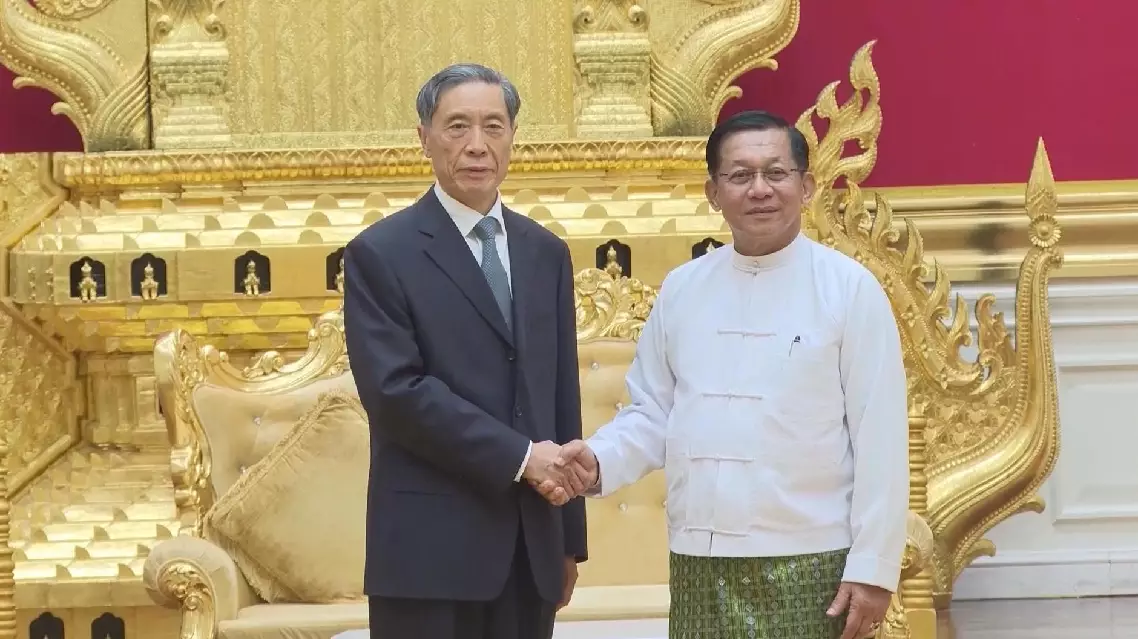
At the invitation of the government of the Republic of the Union of Myanmar, Jiang Xinzhi, Chinese President Xi Jinping's special envoy and vice chairperson of the National Committee of the Chinese People's Political Consultative Conference, attended the inauguration ceremony of Myanmar's President Min Aung Hlaing in Naypyidaw on Friday.
Min Aung Hlaing met with Jiang on the same day.
Noting that the pauk-phaw (fraternal) friendship between China and Myanmar has a long history, Jiang said the two countries have long enjoyed a harmonious relationship and mutual assistance, which fully demonstrates the profound significance of the China-Myanmar community with a shared future. China supports Myanmar in pursuing a development path that suits its own national conditions, Jiang said, adding that the country is willing to work with Myanmar to deepen high-quality Belt and Road cooperation, maintain stability along the China-Myanmar border, and ensure the safety of Chinese personnel and projects in Myanmar.
For his part, Min Aung Hlaing expressed gratitude for China's long-term and valuable assistance to Myanmar's economic and social development.
Myanmar firmly adheres to the one-China principle and supports the four global initiatives proposed by China, Min Aung Hlaing said.
The president pledged that Myanmar would make every effort to ensure China's security interests in the country, and expressed Myanmar's willingness to deepen practical cooperation with China across various fields.
Xi's special envoy attends inauguration of Myanmar's president