DORTMUND, Germany (AP) —
Borussia Dortmund defender Nico Schlotterbeck has ended speculation about a possible move to Real Madrid by extending his contract with the German club until 2031.
The 26-year-old Schlotterbeck, who only had another year on his existing contract with Dortmund, signed a new deal on Friday, the club announced.
Dortmund chief executive Carsten Cramer said the extension is “of enormous significance. He is of great value to us, both as a player and as a person. And Nico, in turn, knows exactly what he has in our club. He is highly valued and senses that we are building something here right now.”
Schlotterbeck, a Germany international, joined Dortmund from Freiburg in 2022 and has played 155 competitive games for the team.
Negotiations over a new deal dragged on as Dortmund announced other players’ extensions and confirmed some players would leave. Team captain Emre Can signed a contract extension despite being out injured for the rest of the season, while Julian Brandt, Salih Özcan and Niklas Süle will leave at the end of the season.
Talks stalled when Dortmund announced the immediate departure of sporting director Sebastian Kehl last month, but his successor, Ole Book from second-division team Elversberg, evidently made Schlotterbeck’s uncertain future one of his first priorities.
“In Nico, we have one of the best center-backs in the world in our ranks,” Book said. “His play with and without the ball, his distribution, his tackling, together with his presence and determination on the field, all of this makes him incredibly valuable to us. We’re certain that we can achieve great things together with Nico at Borussia Dortmund.”
AP soccer: https://apnews.com/hub/soccer

FILE - Dortmund's Nico Schlotterbeck celebrates after scoring the opening goal during the German Bundesliga soccer match between Borussia Dortmund and Werder Bremen in Dortmund, Germany, Tuesday, Jan. 13, 2026. (AP Photo/Martin Meissner, File)
BEIRUT (AP) — It was 2:14 in the afternoon when the first bomb fell, and the sudden sound of crashing metal was like a heavy truck had overturned outside our office. The Israeli strike had hit somewhere nearby.
Within seconds, plumes of smoke were rising across Beirut’s skyline, from the coastal corniche, down to the city’s busiest intersection, up from one of its wealthiest neighborhoods and one of its poorest. Boom. Boom. Boom. We stopped counting. One staffer ran into the office from downstairs, her face white and lips trembling.
During the 10 years that Beirut has been my home, the Lebanese capital has lived through rounds of Israeli bombing, Israel’s detonation of pagers belonging to Hezbollah members and a devastating port explosion in 2020. But Wednesday was the first time it felt like the city had been left breathless.
In a span of 10 minutes, Israel says it hit 100 targets in Lebanon. Most were in Beirut. Over 300 people were killed, including more than 100 women, children and elderly. Late night TV shows said it rivaled one of the worst days during Israel’s 1982 invasion of Beirut — in August of that year, when roughly 300 people were killed over some 10 hours of bombardment.
Before Wednesday's bombardment, many Lebanese had hoped that a ceasefire announced hours earlier in the Iran war would bring a pause in the more than a month of fighting between Israel and the Iran-backed militant group Hezbollah.
It is still not clear what the targets were. Israel said it hit Hezbollah command and control centers, but the only Hezbollah official it reported killing was an aide to the group’s secretary-general.
As bombs fell, panicked commuters got stuck in traffic while trying to rush home to move their families, unsure where Israel may hit next. Others made frantic calls on an overwhelmed communication network, looking for loved ones or yelling at relatives to pack up and leave. Confused drivers stared at the acrid black and white smoke billowing over the city, trying to determine which road to take.
In the stricken areas, the mayhem was on another level. People’s faces were covered in black soot. At one of Beirut’s busiest intersections, on Corniche al-Mazraa, an Associated Press photographer saw charred cars piled on top of each other. A body was crushed inside one.
In Mar Elias, one of Beirut’s main commercial streets, a blast raised dust and debris that hid the view of the entire block. Across the street, Sahar Charara was huddled in her apartment.
Ever since the 2020 port explosion, in which her two children suffered minor injuries, Charara has tried to protect herself from seeing the victims of violence — a sign of how years of accumulated heartbreaks have marked Lebanese. But when the dust cleared, she looked outside and saw the despair of an entire city on the face of an elderly woman frozen in place and screaming for minutes.
“There were so much horror and fear in her screaming,” said Charara.
When Charara left her apartment an hour later, she exchanged a few words with her neighbor whose shop was destroyed. The expression on her face was a “blank look of horror,” Charara said.
She learned later from her building’s doorman that another neighbor had fallen from the balcony and died from the impact.
A strike hit near the home of Nahida Khalil, close to the corniche. Then she saw smoke also coming from the direction of her brother’s building further up the street.
The next 15 minutes felt like an eternity as she tried to call her brother, with no answer. Finally, his wife responded, screaming that their building was hit. They had searched through the black smoke filling their apartment to find their three children. When they finally made it to the street, they saw half of their building had been leveled, and the other half was slowly tumbling down as rescuers searched for the missing.
“I lived through all the wars since 1975. I never felt this fear,” said Khalil, who has lived in the same building for decades. "These strikes are meant to terrorize ... and to spoil the ceasefire and cause division” between Lebanese.
A few hundred meters to the west of Charara’s building later in the day, motorists swerved and crossed paths, as they tried to evacuate Tallet al-Khayyat, one of the highest points in Beirut and home to some of the city’s classiest apartment buildings. One building crumbled to dust in seconds after being struck by an Israeli bomb; a resident described hearing the building’s stones grind before it collapsed.
By nightfall, people were still assessing the losses – and trying to figure out where was safe. Some families spent the night sleeping in different rooms, figuring if overnight strikes hit, some would survive.
Rescue efforts went on through the night.
At Khalil’s family building in the Ain Mreisseh neighborhood, rescue workers' hopes were boosted after finding a 92-year-old man alive. But by daylight Thursday, they were still searching for four or five more bodies, they told the AP. A man whose 23-year-old daughter was among the missing stood on a mound of rubble and helped search.
At hospitals, staff were still trying to identify dozens of bodies, with some burned or damaged. From death notices and its own reporting, the AP collected the names of 61 of the dead. They reflected the breadth of society, including the chef of a popular restaurant, a well-known poet, four soldiers from the Lebanese military, 11 members of two Syrian refugee families, a teacher and her two children, and a doctor along with his wife and three children.
The last strike came shortly after midnight, hitting the southern suburbs of Beirut, which have been regularly hit during the war. Mohammed Mehdi’s barbershop, in operation for 30 years, was destroyed.
During the current war, he and his family fled their home in the neighborhood, Chiyah, and now sleep in a dentist clinic, near Khalil’s family building. But he made it a point to keep his barber shop open, going to it every day to meet friends, have coffee and give the occasional haircut. He shut down Wednesday as bombs starting falling across the city.
“They carried out 100 strikes. Ours was the 101st,” he said Thursday. He is mourning Lebanon’s dead from the day. “I am still in shock, and I don’t know where things are going. I lost my job and this loss may last for a while.”
AP correspondent Kareem Chehayeb in Beirut contributed to this report.
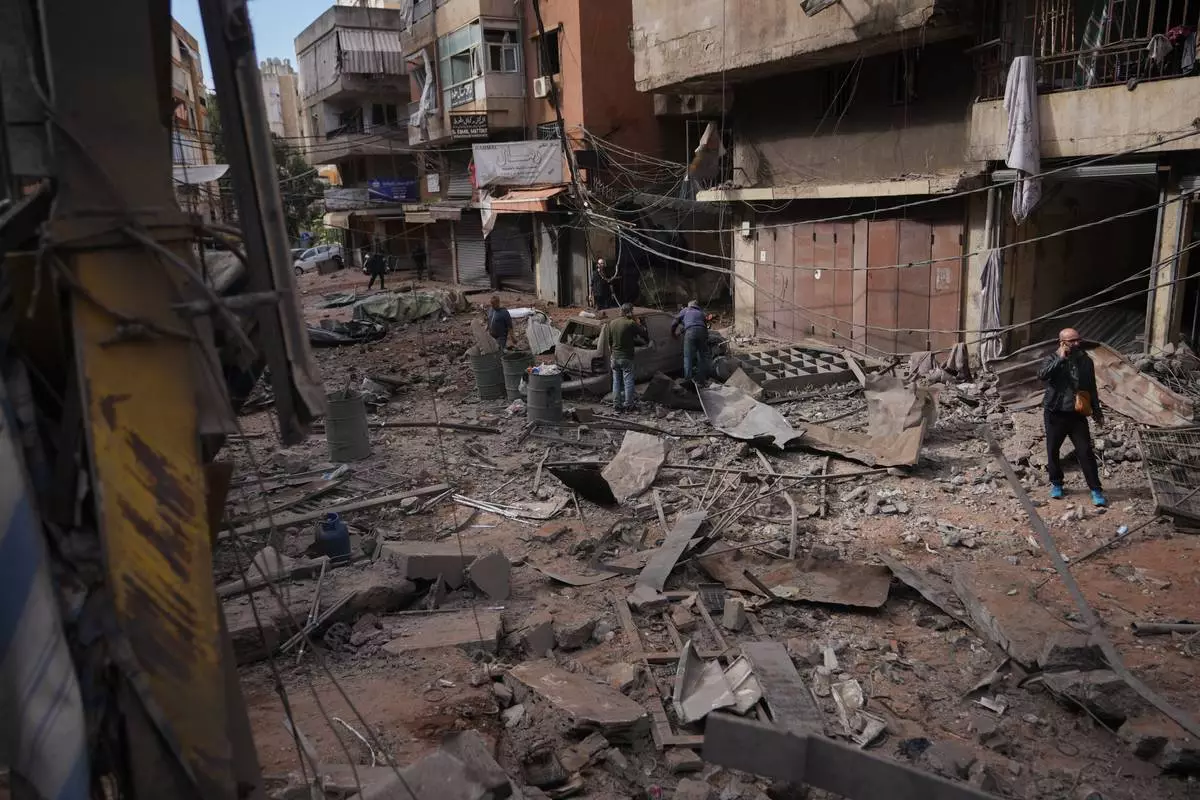
People inspect debris and damaged vehicles at the site of an Israeli airstrike in Dahiyeh, Beirut's southern suburbs, Lebanon, Thursday, April 9, 2026. (AP Photo/Hassan Ammar)
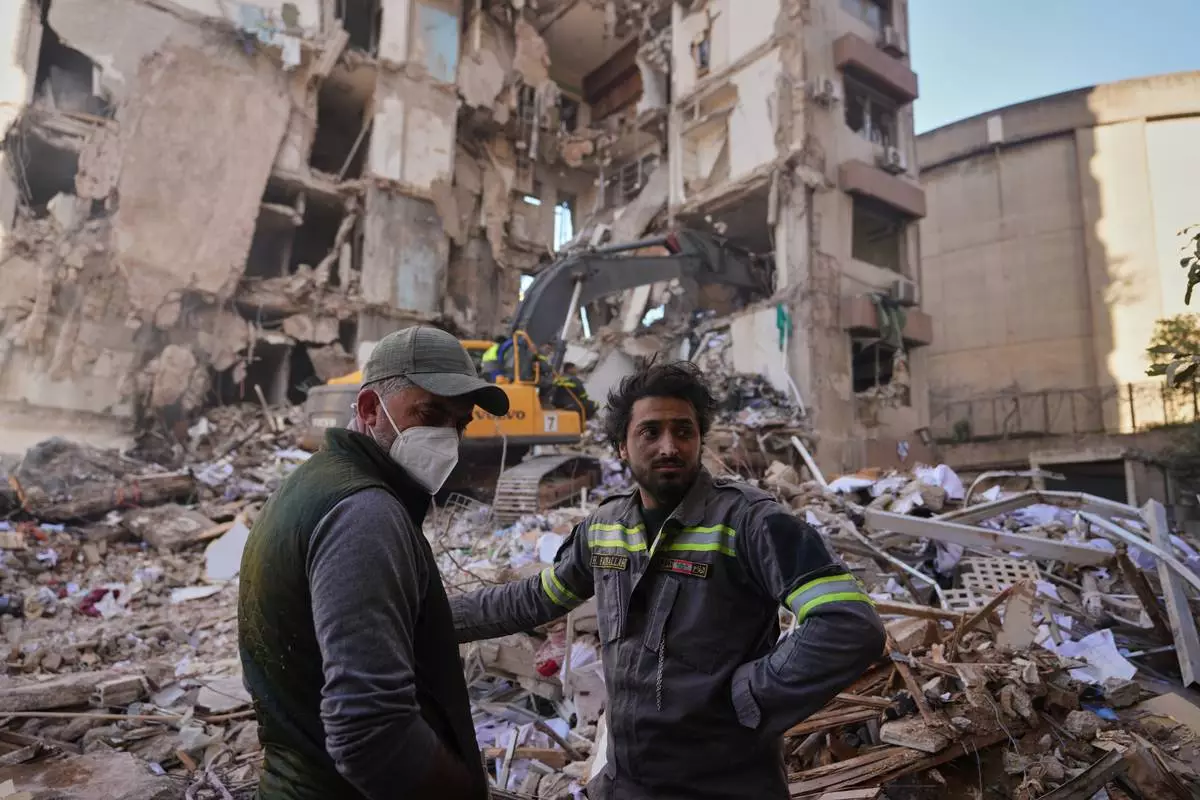
A Lebanese civil defense worker, right, stands with a resident at the site of a building destroyed in an Israeli airstrike a day earlier in central Beirut, Lebanon, Thursday, April 9, 2026. (AP Photo/Hassan Ammar)
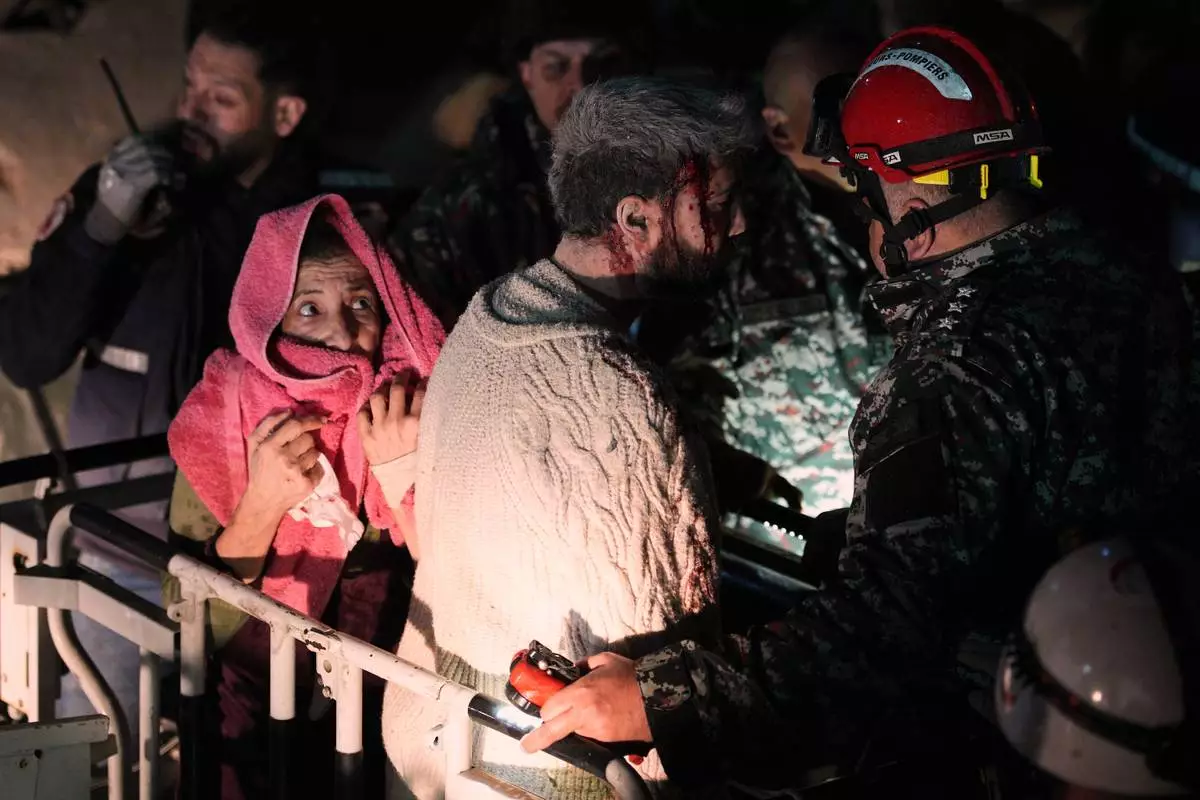
A woman and an injured man, center, are rescued by firefighters from a destroyed building that was hit in an Israeli airstrike in central Beirut, Lebanon, Wednesday, April 8, 2026. (AP Photo/Emilio Morenatti)
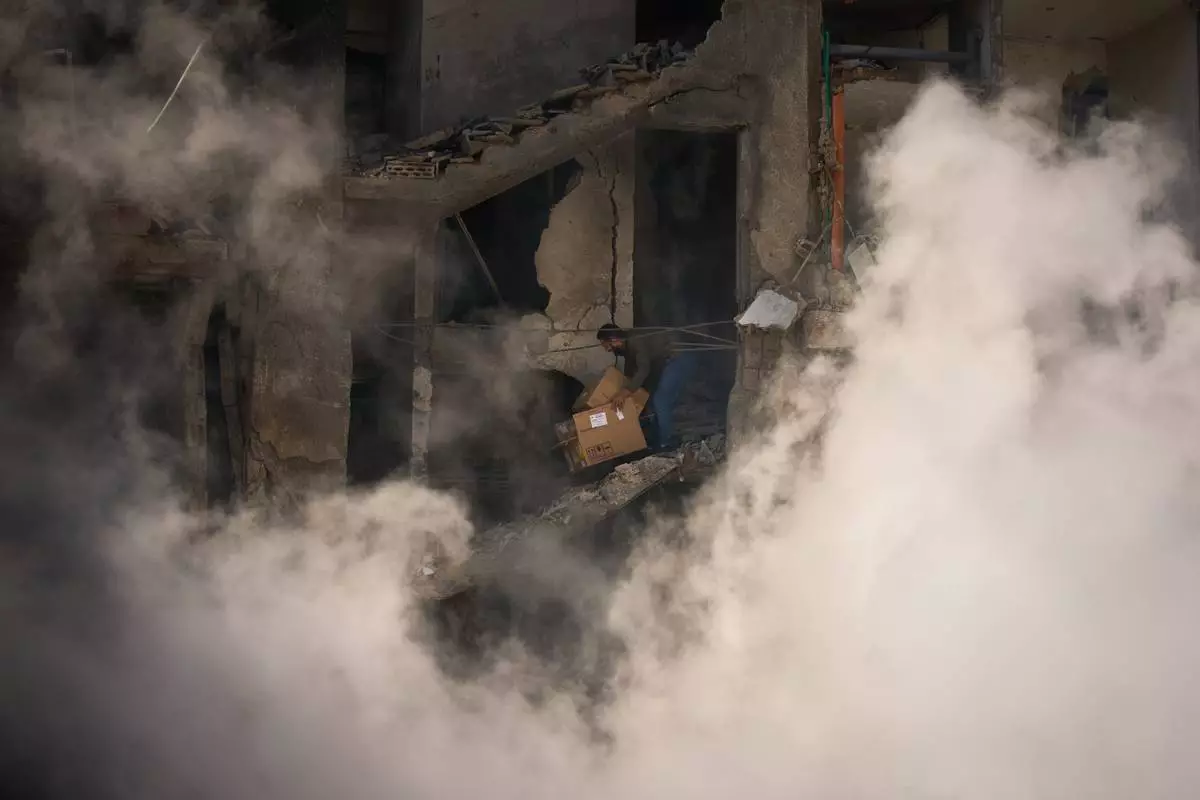
A man gathers his belongings from his home, which has been destroyed in an Israeli airstrike a day earlier in Beirut, Lebanon, Thursday, April 9, 2026. (AP Photo/Emilio Morenatti)
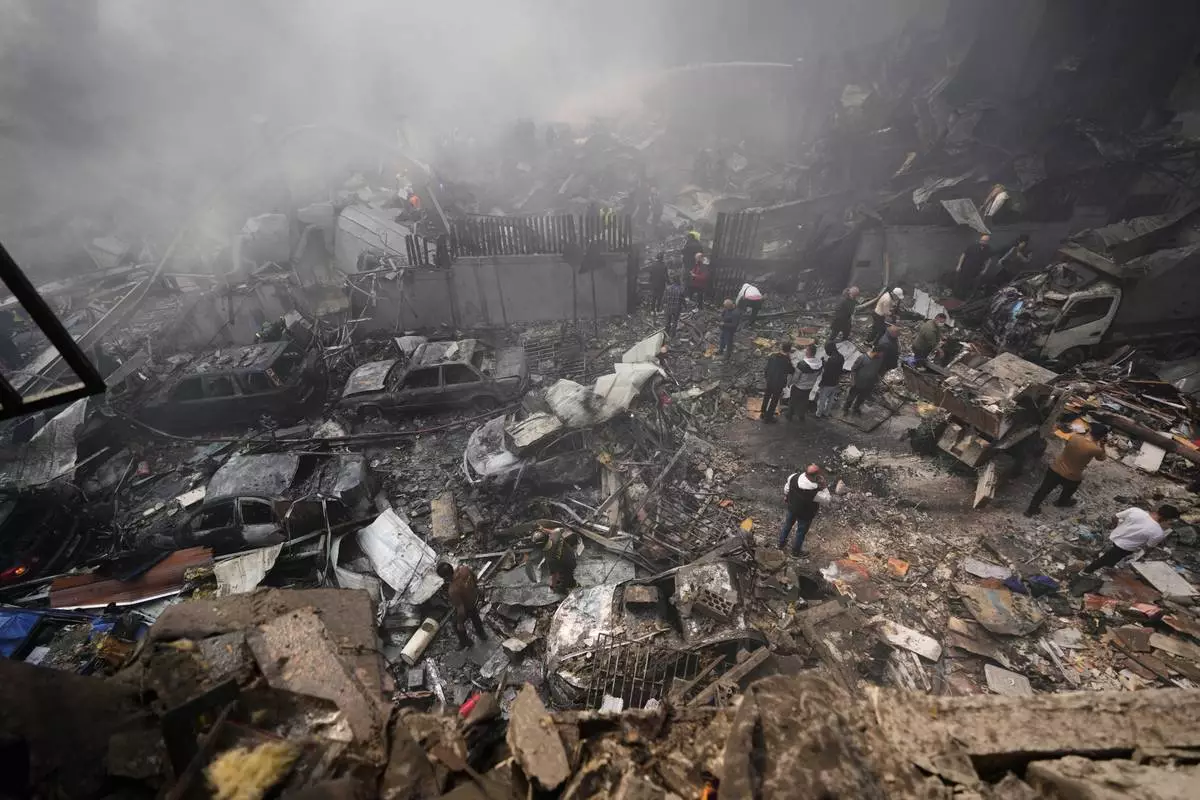
Residents gather at the site of an Israeli airstrike in Beirut, Lebanon, Wednesday, April 8, 2026. (AP Photo/Hussein Malla)
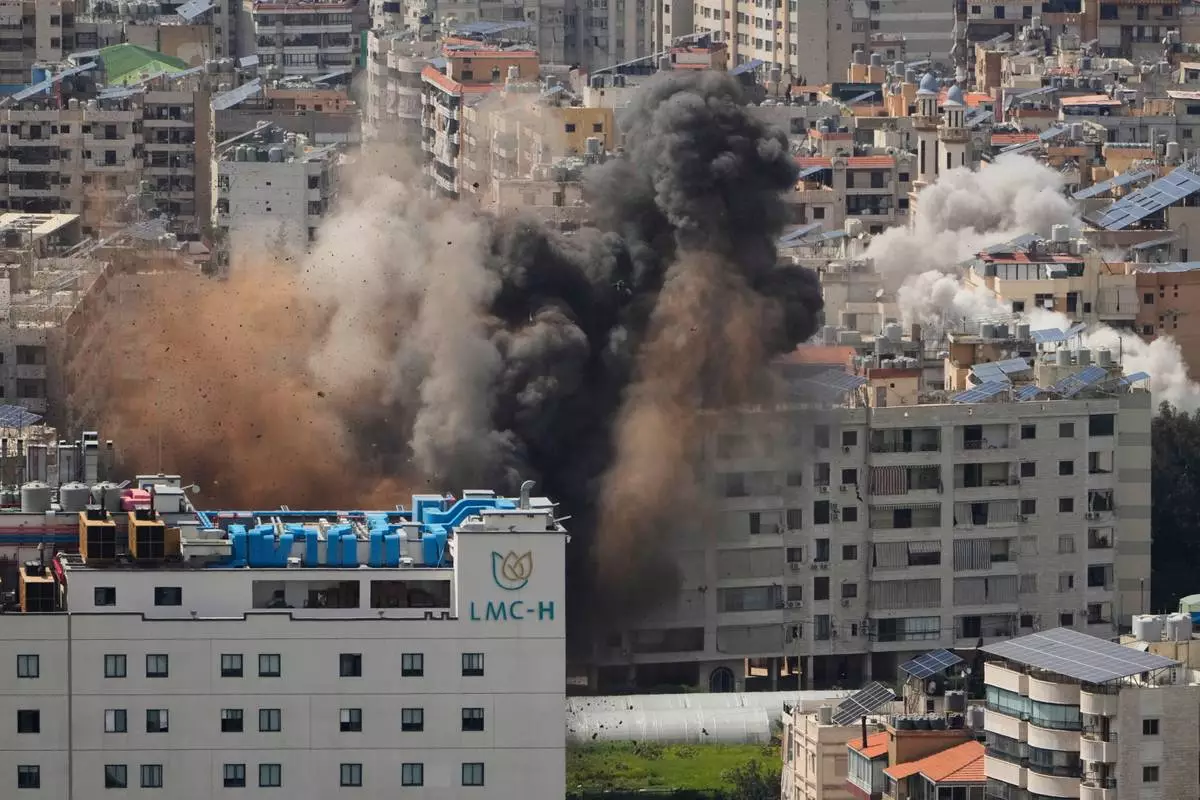
Smoke rises following several Israeli airstrikes in Beirut, Lebanon, Wednesday, April 8, 2026. (AP Photo/Hassan Ammar)
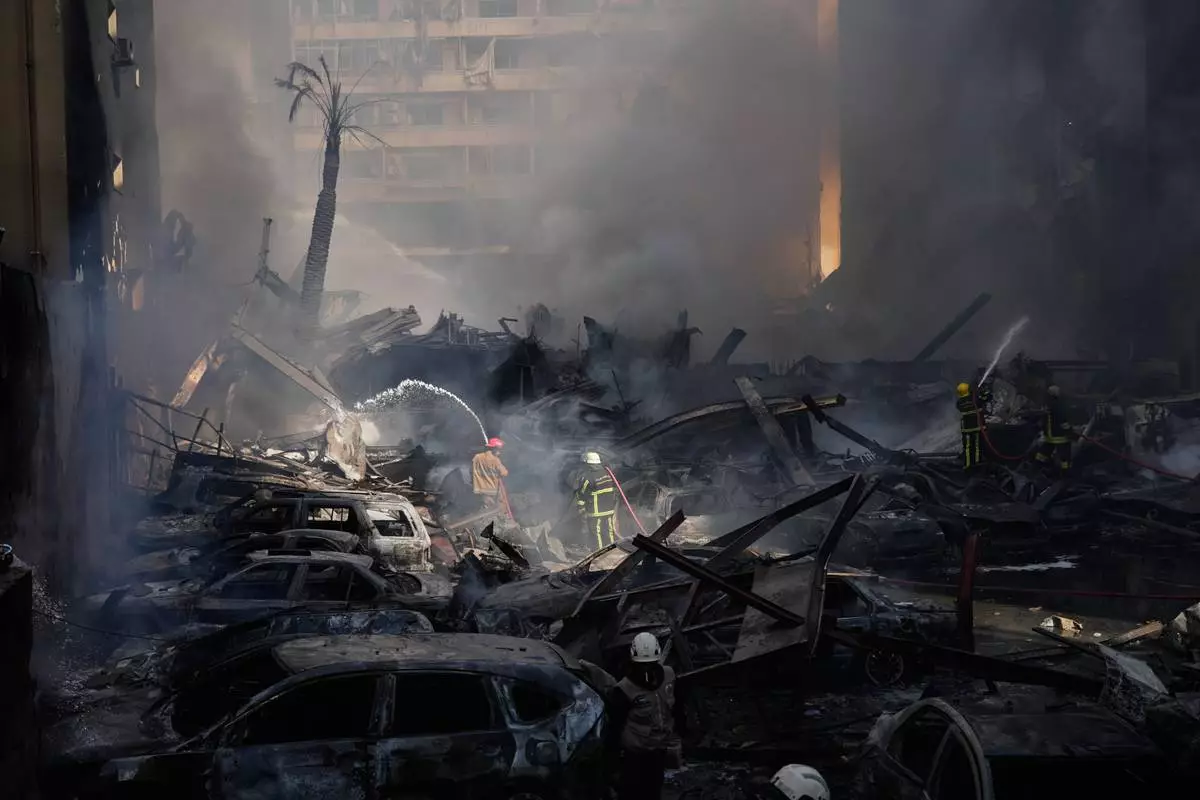
Smoke rises following several Israeli airstrikes in Beirut, Lebanon, Wednesday, April 8, 2026. (AP Photo/Hassan Ammar)
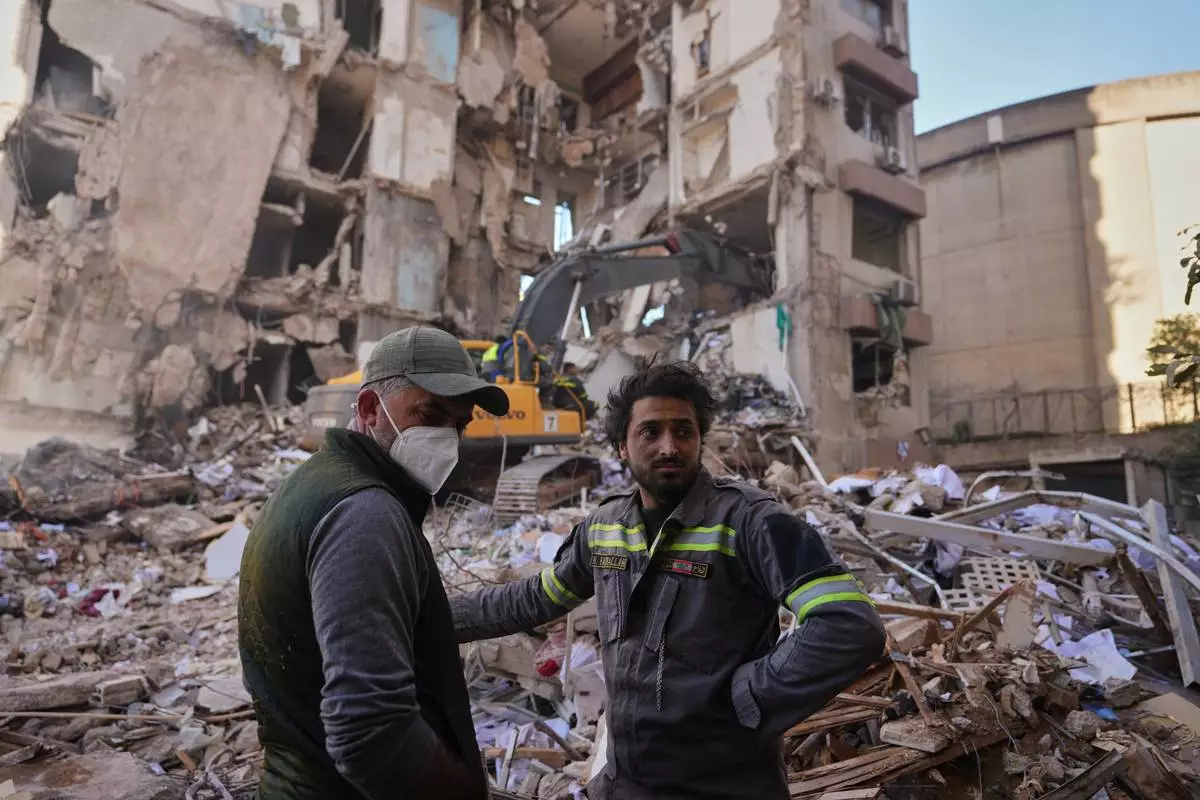
A Lebanese civil defense worker, right, stands with a resident at the site of a building destroyed in an Israeli airstrike a day earlier in central Beirut, Lebanon, Thursday, April 9, 2026. (AP Photo/Hassan Ammar)