Skip to Content Facebook Feature Image

Two-week ceasefire window fraught with challenges as core conflicts remain unresolved: expert

China

China

China

Two-week ceasefire window fraught with challenges as core conflicts remain unresolved: expert

2026-04-10 17:24 Last Updated At:04-11 01:17

The potential for a lasting peace agreement in the Middle East could remain elusive due to decades of accumulated mistrust and unresolved regional conflicts, according to a Chinese scholar and expert on the region, as the U.S. and Iran gear up for crucial negotiations amid their current two-week ceasefire.

Niu Xinchun, executive director of the China-Arab Research Institute of Ningxia University in northwest China, shared his analysis of the current situation and also highlighted the role China can play in pushing for a sustainable solution.

After more than a month of deadly clashes, the United States and Iran reached a two-week ceasefire less than two hours before a deadline set by U.S. President Donald Trump, and have agreed to commence talks in Pakistan's Islamabad on Friday.

According to Niu, one of the immediate challenges lies in the narrow scope of the current ceasefire discussions. He also pointed to the complications brought by Israel's continued bombing campaign on Lebanon, which Iran had insisted was included in the current temporary ceasefire.

"The issue of Lebanon is indeed a major one, because the ceasefire does not include Lebanon, making it a point of contention from the outset," he said.

Niu further emphasized that the exclusion of Lebanon from the ceasefire framework not only creates a geographic gap in de-escalation but also introduces a variable that could easily reignite broader tensions.

Beyond the immediate geographic challenges, Niu also pointed to the deeper structural obstacles that have prevented any long-term resolution in previous talks between the U.S. and Iran.

"To reach a permanent ceasefire agreement, the contradictions accumulated between Iran and the United States over the past 40 years must be resolved. Because the United States and Iran are highly hostile and distrustful, and there have been no direct negotiations between the two sides to date, a mediator is indispensable for a ceasefire and negotiations," he said.

While acknowledging that certain third parties could play a facilitating role, Niu expressed skepticism about their ability to exert real pressure, and though Pakistan has emerged as the host for these crunch talks, he says it may find it hard to influence the direction if discussions.

"While Pakistan is a credible interlocutor, its leverage over either side is limited," he said.

Against the fraught backdrop of deep mistrust, Niu outlined China's approach to the crisis, stressing that China's interests in the region are fundamentally different from those of other major power competitors.

"China pursues no narrow self-interest; our sole objective is the stability and prosperity of the region. Therefore, it is in our interest to maintain stability, peace, and economic prosperity in the Middle East," he said.
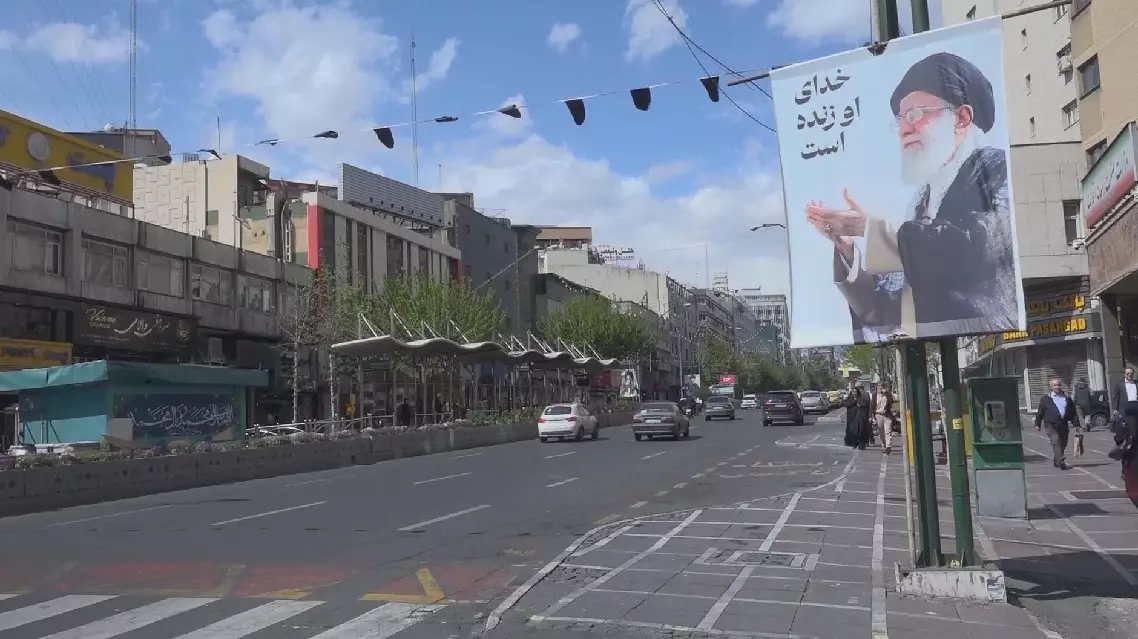
Two-week ceasefire window fraught with challenges as core conflicts remain unresolved: expert
Two-week ceasefire window fraught with challenges as core conflicts remain unresolved: expert

China's newly approved Inner Mongolia Pilot Free Trade Zone (FTZ) is expected to help turn the northern border areas into a new frontier of opening-up.

China on Thursday released a plan for the establishment of the China (Inner Mongolia) Pilot Free Trade Zone, bringing the total number of pilot free trade zones nationwide to 23. Leveraging its unique location linking Russia, Mongolia and wider Eurasia, the zone is designed to advance the country's high-level opening-up through policy support, industrial upgrading and improved connectivity.

The pilot FTZ covers 119.74 square kilometers and comprises three subzones in Hohhot, capital of the autonomous region, Manzhouli, a northern border city, and Erenhot, a land port on the China-Mongolia border, each tasked with differentiated functions and the development of industries tailored to local conditions.

Specifically, the Hohhot subzone will serve as a central hub, focusing on developing specialty industries and innovation clusters. The Manzhouli subzone will build on China-Russia-Mongolia cooperation to become an important gateway to Northeast Asia and Europe. The Erenhot subzone will tap into the China-Mongolia-Russia Economic Corridor and serve as a model for cooperation with neighboring countries.

At the Hohhot Comprehensive Bonded Zone, a gold and silver refining project due to start operations will have an annual processing capacity of 100 tonnes of gold and 1,000 tonnes of silver.

The Manzhouli subzone will prioritize industries including the processing of imported resources, cross-border tourism, cross-border financial services and port services.

"Following the approval of the free trade zone, companies like ours are more confident in expanding our cross-border business further and broadening its scope. Specifically, we aim to achieve full coverage across the entire industrial chain," said Cui Rongzheng, head of Manzhouli Xincheng Supply Chain Limited Company.

Notably, in the first quarter of this year, the Erenhot Railway Port, a key hub on the "middle corridor" of the China-Europe Railway Express, handled a record-high 1,145 freight train trips, a 22.3 percent increase from last year, underscoring its role in stabilizing global supply chains and supporting foreign trade growth.

"The establishment of the Inner Mongolia Pilot Free Trade Zone will strengthen links between border provinces and China's inland regions, and enhance cooperation between land ports, coastal ports and inland ports. It is expected to play a key role in improving the wellbeing of ethnic minority populations in the border areas and turning China's northern border areas into a new frontier of opening-up," said Wang Xuekun, head of the Chinese Academy of International Trade and Economic Cooperation under the Ministry of Commerce.

Inner Mongolia FTZ subzones to drive coordinated opening-up

Inner Mongolia FTZ subzones to drive coordinated opening-up

Recommended Articles