China's futures market posted a surge in both transaction volume and turnover in the first three months of 2026, according to the data released by the China Futures Association on Friday.
The trading volume increased by 40.64 percent year on year to 2.601 billion lots in the January-March period, bringing total turnover to 256.71 trillion yuan (about 37.58 trillion U.S. dollars), up 58.43 percent, the data showed.
Bulk commodity trading remained active in March, with energy, chemical, and metal sectors registering solid growth, while the turnover of fuel oil futures jumped 244.55 percent year on year.
The new energy metal sector maintained its strong momentum in March, with the turnover of lithium carbonate futures rising nearly 4.7 times year on year, indicating that commodities across the new energy industry chain remain a key focus of market attention.
In March, the turnover of gold futures exceeded 10 trillion yuan, up 68.55 percent year on year. Its overall trading volume stayed at a historical high, underscoring the irreplaceable role of precious metals as a safe-haven asset.
China currently has 165 listed futures and options products, basically covering the major areas tied to the national economy and people's livelihood.
"By late March, the number of active clients in the futures market had surpassed 3 million for the first time. The market's roles in price discovery, risk management and resource allocation keep strengthening, playing a growing part in helping industrial clients mitigate risks, promote supply and price stability, and facilitate industrial transformation and upgrading," said Xu Guoxin, a non-member director of China Futures Association.

China's futures market surges in trading volume, turnover in Q1
China's newly approved Inner Mongolia Pilot Free Trade Zone (FTZ) is expected to help turn the northern border areas into a new frontier of opening-up.
China on Thursday released a plan for the establishment of the China (Inner Mongolia) Pilot Free Trade Zone, bringing the total number of pilot free trade zones nationwide to 23. Leveraging its unique location linking Russia, Mongolia and wider Eurasia, the zone is designed to advance the country's high-level opening-up through policy support, industrial upgrading and improved connectivity.
The pilot FTZ covers 119.74 square kilometers and comprises three subzones in Hohhot, capital of the autonomous region, Manzhouli, a northern border city, and Erenhot, a land port on the China-Mongolia border, each tasked with differentiated functions and the development of industries tailored to local conditions.
Specifically, the Hohhot subzone will serve as a central hub, focusing on developing specialty industries and innovation clusters. The Manzhouli subzone will build on China-Russia-Mongolia cooperation to become an important gateway to Northeast Asia and Europe. The Erenhot subzone will tap into the China-Mongolia-Russia Economic Corridor and serve as a model for cooperation with neighboring countries.
At the Hohhot Comprehensive Bonded Zone, a gold and silver refining project due to start operations will have an annual processing capacity of 100 tonnes of gold and 1,000 tonnes of silver.
The Manzhouli subzone will prioritize industries including the processing of imported resources, cross-border tourism, cross-border financial services and port services.
"Following the approval of the free trade zone, companies like ours are more confident in expanding our cross-border business further and broadening its scope. Specifically, we aim to achieve full coverage across the entire industrial chain," said Cui Rongzheng, head of Manzhouli Xincheng Supply Chain Limited Company.
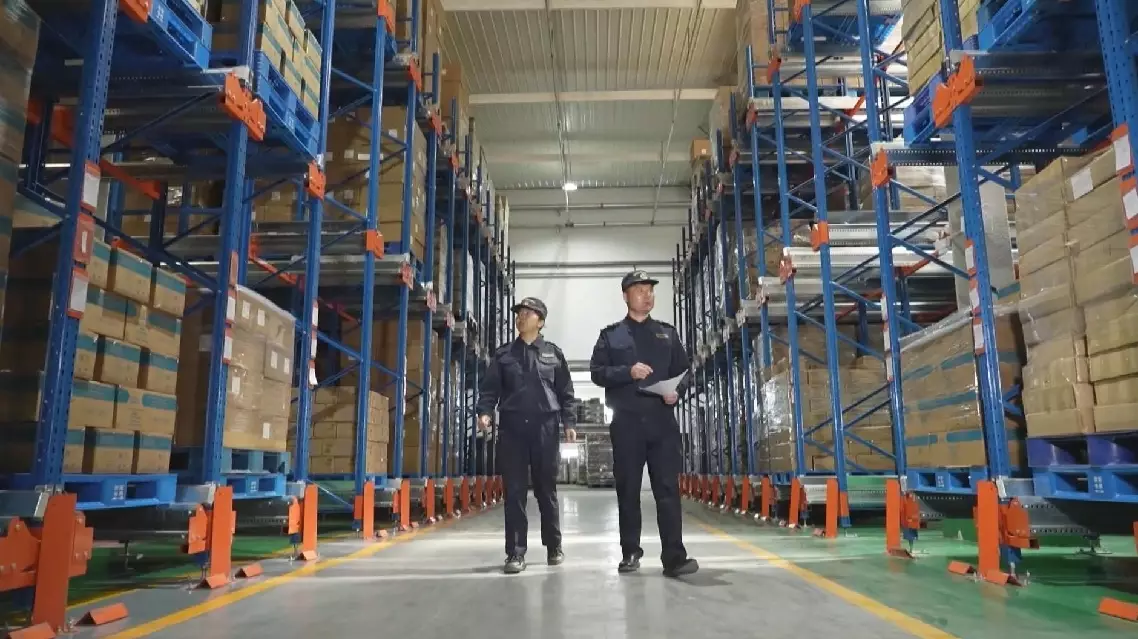
Notably, in the first quarter of this year, the Erenhot Railway Port, a key hub on the "middle corridor" of the China-Europe Railway Express, handled a record-high 1,145 freight train trips, a 22.3 percent increase from last year, underscoring its role in stabilizing global supply chains and supporting foreign trade growth.
"The establishment of the Inner Mongolia Pilot Free Trade Zone will strengthen links between border provinces and China's inland regions, and enhance cooperation between land ports, coastal ports and inland ports. It is expected to play a key role in improving the wellbeing of ethnic minority populations in the border areas and turning China's northern border areas into a new frontier of opening-up," said Wang Xuekun, head of the Chinese Academy of International Trade and Economic Cooperation under the Ministry of Commerce.
Inner Mongolia FTZ subzones to drive coordinated opening-up