Skip to Content Facebook Feature Image

Gaza classes held in shelters, damaged buildings amid resource shortfall

China

China

China

Gaza classes held in shelters, damaged buildings amid resource shortfall

2026-04-11 14:40 Last Updated At:18:57

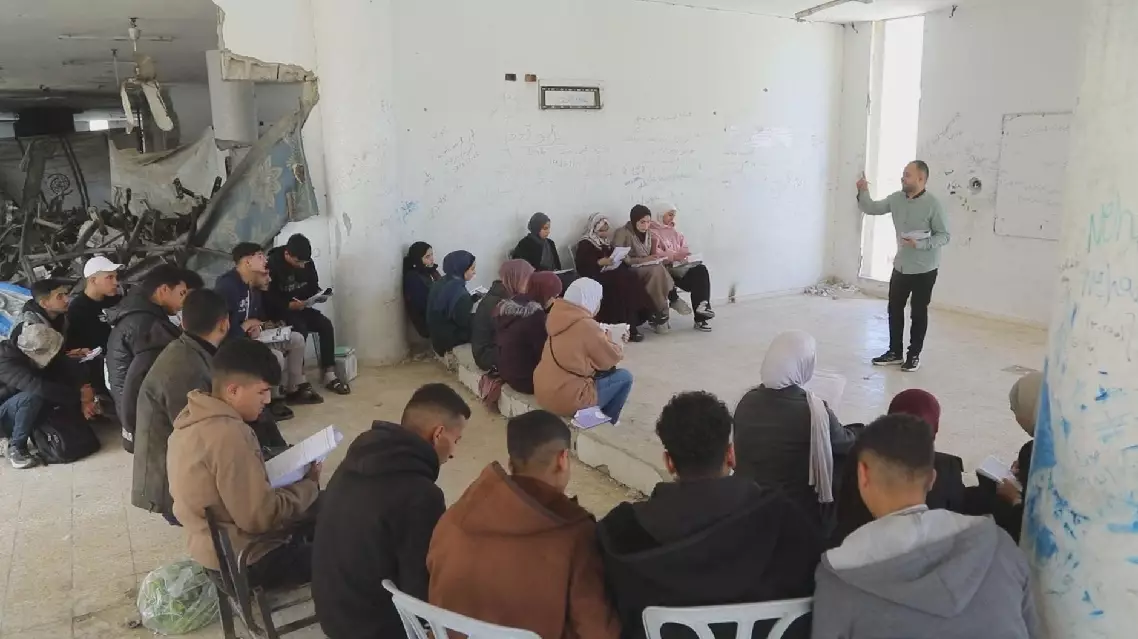
In the Gaza Strip, students are returning to school under dire conditions with classes held in damaged buildings and makeshift shelters amid a severe shortage of textbooks and resources following the destruction of most educational facilities by Israeli attacks.

Inside war-damaged university buildings, students gather to resume their studies, often sitting on the ground in the absence of basic classroom facilities.

Many of these spaces also serve as shelters for displaced families, blurring the line between living and learning environments.

"I used to dream of becoming a cardiologist, but everything has changed. Before the war, we had schools and universities. Now our schools are just tents and rubble," said Reem Al-Zaanin, a student.

Outside the classroom, students continue to grapple with persistent daily challenges, from inadequate transportation and financial difficulties to severe shortages of basic necessities.

"Our situation is very difficult and painful. Transportation is hard to find, getting stationery is very difficult, and our financial situation is also hard. Life is exhausting and painful," said Bara Al-Shurfa, another student.

The hardship also affects teachers, who continue working under extreme conditions to keep education going, after more than 20,000 students and around 1,037 teachers were killed during the war.

"Students struggle just to reach classes. There are not enough seats, no stationery or books. Students are trapped in extremely difficult conditions that are not suitable for learning," said Mohammad Al-Kafarna, a teacher.

According to the Ministry of Education, tens of thousands of students are now receiving lessons through alternative learning points across Gaza.

"More than 86,000 students are currently receiving education through 2,600 teachers. These learning points are simple tents where students sit on the ground, with no blackboards or textbooks," said Jawad Khalil, director of West Gaza Education Directorate of the Ministry of Education.

According to Gaza's government media office, 165 educational institutions have been destroyed and 392 damaged, paralyzing the sector.
Gaza classes held in shelters, damaged buildings amid resource shortfall
Gaza classes held in shelters, damaged buildings amid resource shortfall
Gaza classes held in shelters, damaged buildings amid resource shortfall
Gaza classes held in shelters, damaged buildings amid resource shortfall

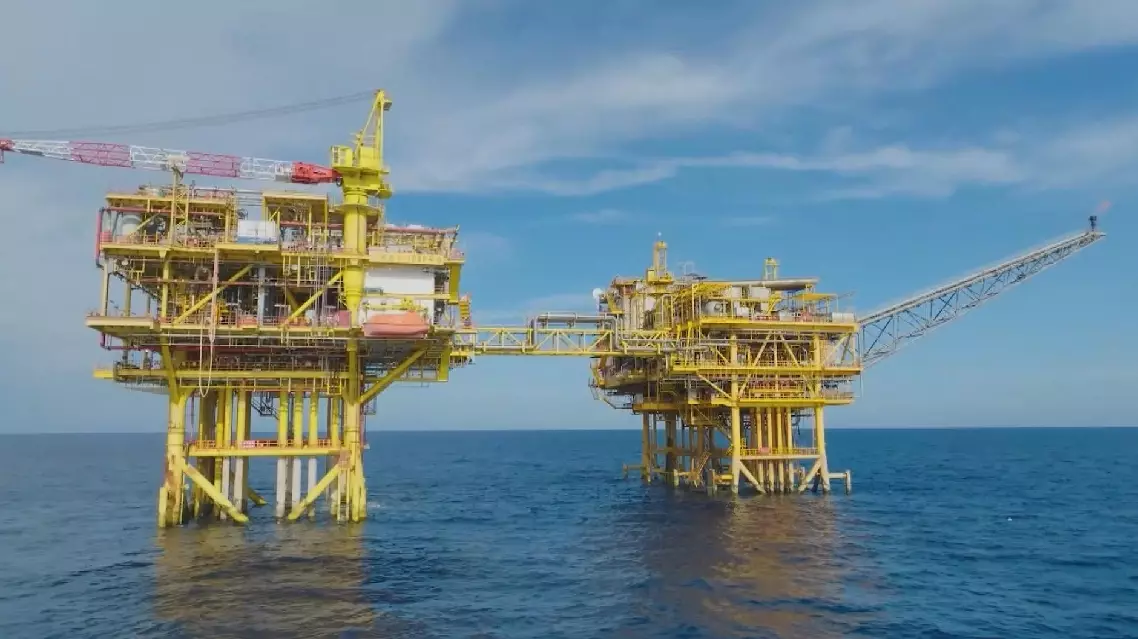
China National Offshore Oil Corporation (CNOOC) announced on Saturday that construction has officially started on a carbon capture, utilization and storage (CCUS) project at the Dongfang 1-1 gas field in south China's Hainan Province.

The project includes the construction of two new jacket platforms and an undersea pipeline connected to the existing production facilities of the Dongfang 1-1 gas field.

It marks China's first demonstration initiative applying offshore carbon injection technology to enhance natural gas production.

Carbon injection for enhanced gas recovery is a specialized branch of CCUS technology. Its core principle is to turn carbon dioxide emitted during natural gas extraction into a valuable resource. After being captured and purified, the carbon dioxide is pressurized and injected back into gas-bearing reservoirs, where it acts as a driving force to unlock hard-to-recover natural gas reserves.

"With the new project, we will move the decarbonization process, originally located at onshore processing plants, to the offshore platform itself, achieving carbon reduction at the source. Compared with traditional processes, the technology used here offers higher equipment integration, lower energy consumption, and better recovery of hydrocarbon components," said Yu Fasong, head of the Dongfang 1-1 CCUS project at CNOOC Hainan.

The Dongfang 1-1 gas field, China's first self-operated offshore gas field and the country's first offshore high-CO2 gas field, has been in production since 2003, with cumulative natural gas output exceeding 50 billion cubic meters.

"When fully operational, the project is expected to inject up to about 1.2 million tons of carbon dioxide into the formation annually. This is of great significance for enhancing marine energy and resource development capabilities and supporting China's dual carbon goals," Yu said.

Upon completion, the project will enhance the transportation capacity of the subsea pipeline network in the Yinggehai Sea, support the cost-effective development of more carbon-rich natural gas resources in the region, and help sustain long-term stable production of the entire Dongfang gas field cluster.

China launches first offshore carbon injection project in Hainan Province

China launches first offshore carbon injection project in Hainan Province

Recommended Articles