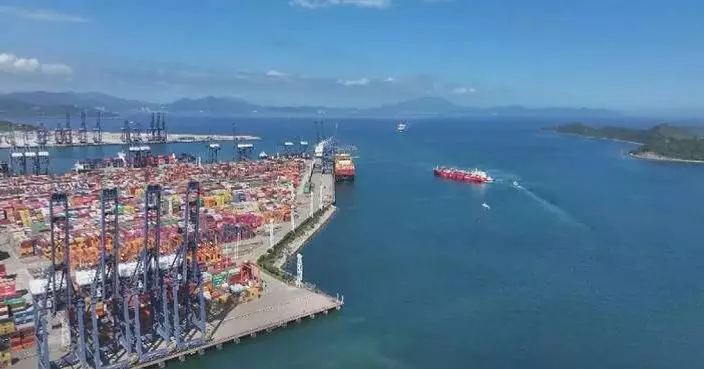
Iran and the United States remained locked in disagreement over control of the Strait of Hormuz during talks in Islamabad, the Pakistani capital, on Saturday, with the Islamic Republic flatly rejecting an American proposal for "joint management" of the strategic waterway.
Two sources familiar with the negotiations said Iranian negotiators insisted on retaining full control of the Strait, including the right to levy transit fees on vessels passing through the key maritime chokepoint.
The issue has emerged as a major sticking point in the negotiations between the two sides, which began on Saturday.
Tensions over the Strait have escalated in recent days.
On Saturday, the U.S. Central Command (CENTCOM) announced that two American guided-missile destroyers, the USS Frank E. Peterson and USS Michael Murphy, transited the Strait and commenced mine-sweeping operations in the Strait of Hormuz.
CENTCOM described the operation as part of an effort to clear mines allegedly laid by Iran's Islamic Revolutionary Guards Corps and to establish a new safety corridor for commercial shipping.
Brad Cooper, commander of CENTCOM, said the new corridor would be opened to the maritime industry soon to facilitate the free flow of commerce. He stressed that the Strait, a vital international waterway, is crucial for regional and global economies.
Additional U.S. forces, including underwater drones, will join the clearance effort in the coming days.
Iran, however, has categorically denied the U.S. account.
On Saturday, a spokesperson for Iran's Khatam al-Anbiya Central Headquarters rejected the American claim that its warships had approached or entered the Strait. The spokesperson reaffirmed that Iran maintains full control over transit through the waterway.
The conflicting statements came as delegations from Iran and the United States are currently in Islamabad for talks on easing tensions in the Middle East after a ceasefire was achieved between the two countries early Wednesday.
Following a meeting between senior officials, Iranian and U.S. expert and technical teams had reached the stage of exchanging texts to develop a joint framework for further talks.
However, the third round of U.S.-Iran negotiations concluded with "serious disagreements," the semi-official Tasnim news agency reported Sunday. According to Tasnim, the Strait of Hormuz and several other issues remain sources of "serious disagreement" in the negotiations held in Pakistan.
Iran's government said on social media that despite the disagreements, negotiations will continue.
The Iranian delegation at the talks includes Mohammad Bagher Ghalibaf, speaker of the Iranian Parliament; Iranian Foreign Minister Seyed Abbas Araghchi; and Ali Bagheri, a member of Iran's Supreme National Security Council.
The U.S. side is represented by Vice President J.D. Vance, President's Middle East Envoy Steve Witkoff, and Special Peace Envoy Jared Kushner.
Iranian officials have previously signaled that any outcome must preserve the country's military achievements and safeguard the rights of its people, underscoring the high stakes of the discussions over the strategic waterway.
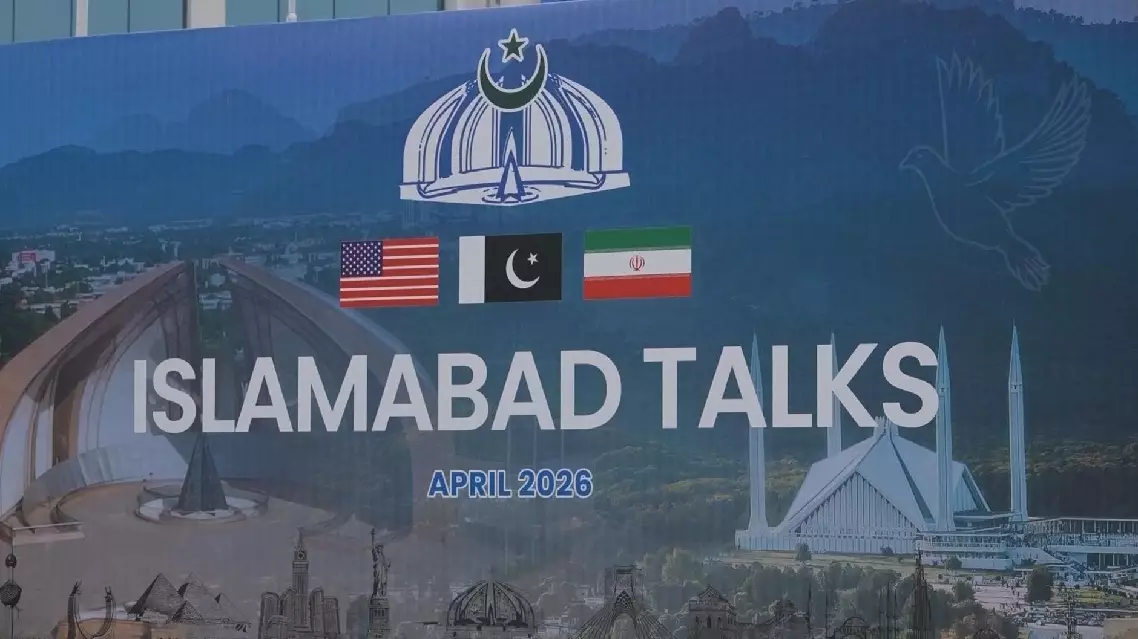
Iran, U.S. at odds over control of Strait of Hormuz as Tehran rejects joint management
The latest speech on cross-Strait relations by Xi Jinping, general secretary of the Communist Party of China (CPC) Central Committee, in which he called for peaceful development, closer exchanges and greater unity, has drawn a warm response from across society at home and abroad.
Meeting Cheng Li-wun, chairwoman of the Chinese Kuomintang (KMT) party, in Beijing on Friday, Xi, also general secretary of the Communist Party of China Central Committee, called for closer cross-Strait ties by fostering a shared sense of identity, safeguarding the common homeland through peaceful development, improving people's well-being through exchanges and integration, and working together to achieve national rejuvenation. His remarks further clarified the direction of cross-Strait relations and provided important guidance for their development.
He said that people on both sides of the Taiwan Strait hope for peace and tranquility, improved cross-Strait relations, and better lives, stressing that it is a responsibility that the CPC and the KMT cannot shirk, and also a driving force for the two parties to work together.
Figures from the Chinese mainland and the Taiwan region said Xi's heartfelt remarks demonstrated his care and concern for compatriots in Taiwan and highlighted the mainland's sense of mission and historical responsibility in pursuing peace across the Taiwan Strait, the well-being of Taiwan compatriots, and the rejuvenation of the Chinese nation.
"General Secretary Xi emphasized that the overarching trend toward the great rejuvenation of the Chinese nation will not change, and the prevailing momentum for the Chinese on both sides of the Strait to come together will not change. The situation across the Taiwan Strait is currently complex and grave, and the secessionist policy of Taiwan's Democratic Progressive Party (DPP) is undermining peace in cross-Strait relations. Therefore, we must achieve a win-win outcome of peaceful cooperation across the Strait on the basis of the common political foundation of adhering to the 1992 Consensus and opposing Taiwan secession," said Zhu Weidong, deputy director of the Taiwan Research Institute at the Chinese Academy of Social Sciences.
"General Secretary Xi's speech holds epoch-making significance for promoting cross-Strait exchanges and peaceful development, and has elicited widespread, positive, and favorable responses in Taiwan. In his speech, the General Secretary emphasized that compatriots on both sides of the Taiwan Strait share the same roots, the same culture and ethnicity, and are one family bound by blood. When a family gets along, as long as they have calm discussions on matters of concern, there will be no conflicts or differences that cannot be resolved. This reflects the mainland's utmost goodwill toward our compatriots in Taiwan," said Chi Chia-lin, honorary chairman of Reunification Alliance Party in Taiwan.
"The general secretary showed great concern for Taiwan compatriots, which is truly heartwarming. He specifically mentioned that we are all part of the Chinese nation and that we must work together to promote our Chinese culture. I believe this is something we, as young people on both sides of the Strait in this new era, should strive to achieve together," said Chen Wen-cheng from Taiwan, who is now a teacher at Peking University in Beijing.
Xi said the future of cross-Strait relations should be firmly held in the hands of the Chinese people themselves, adding that Taiwan compatriots are welcome to visit the mainland and seek development opportunities.
"General Secretary Xi pointed out that this year marks the first year of the 15th Five-Year Plan, and expressed the mainland's willingness to share its development opportunities and achievements with Taiwan compatriots and jointly build a stronger Chinese economy. I am deeply moved and greatly encouraged by this. We have so many like-minded businesspeople and compatriots from Taiwan who have put down roots on the mainland, worked hard to build their businesses, and developed together. We are very proud, and we feel at home here," said Sun Teh-tsong, deputy head of the Association of Taiwan Investment Enterprises on the Mainland.
"In-depth exchanges and interactions between compatriots on both sides of the Strait are absolutely essential. I would like to take this opportunity to strongly urge my compatriots in Taiwan to visit the mainland more often, to see for yourselves, and to gain a deeper understanding and appreciation of the mainland," said Margaret Chiang, director of the Taiwan Compatriots Investment Enterprises Association of Fuzhou.
"I can clearly see how rapidly the mainland's economy and technology are advancing, and how life is becoming increasingly convenient. We traveled to several provinces, including Jilin and Shaanxi, to experience the vastness of our country and explore its land with our own feet. I also hope to show my true potential on this vast platform in the future," said said Gou J-hi, a youth from Taiwan.
Xi stressed that the great rejuvenation of the Chinese nation is unstoppable, and expressed his firm believe that more and more Taiwan compatriots will gain a correct understanding of the mainland's social system and development path, and they will recognize that Taiwan's development prospects hinge on a strong motherland, and that the interests and well-being of Taiwan compatriots are closely linked to the great rejuvenation of the Chinese nation.
"The general secretary's speech not only upholds the greater good of the nation but also resonates deeply with the hearts of compatriots on both sides of the Strait. We share the same language and heritage and trace our roots to the same source; we should not allow differences in political systems to divide us. In truth, we are all in this together, and we must work hand in hand toward the great rejuvenation of the Chinese nation," said Fan Jiangfeng, vice president of the Xiamen Taiwan Business Association.
"We, the Chinese people both at home and abroad, hold our motherland dear to our hearts. The motherland must be reunified. The people on both sides of the Strait are one family bound by blood ties, and we do not need outside interference," said Chen Heng, chairman of the Fukien American Association.
"As a Chinese living abroad, I deeply feel that the principles articulated by the General Secretary—that Chinese territory must remain intact, the nation must maintain order, all ethnic groups must remain united, and the civilization must be sustained—are the very foundation of the enduring vitality of Chinese civilization. We are committed to standing with our compatriots to safeguard our shared homeland," said Fu Shun, a Chinese expatriate living in Slovakia.
"The common conviction mentioned by General Secretary Xi in his important speech represents the core values and consensus forged by the Chinese nation through thousands of years of history, and they will undoubtedly provide powerful momentum as we work together to realize the Chinese Dream," said Lao Ngai Leong, chairman of the Macao Region China Council for Promotion of Peaceful National Reunification.
"The mainland's commitment to achieving complete national reunification and the rejuvenation of the Chinese nation is unwavering. Its strategic resolve and confidence are undeniably evident. After so many years, we are now immensely proud to witness the prosperity and flourishing of the mainland, which further strengthens our conviction that the spirit, dignity, and confidence of being a proud Chinese citizen are growing ever stronger. Our participation in the journey toward the rejuvenation of the Chinese nation is not only an expression of our love for our great homeland but also a very pragmatic step toward our own personal well-being and toward forging our own future," said Wang Bing-chung, a political commentator from Taiwan.
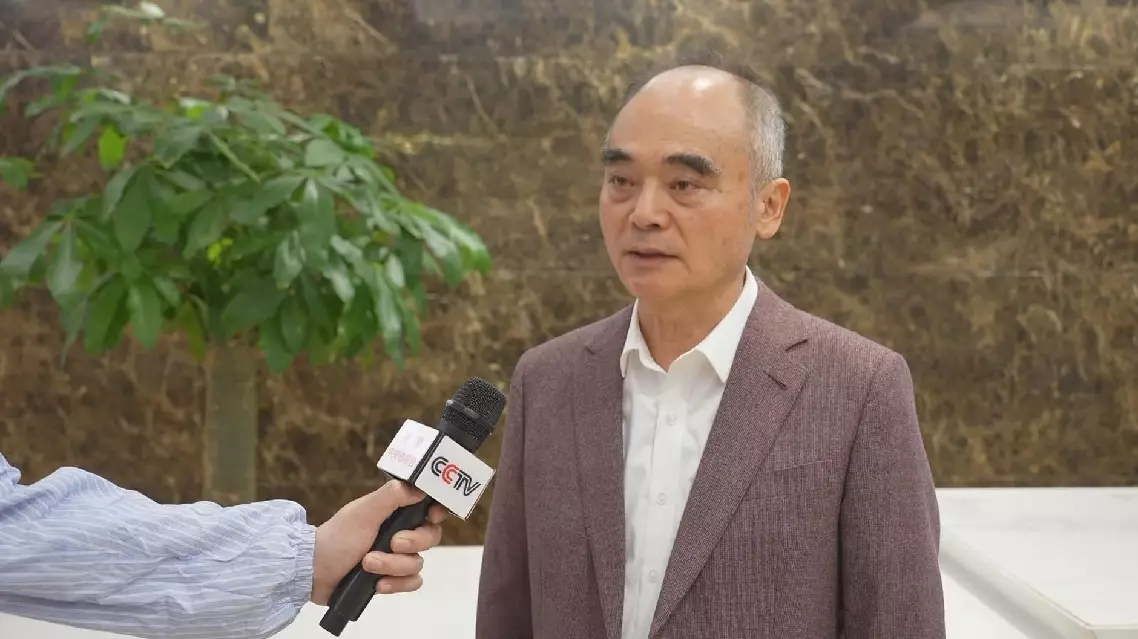
Xi's speech on cross-Strait relations draws warm response