WASHINGTON (AP) — The Kennedy Center's new leadership wants to prove to critics that the building is damaged beyond simple repair. It's starting with Congress.
Matt Floca, the performing arts institution's new executive director and chief operating officer, is leading a series of tours this month that show water damage and intrusion to expansion joints, marble slabs and exterior pavers. Participants are guided through the building's water and HVAC systems, as well as the parking garages and loading docks that are said to need repairs.
The sessions began earlier this month while Congress was in recess and included staff for a bipartisan group of lawmakers, including Senate Minority Leader Chuck Schumer and House Democratic Leader Hakeem Jeffries, the top Democrats on Capitol Hill. A representative for Washington Mayor Muriel Bowser was also included on the tour.
Similar access has been provided for several corporate and individual donors and in the coming weeks, Floca is expected to provide tours for the lawmakers themselves and members of the media.
Once one of Washington's relatively few apolitical spaces, the Kennedy Center has become a source of controversy during President Donald Trump's second term. Shortly after returning to office, Trump ousted the institution's previous leadership and replaced it with a handpicked board of directors.
The president's name was added to the building's facade and its programming took a Trump-friendly turn, serving as a venue for events such as the premiere of first lady Melania Trump's documentary, “Melania.”
Trump's move to shutter the building for two years starting in July, which was approved by the board last month, has spurred lawsuits and an outcry that the closure is merely a response to plunging sales as artists canceled Kennedy Center performances in droves.
The tours are intended to cut through that and show that the Kennedy Center, which began construction in 1965, is in genuine need of a fundamental update.
“As the July closure approaches, the Trump Kennedy Center is leading with transparency and making sure Congress and the public understand what’s at stake and why the work can’t wait,” Floca said in a statement.
In addition to staff for Schumer, Jeffries, and Bowser, the recent tour included representatives for Senate Majority Leader John Thune, R-S.D., Sens. Shelley Moore Capito, R-W.Va., Mark Warner, D-Va., Susan Collins, R-Maine, and Sheldon Whitehouse, D-R.I., along with Reps. Sam Graves, R-Mo., and Rick Larsen, D-Wash.
By virtue of their positions, these lawmakers are ex officio members of the Kennedy Center's board. Kennedy Center spokesperson Roma Daravi said working with both parties was a “top priority” as the institution implements Trump's vision for the renovation.
None of the participants discussed the tour on the record.
Trump secured nearly $257 million from Congress to repair the Kennedy Center. Those who are arguing against its closure haven't disputed the need for routine maintenance and repairs. They say the more substantial changes Trump has hinted at are in the works and should go through the typical review process that governs many major projects in the nation’s capital.
Trump has suggested changes at the Kennedy Center could be so dramatic that the steel supporting the structure could be “ fully exposed.”
According to a lawsuit filed last month against Trump, the Kennedy Center and others in the administration, “Demolition, new construction, major reconstruction, major renovation, or major aesthetic transformation of the Kennedy Center would permanently destroy historic fabric, degrade the monumental core’s vistas and public grounds, and compromise the Kennedy Center’s memorial purpose and architectural integrity, causing permanent, irreversible harm that no subsequent remedy can fully undo."
The Kennedy Center is entering a critical period before its anticipated July closure, which will produce staff reductions.
In the meantime, the Kennedy Center is still hosting shows, including the musical “Chicago,” which Trump attended this month. Performances of “Moulin Rouge! The Musical” are on the calendar from June 18 through July 5. Comedian Bill Maher will be presented the prestigious Mark Twain Prize for American Humor on June 28, just before the closure begins.
The Kennedy Center is part of Trump's broader effort to leave a lasting imprint on the Washington cityscape. He demolished the East Wing of the White House last year and wants to replace it with a ballroom, an effort that is also tangled in litigation.
The president also unveiled plans on Friday for an arch that would stand between the Lincoln Memorial in the east and Arlington National Cemetery toward the west and within a traffic circle connecting Washington with northern Virginia.
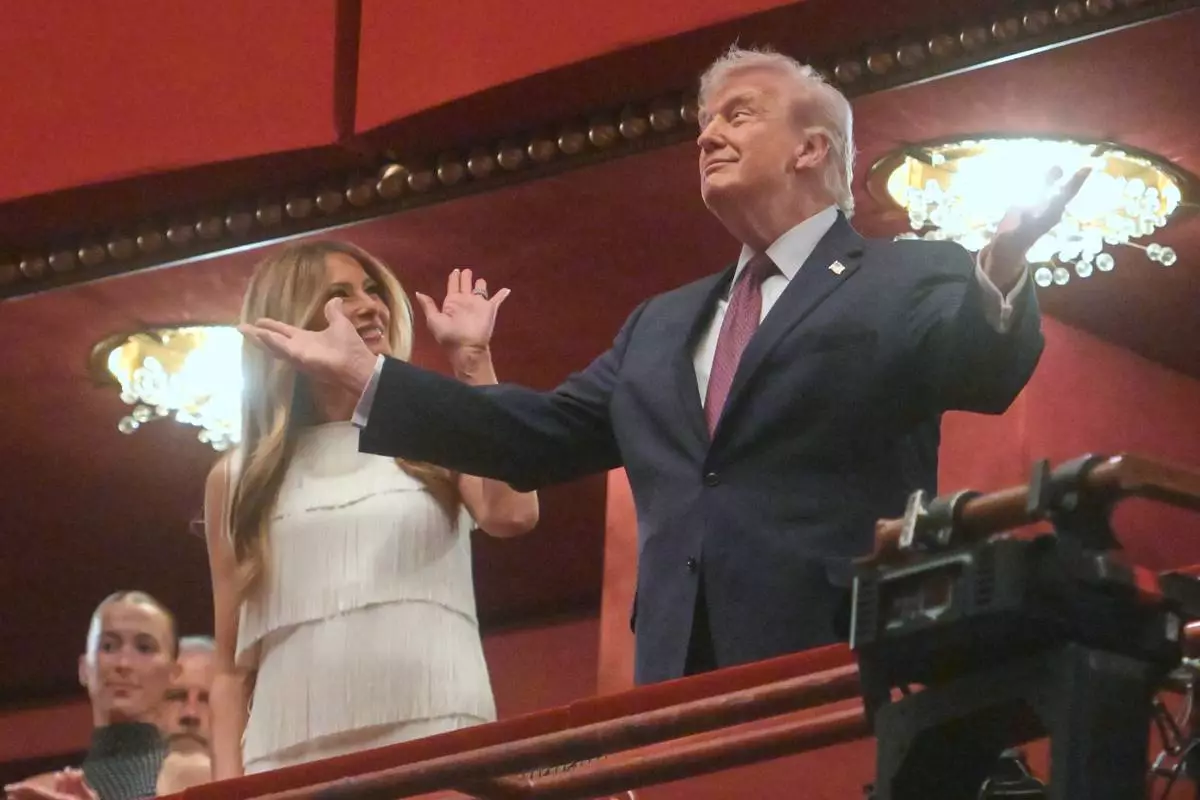
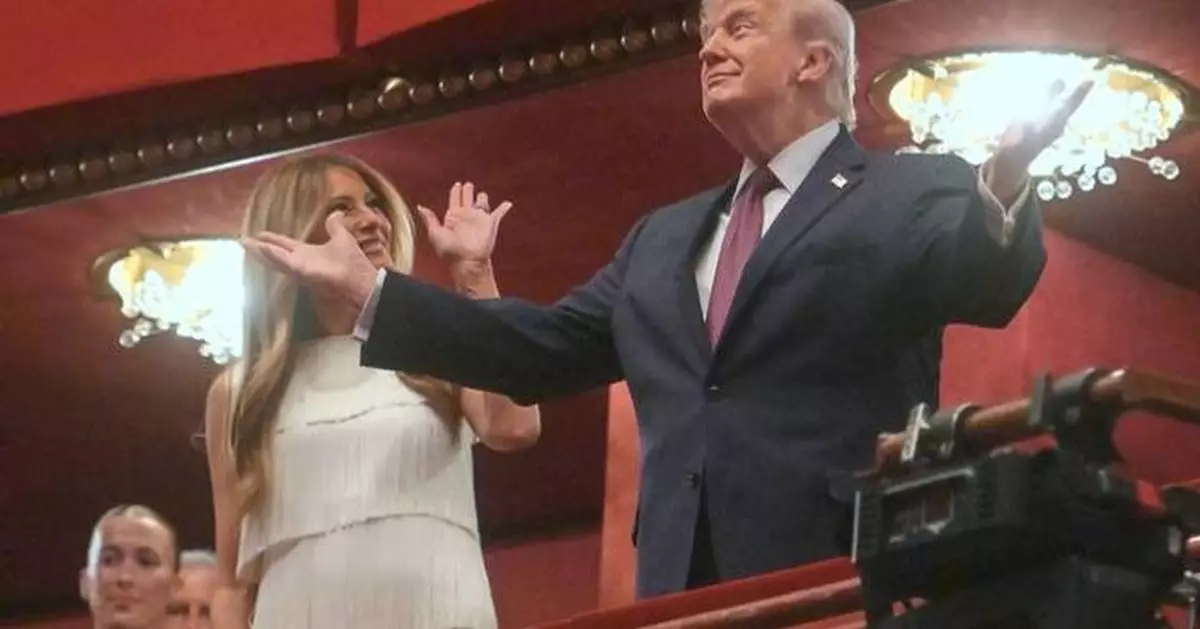
President Donald Trump and first lady Melania Trump arrive to attend the opening nights of the musical "Chicago" at the John F. Kennedy Center for the Performing Arts in Washington, Tuesday, March 31, 2026. (AP Photo/Rod Lamkey, Jr.)
WASHINGTON (AP) — Lebanon and Israel held their first direct diplomatic talks in decades on Tuesday in Washington following more than a month of war between Israel and the Iran-backed Hezbollah militant group, with U.S. Secretary of State Marco Rubio calling it a “historic opportunity” but making clear that no breakthrough agreement would happen right away.
In a statement after the two-hour session ended, the State Department praised the two sides for what it called “productive discussions on steps toward launching direct negotiations between Israel and Lebanon.” Hezbollah opposed the direct talks and was not represented, appearing to step up its fire on northern Israel as the discussions began.
“The United States affirmed that any agreement to cease hostilities must be reached between the two governments, brokered by the United States, and not through any separate track,” the State Department said.
Israeli Ambassador to the U.S. Yechiel Leiter hailed what he called a convergence of opinion about removing Hezbollah’s influence from Lebanon, saying he was encouraged by a “wonderful exchange."
“The Lebanese government made it very clear that they will no longer be occupied by Hezbollah," he said. "Iran has been weakened. Hezbollah is dramatically weakened. This is an opportunity.”
Lebanese Ambassador to the U.S. Nada Hamadeh Moawad “reaffirmed the urgent need” for an end to the Israel-Hezbollah conflict, “underscoring the principles of territorial integrity and full state sovereignty.” She also called for a ceasefire, the return of displaced people to their homes, and “concrete measures to address and alleviate the severe humanitarian crisis” resulting from the conflict.
Despite Hezbollah’s outright rejection, the talks are a major step for two countries with no diplomatic relations that have been officially at war since Israel’s inception in 1948. The latest round of fighting was sparked by Hezbollah firing rockets into northern Israel on March 2, days after the United States and Israel attacked Iran, Hezbollah’s key ally and patron.
As the talks began, Rubio said the Trump administration was “very happy” to facilitate but noted that “we understand we’re working against decades of history and complexities” that will not be quickly resolved.
“But we can begin to move forward with a framework where something can happen — something very positive, something very permanent — so that the people of Lebanon can have the kind of future they deserve, and so that the people of Israel can live without fear,” Rubio said.
The Lebanese government hopes the talks will help pave the way to an end to the war. While Iran has set ending the wars in Lebanon and the region as a condition for talks with the U.S., Lebanon insists on representing itself.
Hezbollah and other critics say Lebanon’s government lacks leverage and that it should back Iran’s position. Wafiq Safa, a high-ranking member of the militant group’s political council, told The Associated Press that the group will not abide by any agreements made during the talks.
On the day of the discussions, incoming fire triggered nonstop drone and rocket alert sirens in Israeli communities near the Lebanese border. Hezbollah, so far on Tuesday, has claimed 24 attacks on northern Israel and on Israeli troops in southern Lebanon.
At least 2,124 people have been killed in Israeli strikes in Lebanon, the Health Ministry said, including hundreds of women and children. More than 1 million people are displaced. The deadliest day of the war took place last week, when Israel launched 100 airstrikes across Lebanon in 10 minutes, including in the heart of the capital, killing over 350 people.
The Israeli military has invaded southern Lebanon, a move some Israeli officials have said aims to create a “security zone” from the border to the Litani River, some 30 kilometers (20 miles) to the north.
Israel’s defense minister says hundreds of thousands of people uprooted from southern Lebanon will not be allowed to return home until the area is demilitarized and Israel believes its northern communities are safe. Hezbollah, though weakened in its last war with Israel that ended in November 2024, still fires drones, rockets and artillery daily into northern Israel and on ground troops inside Lebanon.
Hezbollah enjoys wide influence in Beirut’s southern suburbs, as well as large swaths of the country’s southern and eastern provinces. Hezbollah-allied politicians hold two Cabinet minister positions, though the group’s ties have soured with Lebanon’s top political authorities, who have been critical of Hezbollah’s decision to enter the war last month and who have since criminalized the group’s military activities in the country.
The talks are the first between Israel and Lebanon since 1993. Both countries have relied on indirect communication, often brokered by the United States or UNIFIL, the United Nations peacekeeping mission in southern Lebanon.
Lebanon’s top political authorities, critical of Hezbollah’s decision to fire rockets toward Israel on March 2 in solidarity with Iran, quickly proposed direct talks in a bid to stop the escalation, hoping that Israel would not launch its ground invasion.
Israel did not respond positively until last week, after its deadly bombardment hit several crowded commercial and residential areas in Beirut, sparking an international outcry and triggering threats by Iran that it would end the ceasefire with the United States and Israel.
Lebanese officials have pushed for a truce, which Israel has ruled out. Israel has, however, halted strikes on Lebanon's capital following the bombardment.
“Israel’s destruction of Lebanese territories is not the solution, nor will it yield any results,” Lebanese President Joseph Aoun said Monday. He came to power vowing to disarm non-state groups, including Hezbollah. “Diplomatic solutions have consistently proven to be the most effective means of resolving armed conflicts globally.”
Foreign Minister Gideon Saar on Tuesday denied having disputes with Lebanon and said, “The problem is Hezbollah.”
Hezbollah wants a return to the 2024 agreement under which talks were conducted indirectly with the U.S., France and UNIFIL as mediators.
Chehayeb reported from Beirut. Associated Press writers Farnoush Amiri at the United Nations and Toqa Ezzidin in Cairo contributed to this report.
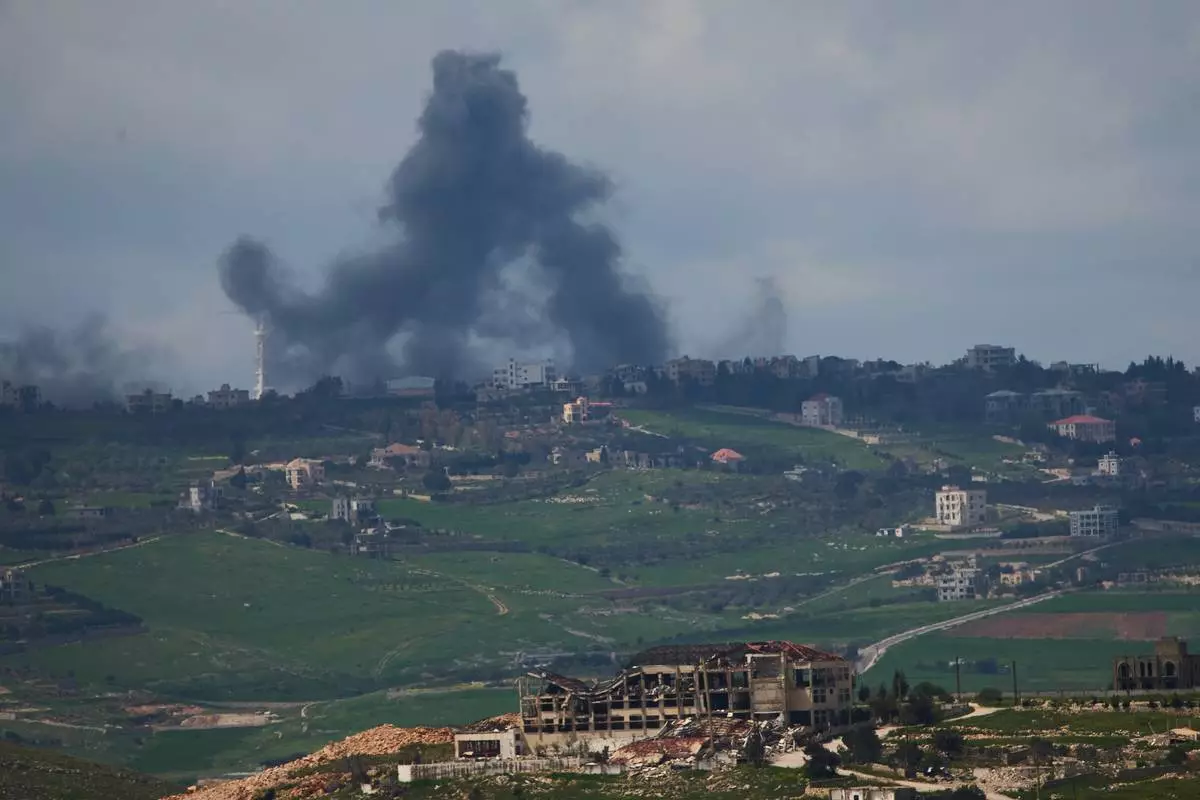
Smoke rises following an Israeli bombardment in southern Lebanon as seen from northern Israel, Sunday, April 12, 2026. (AP Photo/Ariel Schalit)
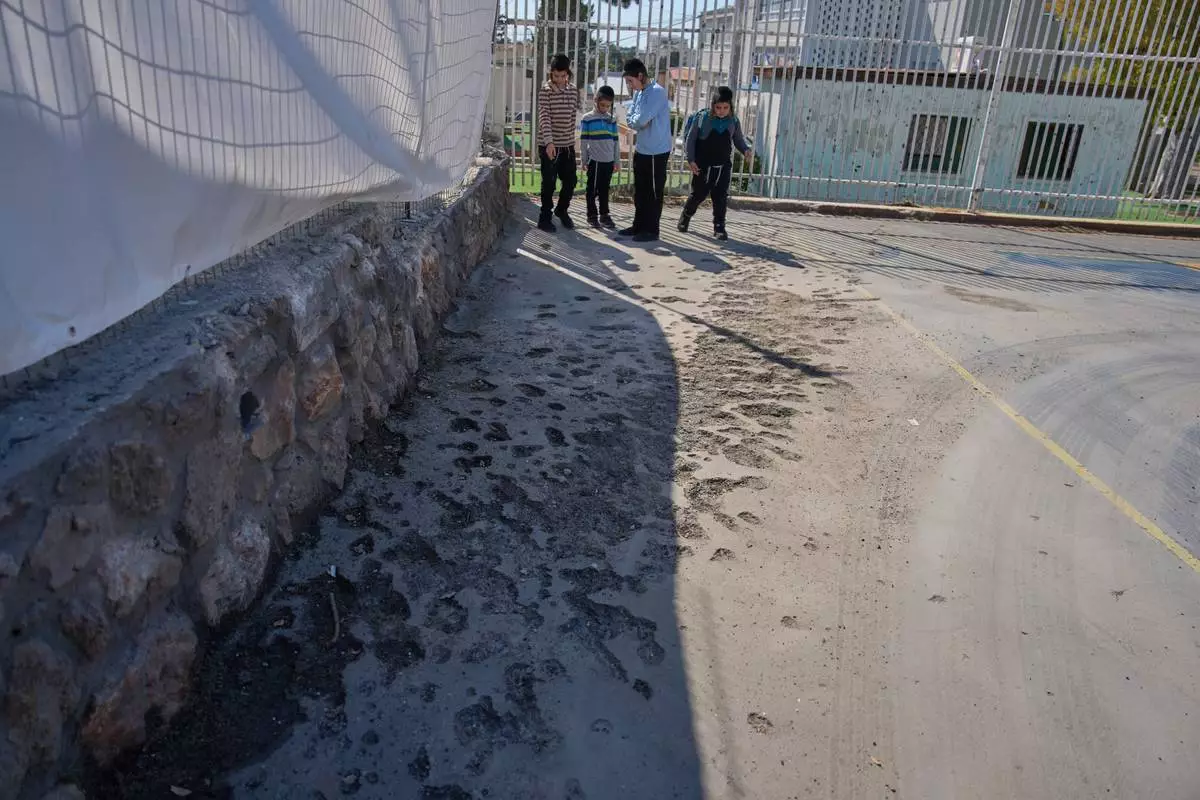
Children look at a damaged play ground hit yesterday by projectiles launched from Lebanon in Nahariya, northern Israel, Sunday, April 12, 2026. (AP Photo/Ariel Schalit)
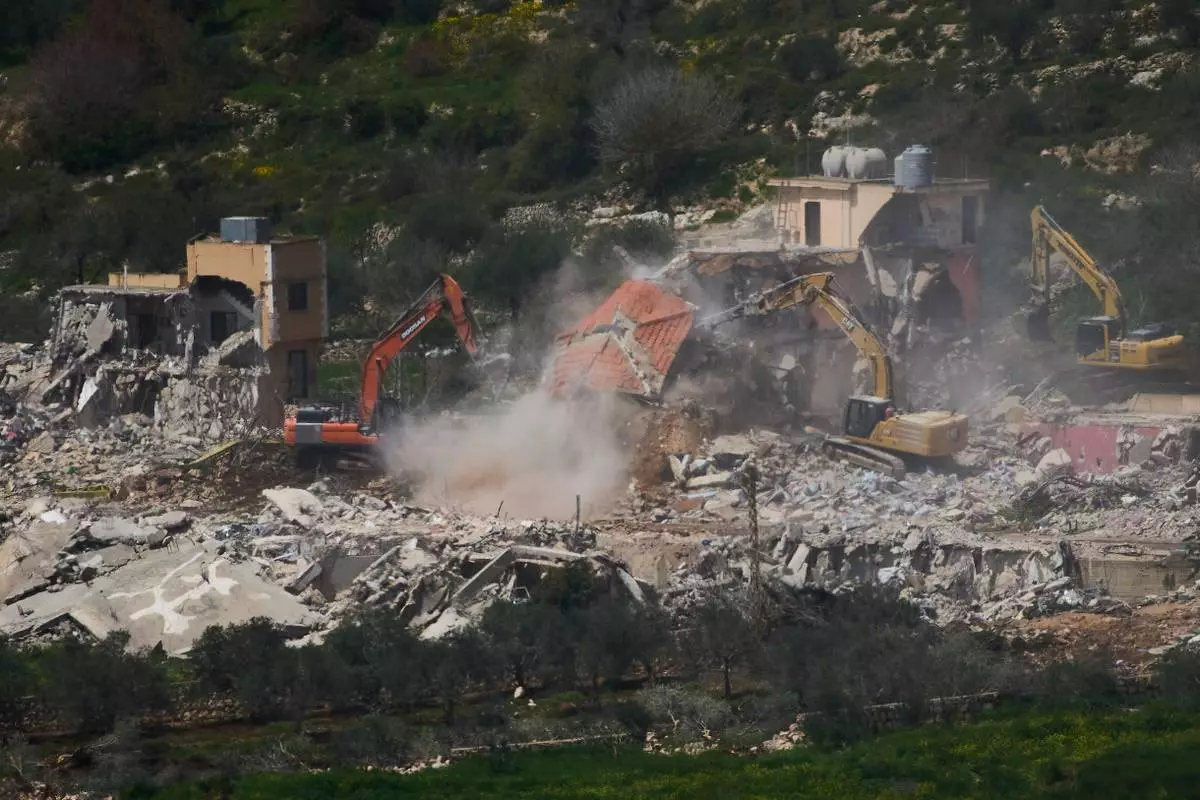
Israeli bulldozers demolish homes in southern Lebanon, as seen from northern Israel, Sunday, April 12, 2026. (AP Photo/Ariel Schalit)
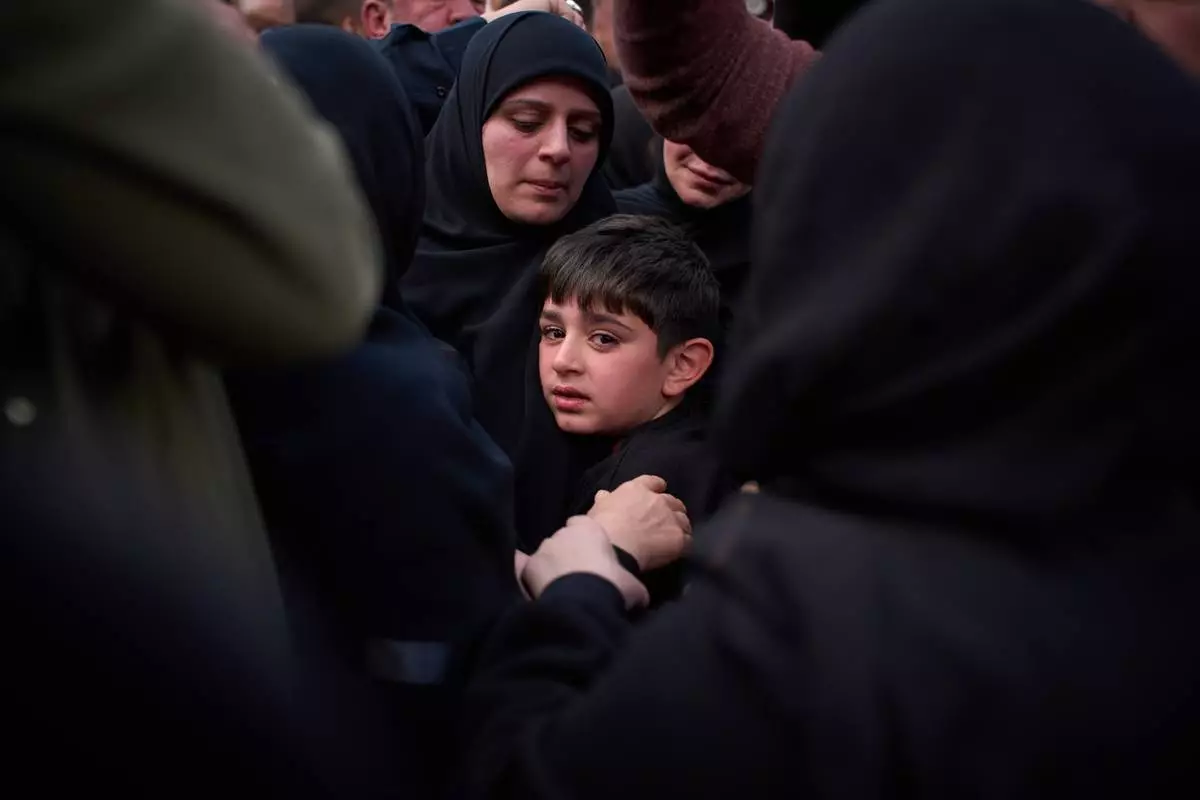
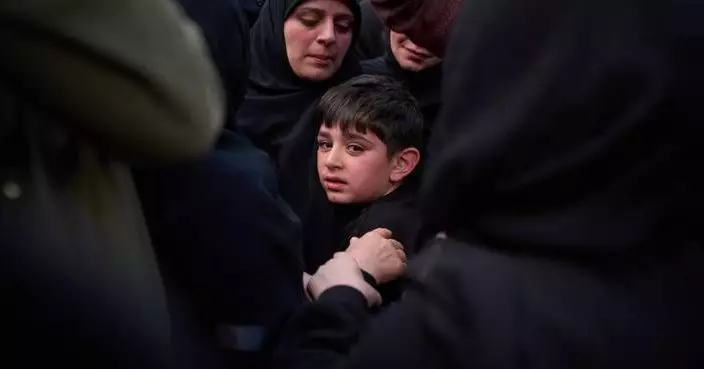
Mohammed, 8, cries next to the coffin of his father, Hussein Makkah, during the funeral of 13 state security officers killed the previous day in an Israeli strike in Lebanon’s coastal city of Sidon, Lebanon, Saturday, April 11, 2026. (AP Photo/Emilio Morenatti)