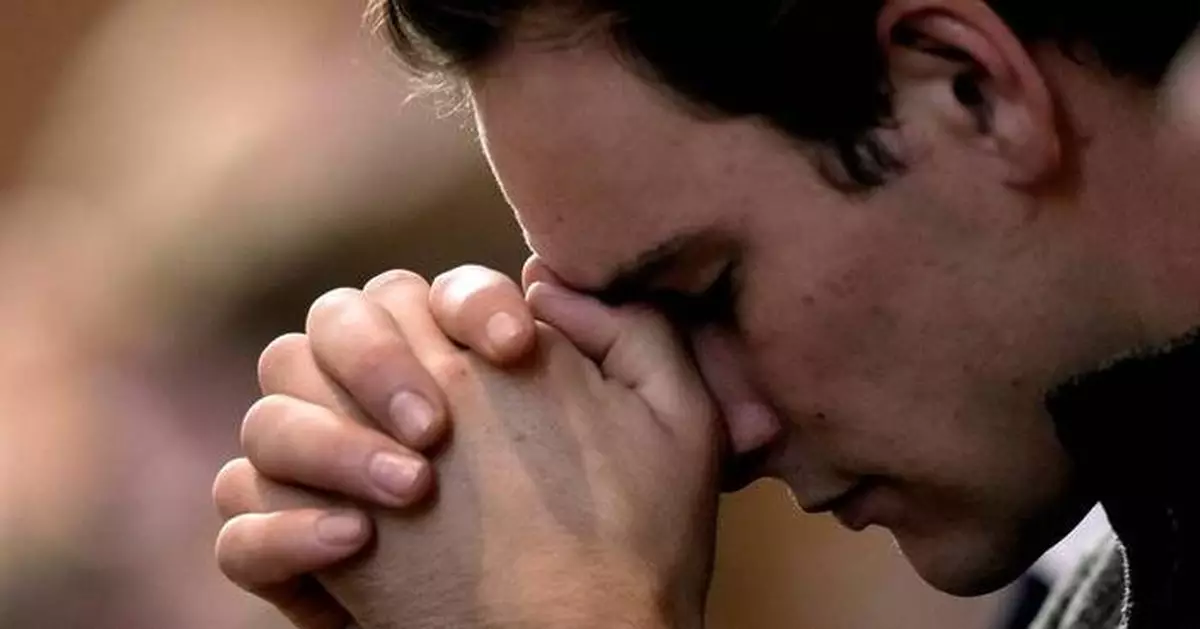
A new Gallup poll released Thursday shows more young men in the U.S. say religion is “very important” in their lives compared to young women — the first time young men have surpassed young women on this measure of religiosity going back 25 years.
Gallup's latest data shows that 42% of men in the U.S. ages 18-29 said religion is very important to them, a notable increase from 28% in 2022-2023. Over the same time, young women's attachment to religion has stayed low, at about 30%.
This marks the first time young men have overtaken women by a big margin on this measure, which goes back to 2000. Gallup reports aggregate findings every two years to ensure the estimates are stable.
Several decades ago, young women were much more attached to religion than young men, but that's shifted over the years. More recently, young men and women's religiosity was roughly similar. The new increase in young men's religiosity also in contrast to the minimal change seen since 2022-2023 among older men and women.
The gender gap reversal is only happening among adults under 30, according to Gallup's data. Among adults aged 30 and older, women remain more religious than men.
Much of the growth in religiosity is happening among young Republicans. The data shows that since 2022-2023, religious attendance has increased among Republican young men and women compared to Democratic men and women. The percentage of young Republican men who attend church, synagogue, mosque or temple at least weekly has been rising since 2019, while young Democratic men's attendance has largely fallen.
There's a similar pattern among women. Now, only about one-quarter of Democratic women under 30 attend church at least monthly, compared to about 6 in 10 young Republican women.
Political scientist Ryan Burge of Washington University in St. Louis, a leading researcher into religious trends and a longtime pastor in the American Baptist Church, said to see the gender gap with religion reversed in Gen Z adults “represents a seismic change in society and the future of the church.”
“It could change the way children are raised,” he said, which could affect the future of the country’s religious landscape if more men are raising religious children.
Burge says young men are more drawn to religion now because it is a space where they feel more accepted in a world where other institutions are “less interested in white men compared to women and people of color.”
“It's the only place where you don't have to apologize for being a white man,” he said. “American religion is very white male dominated and young men are drawn to institutions that elevate them and give them influence and power.”
Other surveys suggest that young men also diverge from young women on some important moral questions.
Pew Research Center surveys conducted in March 2025 found about 4 in 10 men under 30 say divorce is morally wrong, compared to only about 2 in 10 young women. Even more men under 30, about half, say abortion is morally wrong, compared to only about one-third of women the same age. Young men are also likelier than young women to say homosexuality is morally wrong, although both groups are substantially less likely than older men and women to hold this view.
While young men stand out on the morality of divorce — only about 2 in 10 men or women under 65 say this is morally wrong — young women are less likely than other men and women to see abortion as morally wrong.
Other Gallup surveys have found that young women are more likely to identify as politically liberal than in the past. This shift is also happening at a time when women are becoming increasingly averse to religion, Burge said.
“Women are viewing religion as patriarchal,” he said. “Abortion is illegal in many states because of Christianity and young women tend to be progressive on issues such as abortion and LGBTQ rights. It feels repressive to them.”
Still, some young women continue to embrace male-led faiths.
Rabbi Nicole Guzik serves as co-senior rabbi with her husband Erez Sherman at Sinai Temple in Los Angeles, which follows the values of Conservative Judaism. She said membership at her 5,000-strong congregation has seen a steady, significant increase since after the pandemic and Hamas’ Oct. 7 attack on Israel.
Guzik hasn’t seen a gender gap in her congregation with regard to religiosity or attendance, but said she is happy to hear more people are giving importance to religion because “faith has a role to play in shaping people’s identities, especially in an increasingly dark and polarized world.”
“It’s about being in a place of belonging and inspiration,” she said. “People are seeking something right now. There’s a crisis of loneliness and mental health. Social media and AI are not helping. I’m glad that religious institutions are able to provide some semblance of light in these times.”
Gallup senior scientist Frank Newport, who has studied the gender gap in religiosity over decades, said another important finding is that church attendance is more or less the same for both genders.
“One of the dominant trends we’ve observed in recent years has been a decline in religiosity among Americans,” he said. “Now, in young people, we’re seeing that decline beginning to stop. That’s pretty significant.”
But while age doesn't have a major impact when it comes to church attendance for men, young women are much less likely than older women to attend church at least once a month, the poll found.
The Gallup results are based on two-year averages from their monthly live telephone surveys that are conducted among approximately 1,000 U.S. adults. The 2024 to 2025 results for the question about the importance of religion are based on 4,015 U.S. adults, including 295 men aged 18 to 29 and 145 women aged 18 to 29. The margin of error for young men is ±7 percentage points for young men and ±10 percentage points for young women on that question.
Associated Press religion coverage receives support through the AP’s collaboration with The Conversation US, with funding from Lilly Endowment Inc. The AP is solely responsible for this content.
AP polling editor Amelia Thomson-DeVeaux contributed.
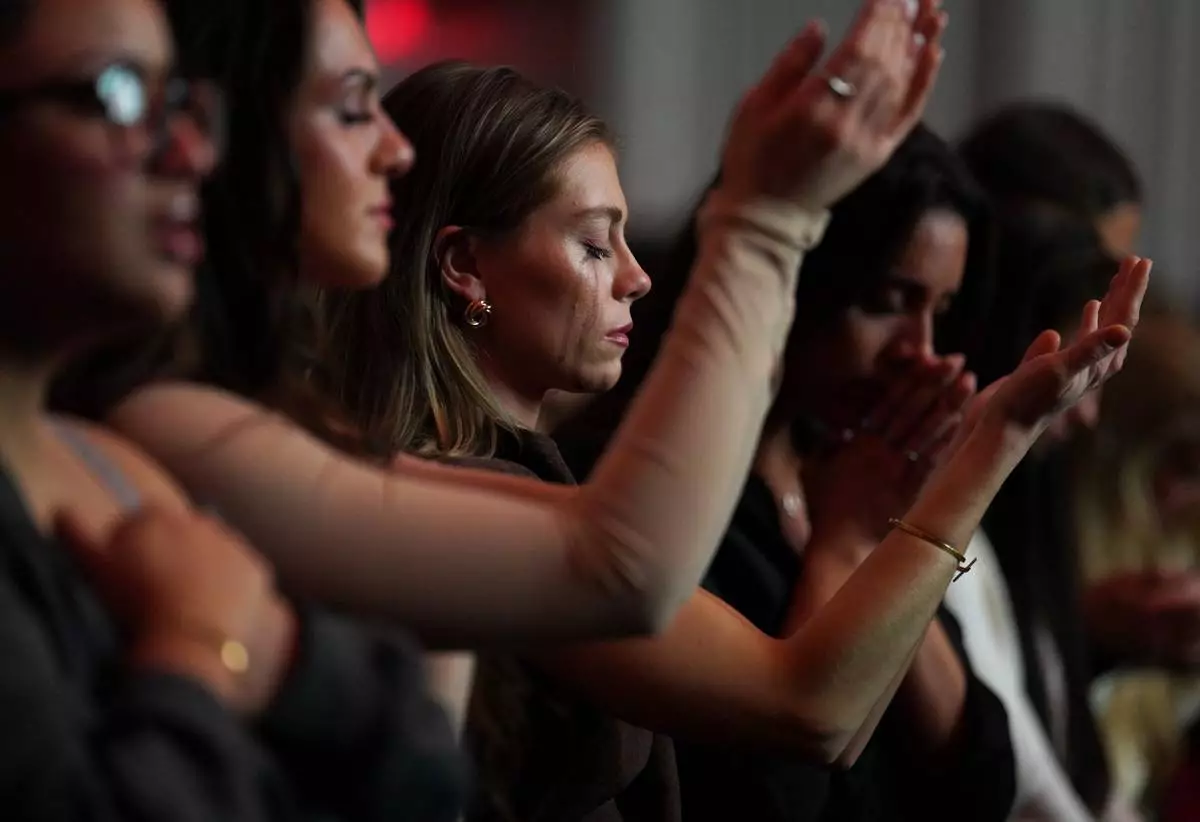
FILE - Followers of the Christian podcast, "Girls Gone Bible," cry during the live show held at the Atlanta Symphony Hall, Nov. 14, 2025, in Atlanta. (AP Photo/Jessie Wardarski, File)
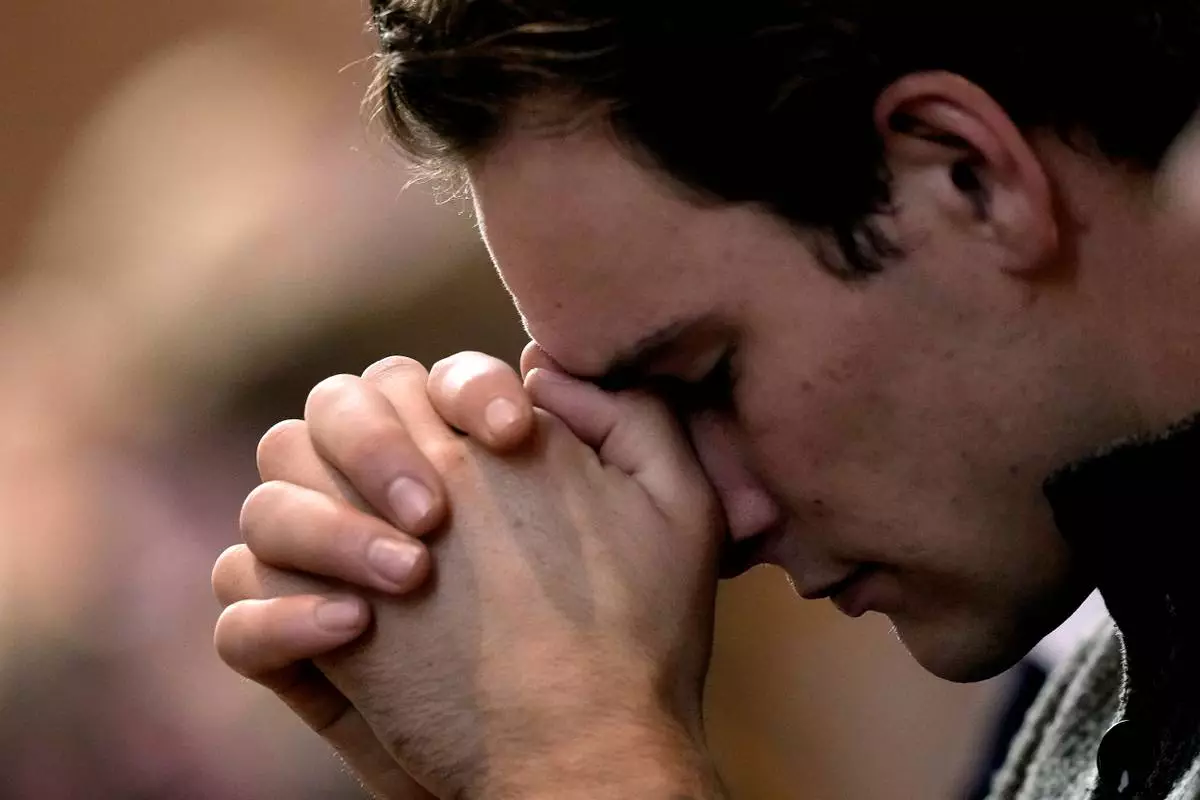
FILE - A man prays during Catholic Mass at Benedictine College, Oct. 29, 2023, in Atchison, Kan. (AP Photo/Charlie Riedel, File)