YAOUNDE, Cameroon (AP) — Pope Leo XIV arrived in Cameroon’s northwestern city of Bamenda on Thursday to lead a peace meeting in a region battered by separatist violence that has claimed thousands of lives since it started nearly a decade ago.
The event, which is part of the pope's programs for his tour of four African nations, seeks to highlight the interfaith movement that has been seeking to end the conflict and care for its many traumatized victims.
Click to Gallery
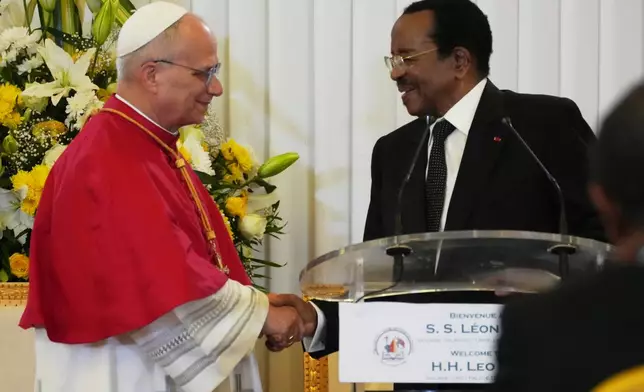
Pope Leo XIV shakes hands with Cameroon's President Paul Biya during the meeting with the authorities, civil society and the diplomatic corps in Yaounde Cameroon, Wednesday, April 15, 2026. (AP Photo/Andrew Medichini)
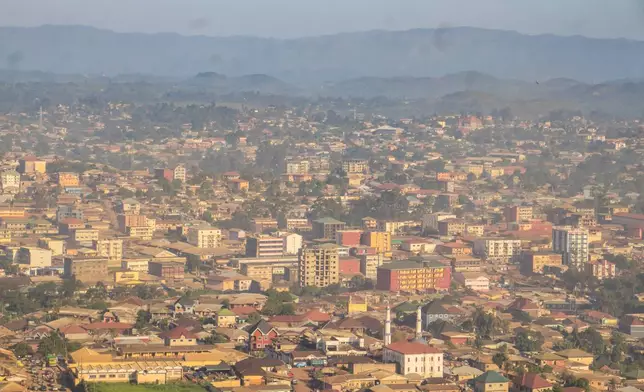
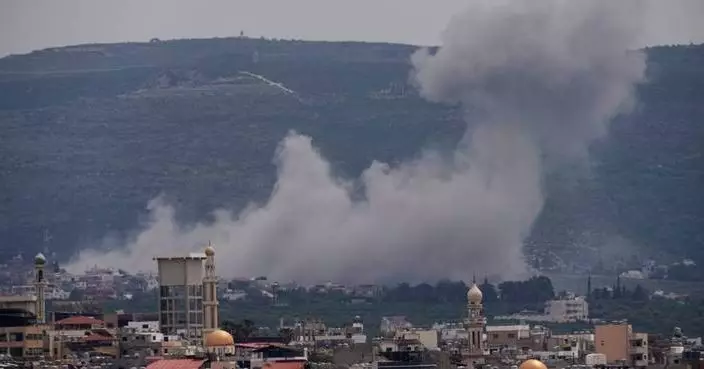
A general view of Bamenda, Cameroon, Tuesday, April 14, 2026. (AP Photo/Welba Yamo Pascal)
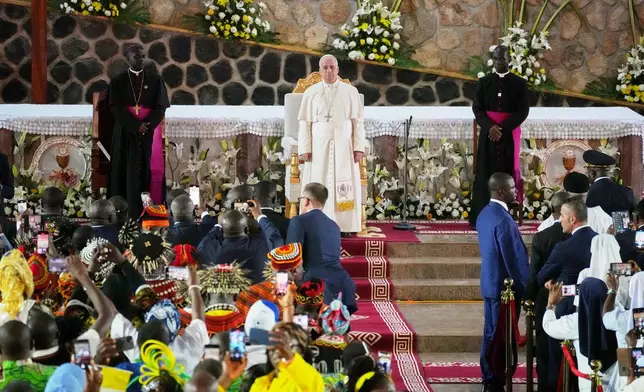
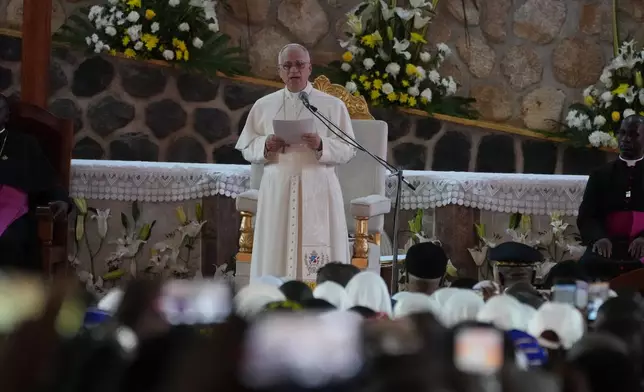
Pope Leo XIV, with the Archbishop of Bamenda Andrew Nkea Fuanya, left, leads a meeting for peace at Saint Joseph's Cathedral in Bamenda, Cameroon, with the local community Thursday, April 16, 2026, on the fourth day of his 11-day pastoral visit to Africa. (AP Photo/Andrew Medichini)
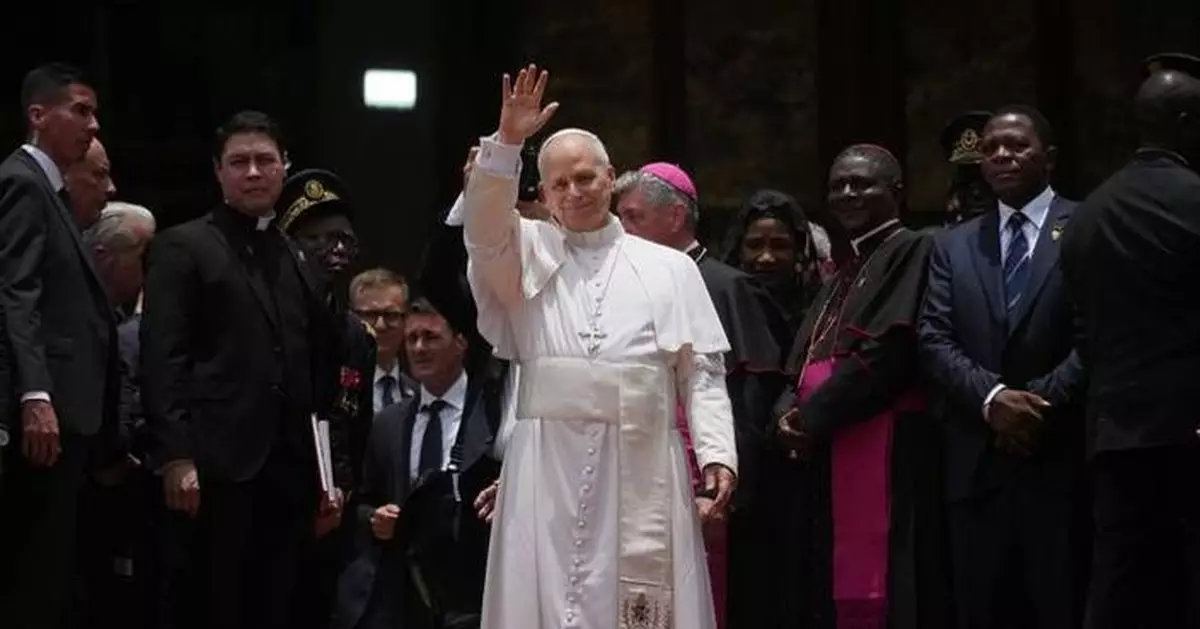
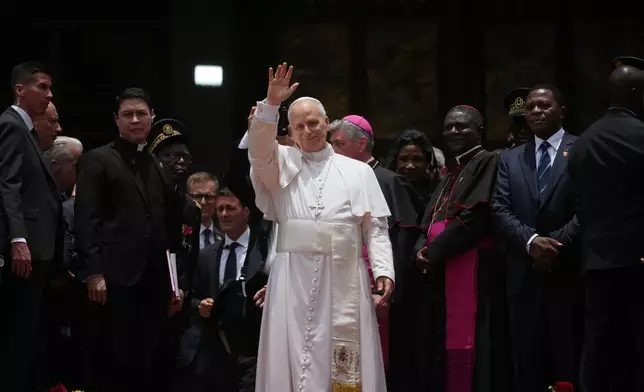
Pope Leo XIV leaves at the end of a meeting for peace at Saint Joseph's Cathedral in Bamenda, Cameroon, with the local community Thursday, April 16, 2026, on the fourth day of his 11-day pastoral visit to Africa. (AP Photo/Andrew Medichini)
Pope Leo XIV leads a meeting for peace at Saint Joseph's Cathedral in Bamenda, Cameroon, with the local community Thursday, April 16, 2026, on the fourth day of his 11-day pastoral visit to Africa. (AP Photo/Andrew Medichini)
Clashes have intensified in recent years between the government's forces and separatist militias demanding secession from Cameroon, which comprises eight French-speaking regions and two English-speaking regions.
Here's what to know:
Cameroon’s western regions have been plagued by fighting since English-speaking separatists launched a rebellion in 2017 with the goal of breaking away from the French-speaking majority and establishing an independent state. The conflict has killed more than 6,000 people and displaced over 600,000 others.
It started in the aftermath of World War I, when Cameroon was split under British and French colonial control. At its independence in 1960-1961, the two territories reunited and formed a federal state, with the French-speaking section constituting about 80% both in territory and population.
The English-speaking population currently makes up about 20% of the roughly 30 million people and say they're marginalized by the French-majority government under President Paul Biya, in power for over 40 years and currently the world's oldest leader.
Tensions spiked in 2016 when the government attempted to impose French in English-speaking regions’ schools and courts, igniting protests that security forces violently repressed.
The conflict features various separatist groups whose leaders are mostly based abroad, many after being blacklisted by the Cameroonian government.
Analysts have said their cover abroad could be complicating peace effort at home because they would operate with ease to raise funds and issue instructions to their followers engaging with Cameroonian forces
In September 2024, Norway charged Lucas Ayaba Cho, commander of the Ambazonia Defense Forces, a key actor in the conflict, with incitement to commit crimes against humanity, an accusation he contested.
Last December, a federal jury in the U.S. convicted two individuals for conspiracy to provide funds and equipment to the separatist fighters.
In March, Belgium arrested four people as part of its investigations into Belgian residents suspected of being among the separatist leaders and raising money for the movement.
Cameroon's government has taken several steps to address the violence, but a permanent solution still feels far off.
A national dialogue in 2019 led to the granting of special status to the northwest and southwest regions and proposals on governance, justice and education, but many such proposals have not been implemented. A disarmament, demobilization and reintegration program has also been faulted as lacking transparency and being limited in its reach.
The government at first viewed the conflict as an agitation by “a few misguided” groups in the Anglophone region, said Colbert Gwain Fulai, a civil society leader based in Bamenda.
It still does not acknowledge the marginalization claims and mostly frames the conflict as one more in need of a military solution than a political one, said Fulai.
The separatist leaders, meanwhile, seem “determined to double down, wagering on the absence of sustained peace efforts,” the Crisis Group said last year. Some have also developed cross-border alliances with separatists across the border in Nigeria who also seek to create an independent state.
The pope’s visit and the peace meeting have been received with a mixed feeling of hope and doubt among residents and local leaders. That's because such a peace meeting between the government and the separatists is rare, the last major one held in 2022.
Lucas Asu, a spokesperson for the Ambazonia Governing Council separatist group, said they are committed to a peaceful settlement of the conflict through dialogue and accused the government of avoiding talks.
Cameroonian authorities did not immediately respond to a request for comment.
Mother-of-three Morine Ngum, whose husband was shot dead as a separatist fighter in 2022, said any real progress must begin with the government.
“I see them (the government) using this crisis as an advantage. It brings them more profit. They just want to use this pope coming to cover up things,” Ngum said.
———
Asadu reported from Abuja, Nigeria.
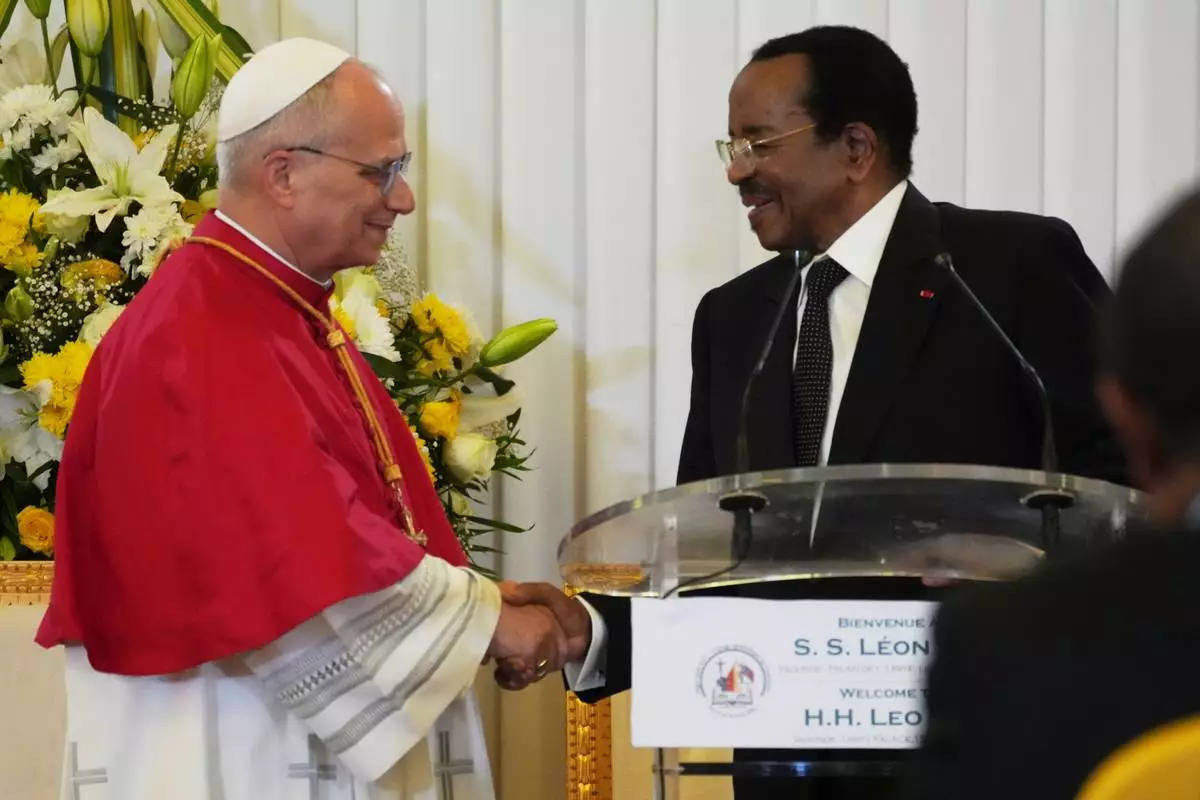
Pope Leo XIV shakes hands with Cameroon's President Paul Biya during the meeting with the authorities, civil society and the diplomatic corps in Yaounde Cameroon, Wednesday, April 15, 2026. (AP Photo/Andrew Medichini)
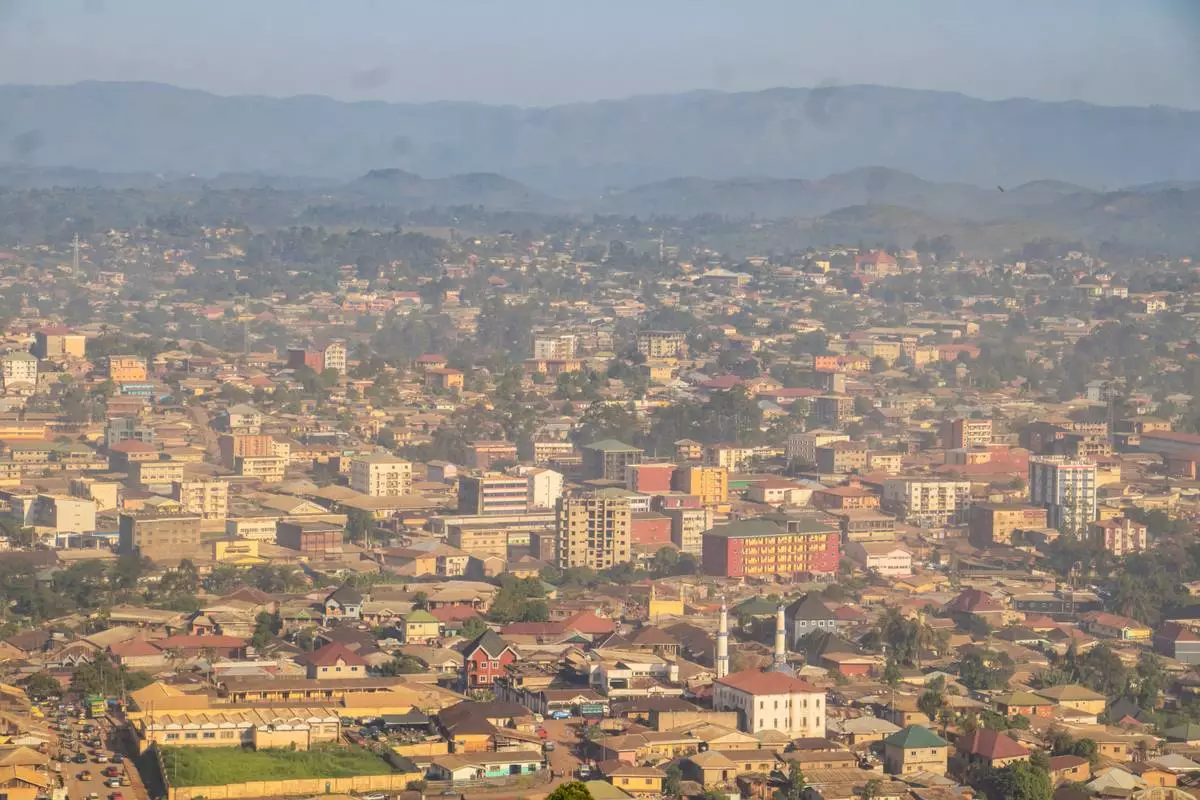
A general view of Bamenda, Cameroon, Tuesday, April 14, 2026. (AP Photo/Welba Yamo Pascal)
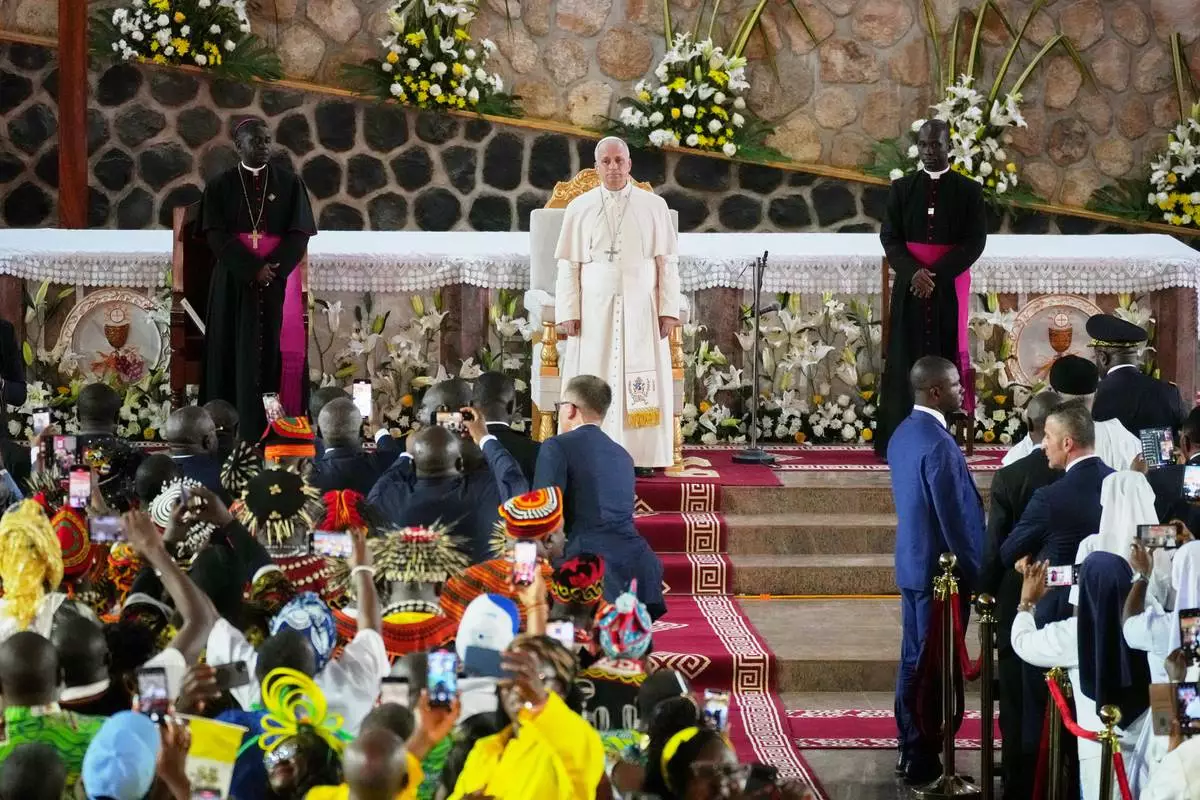
Pope Leo XIV, with the Archbishop of Bamenda Andrew Nkea Fuanya, left, leads a meeting for peace at Saint Joseph's Cathedral in Bamenda, Cameroon, with the local community Thursday, April 16, 2026, on the fourth day of his 11-day pastoral visit to Africa. (AP Photo/Andrew Medichini)
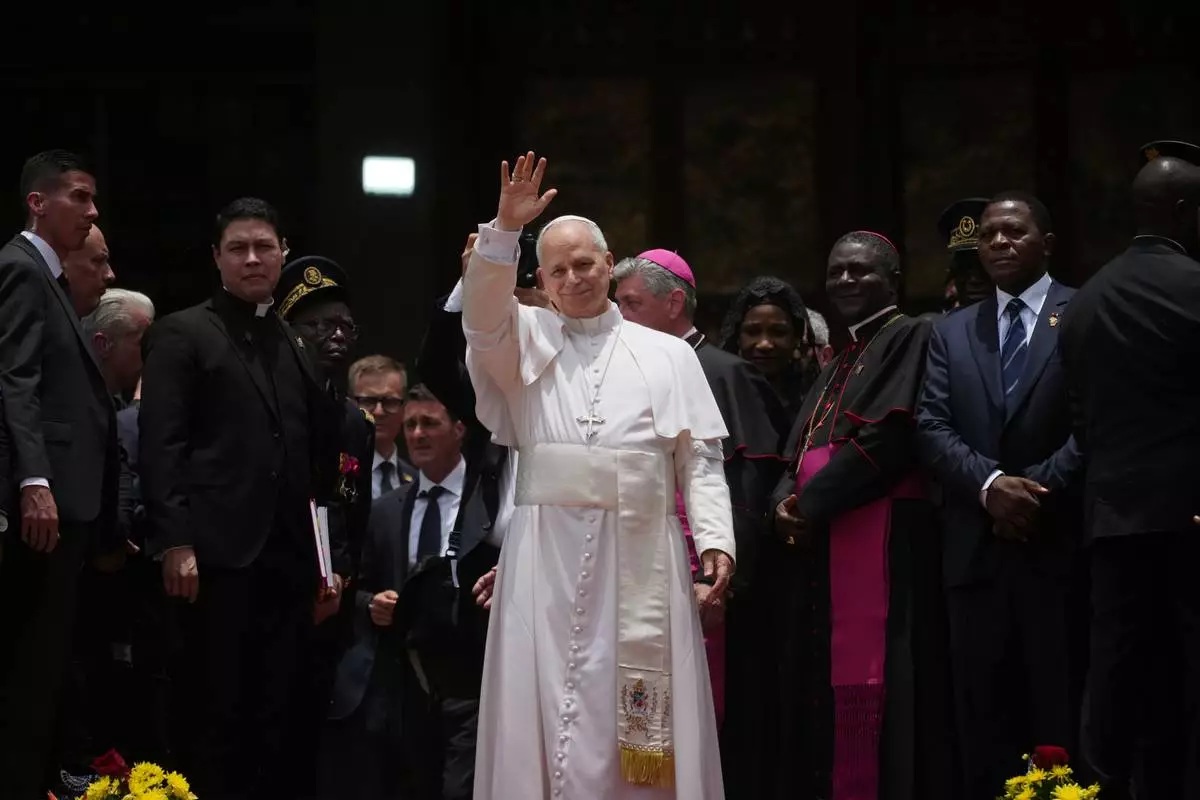
Pope Leo XIV leaves at the end of a meeting for peace at Saint Joseph's Cathedral in Bamenda, Cameroon, with the local community Thursday, April 16, 2026, on the fourth day of his 11-day pastoral visit to Africa. (AP Photo/Andrew Medichini)
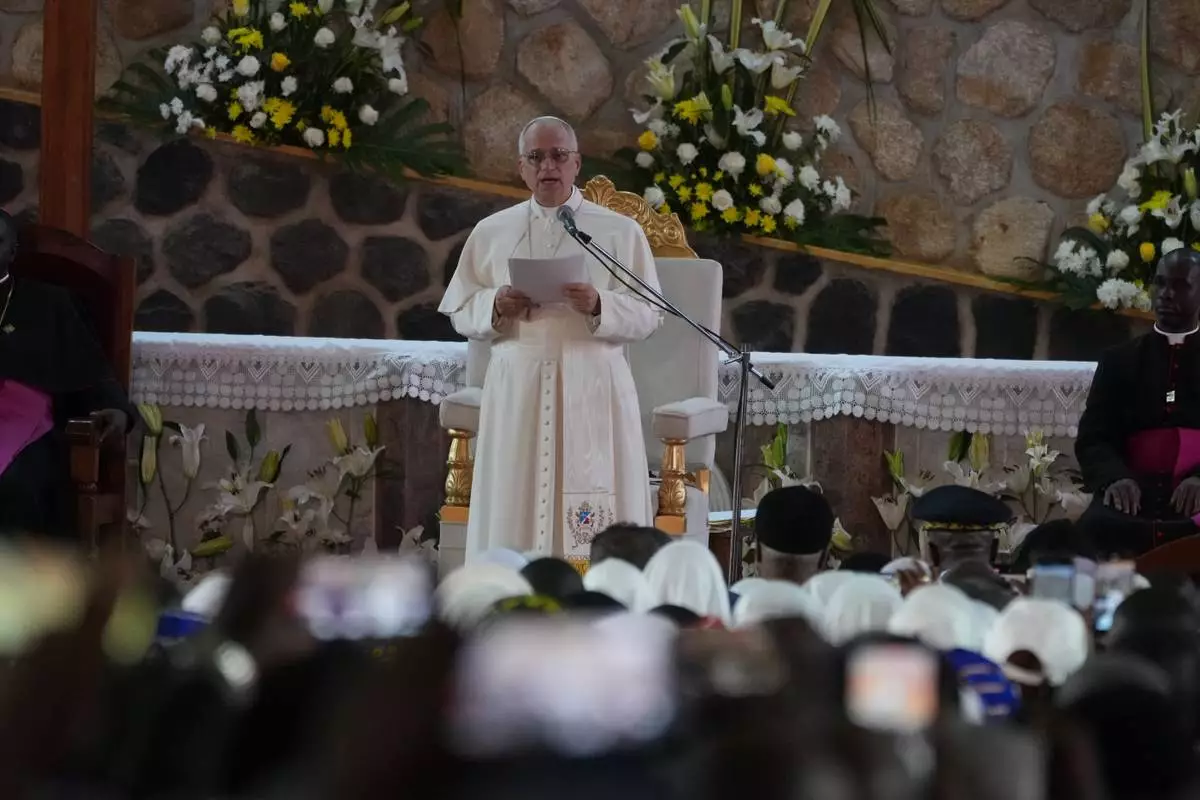
Pope Leo XIV leads a meeting for peace at Saint Joseph's Cathedral in Bamenda, Cameroon, with the local community Thursday, April 16, 2026, on the fourth day of his 11-day pastoral visit to Africa. (AP Photo/Andrew Medichini)
BAMENDA, Cameroon (AP) — Pope Leo XIV blasted the “handful of tyrants” who are ravaging Earth with war and exploitation, as he preached a message of peace Thursday in the epicenter of a separatist conflict considered one of the world’s most neglected crises.
Leo traveled to the western Cameroon city of Bamenda, where jubilant crowds clogged the roads, blowing horns and dancing. They were overjoyed that a pope had come so far to see them and put a global spotlight on the violence that has traumatized this region for nearly a decade.
Leo presided over a peace meeting involving a Mankon traditional chief, a Presbyterian moderator, an imam and a Catholic nun. The aim was to highlight the interfaith movement that has been seeking to end the conflict and care for its many victims.
In his remarks in the St. Joseph Cathedral, on land donated by the Mankon, Leo praised the peace movement and warned against allowing religion to enter conflicts. It's a theme he has been echoing amid the U.S.-Israeli war in Iran and the religious justifications for it by U.S. officials.
“Blessed are the peacemakers!” he said. “But woe to those who manipulate religion and the very name of God for their own military, economic and political gain, dragging that which is sacred into darkness and filth.”
He called for a “decisive change of course” that leads away from conflict and the exploitation of the land and its people for military or economic gain.
“The world is being ravaged by a handful of tyrants, yet it is held together by a multitude of supportive brothers and sisters!” he said.
Leo's comments were directed at Cameroon's separatist conflict. But Vatican officials have made clear that on this trip, he is preaching the Gospel message of peace that surpasses borders and continents, and is meant for all those responsible for the wars and exploitation ravaging the Earth.
It wasn’t immediately clear if any of the separatist fighters, who announced a three-day pause in fighting to allow the pope safe passage to Bamenda, attended.
Thousands of people then gathered on the Bamenda airfield for Leo's afternoon Mass, which he was celebrating before returning to the capital Yaounde.
The conflict in Cameroon’s two Anglophone regions is rooted in Cameroon’s colonial history, when the country was divided between France and Britain after World War I. English-speaking regions later joined French Cameroon in a 1961 U.N.-backed vote, but separatists say they have since been politically and economically marginalized.
In 2017, English-speaking separatists launched a rebellion with the stated goal of breaking away from the French-speaking majority and establishing an independent state. The conflict has killed more than 6,000 people and displaced over 600,000 others, according to the International Crisis Group.
Leo arrived to a raucous welcome in Bamenda, where blasting music from loudspeakers gave the event a concert-like vibe.
“We are so overjoyed, so overwhelmed,” said Felicity Cali, a Catholic student. “Say thank you, God, for this extraordinary day and for making us be alive to see this day.”
The separatist movement is believed to be backed by several actors abroad. In December, a federal jury in U.S. convicted two individuals for conspiracy to provide funds and equipment to the separatist fighters. Belgian authorities in March also announced they had arrested four people as part of investigations into Belgian residents suspected of being among the separatist leaders and raising money for them there.
“Those who rob your land of its resources generally invest much of the profit in weapons, thus perpetuating an endless cycle of destabilization and death,” Leo said. “It is a world turned upside down, an exploitation of God’s creation that must be denounced and rejected by every honest conscience.”
Cameroon sits atop significant reserves of oil, natural gas, cobalt, bauxite, iron ore, gold and diamonds, making resource extraction one of the pillars of its economy.
While French and English companies have long dominated the extraction industry in Cameroon, Chinese companies have established a significant presence in recent years, particularly in the gold mining regions of the east.
On the eve of Leo’s arrival, separatist fighters announced a three-day pause in fighting. A spokesperson for the Unity Alliance, Lucas Asu, said the pause “reflects a deliberate commitment to responsibility, restraint and respect for human dignity, even in the context of ongoing conflict.”
Though the number of deadly attacks by separatists has decreased in recent years, the conflict shows no sign of resolution. Peace talks with international mediators have stalled, with both sides accusing each other of acting in bad faith.
Morine Ngum, a mother of three whose husband was shot dead in 2022 by Cameroonian soldiers while fighting as a separatist, expressed doubt that the pope’s visit and peace meeting would lead to meaningful change. She said any real progress must begin with those in power.
“Nothing is going to change,” said Ngum, 30. “This conflict has turned my children into orphans and me into a widow. Many families have been rendered homeless.”
The archbishop of Bamenda, Andrew Nkea Fuanya, told Leo that the people there had suffered from “a situation they did not create,” losing their livelihoods, homes and education: Children were not allowed to go to school for years.
“Most Holy Father, today that your feet are standing on the soil of Bamenda that has drunk the blood of many of our children,” he said.
Leo, the former Cardinal Robert Prevost, spent two weeks sitting with Fuanya at the same table during Pope Francis’ 2024 big meeting, or synod, on the family.
The Right Rev. Fonki Samuel Forba, emeritus moderator of the Presbyterian church in Cameroon, said the Vatican had joined other faith groups in trying to bring the separatists to the negotiating table with the government, and meeting with their supporters abroad.
Biya’s government has been accused of shunning dialogue with the separatists. The last time a peace meeting was held between the government and separatists was in 2022 during talks facilitated in Canada by the Canadian government.
“There is a proverb in Africa that ‘When two elephants fight, it is the grass that suffers,’” Forba said.
Akua contributed from Yaounde, Cameroon. Associated Press writer Chinedu Asadu in Abuja, Nigeria, contributed to this report.
Associated Press religion coverage receives support through the AP’s collaboration with The Conversation US, with funding from Lilly Endowment Inc. The AP is solely responsible for this content.
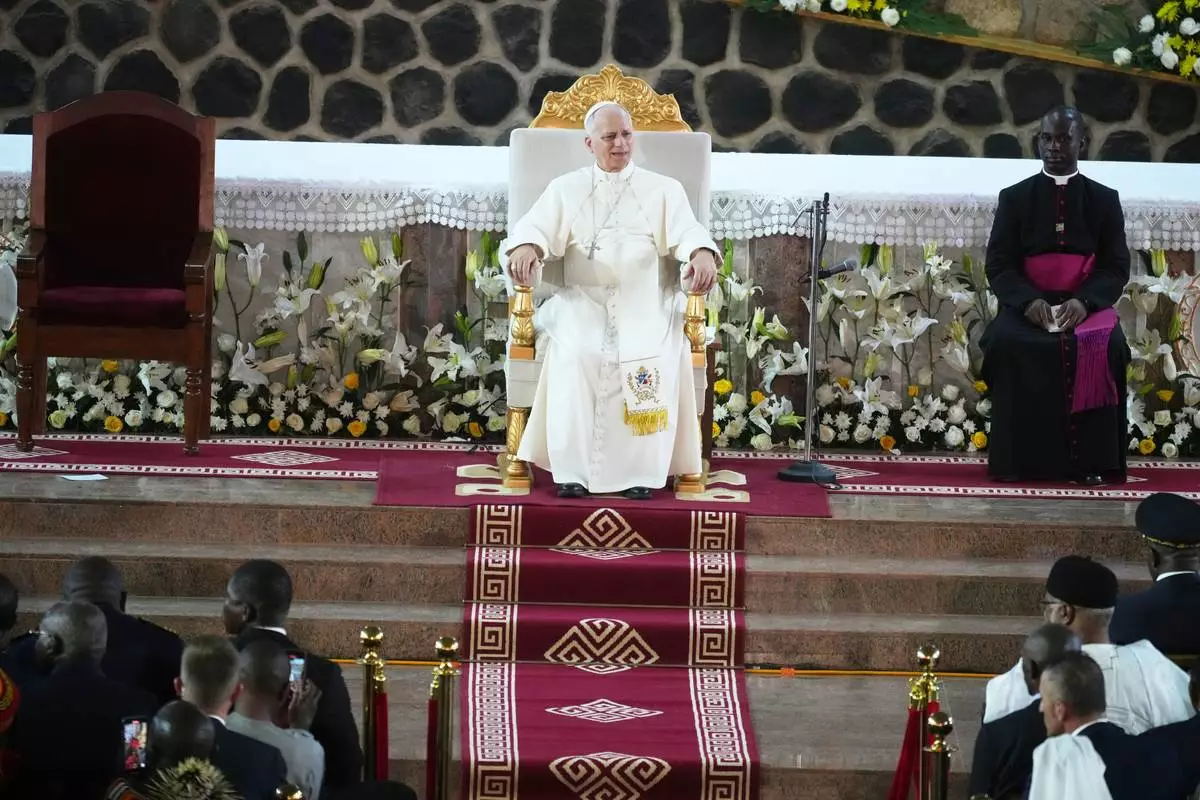
Pope Leo XIV leads a meeting for peace at Saint Joseph's Cathedral in Bamenda, Cameroon, with the local community Thursday, April 16, 2026, on the fourth day of his 11-day pastoral visit to Africa. (AP Photo/Andrew Medichini)
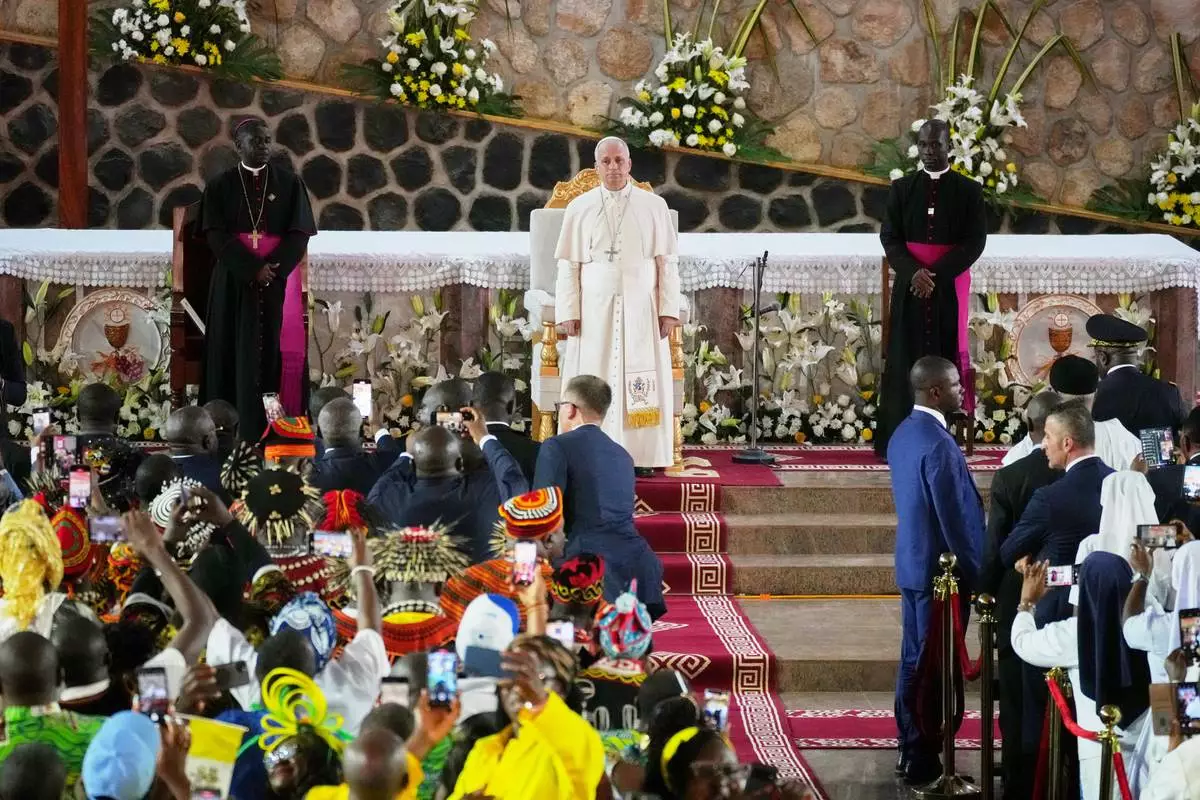
Pope Leo XIV, with the Archbishop of Bamenda Andrew Nkea Fuanya, left, leads a meeting for peace at Saint Joseph's Cathedral in Bamenda, Cameroon, with the local community Thursday, April 16, 2026, on the fourth day of his 11-day pastoral visit to Africa. (AP Photo/Andrew Medichini)
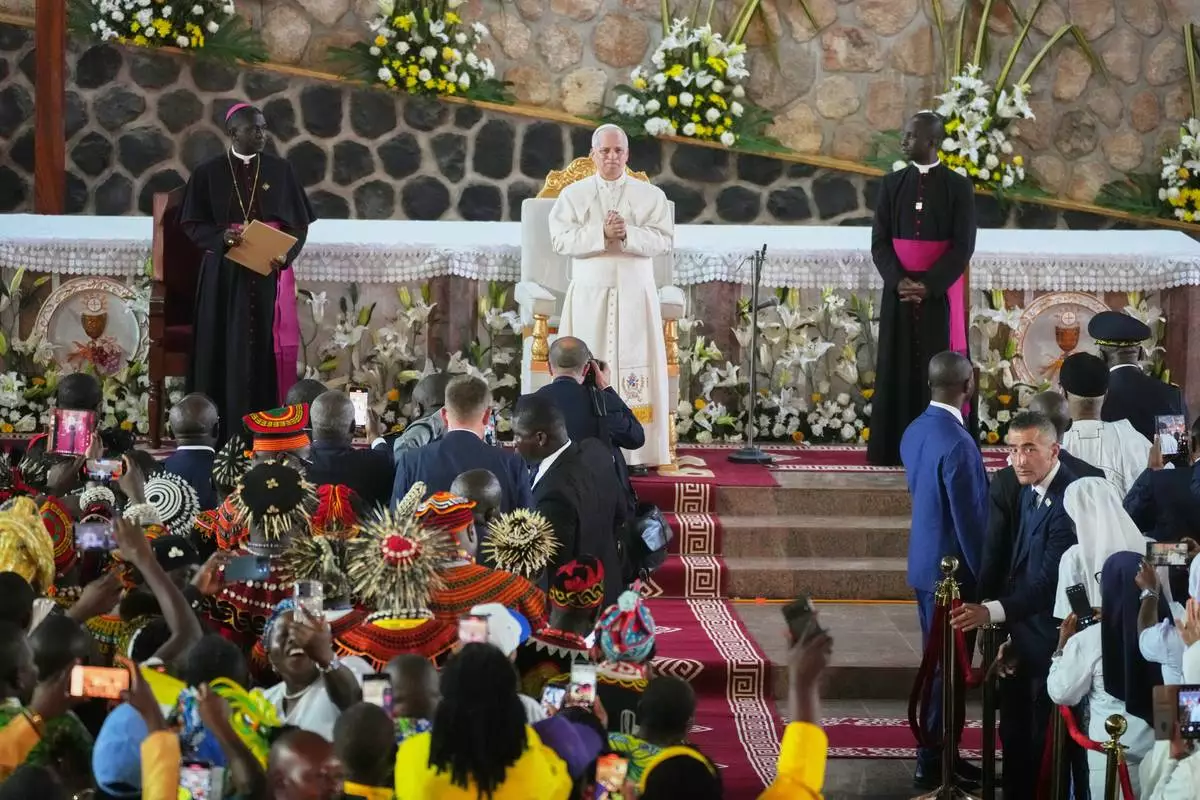
Pope Leo XIV, with the Archbishop of Bamenda, Andrew Nkea Fuanya, left, leads a meeting for peace at Saint Joseph's Cathedral in Bamenda, Cameroon, with the local community Thursday, April 16, 2026, on the fourth day of his 11-day pastoral visit to Africa. (AP Photo/Andrew Medichini)
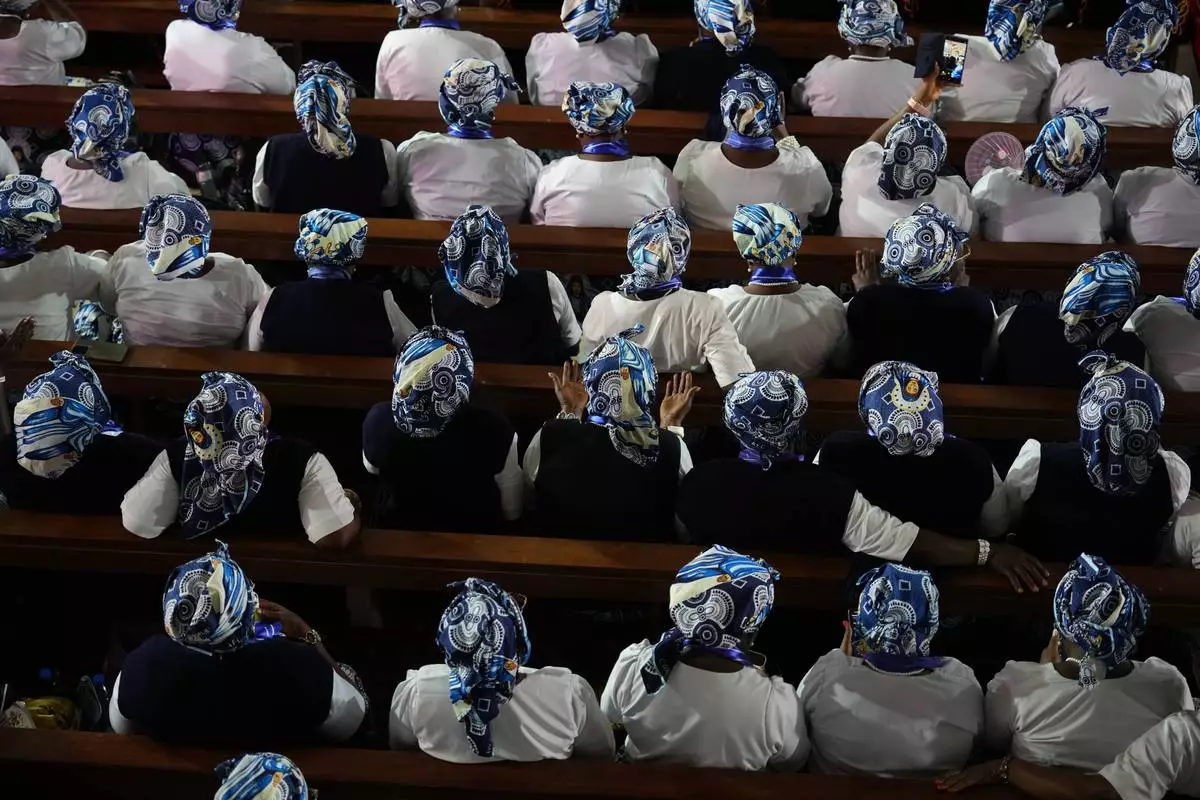
Faithful attend a meeting for peace, lead by Pope Leo XIV at Saint Joseph's Cathedral in Bamenda, Cameroon, with the local community Thursday, April 16, 2026, on the fourth day of his 11-day pastoral visit to Africa. (AP Photo/Andrew Medichini)
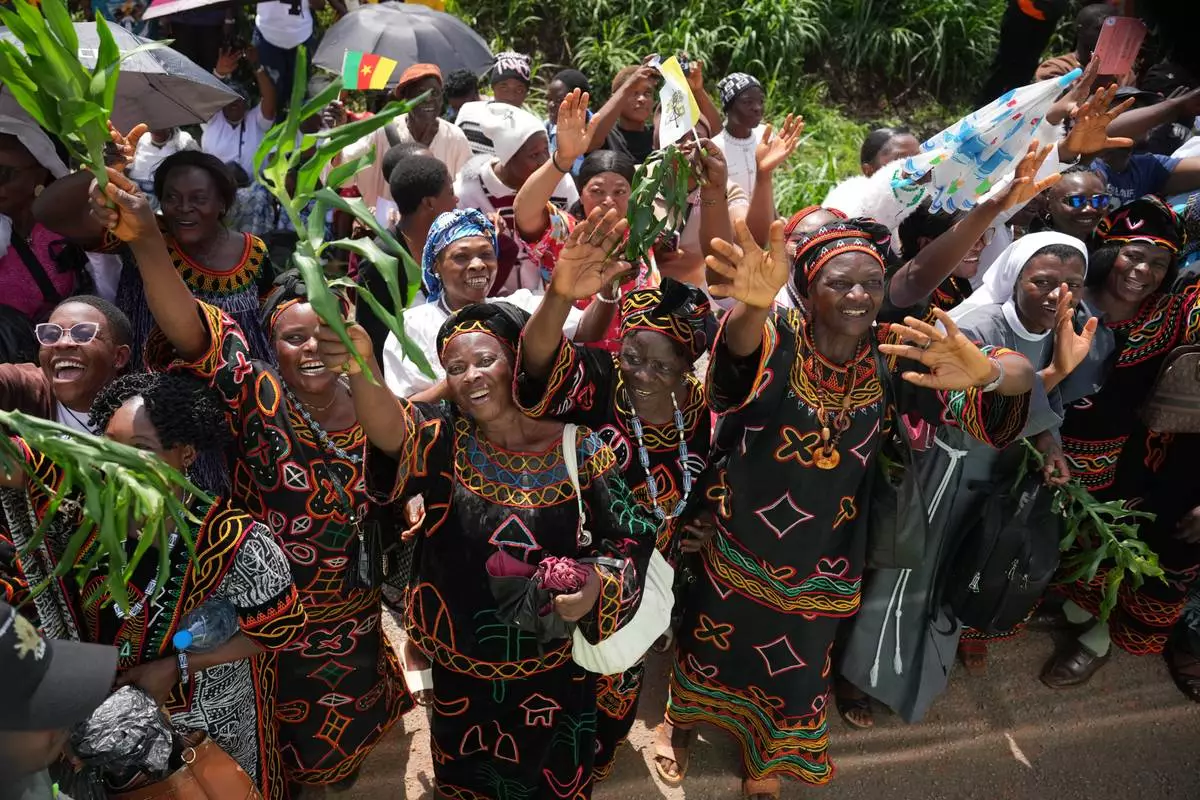
People wait for Pope Leo XIV in Bamenda, Cameroon, Thursday, April 16, 2026, on the fourth day of his 11-day pastoral visit to Africa. (AP Photo/Andrew Medichini)
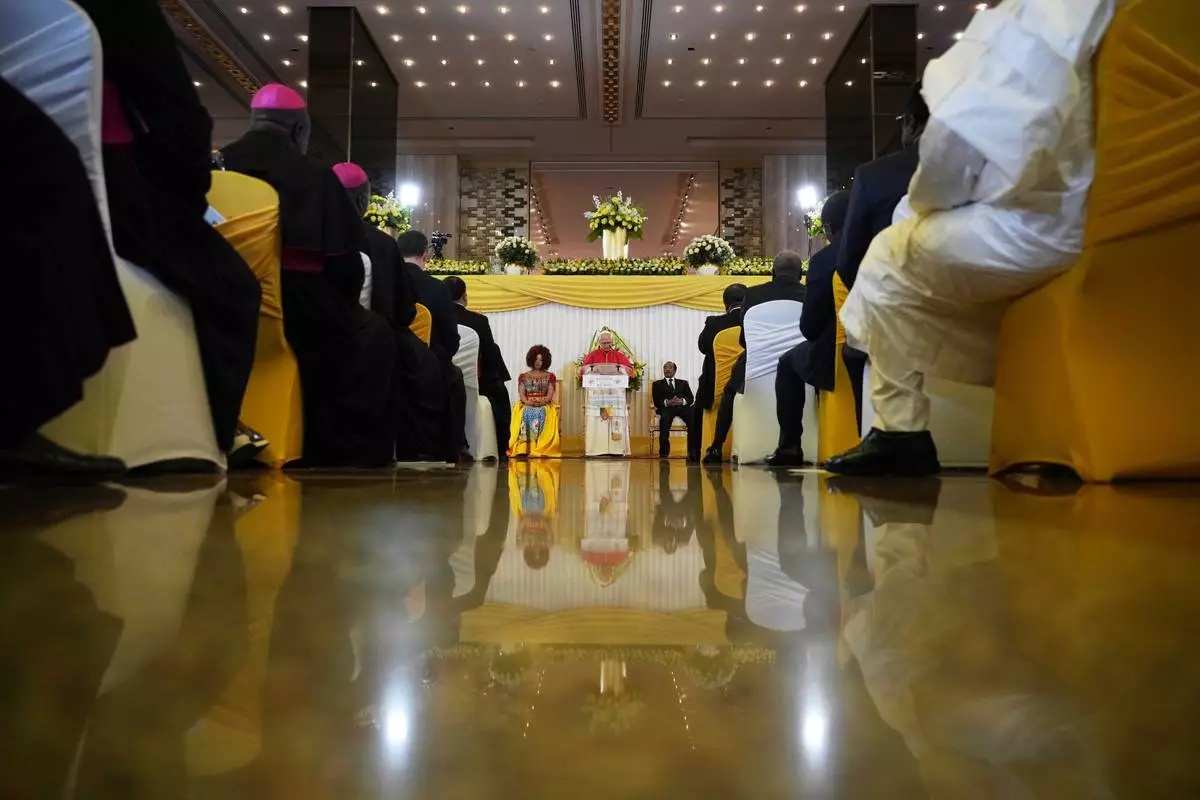
Pope Leo XIV, background center, flanked by Cameroon's President Paul Biya and his wife Chantal, meets with the authorities, civil society and the diplomatic corps in Yaounde Cameroon, Wednesday, April 15, 2026. (AP Photo/Andrew Medichini)
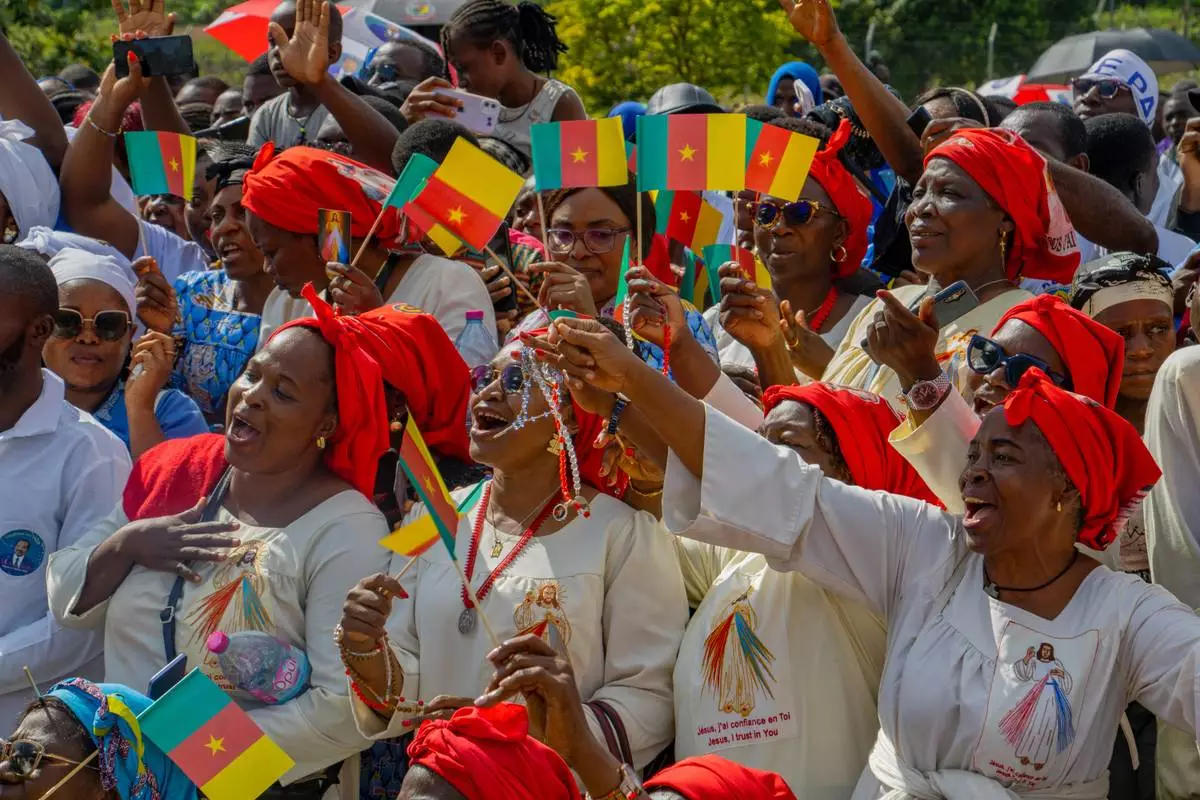
People cheer as Pope Leo XIV arrives in Yaounde, Cameroon, Wednesday, April 15, 2026. (AP Photo/Welba Yamo Pascal)
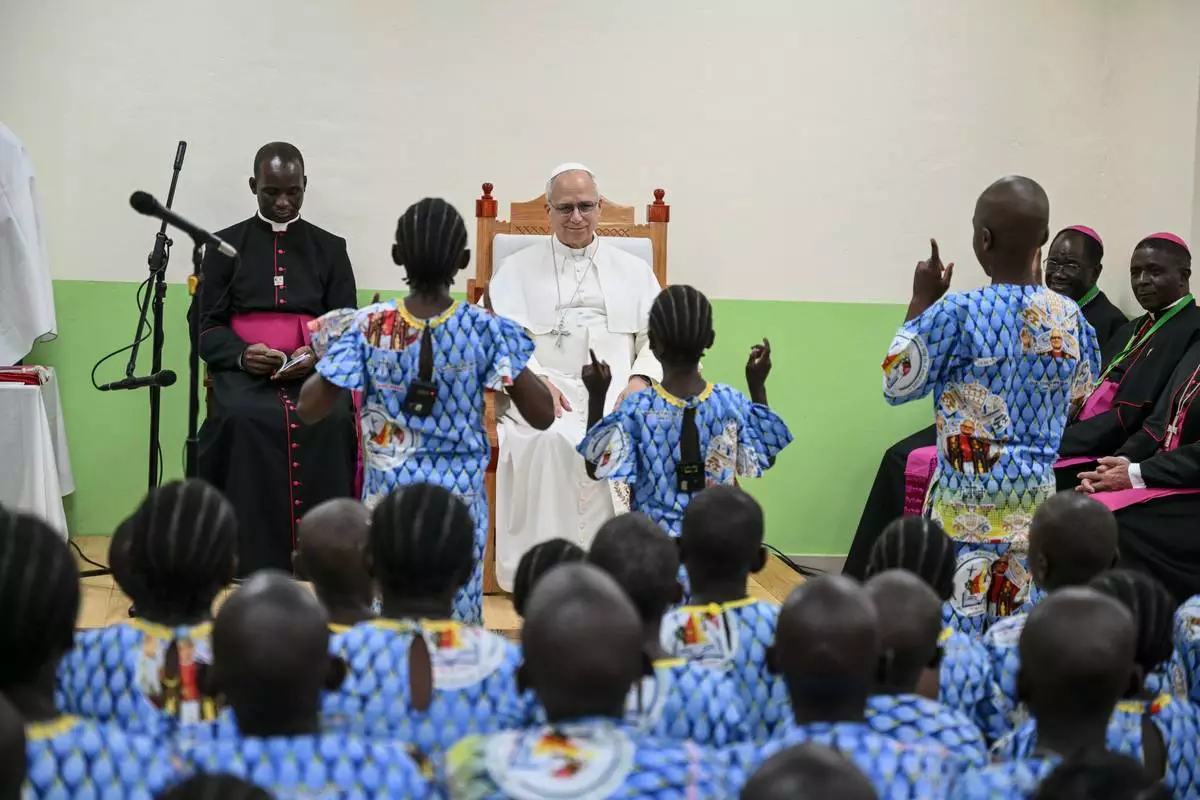
Pope Leo XIV watches children perform a dance as he visits the Ngul Zamba (Power of God) orphanage in Yaounde, Cameroon, Wednesday April 15, 2026 on the third day of his apostolic journey to Africa. (Alberto Pizzoli, Pool Photo via AP)
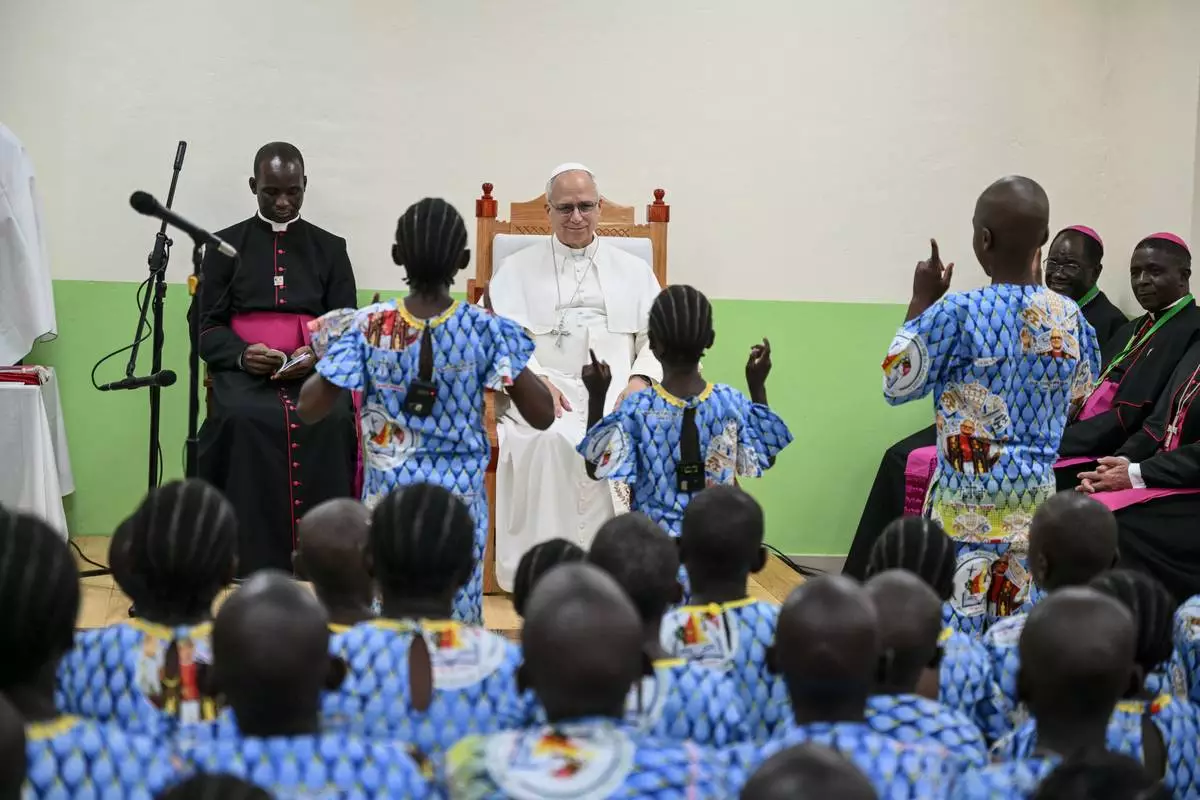
Pope Leo XIV watches children perform a dance as he visits the Ngul Zamba (Power of God) orphanage in Yaounde, Cameroon, Wednesday April 15, 2026 on the third day of his apostolic journey to Africa. (Alberto Pizzoli, Pool Photo via AP)
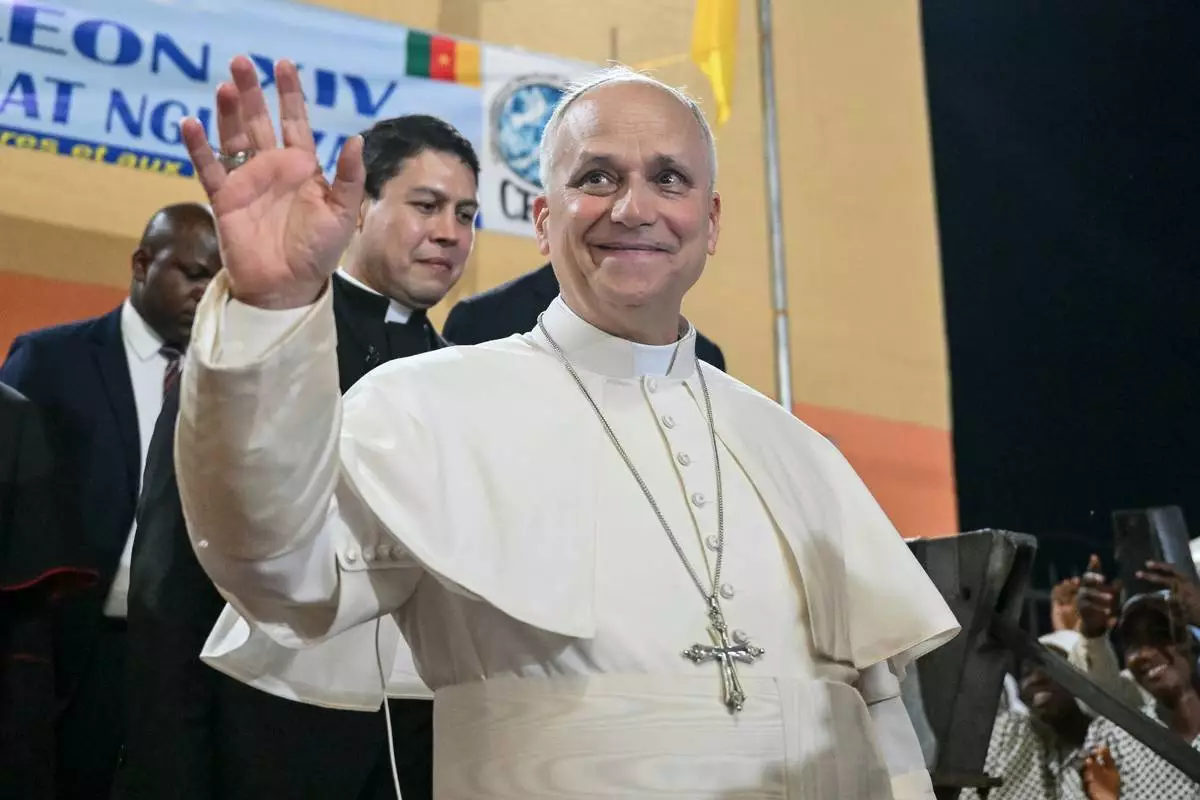
Pope Leo XIV waves to supporters as he leaves after his visit to the Ngul Zamba (Power of God) orphanage in Yaounde, Cameroon, Wednesday April 15, 2026 on the third day of his apostolic journey to Africa. (Alberto Pizzoli, Pool Photo via AP)