It didn't take long for the Columbus Blue Jackets to decide if Rick Bowness would return as coach.
The team announced Thursday that Bowness agreed to a deal to be behind the bench for the 2026-27 season.
Bowness led Columbus to a 21-11-5 record after taking over for Dean Evason on Jan. 12.
“If you look at the body of work that happened here over the last 37 games, I’m very pleased with Rick’s work. I’ve said all along that the strengths of this organization from a coaching standpoint has been the communication he’s had with the players and getting them ready to play on a regular basis,” President of Hockey Operations and General Manager Don Waddell said during a news conference. “It’s always interesting when you do make changes how players are going to respond. Through all the exit meetings that have happened so far, every player to a man said they love playing for Rick, they respect Rick and they’re all hoping he’d come back for another year.”
The Blue Jackets were in last place in the Eastern Conference when Bowness arrived. They went 18-2-4 in Bowness’ first 24 games and moved into a playoff spot after collecting a point in 12 straight games.
But Columbus struggled down the stretch, going 3-9-1 to miss the Stanley Cup Playoffs for the sixth straight season.
Bowness gave his players a lot to think about after a 2-1 season-ending loss to the Washington Capitals on Tuesday night. He launched into a 3-minute rant on the team's effort and that “losing is not important enough to them. It doesn’t bother them."
He also said that if he was back "we’re changing this freaking culture. I’ve been around long enough to know. I’ll find ways. I’ve got enough experience. I’ve dealt with this. I’ve dealt with it before. If we’re back, we’ll straighten it out.”
Bowness and Waddell said the comments were not a surprise to the players, since they heard the same thing before he addressed the media.
“Rick speaks from his heart. It was very passionate what he said and he cares and from a general manager standpoint, that’s what he asked for,” Waddell said. “Since Rick’s been here, I knew that he was all in on this. I give players the opportunity (to discuss the comments during end-of-season meetings) and to a man I heard only positive things, so I’m good with everything that’s happened.”
Bowness added on Thursday that he might have pushed things a little too far, and that he held himself as much accountable for the late-season struggles as he did the players.
“Now I have a reference point to them and I can go to them in October and I can go to them in November ‘that’s the stuff that hurts us in March and April that you will not get away with then and you will not get away with in the playoffs.’ So that helps. That seed has been planted,” he said.
Bowness is expected to be the league's oldest coach at 71 when next season begins. He has a 331-419-48-42 record in stints with the Blue Jackets, Winnipeg Jets (twice), Dallas Stars, Phoenix Coyotes, New York Islanders, Ottawa Senators and Boston Bruins.
Columbus went 40-30-12 this season, the first time it has posted 40 games two straight seasons since 2018-19. The 92 points this season are the fifth-highest point total in club history, but the first time the team had at least 90 points and didn't make the playoffs.
The Blue Jackets have Zach Werenski, who led the team with 81 points and is among the favorites for the Norris Trophy as the league’s top defenseman.
Center Charlie Coyle and left wing Mason Marchment, along with captain Boone Jenner, will be unrestricted free agents. Adam Fantilli, the third pick in the 2023 draft, is a restricted free agent in line for a lucrative extension.
AP NHL: https://apnews.com/hub/nhl

Columbus Blue Jackets coach Rick Bowness, center top, looks on during the third period of an NHL hockey game against the Winnipeg Jets in Columbus, Ohio, Saturday, April 4, 2026. (AP Photo/Paul Vernon)
President Donald Trump announced Thursday that Israel and Lebanon had agreed to a 10-day ceasefire, a truce that could boost attempts to extend the ceasefire between Iran, the United States and Israel after weeks of devastating war.
Israel has not been fighting with Lebanon itself, but rather with the Iranian-backed Hezbollah militant group inside Lebanon. Hezbollah said in a statement that “any ceasefire must be comprehensive across all Lebanese territory and must not allow the Israeli enemy any freedom of movement.”
The ceasefire would begin at 5 p.m. ET Thursday. Nearly 2,200 people in Lebanon have been killed by Israeli air strikes.
Meanwhile, Pakistan’s army chief met with Iranian officials in Tehran on Thursday in a bid to ease tensions in the Middle East and arrange a second round of negotiations between the United States and Iran after almost seven weeks of war.
The U.S. naval blockade of Iranian ports continued as U.S. Treasury Secretary Scott Bessent said the Trump administration would ramp up economic pain on Iran with new economic sanctions on countries doing business with it, calling the move the “financial equivalent” of a bombing campaign.
The White House said any further talks with Iran would likely take place in the Pakistani capital of Islamabad, though no decision had been made on whether to resume negotiations. Pakistan has emerged as a key mediator after it hosted direct talks between the U.S. and Iran in Islamabad.
Here is the latest:
Ambassador Amir Saeid Iravani said the Islamic Republic welcomes and supports diplomatic efforts to bring a “sustainable end to this unlawful and unwarranted war,” including by Pakistan, Turkey, Egypt, Saudi Arabia, China and Russia.
“Despite our deep mistrust of the United States, stemming from its repeated betrayal of diplomacy, we nevertheless enter the negotiation in good faith and remain cautiously optimistic,” he told the U.N. General Assembly on Thursday.
“We believe that should the United States adopt a rational and constructive approach and refrain from advancing demands that are inconsistent with international law, this negotiation can lead to a meaningful outcome,” Iravani said.
He spoke at an assembly meeting in support of vetoes by Beijing and Moscow of a U.N. Security Council resolution backed by the U.S. and Gulf nations aimed at opening the Strait of Hormuz.
The Lebanese militant group called on people to exercise restraint and refrain from returning to areas in south and eastern Lebanon and Beirut’s southern suburbs that have been hit hard by Israeli strikes “until the situation becomes fully clear.”
The Lebanese army issued similar warnings, urging people not to rush back to those areas after the 10-day ceasefire kicks in at midnight Beirut time.
Previous ceasefires saw tens of thousands of people clogging roads as they attempted to drive back to check on homes and belongings in the first hours of the truce.
More than 1 million Lebanese people have been displaced during the ongoing war between Israel and Hezbollah.
Anwar Gargash, diplomatic advisor to the UAE’s president, said Gulf states have a different view of Iran, seeing it as the “main enemy”, citing its missile and drone attacks despite.
“We are fully aware of the position of many Arab societies in viewing Israel as the primary enemy, but the view in the Gulf states may be different... Iran is the one that attacked the Gulf states with thousands of missiles and drones, and for this reason we do not trust it, and we view it as a primary enemy,” he said during a media briefing Thursday at Dubai Press Club.
Gargash added that the UAE has questions over Iran’s nuclear program as well as its ballistic missiles and drones, and said that just as Tehran is seeking guarantees and reparations for war damage, the UAE also wants assurances that such “cowardly” attacks will not happen again.
The 10-day ceasefire that Israel and Lebanon agreed to came about following a meeting between the nations’ ambassadors and a flurry of subsequent phone calls from President Donald Trump and Secretary of State Marco Rubio, according to a White House official.
After the talks Tuesday in Washington that included Rubio, Trump spoke Wednesday evening with Israeli Prime Minister Netanyahu, who agreed to a ceasefire with certain terms, according to the official, who was not authorized to comment publicly and spoke on condition of anonymity.
Rubio then called Lebanon’s president, Joseph Aoun, who got on board. Trump then spoke with Aoun, and again with Netanyahu.
Meanwhile, the State Department worked with both governments to formulate a memorandum of understanding for the truce.
Mohammad Bagher Qalibaf made these remarks on Iranian state television after meeting Pakistan’s army chief Gen. Asim Munir in Tehran. U.S. President Donald Trump announced a 10-day truce between Lebanon and Israel in a bid to end the war between Israel and the Hezbollah militant group.
Iran, Hezbollah’s key patron and ally, has included ending the war in Lebanon as one of its conditions in its talks with Washington, mediated by Pakistan.
There was no mention about resuming in-person talks with Washington, as both sides gear up for a second round of talks.
The 10-day halt to the fighting that will begin later Thursday can be extended if there’s progress in talks to reach a lasting peace agreement and Lebanon “effectively demonstrates its ability to assert its sovereignty,” the State Department said.
President Donald Trump announced the truce following talks held in Washington this week. Israel hasn’t been fighting with Lebanon itself but rather with the Iranian-backed Hezbollah militant group inside Lebanon.
In the statement that the U.S. says was agreed to by Lebanon and Israel, there is a provision to allow Israel to defend itself “at any time, against planned, imminent, or ongoing attacks.” Hezbollah has said it will respond to any strikes by Israel.
But otherwise, Israel “will not carry out any offensive military operations against Lebanese targets, including civilian, military, and other state targets,” the statement says.
The president once again claimed progress is being made in talks with Iran and suggested he could be involved in the signing of a peace agreement, if one is reached.
“If the deal is signed in Islamabad, I might go,” said Trump, who heaped praise on Pakistani Prime Shehbaz Sharif and Pakistani Army Gen. Asim Munir for their role as mediators in the U.S.-Iran talks.
“The field marshal has been great. The prime minister has been really great in Pakistan, so I might go. They want me.”
Foreign Minister Paulo Rangel said on Thursday his country’s prime minister will participate in a conference on Friday co-hosted by the French and British leaders on setting up a mission to ensure freedom of navigation through the strait after the Iran war ends.
But Rangel said a decision on Portugal’s contribution to such a mission won’t be taken “before we know exactly what is at stake” because the mission plan is still unclear.
He said the Portuguese “fully understand the value of freedom of navigation” because they have been “navigators for centuries.”
“So let’s go to the meeting, let’s see what are the plans,” Rangel said after talks with Cypriot counterpart Constantinos Kombos.
Trump isn’t worried that his taunting of Pope Leo XIV might offend his voters.
“I have to do what’s right — the pope has to understand that,” Trump told reporters. “I have nothing against the pope. His brother is MAGA all the way.”
The U.S. president has maintained that the Iran war is about stopping that country from developing a nuclear weapon and he criticized that country’s leadership for killing its own people as he objected to the papal emphasis on peace.
The president added that he’s “sure the pope is a great guy,” yet he suggested Pope Leo XIV was naive about geopolitics.
“The pope has to understand that this is the real world,” Trump said.
The 14-day ceasefire is set to expire April 22, but Trump said it’s possible that the deadline to make a deal could be pushed out further.
“If we’re close to a deal would I extend?” Trump said in an exchange with reporters. “Yeah, I would do that”
Israel’s Netanyahu says Israeli troops will remain in an expanded security zone in south Lebanon despite a ceasefire.
He said troops will remain in a10-kilometer deep zone, “much stronger, more extensive and more continuous than before.”
“That is where we are, and we are not leaving.”
Hezbollah, in commenting on the ceasefire, had said continuing Israeli occupation grants Lebanon the right to resist.
“I had a great talk with both of them today,” Trump said of this conversations with Aoun and Netanyahu. “They’re going to be having a ceasefire, and that’ll include Hezbollah.”
Trump in an extended exchange with reporters said also that he expected that Aoun and Netanyahu would meet in the next week or two, before saying the White House meeting between the Mideast leaders could happen in the next four or five days.
The president added that he was open to visiting Lebanon “at the right time.”
The U.S. president played down prices at the pump averaging $4.09 a gallon nationwide, saying the cost wasn’t so great relative to the risk of evening higher prices tied to keeping Iran from getting a nuclear weapon.
“Well, they’re not very high, if you look at what they were supposed to be in order to get rid of a nuclear weapon,” Trump told reporters about gas prices before a planned trip to Las Vegas.
The president repeated a past claim that he thought the war with Iran would have driven energy costs much higher.
Gas prices are up roughly 29% from a year ago, according to AAA.
Israeli Prime Minister Benjamin Netanyahu says he has agreed to a 10-day ceasefire in Lebanon.
In a video statement, Netanyahu said he was taking the step in an attempt “to advance” peace efforts with Lebanon.
Israel and Lebanon opened negotiations this week in Washington aimed at forging a peace agreement. The Hezbollah militant group, which has been fighting Israel for six weeks, has said it opposes the dialogue.
“We have an opportunity to make a historic peace agreement with Lebanon,” Netanyahu said.
Italian Premier Giorgia Meloni greeted the announcement of a ceasefire between Israel and Lebanon as “excellent news,” achieved “thanks to the mediation of the United States.”
She added that the ceasefire must be fully respected, singling out Hezbollah “for having started this conflict,” and expressed hope that it would create conditions for talks leading “to a full and lasting peace” between Israel and Lebanon.
Italy has the second-largest contingent of U.N. peacekeepers serving in southern Lebanon.
Hezbollah said in a statement that “any ceasefire must be comprehensive across all Lebanese territory and must not allow the Israeli enemy any freedom of movement.”
Israel offered no official comment on Trump’s announcement.
Hezbollah added that “Israeli occupation on our land grants Lebanon and its people the right to resist it, and this matter will be determined based on how developments unfold,” a stance that could complicate the ceasefire.
Israel has staged a ground invasion in southern Lebanon, where its forces have been engaged in fierce battles with Hezbollah militants in the border area. It is unclear whether Israel would withdraw some or all of its forces as part of the truce.
▶ Read more
Two local leaders in northern Israel criticized a proposed ceasefire with Lebanon, warning it would leave communities vulnerable.
Moshe Davidovich, head of the Mateh Asher Regional Council, said agreements may be signed in Washington but “the price is paid here in blood, in destroyed homes and shattered communities.”
He warned that a ceasefire without strict enforcement against Hezbollah and a buffer zone up to the Litani River, some 30 kilometers (18.64 miles) north of the Israeli border, would amount to “waiting for the next massacre.”
Eitan Davidi, head of the Margaliot moshav, called the move “a surrender” and “a political defeat.” He told the N12 news site it was made without coordination with northern residents and contradicts the stated goal of dismantling Hezbollah’s capabilities.
Ambassador Fu Cong said the strait “should be safeguarded” for international navigation and called on Iran to take ‘proactive measures’ to open the waterway, used to ship about 20% of the world’s oil.
“The issue of navigation in the Strait of Hormuz is a spillover effect of the conflict in Iran,” he said. “Only a complete ceasefire can fundamentally create conditions for easing the situation.”
Fu told the U.N. General Assembly on Thursday that Beijing is engaged “in intensive mediation with all parties to actively promote talks for peace”’ and an end to the war in Iran.
The 193-member world body was meeting to hear China and Russia explain why they vetoed a Security Council resolution backed by the U.S. and Gulf nations aimed at opening the Strait of Hormuz.
Fu claimed the resolution would have given “a carte blanche for the continuation of aggressive actions and further escalation” rather than de-escalate the conflict and promote negotiations.
Prime Minister Nawaf Salam said the ceasefire was Lebanon’s first goal in landmark talks that took place with Israel in Washington on Tuesday between the country’s ambassadors to the U.S.
“While I congratulate all Lebanese on this achievement, I offer my condolences to the families of the martyrs who fell, and I affirm my solidarity with their families, with the wounded, and with the citizens forced to flee their cities and villages,” Salam said.
Trump said it would be “the first meaningful talks between Israel and Lebanon since 1983.”
“Both sides want to see PEACE, and I believe that will happen, quickly,” Trump wrote on his Truth Social platform.
Lebanon and Israel signed an agreement in 1983 saying Lebanon would formally recognize Israel and Israel would withdraw from Lebanon. The deal fell apart during Lebanon’s civil war and was formally rescinded a year later.
Iran’s foreign ministry spokesperson Esmail Baghaei criticized economic threats by U.S. Treasury Secretary Scott Bessent, saying they harm “innocent people” and reflect an “inhumane mindset.”
“These are nothing short of economic terrorism and state-sponsored extortion,” he wrote on X, referring to Bessent’s Wednesday remarks about potentially carrying out the “financial equivalent” of a bombing campaign.
The U.S. military has released an expansive lists of goods it considers contraband as part of its blockade of Iran and declares it will seize from merchant vessels “regardless of location.”
In a notice published Thursday, the U.S. military says any “goods that are destined for an enemy and that may be susceptible to use in armed conflict” are “subject to capture at any place beyond neutral territory.”
The list includes items like arms, ammunition and military equipment that are classified as “absolute contraband.” However, it also lists items like oil and iron, steel, and aluminum as well as some civilian goods, as “conditional contraband” and argues these items can be put to military use.
The notice says that otherwise innocuous items like electronics or heavy machinery can be seized if “circumstances indicate intended military end-use.”
U.S. Central Command says those vessels have turned around in the first three days of the blockade on Iranian ports at the direction of American forces.
At a Pentagon news briefing earlier Thursday, U.S. defense leaders said more than 10,000 American troops are helping enforce the blockade on Iranian ports and that no ships have yet needed to be boarded.
He said it followed “excellent” conversations he had with Lebanese President Joseph Aoun and Israeli Prime Minister Benjamin Netanyahu.
Lebanon and Israel held their first direct diplomatic talks in decades Tuesday in Washington after more than a month of war between Israel and the Iran-backed Hezbollah militant group.
Trump said he’s directed U.S. Vice President JD Vance others to work with Israel and Lebanon to “achieve a Lasting PEACE.” He added: “so let’s, GET IT DONE.”
The office of Lebanon’s President Joseph Aoun said President Trump was thanked by the Lebanese head of state to reach a ceasefire in the devastating war.
Aoun earlier spoke to U.S. Secretary of State Marco Rubio where he refused to have a direct call with Israeli Prime Minister Benjamin Netanyahu and has insisted on achieving a ceasefire ahead of continued direct talks. Israel hasn’t made a decision regarding a ceasefire.
The statement said Trump stressed “his commitment to fulfilling the Lebanese request for a ceasefire as soon as possible.”
Neither the State Department nor the White House immediately issue a statement on the calls with the Lebanese president.
A second Lebanese official said Aoun explained to U.S. Secretary of State Marco Rubio that direct talks with Netanyahu at this point would be inappropriate given the ongoing airstrikes and destruction in Lebanon and the lack of a ceasefire in place.
The official also spoke on condition of anonymity because of the sensitivity of the situation.
— Kareem Chehayeb
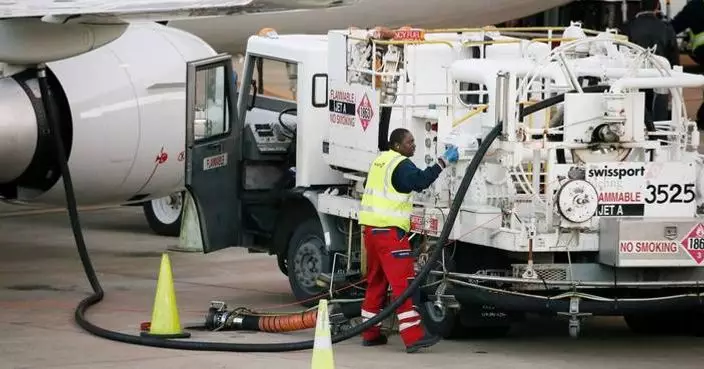
Lufthansa said Thursday that labor disputes and high fuel prices are forcing it to immediately shut down its feeder airline CityLine earlier than planned and take its 27 older, less fuel efficient planes out of service. The decision accelerates a shutdown that had been expected for next year.
CityLine’s primary role was bringing passengers to Lufthansa’s mid- and long-haul hubs in Frankfurt and Munich, Germany. Fuel prices have soared since the outbreak of the Iran war in February and the blocking by Iran of the Strait of Hormuz, a key passage way for crude oil and fuel products from Persian Gulf producers.
CityLine will halt operations Saturday.
Abdul Malik al-Houthi, leader of the Iran-backed Yemeni rebel group, said that in negotiations with Iran, the U.S. is making “impossible demands for any independent country to accept.”
During a video speech Thursday, he said the ongoing two-week ceasefire was a result of “failures” by the U.S. and Israel to achieve their goals in the Iran war.
“If negotiations succeed, it will either result in a longer period of stability or an end to the aggression,” he said, adding that the U.S. entered negotiations based on their own terms built on “arrogance and pride.”
Lebanon’s Health Ministry says that among the killed are 260 women and 172 children since the latest war between Israel and Hezbollah began March 2. Another 7,185 have been wounded.
Israel’s latest military escalation started after Hezbollah fired rockets towards northern Israel in solidarity with its key ally and patron Iran.
Lebanon and Israel started direct talks Tuesday, the first of their kind since 1993. Lebanon hopes those talks can end the war.
“There are no dates yet,” Pakistan’s Foreign Ministry spokesperson Tahir Andrabi told reporters Thursday.
“We will announce the timing of these talks as and when it is decided,” he said, urging the media to avoid speculation.
Andrabi said Pakistan’s role as a mediator and facilitator did not end when the first round of talks concluded over the weekend.
“It continued,” he said.
He said Pakistan’s army chief, Field Marshal Asim Munir, is visiting Iran with a delegation, while Prime Minister Shehbaz Sharif is also traveling to regional countries to promote peace.
“We will continue to advocate for peace, prosperity and stability,” he said.
Asked about the first round of talks, Andrabi said there was “certainly not a major breakthrough in terms of any concrete document emanating from these talks, but there was no breakdown as well.”
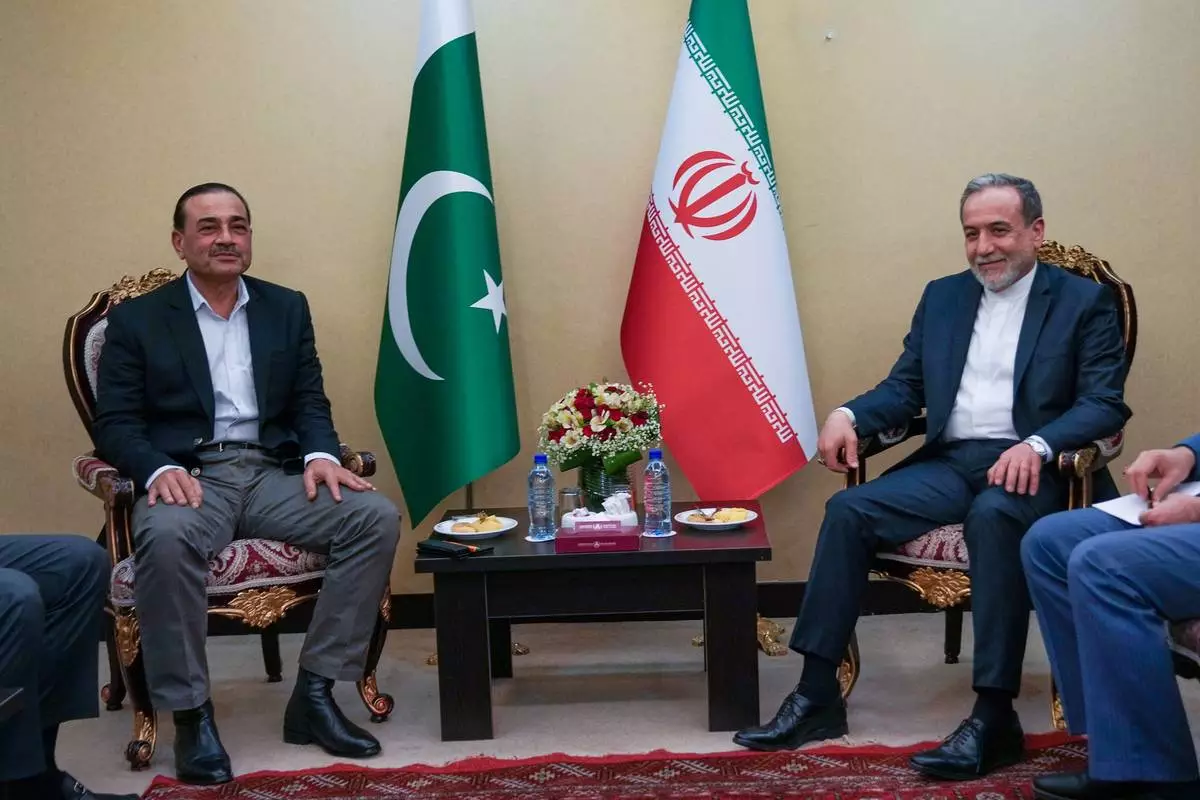
In this photo released by the Iranian Foreign Ministry, Iranian Foreign Minister Abbas Araghchi, right, meets with Pakistan's Army Chief Field Marshal Gen. Asim Munir in Tehran, Wednesday, April 15, 2026. (Iranian Foreign Ministry via AP)
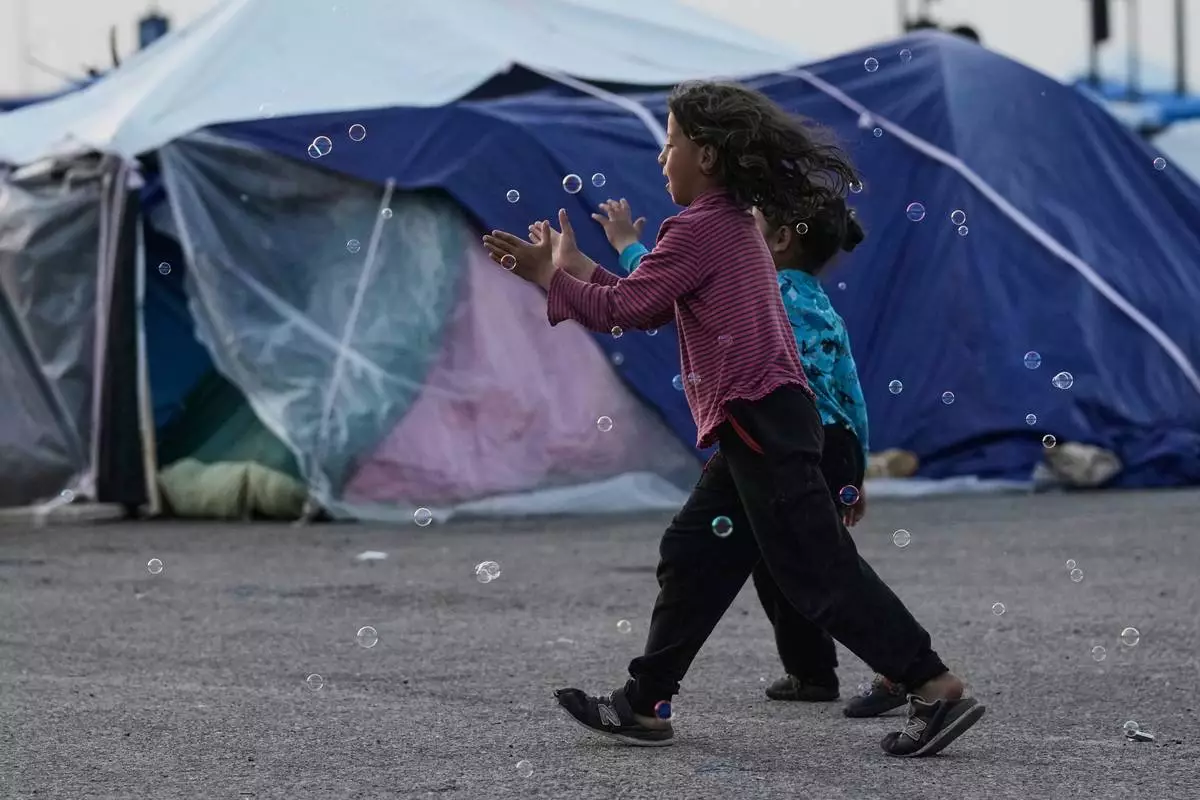
Girls chase bubbles next to their family's tents used as shelter after fleeing Israeli bombardment in Dahiyeh, Beirut's southern suburbs, in Beirut, on Wednesday, April 15, 2026. (AP Photo/Bilal Hussein)
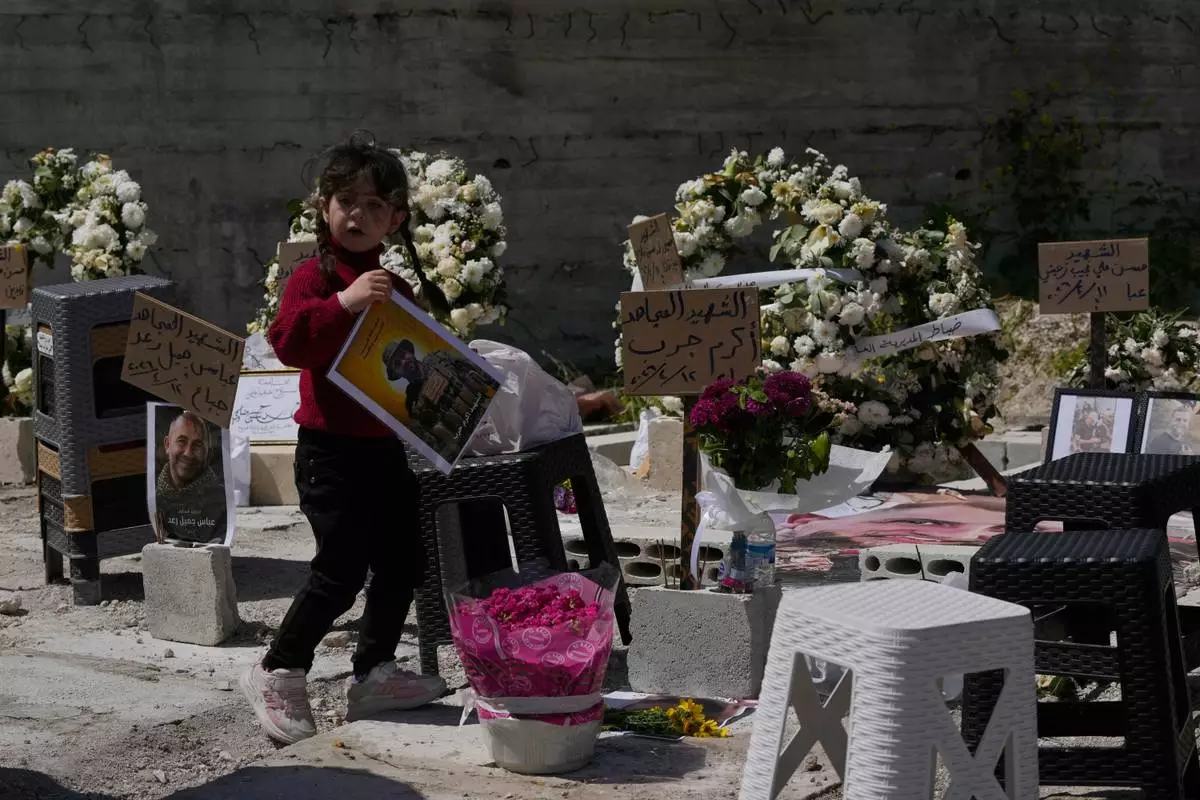
A young girl carries a portrait of a killed Hezbollah fighter at a mass grave where civilians and Hezbollah fighters killed in Israeli airstrikes are temporarily buried in the southern port city of Sidon, Lebanon, Tuesday, April 14, 2026. (AP Photo/Mohammed Zaatari)
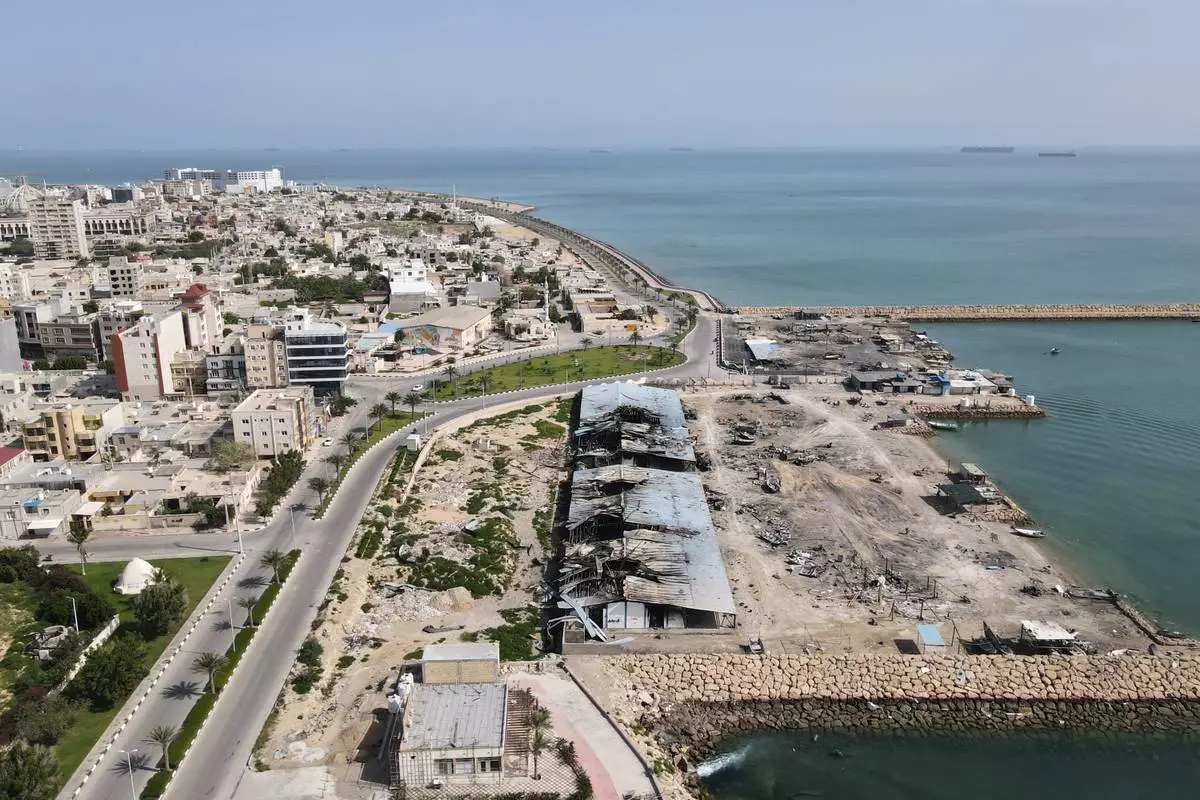
Backdropped by ships in the Strait of Hormuz, damage, according to local witnesses caused by several recent airstrikes during the U.S.-Israel military campaign, is seen on a fishing pier in the port of Qeshm island, Iran, Monday, April 13, 2026. (AP Photo/Asghar Besharati)
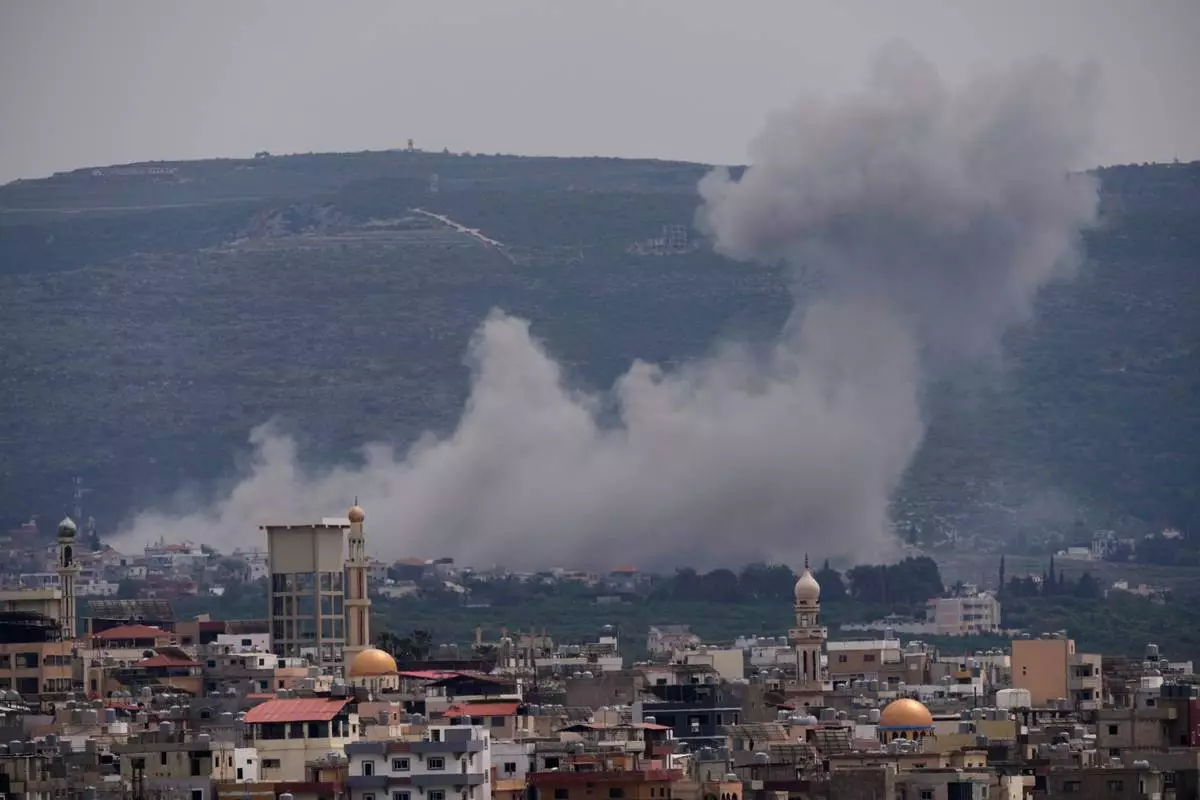
Smoke rises following an Israeli airstrike on the village of Qlaileh, as seen from the southern port city of Tyre, Lebanon, Wednesday, April 15, 2026. (AP Photo/Hussein Malla)