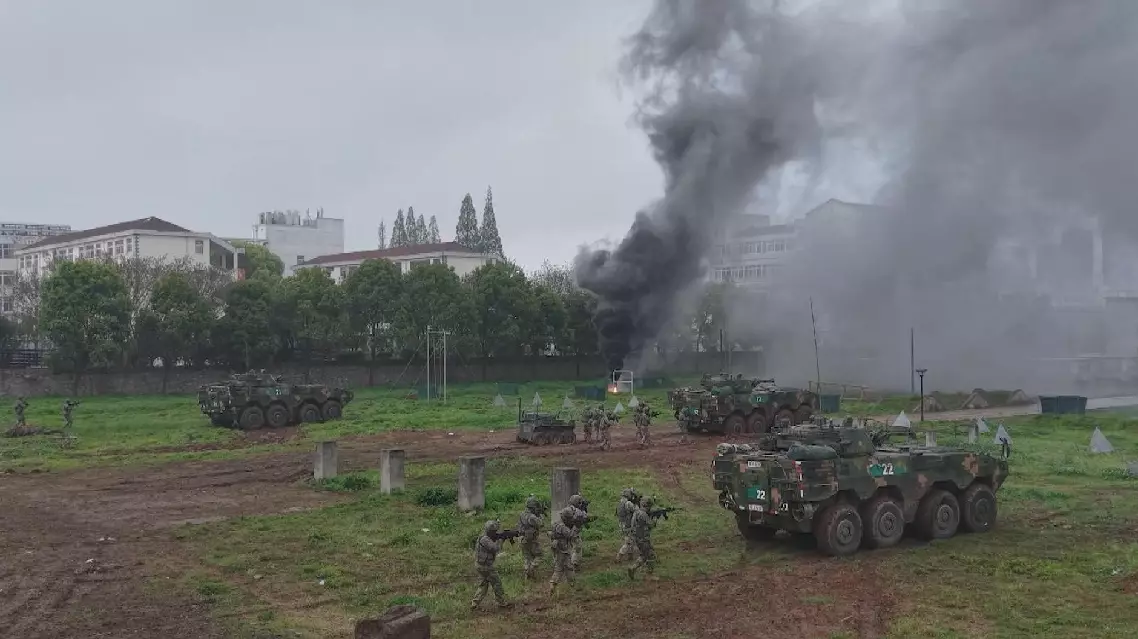
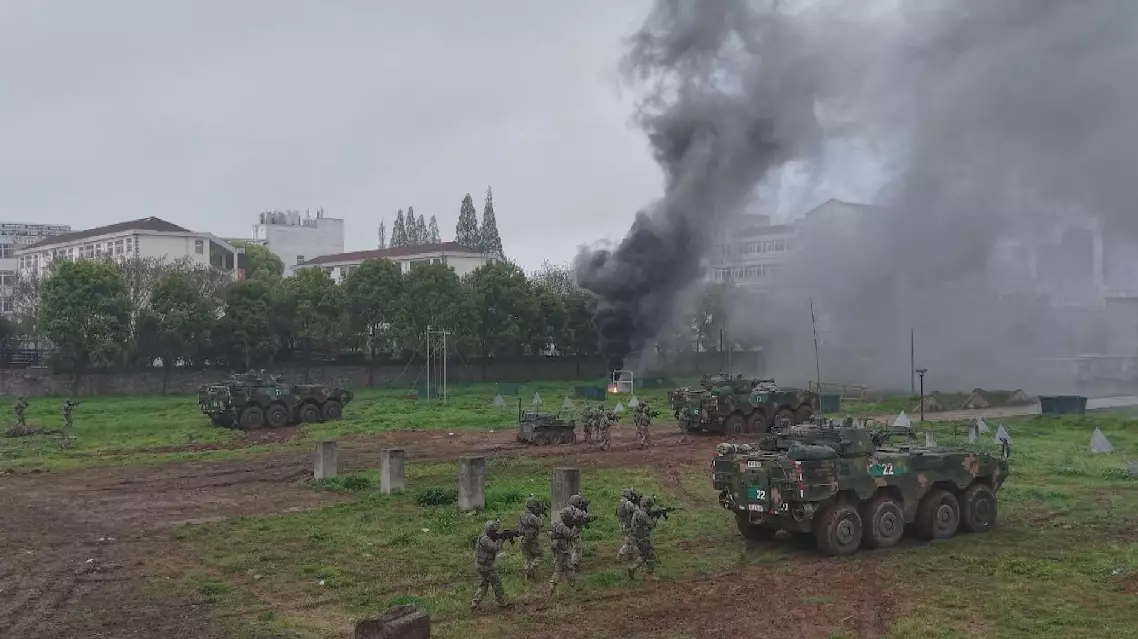
In a sprawling urban combat training ground at a base of the Chinese People's Liberation Army (PLA) Army, the future of warfare is taking shape, not with massed infantry charges, but with swarms of drones, robotic dogs and unmanned ground vehicles (UGVs) operating in seamless coordination with human soldiers.
The recent exercise showcases the PLA Army's accelerating integration of intelligent unmanned systems into complex street-fighting scenarios, which aims to maximize combat effectiveness while minimizing casualties.
The drill was conducted across a meticulously constructed mock cityscape featuring multi-story buildings, tangled alleyways and common battlefield obstacles, including barbed wire, concrete barriers and fortified bunkers.
The deployment of small tactical drones, UGVs and quadruped robots extended soldiers' situational awareness, enabling stealthy, close-in reconnaissance of high-threat zones previously too dangerous for human scouts.
As the breach-and-assault phase commenced, FPV strike drones and explosive-laden UGVs spearheaded the advance, clearing obstacles and breaching entry points. Simultaneously, loitering munitions descended on fortified strongpoints with pinpoint accuracy, neutralizing entrenched defenses from above.
A tracked reconnaissance-strike UGV demonstrated exceptional cross-urban mobility, while its modular weapon suite, featuring a machine gun, portable rocket launcher and anti-tank guided missile, provided flexible and on-demand firepower to support advancing infantry.
"Breaching outer defensive perimeters has always been the most challenging and costly phase of offensive operations. Now, we deploy cost-effective unmanned systems to pave the way, with high-altitude targets engaged by aerial drones, low-profile threats handled by unmanned ground vehicles, and moving targets neutralized with rocket launchers. This not only significantly reduces casualties, but also enables integrated, multi-layered obstacle breaching," said Liang Jiaying, a soldier with the participating unit.
As the exercise progressed, troops advanced deeper into the urban area. Overhead, armed "hunter-killer" drones provided overwatch; on the ground, packs of robotic "wolves" executed flanking maneuvers and suppressive fire. Infantry squads moved in tandem with support unmanned vehicles, creating a tightly integrated combat network.
According to the participating soldiers, this integrated human-unmanned training model has already become standard operating procedure, accelerating their adaptation to the demands of tomorrow's battlefield.
Chinese army tests human-unmanned team tactics in urban warfare drill
Chinese army tests human-unmanned team tactics in urban warfare drill