Skip to Content Facebook Feature Image

Israeli strikes leave Lebanese hospital struggling, temporary graveyards emerge

China

China

China

Israeli strikes leave Lebanese hospital struggling, temporary graveyards emerge

2026-04-20 17:03 Last Updated At:23:07

Medical facilities in Lebanon are struggling to treat victims of Israel's bombardment, while controversial temporary graveyards have also emerged in major southern cities.

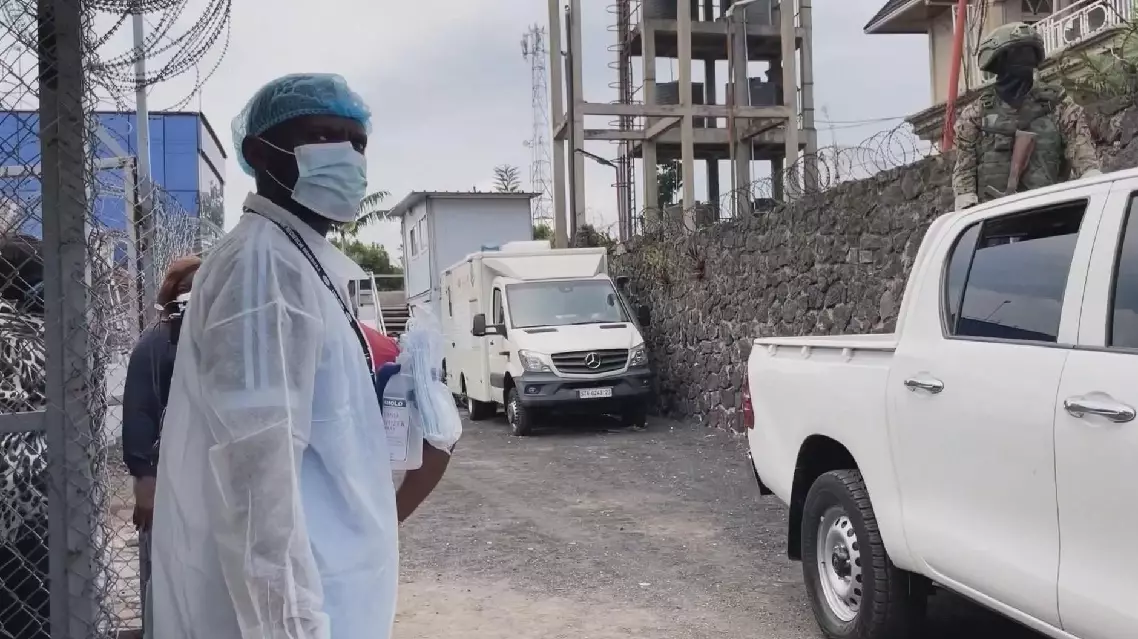
In the Lebanese mountains, just a few kilometers from Bint Jbeil, one of the areas that saw some of the heaviest fighting, the Tebnine Public Hospital still stands. It is the only facility within a 35-kilometer radius equipped with advanced medical capabilities.

However, because of Israeli bombardment, a row of charred vehicles lies crushed along its perimeter fence, and across the street, many buildings have been heavily damaged. This has made access to the hospital extremely difficult and placed heavy strain on the essential supplies needed to treat the severely injured.

At the height of the conflict, Tebnine had just over 10 doctors, including only one specialist in intensive care and another in anesthesia.

"We were under massive siege, but the Lebanese military greatly helped us by supplying essentials. They delivered food with their armored vehicles. They delivered electric generators from the Red Cross when the power was cut. This hospital contains 85 beds to accommodate 85 patients. It has an intensive care unit, a cardiology care unit. It is equipped with the most advanced devices because it is near the frontlines with the enemy. Throughout the war we received more than 800 injured people and tens of martyrs," said Solaiman Zahwi, medical director of the Tebnine Public Hospital.

Thousands of Lebanese citizens were killed during the latest conflict.

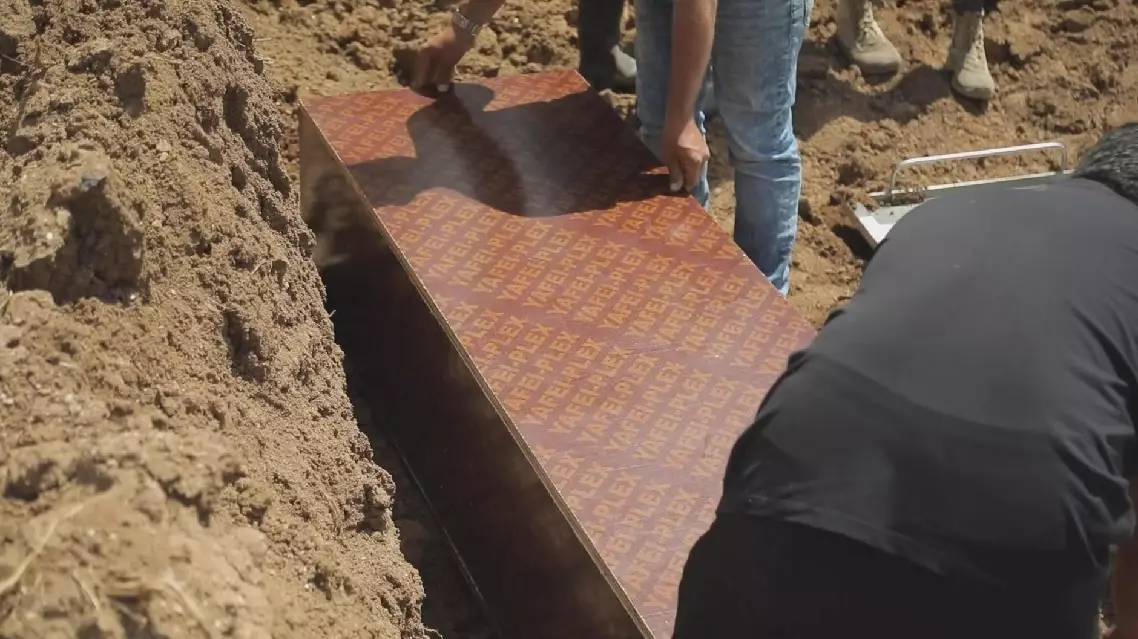
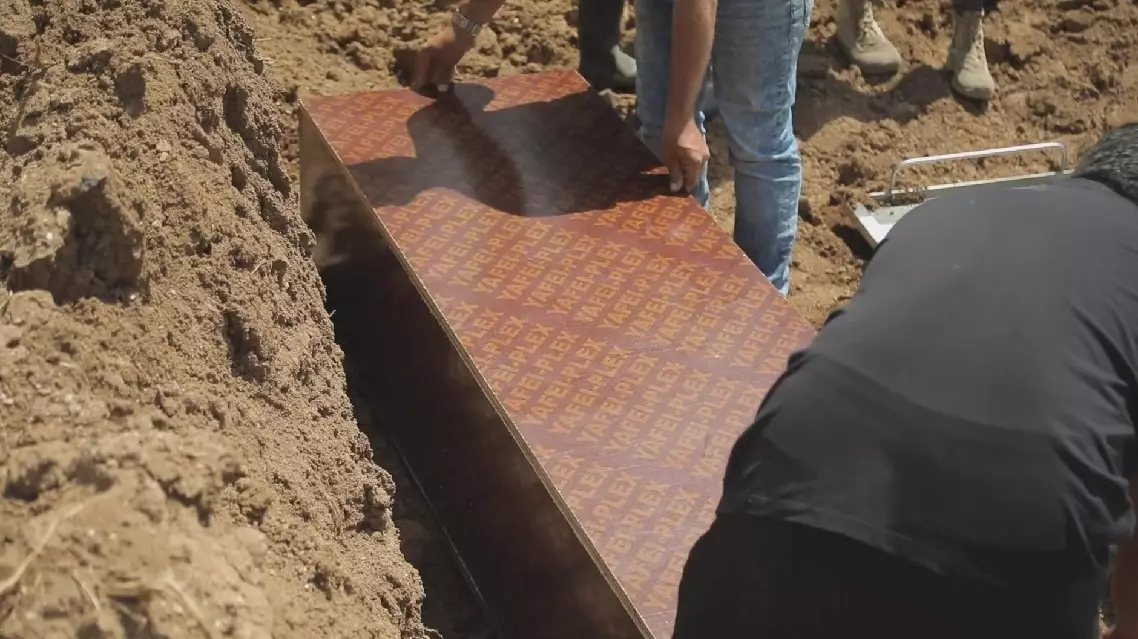
Dozens of victims have not received formal funerals and were instead buried in what are locally known as temporary or "deposit" graveyards.

The practice dates back to the 2006 war with Israel, when similar measures were used under emergency conditions.

"The idea to put the dead in boxes was proposed at the time. The boxes would then be relocated, so in a way it's like relocating the tomb rather than the body itself, which is controversial in Islam. In Islamic law, deposit burials do not exist. Muslims must be buried right after their bodies are washed and wrapped in cloth, with prayers. These exceptional circumstances forced us to come up with this alternative. Families usually want to bury their loved ones in their hometowns, which is a way of holding on to their land," said Rabei Qubaisi, Sheikh in Tyre.

Some of these deceased were local first responders.

"In this graveyard we have 29 deposits, and six of them are members of my team. I had spoken to some of them 10 minutes earlier, an hour before. Some even got killed while we were talking. These first responders are directly targeted," said Mohamed Nasrallah, a first responder volunteer in Southern Lebanon.
Israeli strikes leave Lebanese hospital struggling, temporary graveyards emerge
Israeli strikes leave Lebanese hospital struggling, temporary graveyards emerge
Israeli strikes leave Lebanese hospital struggling, temporary graveyards emerge
Israeli strikes leave Lebanese hospital struggling, temporary graveyards emerge
Israel has wiped out entire villages and destroyed crucial infrastructure in southern Lebanon during conflicts with Hezbollah.

According to local media reports, the Israeli military has bombed every bridge over the Litani River last week. It means that major cities like Tyre are now isolated. Vehicles have no way to get through to deliver urgent medicine, supplies, or food. Even the United Nations Interim Force in Lebanon (UNIFIL), which monitors the violations and attacks happening in south Lebanon, can no longer have a direct connection of supply to its forces.

Hassan Dbouk, president of the Union of Tyre Region Municipalities, condemned Israel's destruction, saying it has been wholly disregarding international law and following the same calamitous pattern seen in the Gaza Strip.

"Israel doesn't respect international law. It's destroying everything, mosques, religious places, schools, clinics, the vicinity of hospitals -- even when it doesn't directly hit a hospital, it targets its vicinity, which puts it out of service. As for the infrastructure, last time, it bombarded the central water facility, and electricity always gets affected. To me, the situation in Lebanon is following the same pattern as in Gaza," he said.

He further noted that Israel is destroying villages along the Blue Line, a border demarcation line between Lebanon and Israel established by the United Nations in 2000.

"They said that they are destroying the Blue Line, which is the first line of villages on the border, and the second line, and they're calling for the occupation of the third line and therefore its destruction. They want it to be a buffer zone, which means an uninhabitable place with no population or houses, and this is getting implemented," he said.

Ali Khreis, a Lebanese parliament member, said that Israel is trying to prevent people from returning home as a form of political pressure, but Lebanon will not surrender.

"They want to prevent people from going back home. This is a type of political pressure. Israel is doing this so that Lebanon will yield to its demands. Despite what is happening, we can't give in to the Israeli pressure, whatever the cost. There is no crossing point between Tyre and the rest of the territories now. The main bridge was destroyed, and before that, another bridge was destroyed. This was the only remaining crossing," he said.

A 10-day ceasefire between Israel and Lebanon took effect at midnight between Thursday and Friday local time, following an earlier announcement by U.S. President Donald Trump.

However, the Israel Defense Forces said in a statement on Saturday that it had struck militants approaching a "Yellow Line," which marks the northern edge of the "security zone" established by Israel in southern Lebanon, over the past day.

Israeli attacks destroy infrastructure in southern Lebanon

Israeli attacks destroy infrastructure in southern Lebanon

Recommended Articles