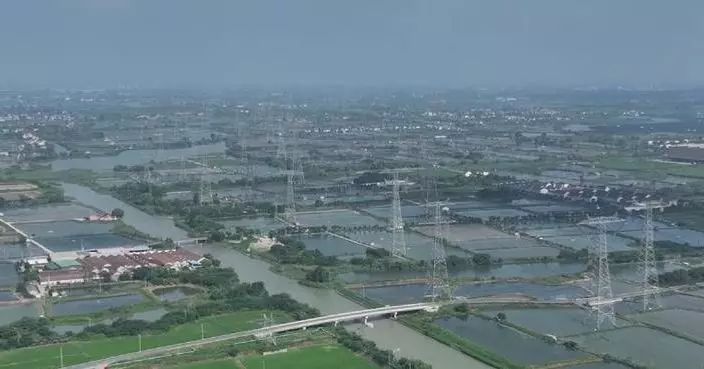
China's largest ultra-deep condensate gas field, the Bozi-Dabei gas zone, in northwest China's Xinjiang Uygur Autonomous Region, has reached a significant production milestone: the number of its high-yield wells, each having produced over 1 billion cubic meters of natural gas, now totals 12 as of Saturday.
This success was achieved through continuous technological innovation and refined management by PetroChina Tarim Oilfield. Over the years, the oilfield has established an integrated development model encompassing underground reservoirs, wellbores and surface facilities. A suite of specialized technologies has also been developed, including wellbore cleaning and gas well de-liquification.
"To address the widespread issue of water accumulation that hinders gas production at the gas field, we have innovatively established a five-in-one water control and [gas] production enhancement system integrating [water accumulation] control, drainage, adjustment, injection and plugging technologies to extend the production life cycle of gas wells," said Tang Zhengwei, director of the production and operation department at the Bozi-Dabei management area of PetroChina Tarim Oilfield.
The Bozi-Dabei gas zone is located at the southern foot of the Tianshan Mountains in the Tarim Basin, with reserves typically buried at depths exceeding 6,000 meters.
Since large-scale production began in 2019, the Bozi-Dabei gas zone has become a primary driver of Tarim Oilfield's growth, with over 80 wells now in operation. In 2026 alone, five new wells have been put into production and two previously inactive wells have been restored for production at the gas zone.
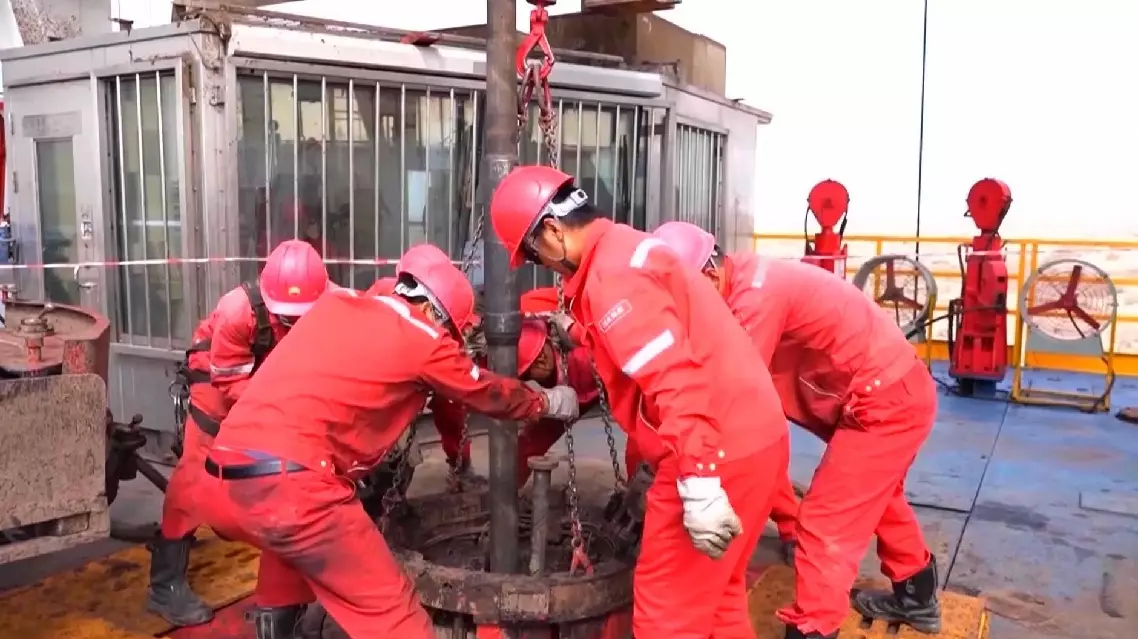
China's largest ultra-deep condensate gas field expands to 12 wells