TAMPA, Fla.--(BUSINESS WIRE)--Apr 21, 2026--
BST Global, the leading provider of AI-powered project intelligence ™ solutions for the AEC industry, announced that registration is officially open for its third annual AI Summit, taking place November 10–12, 2026, in Palm Beach, Florida. Building on the success of its first two events, the company’s AI Summit will once again convene senior AEC executives to explore how artificial intelligence and big data are reshaping strategy, project delivery, and operations and transforming the industry.
This press release features multimedia. View the full release here: https://www.businesswire.com/news/home/20260421204454/en/
Registration opened Monday, April 20, 2026, for AI Summit — hosted at the Eau Resort & Spa — and ends on Friday, October 30, at 11:59 p.m. ET. Attendees registering by 11:59 p.m. ET on July 3, 2026, will receive a discounted early-bird admission price.
Since launching the AEC industry’s first AI Summit in 2024, BST Global’s event has become the premier forum for executives seeking practical insight into how AI and big data are transforming design, engineering and environmental consulting firms. The inaugural summit brought together leaders from many of the world’s most influential AEC firms to share real-world perspectives on deploying AI at scale and preparing for an AI-powered future.
The 2026 AI Summit builds on that legacy with an expanded agenda, new interactive formats, and a continued focus on actionable, executive-level insight tailored specifically to AEC leaders as they prepare to become the AI-powered, data-driven superconsultancies of the future.
What’s New at AI Summit
New for 2026, BST Global is introducing several program enhancements to spotlight real-world innovation and peer learning:
The Proven Forum for AEC Executives
Exclusively for AEC executives, AI Summit offers a highly curated environment for learning, networking and collaboration. Attendees can expect keynote presentations, expert-led panels, and dedicated networking experiences designed to foster meaningful peer connections among 300+ senior industry leaders.
“The AI Summit was created to give AEC leaders a dedicated forum to learn from the industry’s brightest minds shaping our AI-powered future,” Javier A. Baldor, Chief Executive Officer at BST Global, commented. “As AI continues to move from experimentation to enterprise-scale impact, the conversations we’re hosting in 2026 are more important than ever for firms navigating this next era of transformation.”
Event Details
Event: BST Global’s AI Summit
Dates: November 10–12, 2026
Location: Eau Resort & Spa, Palm Beach, FL
Audience: AEC executives
Registration: Open from Monday, April 20, 2026, through Friday, October 30, 2026; early registration is encouraged due to limited capacity
For more information or to register, visit BSTGlobal.com/AISummit2026.
BST GLOBAL
BST Global designs, develops and deploys the AEC industry’s first suite of AI-powered project intelligence ™ solutions. Beyond our flagship ERP offering, we provide work management, predictive insights and resource management solutions to complement a firm’s existing ERP. More than 120,000 architects, engineers and consultants in 65 countries across six continents rely on BST Global’s solutions each day to successfully manage their projects, resources, finances and client relationships. With unrivaled industry knowledge, BST Global serves as a trusted partner to its loyal clients and remains at the forefront of innovation. For more information, visit www.BSTGlobal.com.

BST Global, the leading provider of AI-powered project intelligence™ solutions for the AEC industry, announced that registration is officially open for its third annual AI Summit, taking place November 10–12, 2026, in Palm Beach, Florida. Building on the success of its first two events, the company’s AI Summit will once again convene senior AEC executives to explore how artificial intelligence and big data are reshaping strategy, project delivery, and operations and transforming the industry. (Credit: BST Global)
LA GUAIRA, Venezuela (AP) — The death toll of Venezuela’s earthquakes rose to 1,430 on Saturday, officials said. The latest figures were released as rescuers continued the search for survivors of the one-two punch of 7.2 and 7.5 magnitude earthquakes that devastated the South American nation three days earlier. Families had reported at least 68,900 people missing as of Saturday morning.
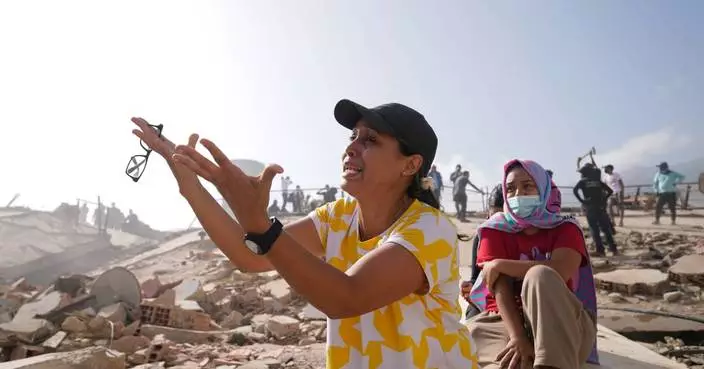
Venezuelans looking for loved ones and neighbors used shovels, heavy equipment, ropes and bare hands atop mounds of toppled concrete throughout La Guaira, one of Venezuela’s hardest-hit states.
Most of those digging were civilians who took search efforts into their own hands, and tensions spiked over an inadequate response from the Venezuelan government, whose soldiers, firefighters, police and military cadets were evidently underprepared to respond to the tragedy.
THIS IS A BREAKING NEWS UPDATE. AP’s earlier story follows below.
LA GUAIRA, Venezuela (AP) — The increasingly desperate search for survivors i n Venezuela entered a third day Saturday as people dug through the rubble of collapsed homes and apartment buildings after the devastating one-two punch of 7.2 and 7.5 magnitude earthquakes, knowing time is running out.
Venezuelans looking for loved ones and neighbors used shovels, heavy equipment, ropes and bare hands atop mounds of toppled concrete throughout La Guaira, one of Venezuela’s hardest-hit states.
Aid agencies consider the first 48 to 72 hours as crucial for retrieving people alive, though that can be extended if they have access to food and water.
Most of those digging were civilians who took search efforts into their own hands, citing the lack of state presence.
However, a growing number of international rescue teams were joining the effort to save lives nearly 72 hours after the quake.
The toll of Wednesday’s quakes stood at at least 920 dead and more than 51,000 missing on Friday. People reported seeing few state rescue teams in the hardest-hit areas despite authorities projecting an image of a robust government response.
In Catia La Mar, Ezequiel Frontado peered down at dozen bodies lying on the street Saturday morning, covered with blankets that neighbors and rescuers had recovered from the rubble of nearby collapsed buildings. He was searching to see if any were his missing relatives.
Acting President Delcy Rodríguez said on state television Saturday that more than 14,000 members of the military and police are patrolling the area, where access is now blocked and special permits are required to enter.
More rescue teams sent by governments across the world arrived in Venezuela on Saturday.
Simón Bolívar International Airport, which serves Venezuela’s capital, Caracas, was badly damaged in the quake. One runway was operational on Saturday as U.S. teams worked to repair the crucial throughway, said Jeremy Lewin, a senior State Department official in charge of foreign assistance told reporters.
In the state of La Guaira, just north of Caracas, Nazareth Jiménez sobbed into a loved one's shoulder on Friday as she watched neighbors use hammers and power tools to try to cut through slabs of concrete in a building reduced to a mountain of debris. She was wracked with anxiety as she waited to see if her siblings, nephews, nieces and friends would emerge alive.
“My God, how are we going to get them out of there?” Jiménez murmured.
“We're making a call for help to the government and countries across the world,” she said, pleading for machinery capable of moving collapsed structures. “There are still people alive in there.”
Government forces distributed food and water to survivors in La Guaira, and Rodríguez said her government was mounting a full response during these “critical hours for rescuing people alive.”
The disaster poses a huge challenge for Rodríguez, the former vice president who took office in January after the capture and removal of then-President Nicolás Maduro by the United States. Venezuela has been facing economic disarray for more than a decade, and many people reject the legitimacy of the political movement Rodríguez represents.
The number of dead was expected to climb, and people reported tens of thousands of missing on independent digital databases. Those figures likely included people who have been incommunicado due to the lack of cellphone signals, and some reports may be duplicated.
The number of injured stood at more than 3,300 as of midday Friday, and authorities said they rescued 243.
Search teams and foreign aid from Mexico, the U.S., Brazil, El Salvador, France, El Salvador and more continued to arrive to Venezuela Saturday morning to bolster recovery efforts.
Lewin, the State Department official, said the U.S. military would help coordinate flights to bring in search and rescue workers, mobile hospitals and supplies. He said two 80-person search teams were at work and a U.S. Navy transport ship was docked off the coast of Venezuela ready to receive airlifted survivors in need of medical attention. Lewin said it is a “race against the clock” to find people injured in the quakes.
“People are trapped under rubble, and the priority is to get the search and rescue teams and the medical professionals and others to them as quickly as possible to save lives,” he said.
The International Organization for Migration said up to 6.76 million people could be affected, some 2 million of them in Caracas alone. The destruction was amplified by the quick succession of shallow quakes, experts said.
Loyce Pace, the International Red Cross’ regional director for the Americas, said “people are still terrified to reenter what were their homes.”
Indeed, many continued to sleep on the street.
Omar Reyes said around 20 family members died.
“I’ve been left alone in this life,” Reyes said, walking through the rubble where two of his children were buried.
In the city of Maiquetia, people lined up outside stores and pharmacies that served them one by one behind closed doors. At one point a woman in a crowd threw herself to the ground to protect a package of diapers with her body, desperate to keep it.
Traffic and throngs of motorcyclists at times disrupted search efforts. Mexican soldiers and volunteers repeatedly asked for silence to try to hear signs of life under the rubble, but bikers — civilian and uniformed — continued to honk horns and rev engines to the first responders' frustration.
Some people began to carry off basic goods such as toilet paper and food from stores in Catia La Mar, adjacent to the country’s main airport. Others swarmed a civilian pickup truck that was giving out bread and water, until a soldier intervened. The parking lot of a pharmacy turned into a makeshift shelter with tarps, hammocks and tents.
A few miles (kilometers) away, Yuleidy Cadenas, 28, stood across the street from a collapsed public housing building, hoping her son, mother and brother would be pulled out alive.
She fled barefoot from another building as it collapsed Wednesday and found her mother’s 12-floor apartment tower had pancaked.
“I got on top of the rubble and told them to yell back, and nobody did, not my brother, nor my son or my mother,” Cadenas said.
Janetsky reported from Mexico City. Associated Press journalists Clara Preve in Buenos Aires, Argentina, Dánica Coto in San Juan, Puerto Rico, and Ali Swenson in Washington, D.C. contributed to this report.
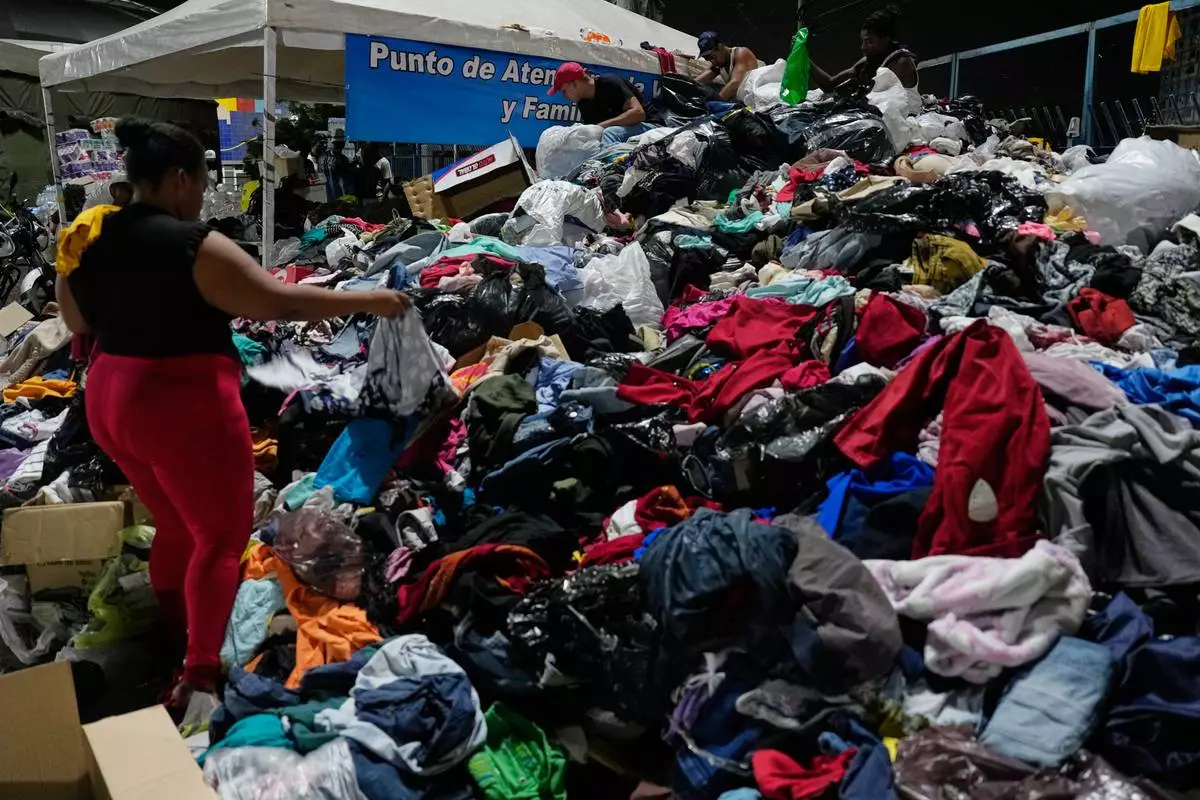
People search through donated clothing at a gymnasium serving as a shelter three days after earthquakes struck La Guaira, Venezuela, Saturday, June 27, 2026. (AP Photo/Fernando Vergara)
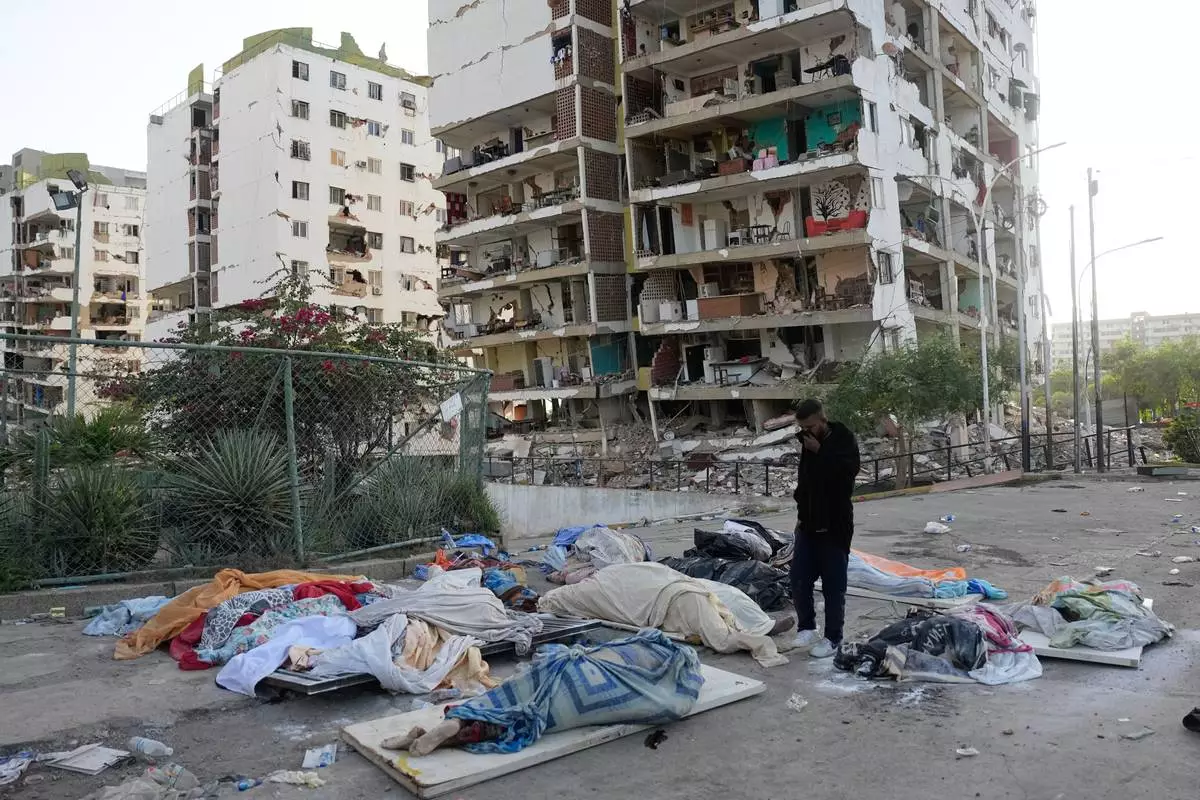
Ezequiel Frontado looks at covered bodies while searching for missing relatives three days after earthquakes struck Catia La Mar, Venezuela, Saturday, June 27, 2026. (AP Photo/Fernando Vergara)
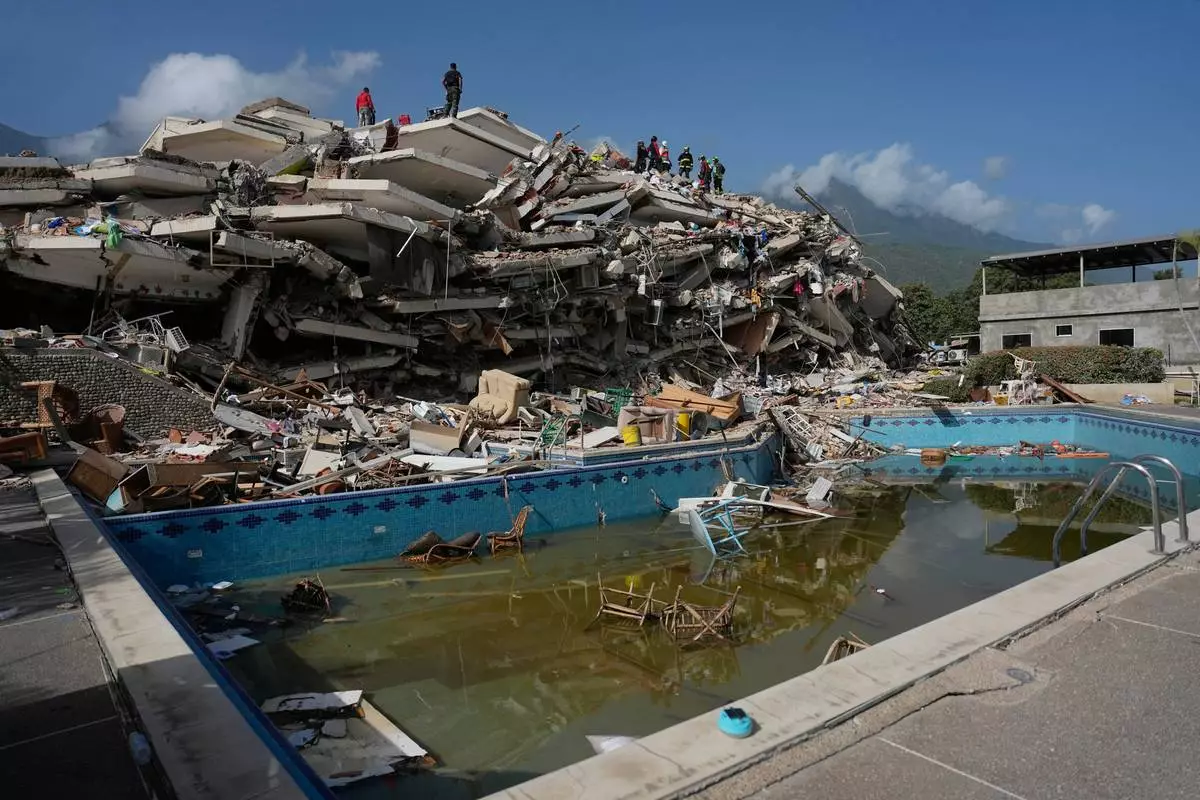
Rescue workers search through the rubble three days after earthquakes struck Catia La Mar, Venezuela, Saturday, June 27, 2026. (AP Photo/Fernando Vergara)
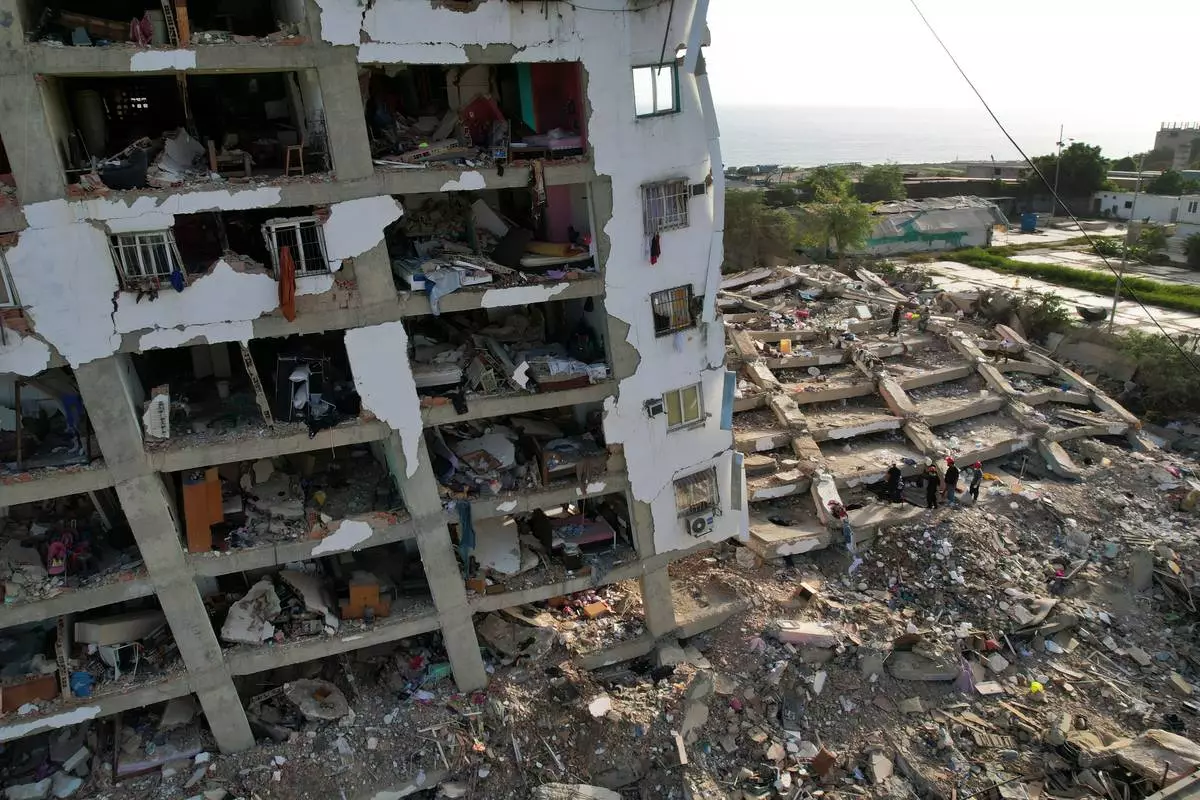
Rescue workers look for survivors three days after an earthquake struck in Catia La Mar, Venezuela, Saturday, June 27, 2026. (AP Photo/Matias Delacroix)
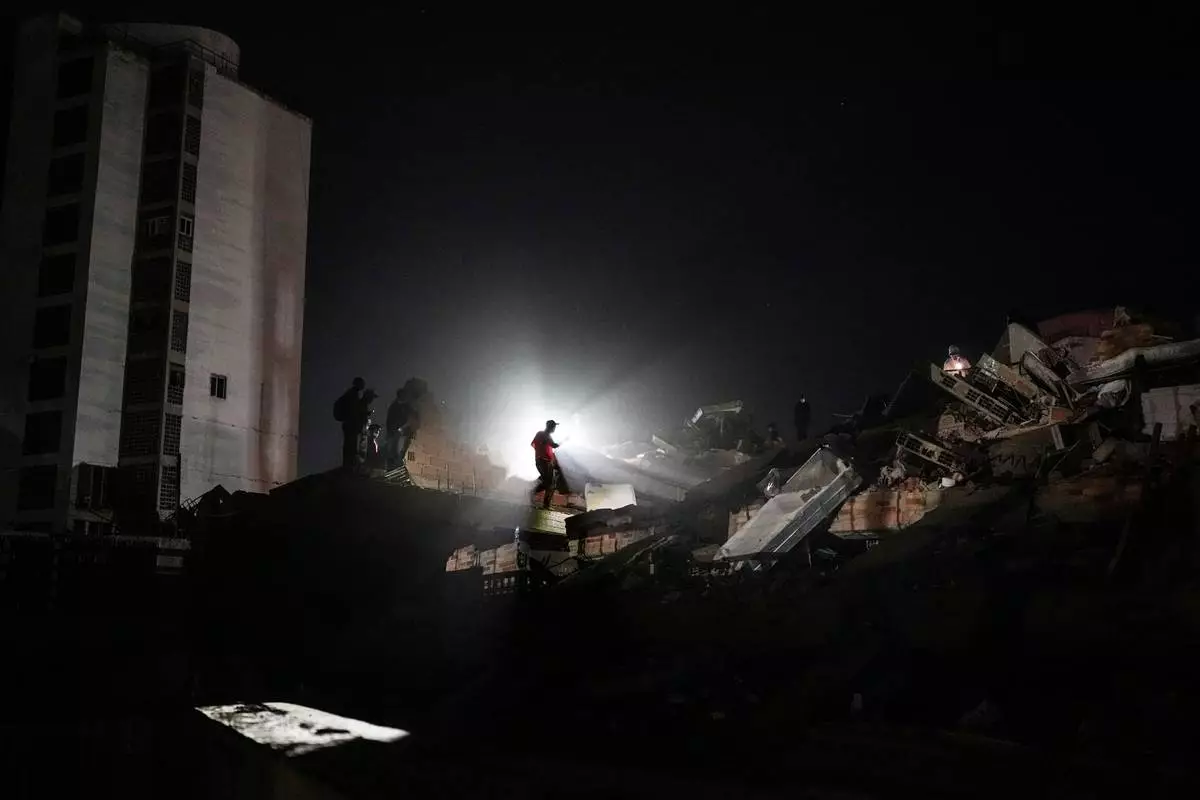
Residents and rescue workers search through the rubble two days after an earthquake struck in La Guaira, Venezuela, Friday, June 26, 2026. (AP Photo/Matias Delacroix)
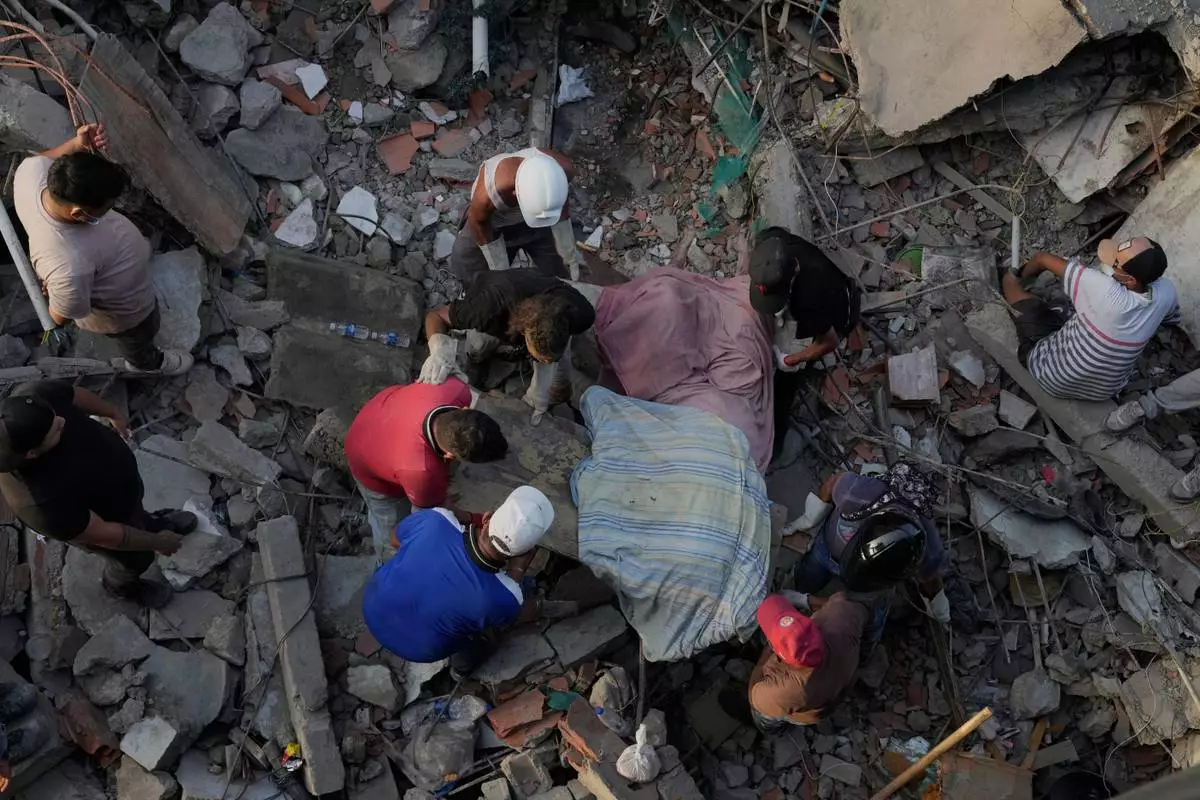
Residents pull a body from the rubble two days after earthquakes struck La Guaira, Venezuela, Friday, June 26, 2026. (AP Photo/Ariana Cubillos)
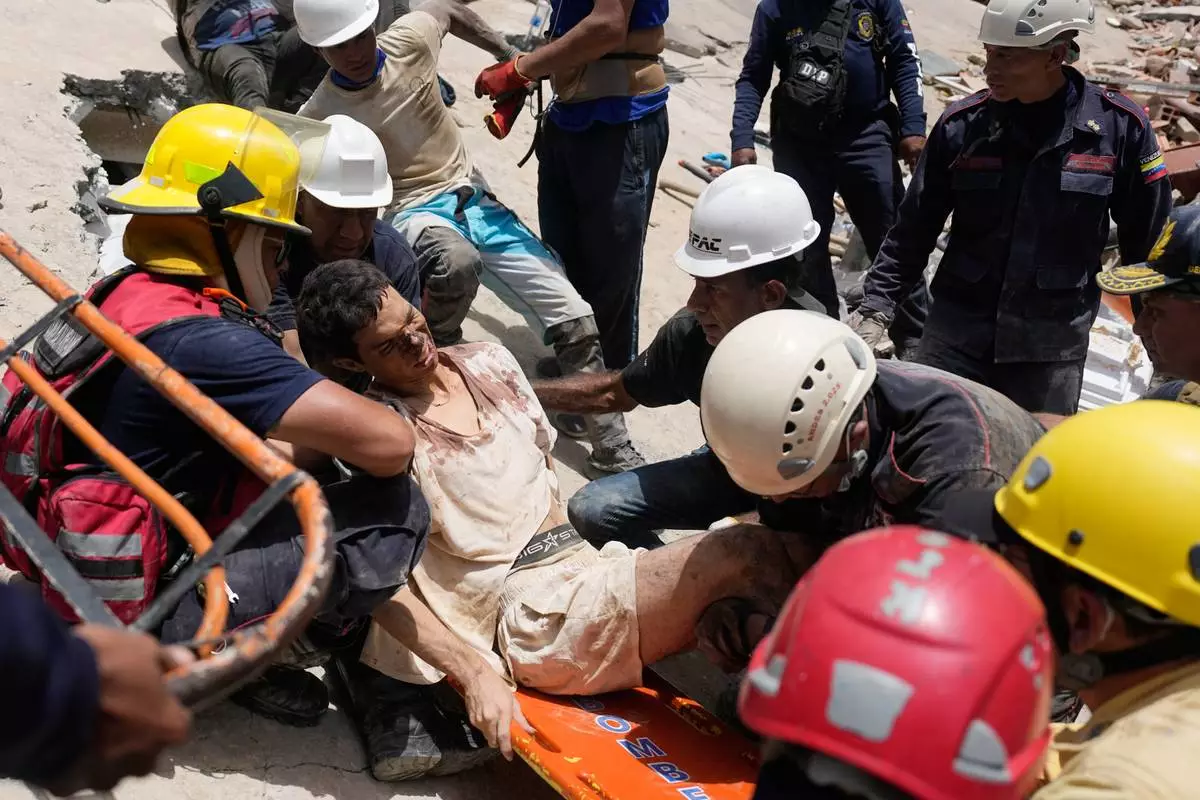
Rescue workers place Daniel Cordero on a stretcher after pulling him from the rubble two days after an earthquake struck Catia la Mar, Venezuela, Friday, June 26, 2026. (AP Photo/Fernando Vergara)
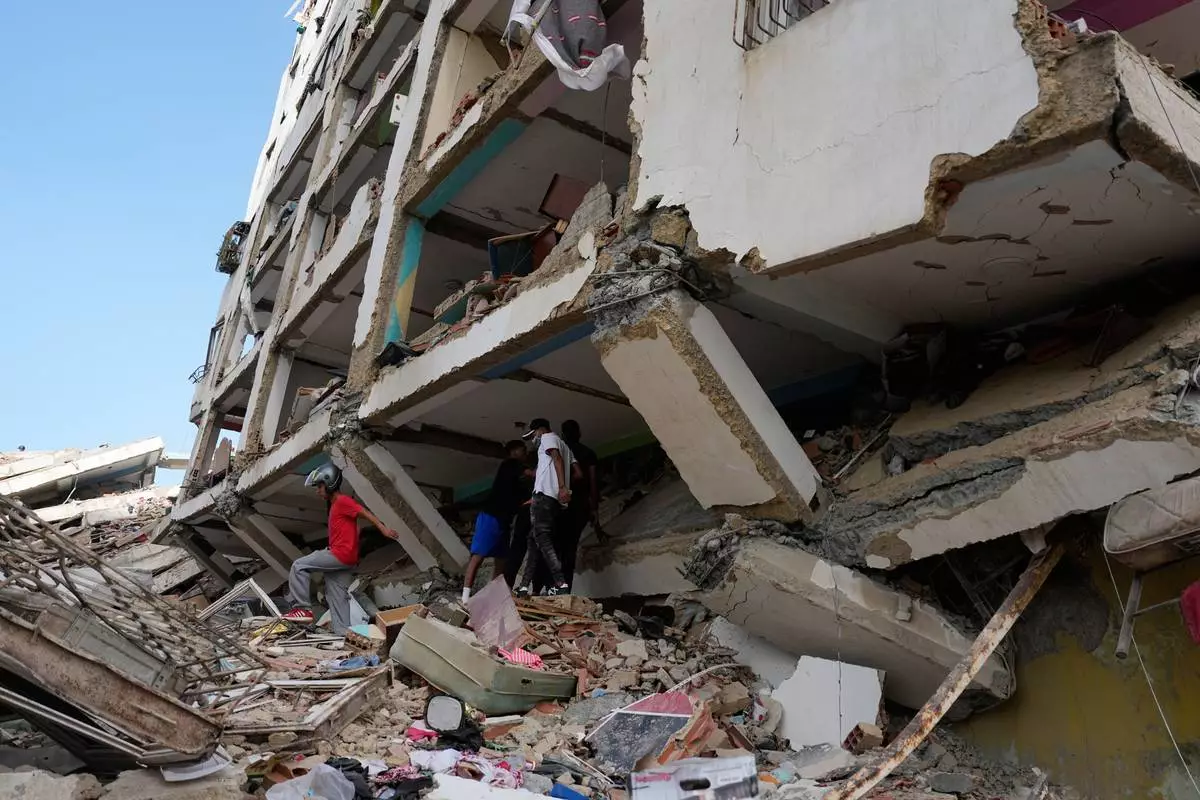
Residents walks through the rubble two days after earthquakes struck Catia La Mar, Venezuela, Friday, June 26, 2026. (AP Photo/Fernando Vergara)
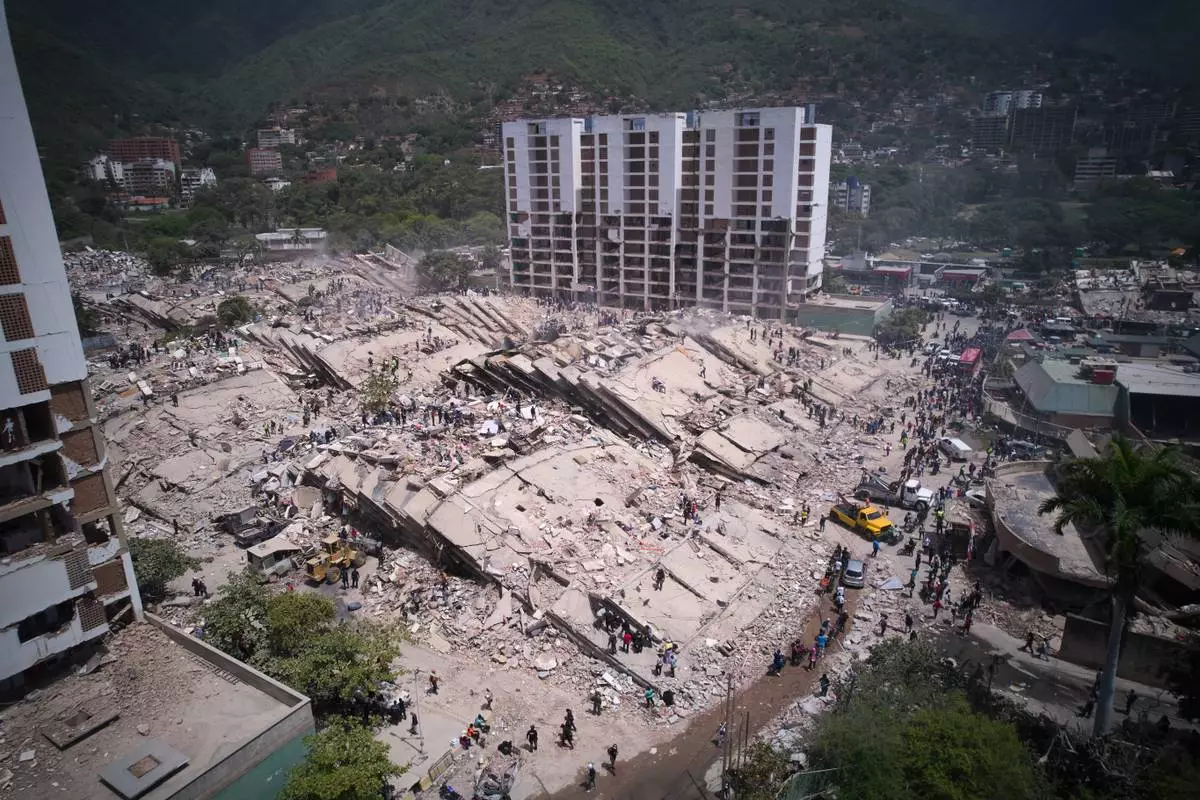
Residents and rescue workers search through the rubble two days after an earthquake struck La Guaira, Venezuela, Friday, June 26, 2026. (AP Photo/Juan Pablo Arraez)