Millions of people around the world will pause Wednesday, at least for a moment, to mark Earth Day. It's an annual event founded by people who hoped to stir activism to clean up and preserve a planet that is now home to some 8 billion humans and assorted trillions of other organisms.
Here are answers to some common questions about Earth Day and how it came to be:
Earth Day has its roots in growing concern over pollution in the 1960s, when author Rachel Carson's 1962 book “Silent Spring,” about the pesticide DDT and its damaging effects on the food chain, hit bestseller lists and raised awareness about nature's delicate balance.
But it was a U.S. senator from Wisconsin, Democrat Gaylord Nelson, who had the idea that would become Earth Day. Nelson had long been concerned about the environment when a massive offshore oil spill sent millions of gallons onto the Southern California coast in 1969. Nelson, after touring the spill site, had the idea of doing a national “teach-in” on the environment, similar to teach-ins that were being held on some college campuses to oppose the war in Vietnam.
Nelson and others, including activist Denis Hayes, worked to expand the idea beyond college campuses, with events across the U.S., and came up with the Earth Day name.
A history of the movement by EarthDay.org, where Hayes remains board chair emeritus, says the date of the first Earth Day — April 22, 1970 — was chosen because it fell on a weekday between spring break and final exams and the aim was to attract as many students as possible.
It's not a federal holiday. But many groups use the day to put together volunteer events with the environment in mind, such as cleanups of natural areas. You can see a list of events worldwide, or register your own event, at EarthDay.org.
It has. The overwhelming public response to the first Earth Day is credited with adding pressure for the U.S. Congress to do more to address pollution, and it did, passing landmark legislation including the Clean Air Act and Clean Water Act.
More broadly, it's seen as the birth of the modern environmental movement. In later years, Earth Day expanded to become a truly global event. It now claims to have motivated action in more than 192 countries.
In 2000, Earth Day began taking aim at climate change, a problem that has grown more urgent in recent years.
This year's Earth Day centers around the slogan “Our Power, Our Planet” and encourages collective action against environmental impacts.
The Associated Press’ climate and environmental coverage receives financial support from multiple private foundations. AP is solely responsible for all content. Find AP’s standards for working with philanthropies, a list of supporters and funded coverage areas at AP.org.
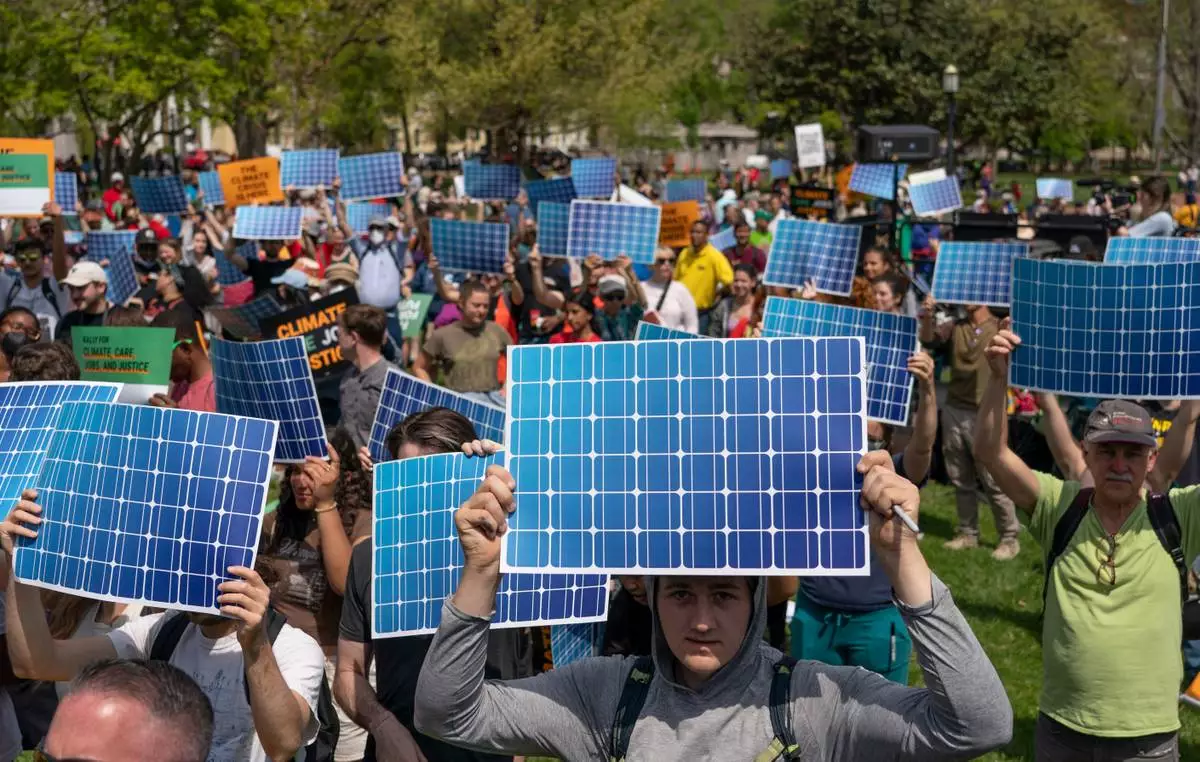
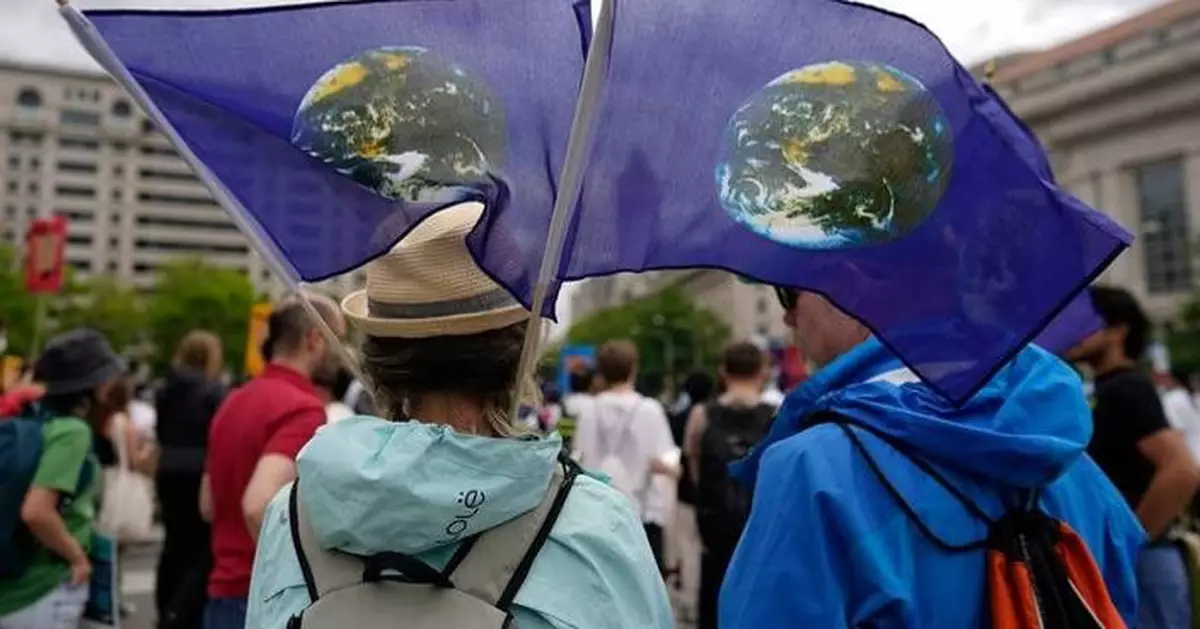
FILE - Activists display prints replicating solar panels during a rally to mark Earth Day at Lafayette Square, Washington, April 23, 2022. (AP Photo/Gemunu Amarasinghe, File)
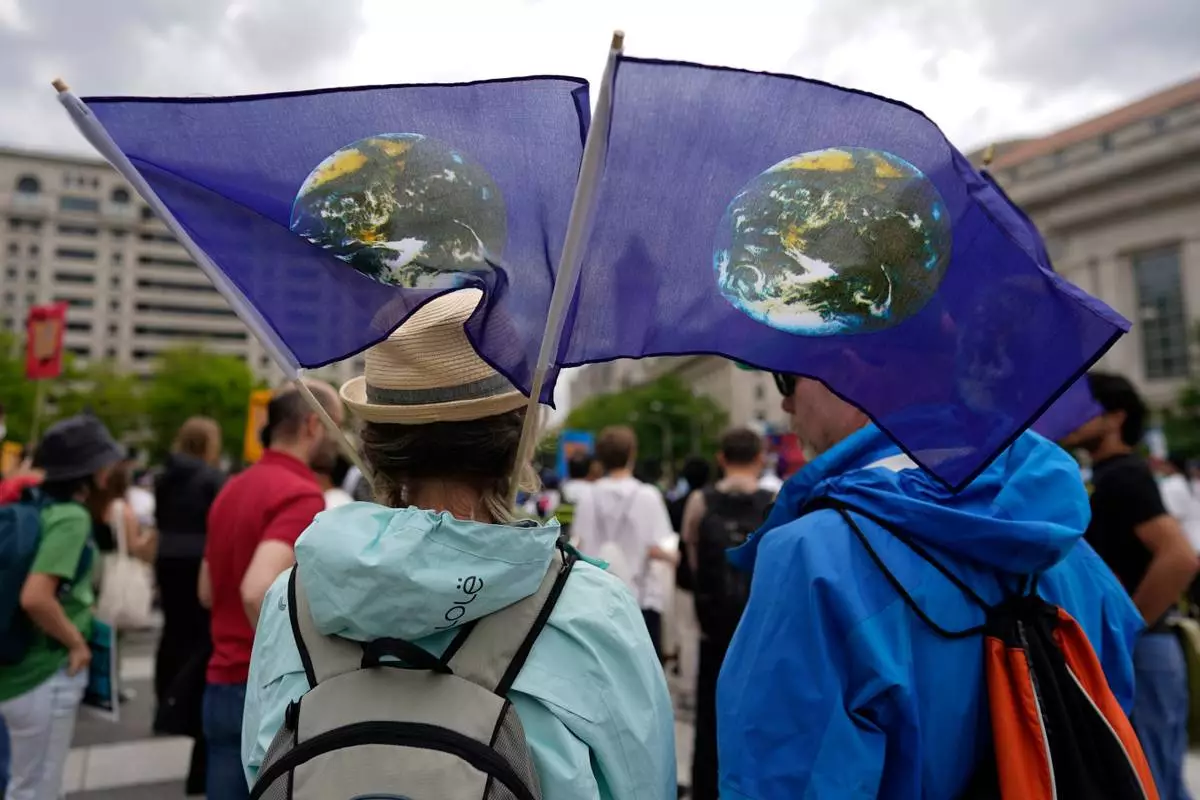
FILE - Climate activists hold a rally to protest the use of fossil fuels on Earth Day at Freedom Plaza, April 22, 2023, in Washington. (AP Photo/Carolyn Kaster, File)
DUBAI, United Arab Emirates (AP) — The ceasefire in the Iran war hangs in the balance as Pakistan's capital stands prepared for possible new talks between Tehran and Washington.
The two-week ceasefire was set to expire at 0000 GMT Wednesday (8 p.m. ET Tuesday.) Neither the U.S. nor Iran have publicly confirmed timing of any new talks or plans to extend the ceasefire, but sudden changes have been the norm in the lead-up to past rounds of talks.
Here’s what to know about where the ceasefire stands, the possible talks in Pakistan and other issues surrounding the war:
Two regional officials told The Associated Press on Tuesday that the United States and Iran have signaled they will hold a new round of talks. Pakistan-led mediators received confirmation that top negotiators, U.S. Vice President JD Vance and Iran’s parliament speaker Mohammad Bagher Qalibaf, are expected to arrive in Islamabad early Wednesday to lead their teams, the officials told The Associated Press.
As of Tuesday evening, Pakistan’s Information Minister Attaullah Tarar said Iran had not formally confirmed it would participate in more talks, noting the looming deadline.
“An Iranian decision to attend the talks before the end of the two-week ceasefire is critical,” he said in a post on X.
The White House said Vance was still in Washington, and gave no word on whether he would be traveling to Pakistan.
Serious challenges face any upcoming talks, about the future of the Strait of Hormuz, Iran's nuclear program and other issues. Meanwhile, Iran targeted ships in the strait over the weekend. The U.S. also attacked and boarded one Iranian vessel that tried to outrun the American naval blockade in the strait — signaling that the situation remains volatile and a resumption of the war isn't out of the question.
The current truce between Iran, Israel and the United States began April 8 after multiple deadlines posed by U.S. President Donald Trump that threatened Iran’s very “civilization” at one point.
Iranian attacks targeted Gulf Arab states and Israel after it had started. Another mysterious attack struck an Iranian oil refinery on an island as well that afternoon. However, the ceasefire has broadly held.
An earlier round of negotiations between Iran and the U.S. was held in Pakistan from April 11 into the early morning the following day. Vance took part in the highest-level talks between America and Iran since the 1979 Islamic Revolution, which ended without an agreement.
Since this weekend, authorities in Islamabad have made preparations similar to those that accompanied the first talks, suggesting another round loomed. The White House has said that Vance would be returning to Islamabad for a new round of talks in the coming days with envoys Steve Witkoff and Jared Kushner.
The Strait of Hormuz, the narrow mouth of the Persian Gulf through which 20% of all natural gas and oil passes, remains effectively closed over Iranian attacks in the waterway. That included some attacks Saturday. There's also a fear that Iran mined a portion of the strait used by transiting ships during peacetime. Since the war, Iran reportedly has been charging as much as $2 million a vessel to allow them to pass. Opening the strait remains a key focus of negotiations and Tehran's strongest leverage against Washington, particularly as countries around the world have begun rationing energy and warning of shortages of jet fuel. The United States, meanwhile, has begun blocking ships from Iranian ports. The U.S. Navy attacked an Iranian container ship that tried to run through the U.S. blockade this weekend, with Marines rappelling onto it from helicopters.
All of Iran’s highly enriched uranium remains in the country, likely entombed at enrichment sites bombed by the U.S. during a 12-day war last June. Iran hasn’t enriched since then but maintains it has the right to do so for peaceful purposes and denies seeking nuclear weapons. Trump, along with Israel, has called for Iran to completely dismantle its nuclear program and give up its stockpile. Iran rejected that in its 10-point proposal for ending the war.
__ AP reporters Sam Metz in Ramallah, West Bank, Samy Magdy in Cairo and Munir Ahmed in Islamabad contributed reporting.
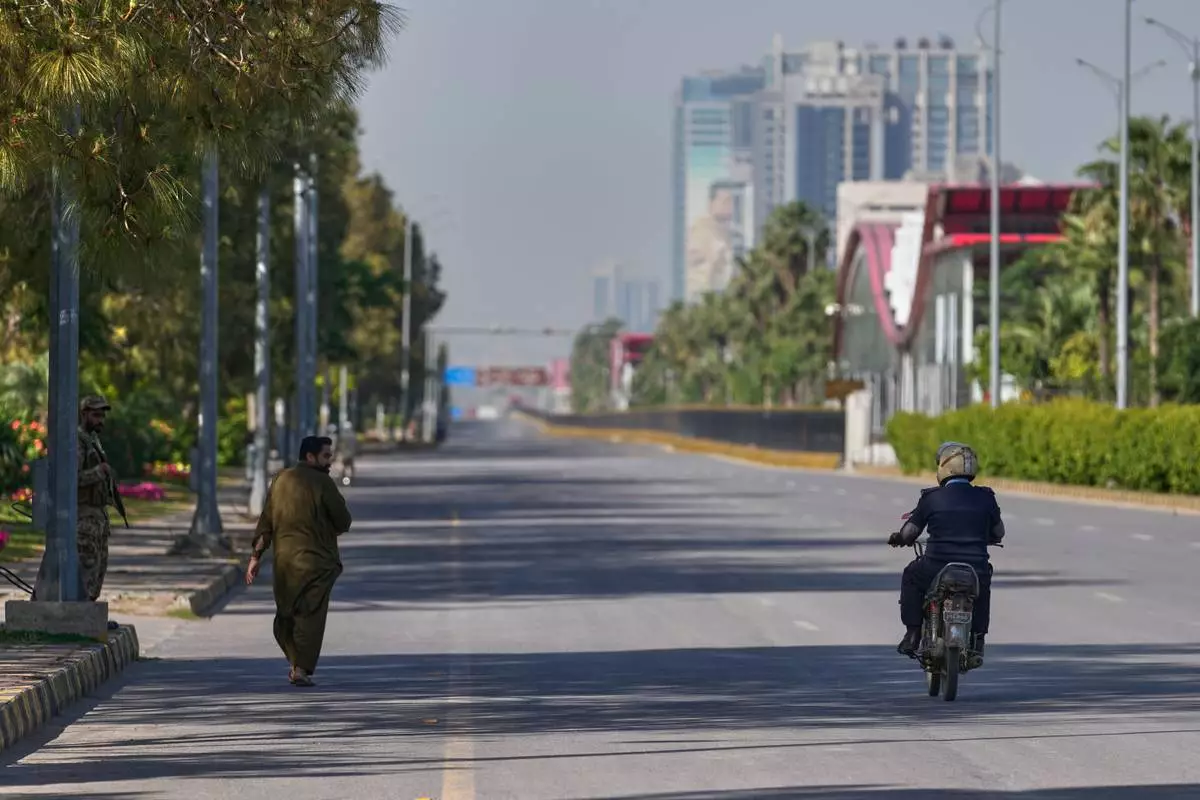
An army soldier, left, walks as police officer drives motorcycle on an empty road ahead of second round of negotiations between the U.S. and Iran, in Islamabad, Pakistan, Monday, April 20, 2026. (AP Photo/Anjum Naveed)
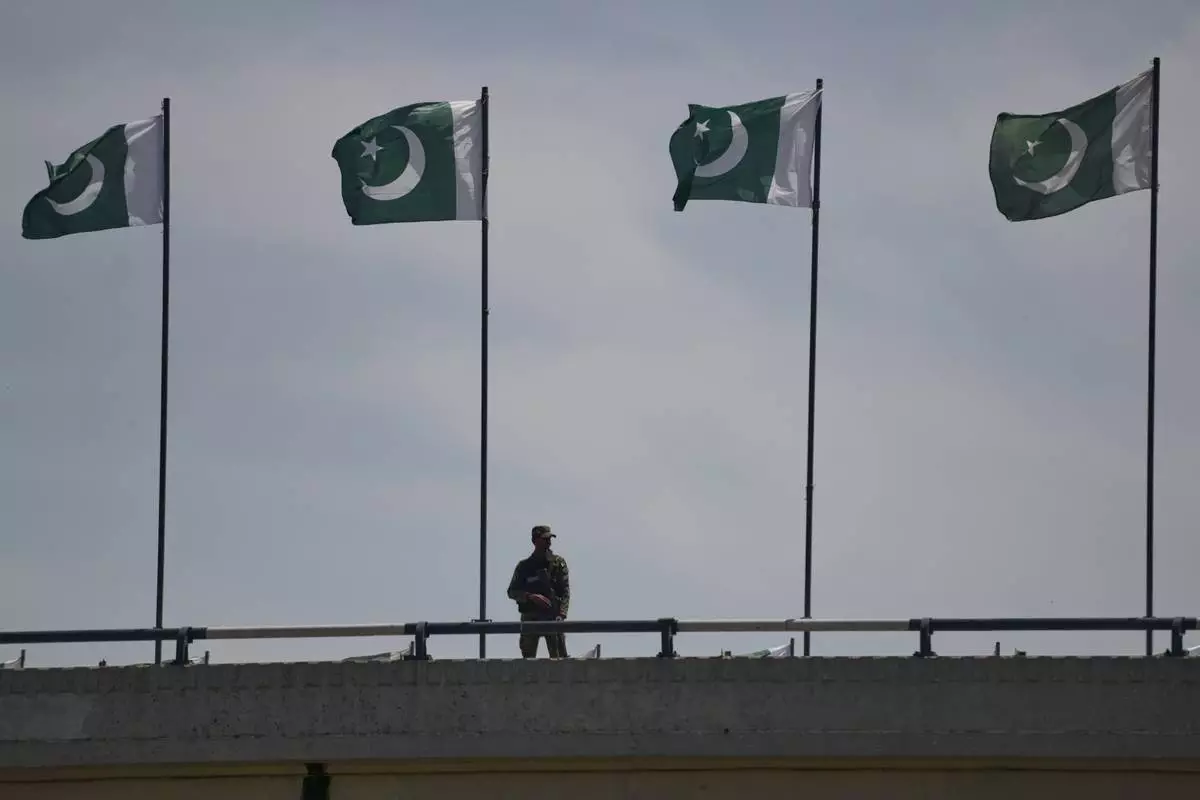
A soldier stands guard on a bridge ahead of second round of negotiations between the U.S. and Iran, in Islamabad, Pakistan, Monday, April 20, 2026. (AP Photo/M.A. Sheikh)
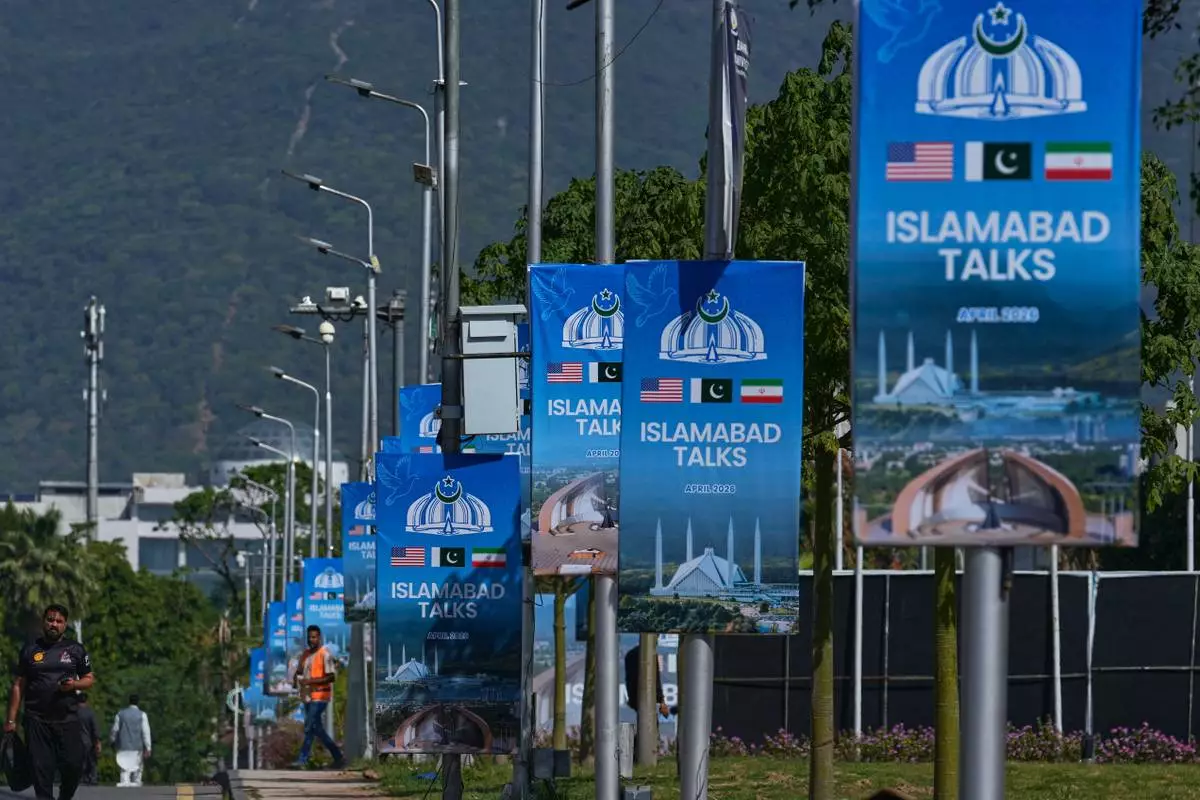
Workers walk past billboards near the Serena Hotel ahead of the second round of negotiations between the U.S. and Iran, in Islamabad, Pakistan, Monday, April 20, 2026. (AP Photo/Anjum Naveed)