President Donald Trump on Tuesday suggested that the federal government could help keep a struggling Spirit Airlines afloat, while also encouraging a buyer to step in and rescue the budget carrier.
“Spirit’s in trouble and I’d love somebody to buy Spirit. It’s 14,000 jobs,” Trump said in a CNBC interview. “And maybe the federal government should help that one out.”
The ultra low-cost carrier filed for bankruptcy protection in August for the second time in less than a year and was aiming to exit in late spring or early summer after striking a preliminary deal with lenders. That plan was quickly disrupted when U.S. and Israeli strikes on Iran sent oil prices soaring above $100 a barrel, with jet fuel costs doubling in some markets as the fighting in the Middle East continues to disrupt global oil supplies.
Spirit’s relatively young fleet has made it an attractive acquisition target. But previous buyout attempts from budget rivals like JetBlue and Frontier were unsuccessful both before and during Spirit’s first bankruptcy.
Trump did not offer details on what type of government aid could be provided. But asked separately on Tuesday about potential government relief, Transportation Secretary Sean Duffy told reporters that the president had directed the department to review possible options.
“He’s directed us to take a look. I’ll have a conversation with the president later today,” Duffy said, adding that he was also meeting with some of the budget carriers later Tuesday.
The Associated Press sent emailed requests for comment to Spirit.
Congress has stepped in to authorize federal support for airlines before, most notably after the Sept. 11 terrorist attacks and during the COVID-19 pandemic.
Already weakened by soft domestic demand and persistent losses, especially since the pandemic, Spirit has come under growing financial strain as the higher fuel costs have added fresh uncertainty about its ability to continue operating.
Against that backdrop, the union representing Spirit flight attendants sought to address growing concerns in a memo sent last Thursday to members.
“There have been speculative reports of liquidation. While we want to make it clear that conditions have worsened, at this time there are ongoing efforts to keep Spirit operating," the Association of Flight Attendants said. "We know you need the best possible information on this and we will keep you closely advised. But to be clear, at this time there is no definitive decision to halt operations.”
Budget carriers like Spirit — known for its bright yellow planes and no-frills service — have been under pressure by bigger airlines, which have rolled out their own low-cost offerings. By the time of its first Chapter 11 filing in November 2024, the Florida company had lost more than $2.5 billion since the start of 2020.
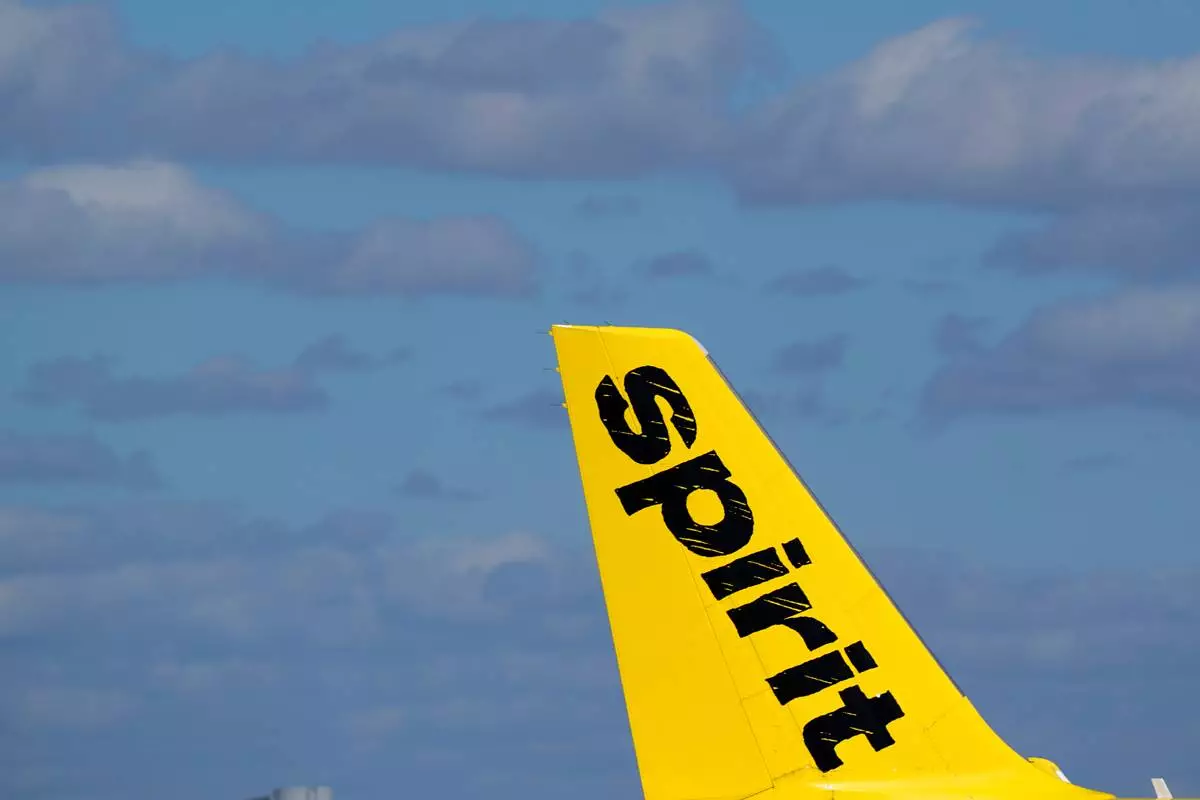
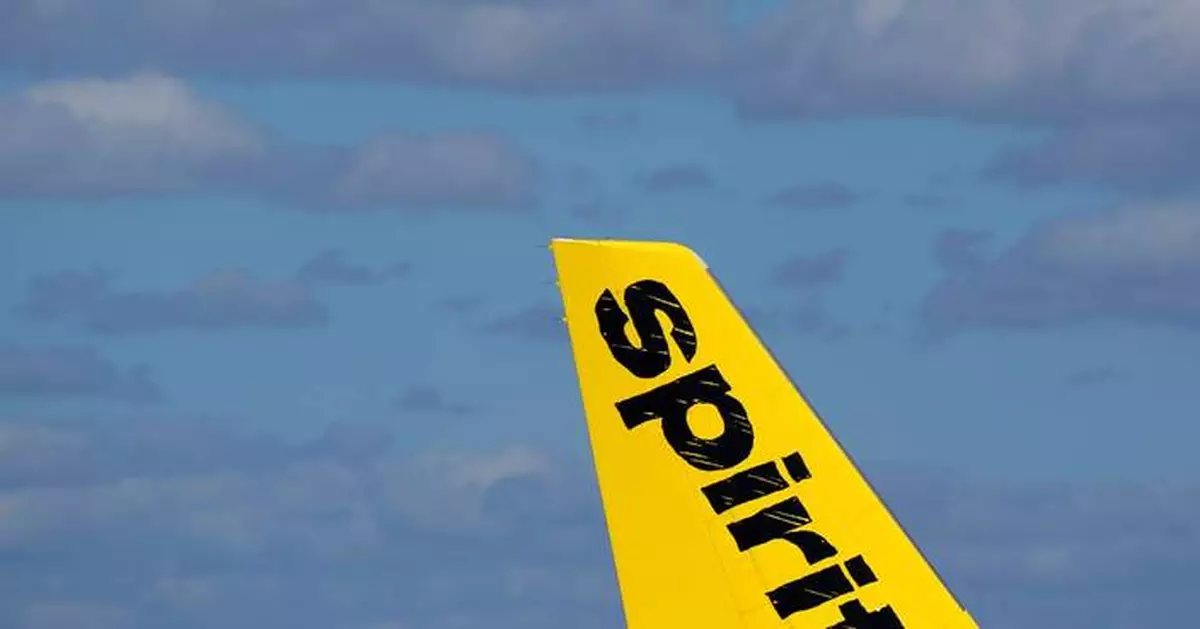
FILE - The tail of a Spirit Airlines Airbus A320 is shown as the plane prepares to take off from Fort Lauderdale-Hollywood International Airport, Jan. 19, 2021, in Fort Lauderdale, Fla. (AP Photo/Wilfredo Lee, File)
WASHINGTON (AP) — A federal judge in Massachusetts on Tuesday struck down several Trump administration actions slowing down development of clean energy, including a requirement that all solar and wind energy projects on federal lands and waters be personally approved by Interior Secretary Doug Burgum.
Chief Judge Denise J. Casper of the U.S. District Court for the District of Massachusetts ruled that a coalition of plaintiffs representing wind and solar developers were likely to succeed on the merits of their claims that the administration's actions violate federal statute and will cause irreparable harm if the court did not intervene.
She issued a preliminary injunction to stop the administration from implementing the policies, which clean energy advocates said would hamstring projects that need to get underway quickly to qualify for expiring federal tax credits.
The Interior Department in July said that all solar and wind energy projects on federal lands and waters must be personally approved by Burgum, a layer of enhanced oversight that officials said was needed to end what they said was preferential treatment for these technologies under the Biden administration. Burgum's order authorized him to conduct “elevated review” of renewable projects, from proposed leases to rights of way, construction and operational plans, grants and biological opinions.
A coalition of regional wind and solar developers sued Burgum and other federal officials in December, saying his actions had the “goal and effect of destroying solar and wind energy” proposals in the United States. They accused Burgum of favoring fossil fuels such as oil and natural gas and said he had intentionally changed longstanding agency processes and legal determinations to delay and prevent the permitting and construction of wind and solar facilities. The lawsuit challenged six final agency actions that it says place wind and solar technologies into “second-class status.”
An Interior spokesperson said Tuesday the department does not comment on litigation, but added: “America sets the global standard for energy production. We do it cleaner, safer, and more reliably than anywhere in the world.”
In his second term, President Donald Trump has focused U.S. energy production on fossil fuels, which he says will lower costs for families, increase reliability and help the U.S. maintain global leadership in artificial intelligence. Critics say that change continues U.S. dependence on more polluting energy sources and sets the country apart from a world transitioning toward cleaner energy.
A law approved last year by the Republican-controlled Congress phases out tax credits for wind, solar and other renewable energy while enhancing federal support for coal, oil and natural gas. Three days after signing the law, Trump issued an executive order that further restricts subsidies for what he called “expensive and unreliable energy policies from the Green New Scam.”
The plaintiffs said in a joint statement Tuesday that the ruling is the first of many steps to bring more affordable energy options to people across the country.
“Clean energy is fast, affordable and here to stay,” the statement said. “We look forward to getting back to work and restarting the impacted wind and solar projects nationwide.”
The plaintiffs are: the Alliance for Clean Energy New York, MAREC Action, Southern Renewable Energy Association, Clean Grid Alliance, Interwest Energy Alliance, Renewable Northwest, Carolinas Clean Energy Business Association, RENEW Northeast and Green Energy Consumers Alliance.
Kit Kennedy, managing director for power at the Natural Resources Defense Council, said the Trump administration keeps trying new ways to block the clean energy projects needed to power the grid, and the courts keep striking them down.
“The administration should take the hint and stop these illegal attacks on projects that will help meet surging electricity demand and bring down costs for consumers,” Kennedy said in a statement.
McDermott reported from Providence, R.I.
The Associated Press’ climate and environmental coverage receives financial support from multiple private foundations. AP is solely responsible for all content. Find AP’s standards for working with philanthropies, a list of supporters and funded coverage areas at AP.org.