Skip to Content Facebook Feature Image

EastBanc Announces Leadership Transition to Position for Historic DC Market Opportunity

Business

EastBanc Announces Leadership Transition to Position for Historic DC Market Opportunity
Business

Business

EastBanc Announces Leadership Transition to Position for Historic DC Market Opportunity

2026-04-22 23:43 Last Updated At:04-23 00:01

WASHINGTON--(BUSINESS WIRE)--Apr 22, 2026--

EastBanc Inc., a Washington, D.C.-based multinational real estate investment firm with $4 billion in assets under management, today formalized the appointment of Philippe Lanier as Chief Executive Officer. The leadership transition—culminating a succession plan years in the making—positions a next-generation executive team to capitalize on what the firm calls the most compelling investment environment in DC commercial real estate in 40 years.

This press release features multimedia. View the full release here: https://www.businesswire.com/news/home/20260422944943/en/

Founder Anthony Lanier, who built EastBanc into one of Washington's preeminent development and investment firms since 1987, will continue as President focusing on strategic ideas and international developments, including an active role in EastBanc's Lisbon, Portugal, office.

“Philippe has played a central role in EastBanc’s evolution over the past two decades,” said Anthony Lanier, Founder and President. “What makes this transition meaningful is that it’s not just my son taking over—it’s a team that understands our markets, our partners and our long-term investment philosophy. Philippe also brings a practitioner’s perspective on the future of work, shaped by his experience building an AI-focused technology company. For a firm with more than 40 years of expertise in Washington, this is as much an evolution as it is a new beginning.”

The transition comes as Washington’s commercial real estate market experiences historic shifts, including increased challenges in securing institutional capital, workforce, elevated interest rates and the potential impact of AI on the office market. EastBanc views this convergence of forces as a generational buying opportunity.

“The current market in Washington is creating a rare window of opportunity, with high-quality assets trading at the lowest discount to replacement cost in our lifetime,” said Philippe Lanier. “At the same time, shifts in how and where people work—driven in part by AI—are redefining what makes real estate valuable. It is an honor to step into this role at such a pivotal moment for the city and for our firm. I’m excited to build on EastBanc’s strong foundation and position the company to meet the next generation of demand and overcome the challenges of a complex market.”

Philippe Lanier will lead the company’s North American portfolio alongside a seasoned executive team that has been with the company for at least a decade, including:

Brian Whitener, Executive Vice President of Acquisitions, joined EastBanc in 2012, having closed over $3 billion in debt and equity transactions over that period. He oversees all new acquisitions, due diligence, and deal structuring.

Hope Richardson, Executive Vice President of Development, joined in 2015 and is responsible for entitlement, design, and execution of EastBanc’s ground-up development and redevelopment projects, including more than one million square feet delivered over the past five years.

Nadine Lanier Arsenyev, Executive Vice President of Marketing and Strategy, joined in 2016 and manages all internal and external messaging across EastBanc’s holdings, including its real estate and development services, international strategy, restaurant and hospitality investments.

Philippe joined EastBanc in 2007 after over eight years combined as an equity research analyst at Lehman Brothers and Bank of America Securities, where he covered energy, refining, and shipping sectors, as well as a period serving as an acquisitions manager at the European office of Prudential Real Estate Investors. At EastBanc, he has guided the firm’s investment strategy, development pipeline, and operations across real estate, technology, and lifestyle businesses. From 2019 to 2024, he served as CEO of EastBanc Technologies, repositioning the business as an AI-focused professional services firm and leading it through a successful sale to Solvd Inc. That experience continues to inform his perspective on how artificial intelligence will reshape commercial real estate demand, and which assets and submarkets are positioned to capture value in that transition.

Looking ahead, EastBanc is deploying its “Washington Renaissance Strategy,” targeting value-add acquisitions across the District’s urban core at the lowest basis entry point in four decades. The firm’s integrated platform spanning development, construction, leasing, property and asset management positions it to execute repositioning strategies that out-of-market investors cannot replicate.

“Working alongside my sister Nadine and the next generation of leaders at EastBanc makes this transition especially meaningful,” Lanier added. “Our success has always been rooted in long-term thinking, strong partnerships, and deep commitment to the communities where we invest. We’re not buying distress to flip—we’re building a portfolio we intend to own for the next generation.”

Founded in 1987, EastBanc continues to advance a robust pipeline of acquisitions and development opportunities across major North American urban markets and Lisbon, Portugal. The firm remains focused on long-term ownership, disciplined investment, and the creation of distinctive mixed-use environments that integrate retail, residential, and office uses.

ABOUT EASTBANC INC.

EastBanc Inc. is a multinational real estate investment firm specializing in the acquisition, development, repositioning, and asset management of urban commercial real estate. For nearly 40 years, the multi-generational family company has focused on long-term ownership and urban revitalization, investing more than $5 billion globally and managing over $4 billion in assets across offices in Washington, D.C., New York City, and Lisbon, Portugal. The firm’s expertise spans trophy office, luxury residential, high-street retail, and luxury hospitality. As an owner-operator that retains ownership in the properties it develops, EastBanc brings a disciplined, full-cycle approach—from development through asset management—emphasizing distinctive, design-forward mixed-use environments. For more information, visit www.eastbanc.com.
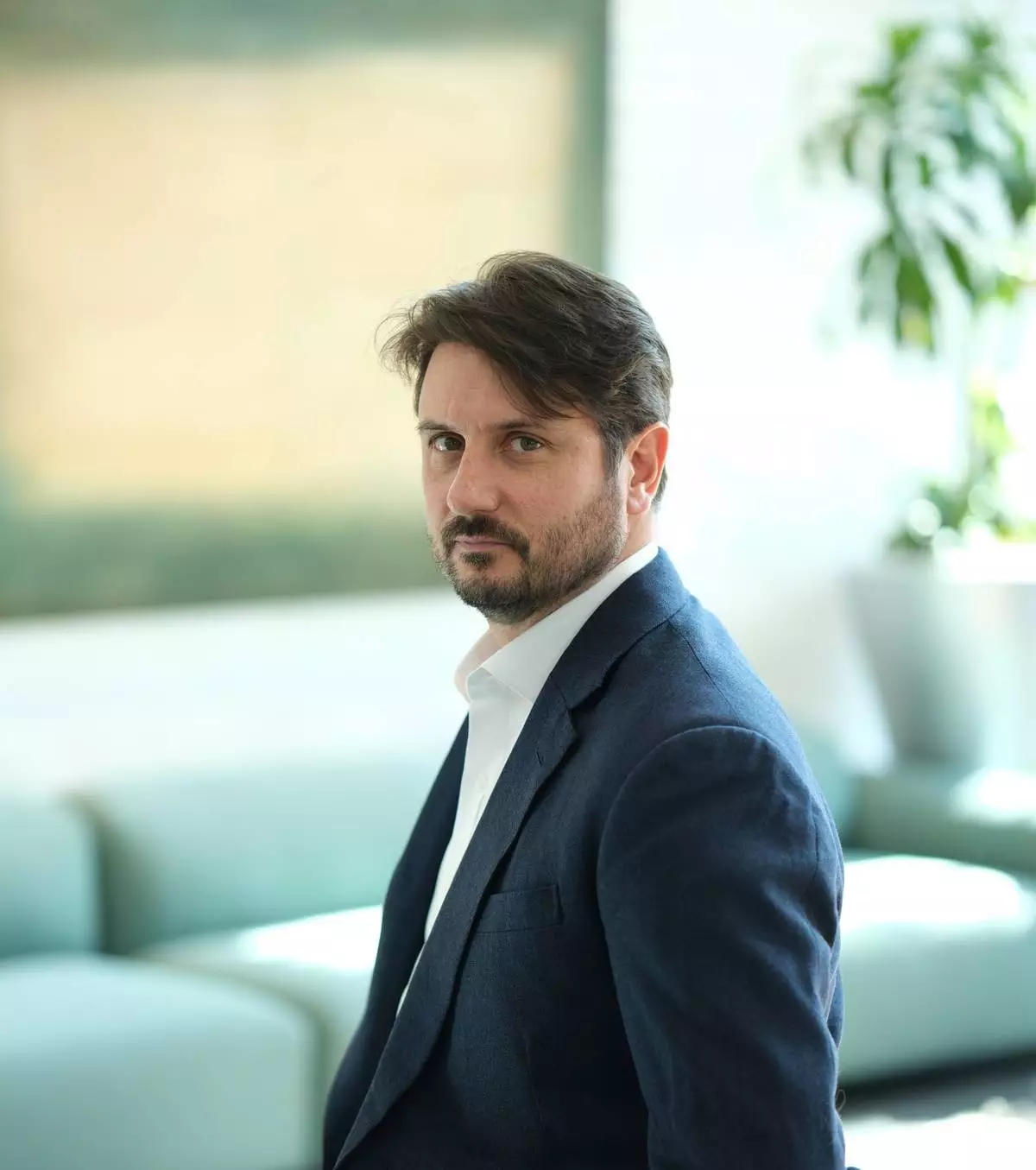
Philippe Lanier Named CEO of EastBanc Inc., with a Next-Generation Executive Team to Lead the Firm’s Washington Strategy

Philippe Lanier Named CEO of EastBanc Inc., with a Next-Generation Executive Team to Lead the Firm’s Washington Strategy
KANSAS CITY, Mo. (AP) — The Kansas City Royals are moving from their longtime home at Kauffman Stadium to the downtown Crown Center area, partnering with Hallmark Cards on a $3 billion project that includes a mixed-used development with a new ballpark as its centerpiece.

Royals owner John Sherman was joined by Hallmark chairman Don Hall Jr., Missouri Gov. Mike Kehoe and Kansas City Mayor Quinton Lucas, along with other local and state dignitaries, in making the announcement Wednesday near Hallmark headquarters.

While the finalized master plan has yet to be complete, Sherman said the $1.9 billion stadium would break ground next year in the middle of Crown Center as part of the first phase of an 85-acre project. Two-thirds of the funding will come from private sources and the remaining one-third from public partners, including money earmarked by the state for stadium projects.

“This is a partnership between two treasured Kansas City institutions,” Sherman said. “We are committed to creating a vision which honors our history, the rich past of both organizations, while reinvigorating and reimagining what our future can be together.”

The announcement came about a week after Kansas City officials passed an ordinance authorizing City Manager Mario Vasquez to negotiate a $600 million deal to help the Royals move downtown. Most believed the stadium would sit on Washington Square Park, which is next to Union Station, but it will instead be located just south of it, with the park featured in the development.

Hallmark intends to build a new headquarters in the area, which is connected by a streetcar to the Power & Light District, where the T-Mobile Center serves as its anchor. That part of downtown Kansas City will provide the backdrop beyond the outfield fence.

Officials touted the availability of public parking already in the area and convenient traffic flow from nearby highways.

Missouri's contribution comes from a law enacted last year that authorized bonds covering up to 50% of the cost of new or renovated stadiums in the state, plus up to $50 million of tax credits for each stadium and unspecified aid from local governments.

“We think it's a great investment for our Missouri taxpayers, because this does not affect existing programs,” Kehoe said. “The ripple effect from this facility will truly be far-reaching into rural Missouri and other parts of the state.”

The Royals have insisted they would leave Kauffman Stadium when their lease expires at the Truman Sports Complex in 2031, and the intention of Sherman ever since purchasing the club in 2019 was to build a downtown ballpark as its replacement.

Yet reaching Wednesday's announcement did not come without plenty of pitfalls.

The biggest stumbling block came in April 2024, when the Chiefs joined the Royals in a plan to renovate Arrowhead Stadium and replace Kauffman Stadium. The plan hinged on the extension of a sales tax that had been paying for stadium upkeep, and voters in Jackson County, Missouri, overwhelmingly rejected the proposal, forcing the franchises to go their own way.

The legislature in neighboring Kansas aggressively pursued the Chiefs, committing last December to issuing $2.4 billion in bonds to cover 60% of the cost of a new $3 billion domed stadium in Kansas City, Kansas. The NFL franchise ultimately decided to move across the state line, where it also will build a new training facility in the nearby suburb of Olathe, Kansas.

Officials in Kansas briefly pursued the Royals, too, but their interest in the MLB franchise had always been lukewarm.

The Royals had been weighing several options in recent months. But they ultimately rejected an option in the suburb of Overland Park, Kansas, and allowed a deadline to pass for a site north of downtown and across the Missouri River in Clay County, Missouri.

Economists have long concluded that subsidizing stadiums isn’t worth the cost for communities because the venues pull economic activity away from other parts of the area, rather than expanding the overall economy. Yet states and cities continually provide money to renovate stadiums or build new ones — 49 of the 60 used by MLB or NFL teams are publicly owned or sit on public land.

One of the stadiums that Sherman has cited as an example of what's possible in Kansas City is Truist Park in Atlanta.

The stadium was a public-private partnership in which the Cobb-Marietta Coliseum & Exhibit Hall Authority issued up to $397 million in bonds, the county raised millions more from transportation taxes and businesses added millions in cash. The Braves contributed the remaining money for the park and The Battery, a mixed-used development, with a total cost of more than $1.1 billion.

“There are many great ballpark neighborhoods in Major League Baseball,” Sherman said, “but this is a bigger project with more land in downtown and in the heart of the city. We are bringing a modern, state-of-the-art ballpark experience to our fans, closer to our public transportation and where more people work and live.”

AP MLB: https://apnews.com/mlb

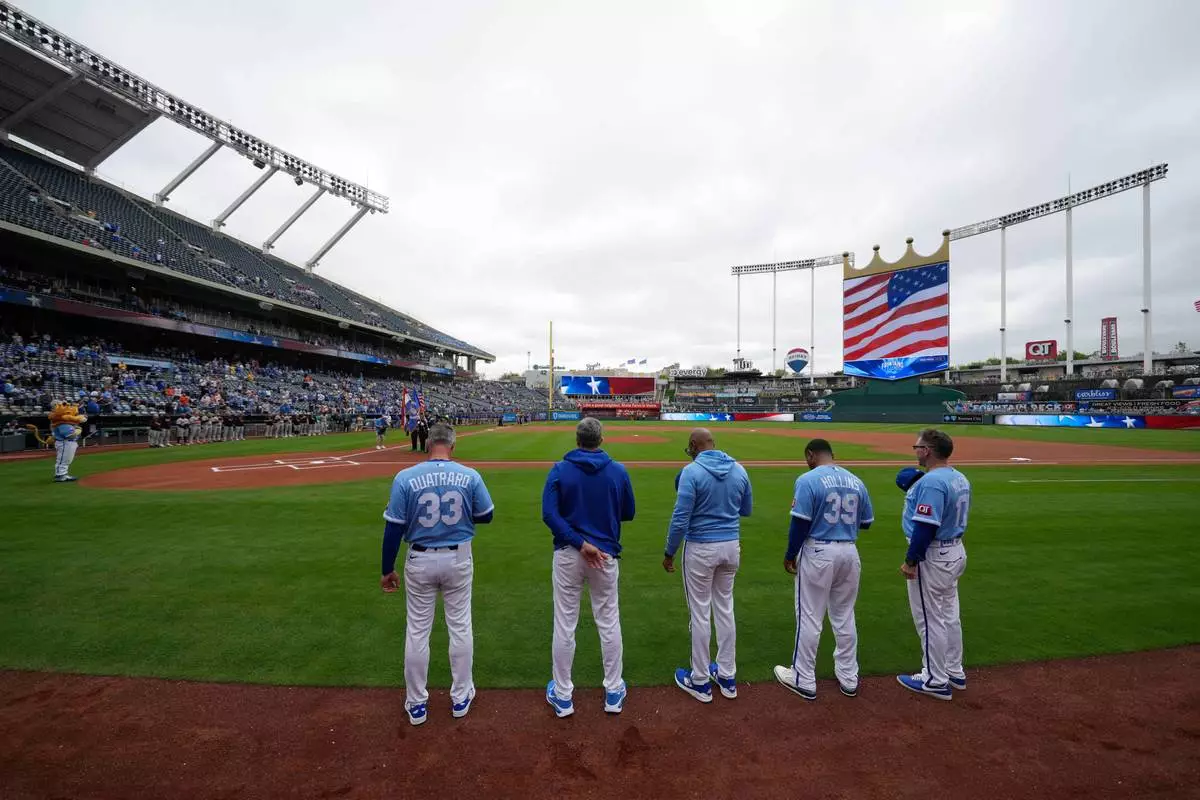
Coaches for the Kansas City Royals stand for the national anthem at Kauffman Stadium before a baseball game against the Baltimore Orioles, Wednesday, April 22, 2026, in Kansas City, Mo. (AP Photo/Charlie Riedel)

Coaches for the Kansas City Royals stand for the national anthem at Kauffman Stadium before a baseball game against the Baltimore Orioles, Wednesday, April 22, 2026, in Kansas City, Mo. (AP Photo/Charlie Riedel)

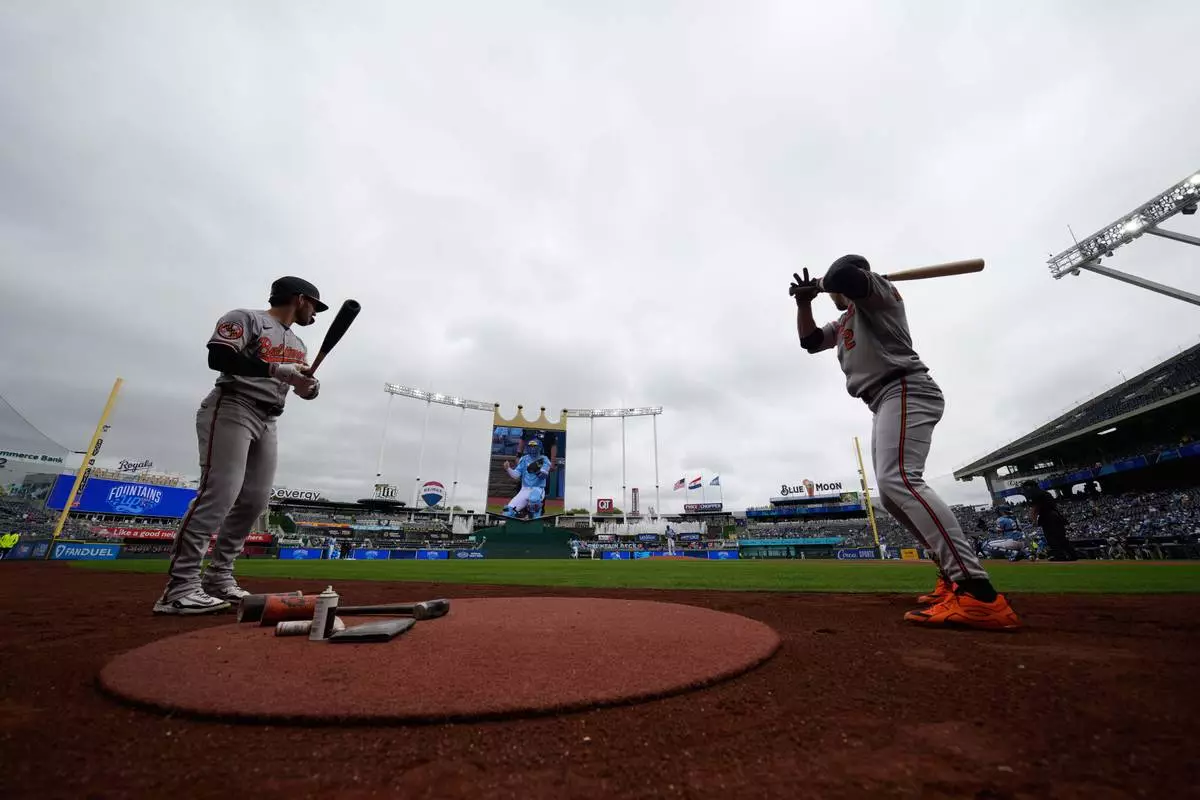
Baltimore Orioles' Taylor Ward, left, and Gunnar Henderson (2) warm up on deck before a baseball game against the Kansas City Royals, Wednesday, April 22, 2026, in Kansas City, Mo. (AP Photo/Charlie Riedel)

Baltimore Orioles' Taylor Ward, left, and Gunnar Henderson (2) warm up on deck before a baseball game against the Kansas City Royals, Wednesday, April 22, 2026, in Kansas City, Mo. (AP Photo/Charlie Riedel)

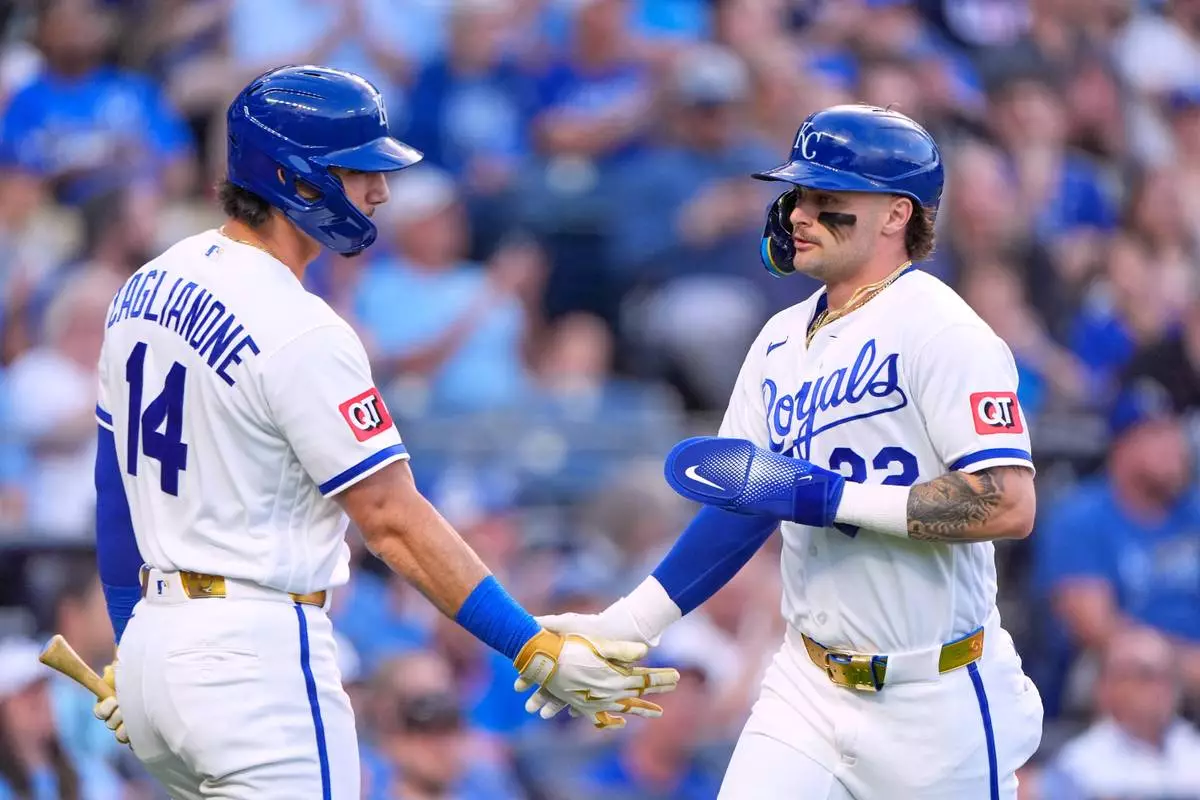
Kansas City Royals' Carter Jensen, right, celebrates with Jac Caglianone (14) after scoring on a sacrifice fly hit by Michael Massey during the second inning of a baseball game against the Baltimore Orioles, Tuesday, April 21, 2026, in Kansas City, Mo. (AP Photo/Charlie Riedel)

Kansas City Royals' Carter Jensen, right, celebrates with Jac Caglianone (14) after scoring on a sacrifice fly hit by Michael Massey during the second inning of a baseball game against the Baltimore Orioles, Tuesday, April 21, 2026, in Kansas City, Mo. (AP Photo/Charlie Riedel)

People gather under storm clouds in a parking lot outside Kauffman Stadium after a baseball game between the Kansas City Royals and the Chicago White Sox, Saturday, April 11, 2026, in Kansas City, Mo. (AP Photo/Charlie Riedel)

People gather under storm clouds in a parking lot outside Kauffman Stadium after a baseball game between the Kansas City Royals and the Chicago White Sox, Saturday, April 11, 2026, in Kansas City, Mo. (AP Photo/Charlie Riedel)

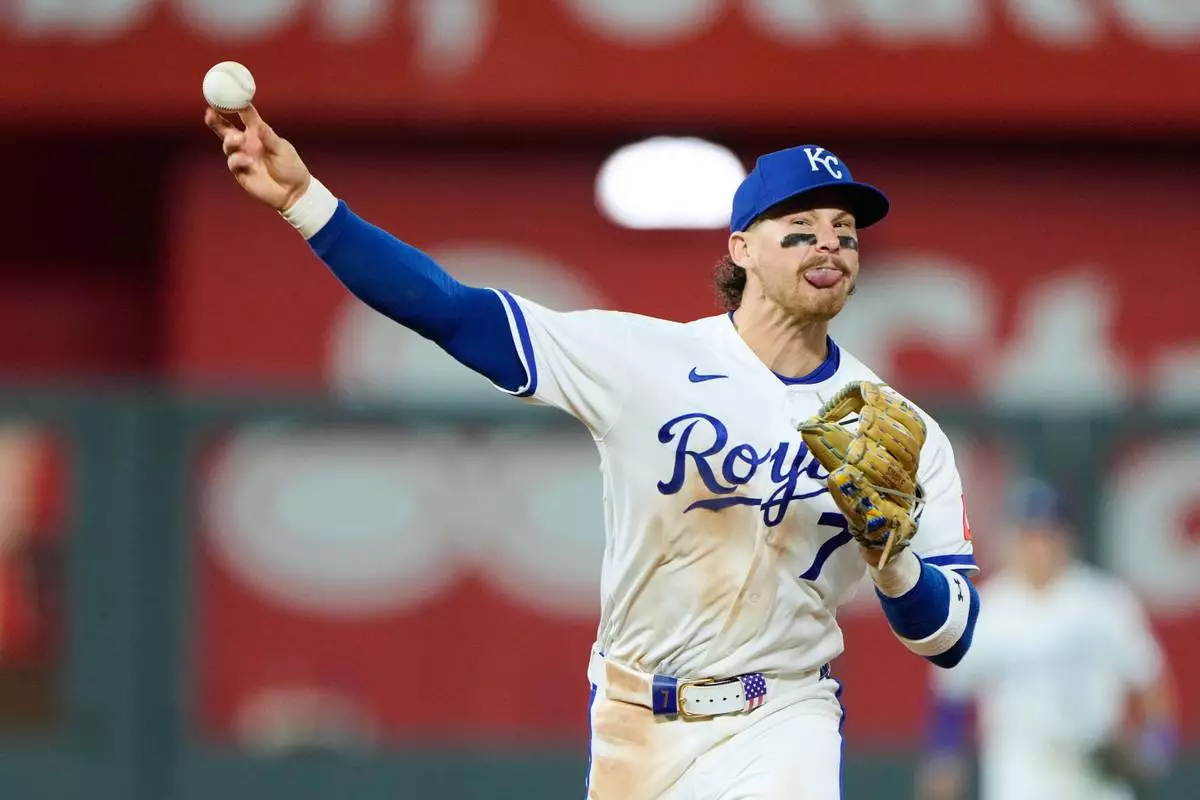
Kansas City Royals shortstop Bobby Witt Jr. throws to first for the double play hit into by Baltimore Orioles' Colton Cowser during the ninth inning of a baseball game Tuesday, April 21, 2026, in Kansas City, Mo. (AP Photo/Charlie Riedel)

Kansas City Royals shortstop Bobby Witt Jr. throws to first for the double play hit into by Baltimore Orioles' Colton Cowser during the ninth inning of a baseball game Tuesday, April 21, 2026, in Kansas City, Mo. (AP Photo/Charlie Riedel)

Recommended Articles