Skip to Content Facebook Feature Image

From beauty to transportation, a lack of water and power forces Cubans to change their routines

News

From beauty to transportation, a lack of water and power forces Cubans to change their routines
News

News

From beauty to transportation, a lack of water and power forces Cubans to change their routines

2026-04-23 21:08 Last Updated At:21:31

HAVANA (AP) — Eduvirgen Zamora hides her hands out of embarrassment these days.

Her nails are down to the quick, except for her thumbs, which feature inch-long talons covered in fancy silver swirls.

More Images
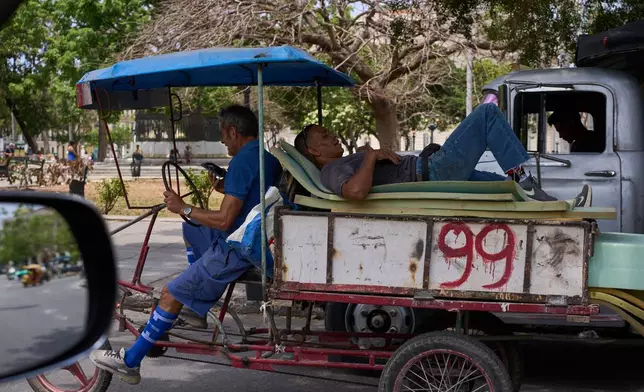
A man rests on mattresses atop a bicycle trailer in Havana, Wednesday, April 22, 2026. (AP Photo/Ramon Espinosa)
A man rests on mattresses atop a bicycle trailer in Havana, Wednesday, April 22, 2026. (AP Photo/Ramon Espinosa)

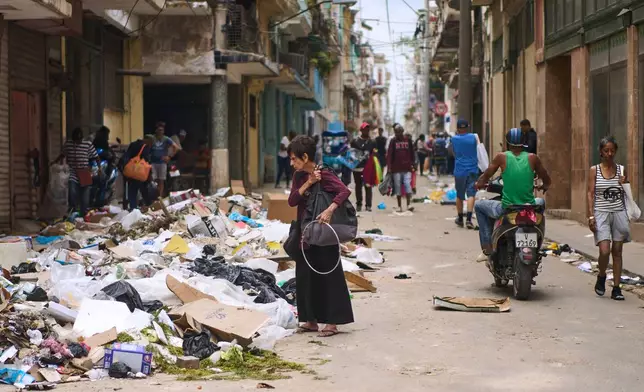
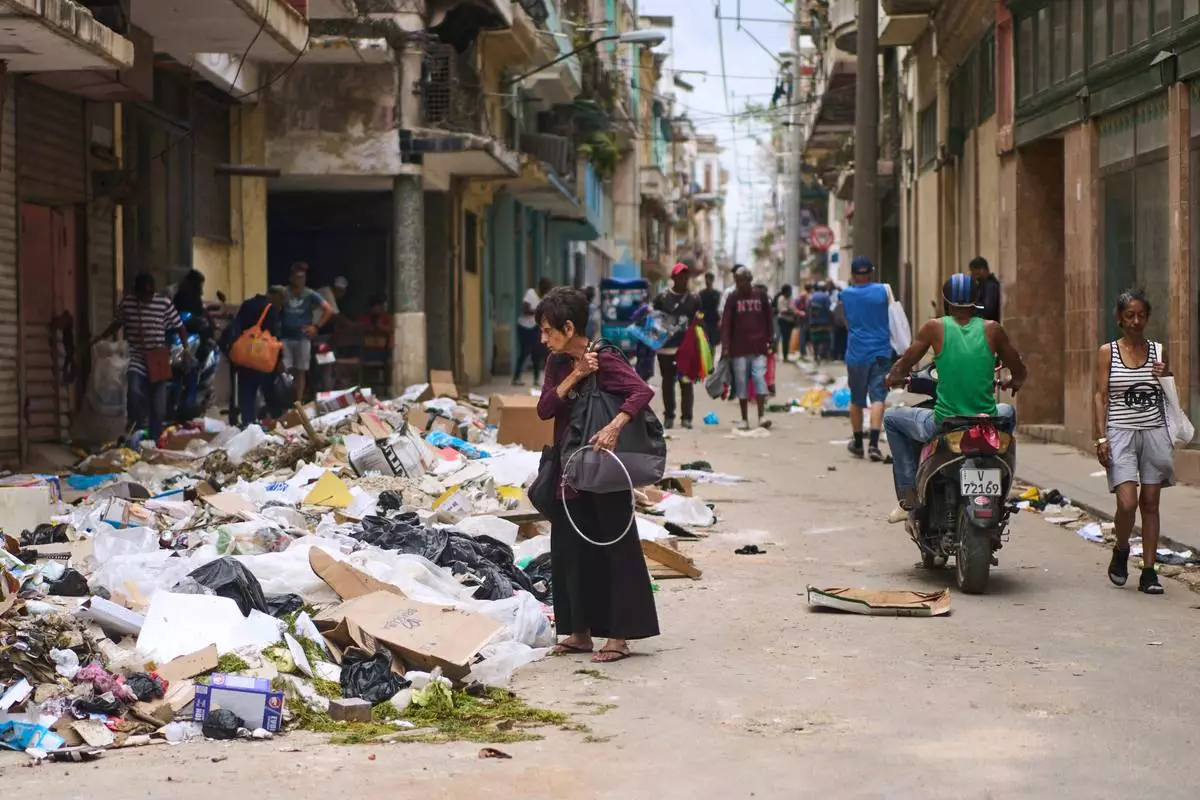
A pedestrian looks for items to salvage in a pile of trash on a street in Havana, Wednesday, April 22, 2026. (AP Photo/Ramon Espinosa)
A pedestrian looks for items to salvage in a pile of trash on a street in Havana, Wednesday, April 22, 2026. (AP Photo/Ramon Espinosa)

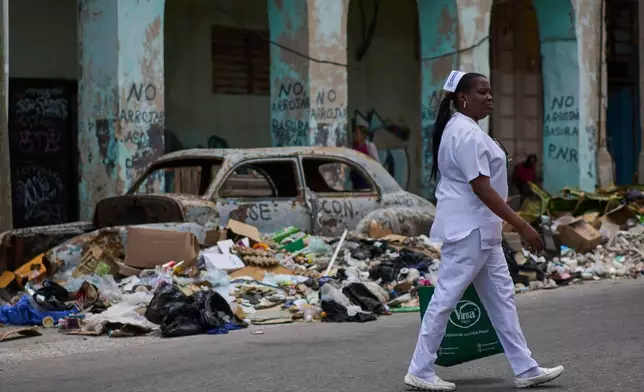
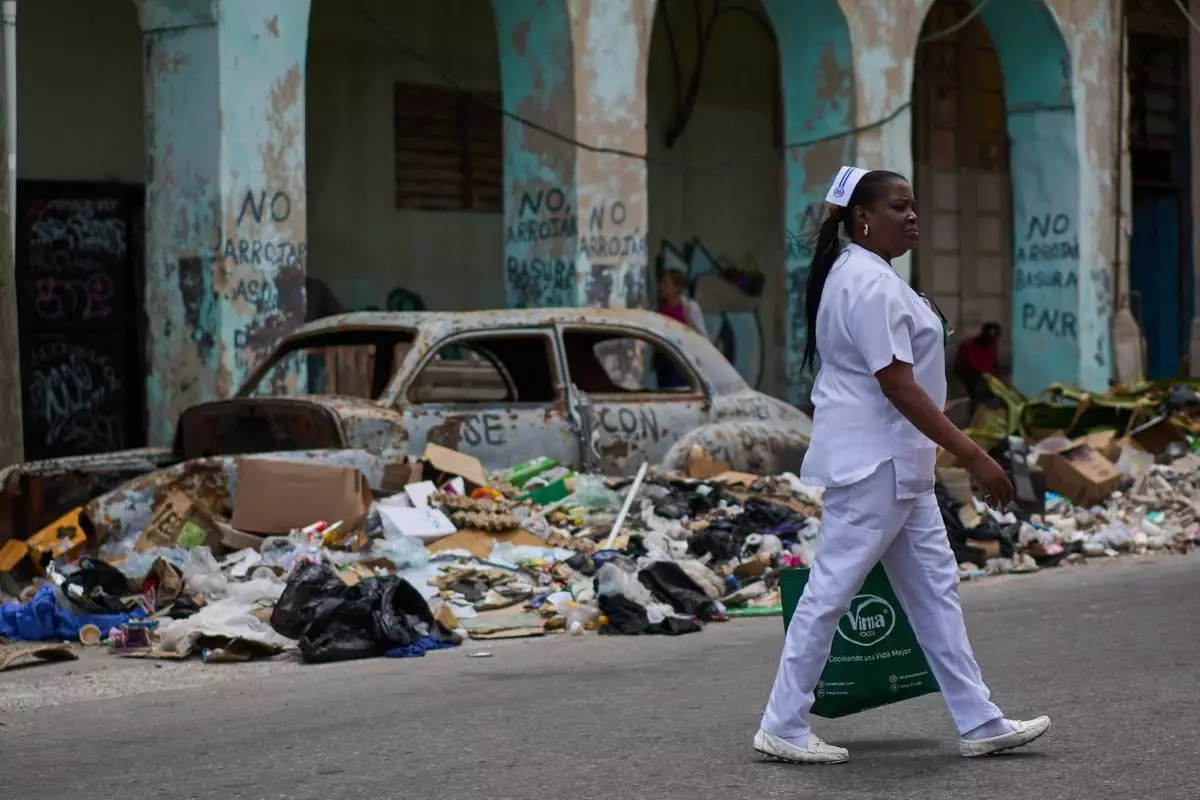
A nurse walks past trash and an abandoned classic American car on a street in Havana, Wednesday, April 22, 2026. (AP Photo/Ramon Espinosa)
A nurse walks past trash and an abandoned classic American car on a street in Havana, Wednesday, April 22, 2026. (AP Photo/Ramon Espinosa)

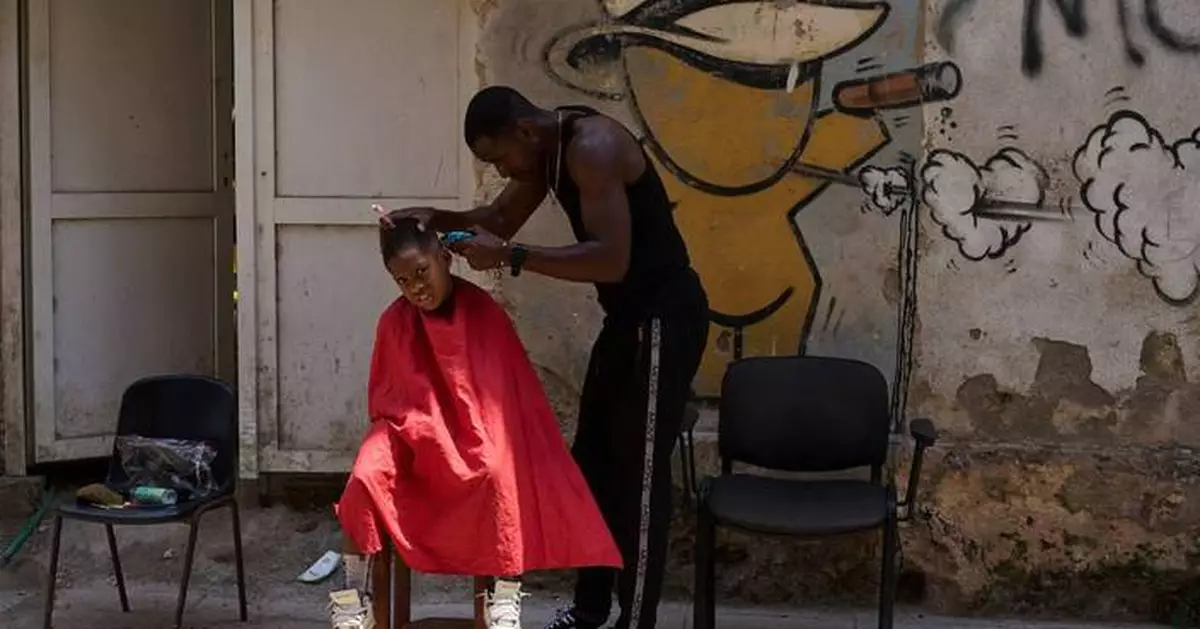
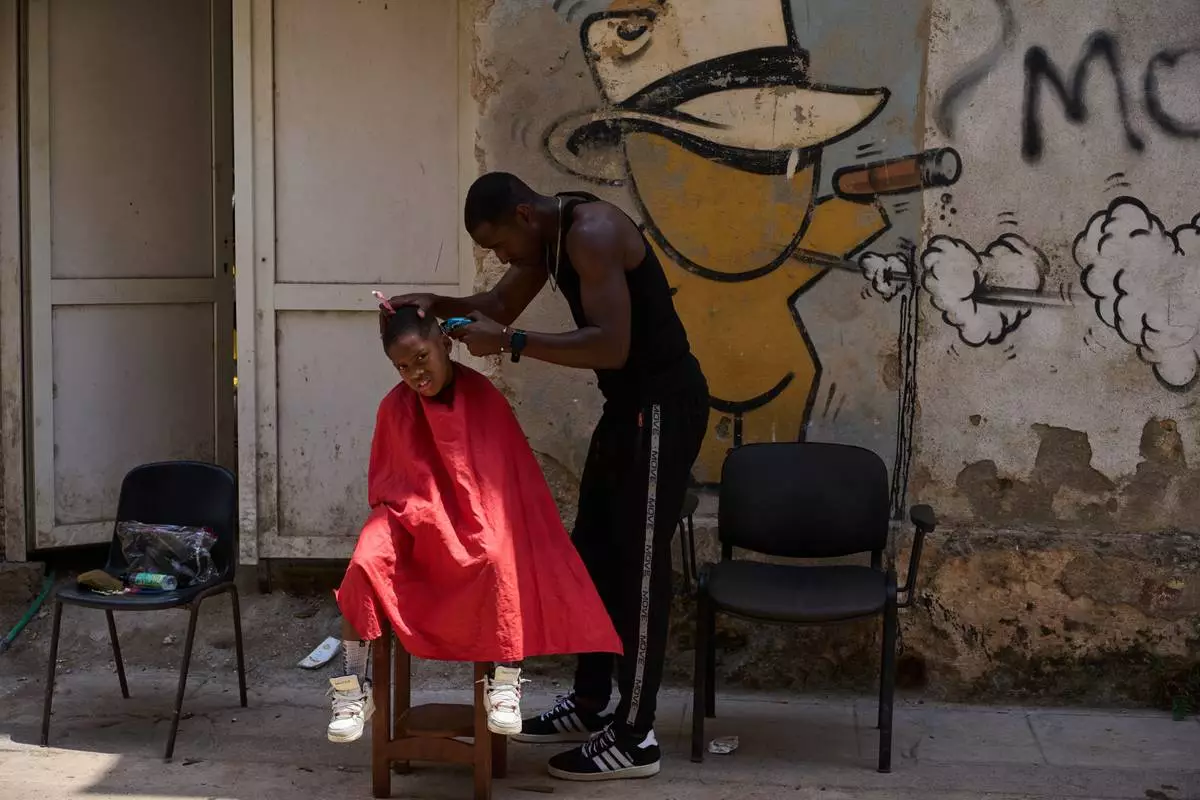
A barber cuts a boy's hair at his makeshift barbershop on the street in Havana, Wednesday, April 22, 2026. (AP Photo/Ramon Espinosa)

A barber cuts a boy's hair at his makeshift barbershop on the street in Havana, Wednesday, April 22, 2026. (AP Photo/Ramon Espinosa)

Unable to afford a new set of nails as Cuba’s economic crises grind on, the 56-year-old cafeteria worker opted instead to do her lashes, a cheaper alternative she hoped would draw people’s attention upward.

Severe shortages of water, power and money combined with a U.S energy blockade has deepened poverty and increased hunger across the island as severe blackouts persist. Even those who are more affluent are now eliminating long-established and often beloved routines as they adapt to increasingly dire realities.

“The Cuban woman likes to look beautiful — to do her hair, do her nails, do her feet — and wear perfume,” Zamora said. “I don’t look how I would like to look.”

Melina Colás knows the feeling.

The young manicurist who works in Havana recently got long braids to celebrate her birthday but quickly realized it’s a difficult style to maintain given chronic water shortages.

She used to wear her hair long and straightened but has decided to cut it and wear it natural, even though she thinks it would not suit what she called her short stature and round face.

“Before, you could do whatever you wanted,” she said of hairstyles when water was readily available. “Not now.”

Colás also has tweaked things at the salon where she works.

She has learned patience, aware clients show up late because public transportation is scarce.

And she now relies on a mix of water and vinegar in a spray bottle to offset water shortages – a concoction she said also helps soften clients’ cuticles and staves off a growing number of fungus cases because time between manicure appointments is growing longer for many.

“Some cases are critical,” Colás said.

She also lamented how the island’s economic crisis and shrinking budgets have led to a drop in customers, a trend that hairstylist Betty Ramírez Aldana, 50, also has noticed.

“It really came as a shock to me, because I’ve lost a lot of clients,” he said on a recent afternoon at a makeshift hair salon with bubblegum pink walls. “Normally by now I’d have five, six, eight clients. Look at the hour. And no one has showed up.”

The hair salon where he works recently spent three weeks without water, since electricity powers many pump stations on the island and severe outages are commonplace. He no longer can provide certain hair straightening treatments, so he offers clients options including flattering cuts.

“A lot of them have opted to embrace their natural curly hair,” he said.

An increasing number of women also have been forced to grow out their roots given a lack of gasoline and public transportation, coupled with withering budgets, Ramírez said.

Those who can afford it call him for home visits, with the original customer likely joined “by her aunt and the upstairs neighbor. I don’t serve one, I serve two or three,” he said.

Beauty aside, Cubans also are agonizing over being forced to cut corners on basic hygiene: some say they are washing their hair only twice a month, and clothes stay dirtier longer.

Antonia Isalgués Barrién, 60, who works for a state-run company running boats from eastern Havana to the heart of the capital, said she hangs her clothes outside every day after working on a boat because she doesn’t have water to wash them.

“It’s very hot here in Cuba; you sweat a lot,” she said, recalling how she used to wash clothes nearly daily. “I’ve never been forced to hang clothes in the fresh air… and then put them on again.”

Isalgués said she has noticed a surge in the number of passengers as a growing number of gas stations close and only a handful of public buses remain in circulation.

Cuba had spent three months without fuel shipments until a Russian tanker arrived in late March with 730,000 barrels of oil. It is expected to last only nine or 10 days.

Iván de los Ángeles Arias, a 44-year-old boat pilot, often boards the boat for a five-minute ride across the Bay of Havana, keeping his car at home for emergency use only.

“That’s the reality we’re forced to live,” he said. “You deal with it as best you can.”

U.S. diplomats flew to Cuba earlier this month to meet with top government officials for the first time since 2016 as tensions remain high between the two countries.

Cuba’s government has said that the elimination of the U.S. energy embargo was a top priority for its delegation, calling it an “act of economic coercion” and “unjustified punishment.”

In late January, just weeks after the U.S. invaded Venezuela in a move that halted critical oil shipments to Cuba, President Donald Trump threatened tariffs on any country that sells or provides oil to Cuba, which produces only 40% to meet its needs.

The U.S. has called for an end to political repression, the release of political prisoners and liberalization of the island’s imploding economy as part of several conditions to lift its sanctions on Cuba.

Arias, the boat pilot, said he didn’t think the talks will change anything for him.

“I have no hope,” he said. “That means nothing if living conditions remain the same.”
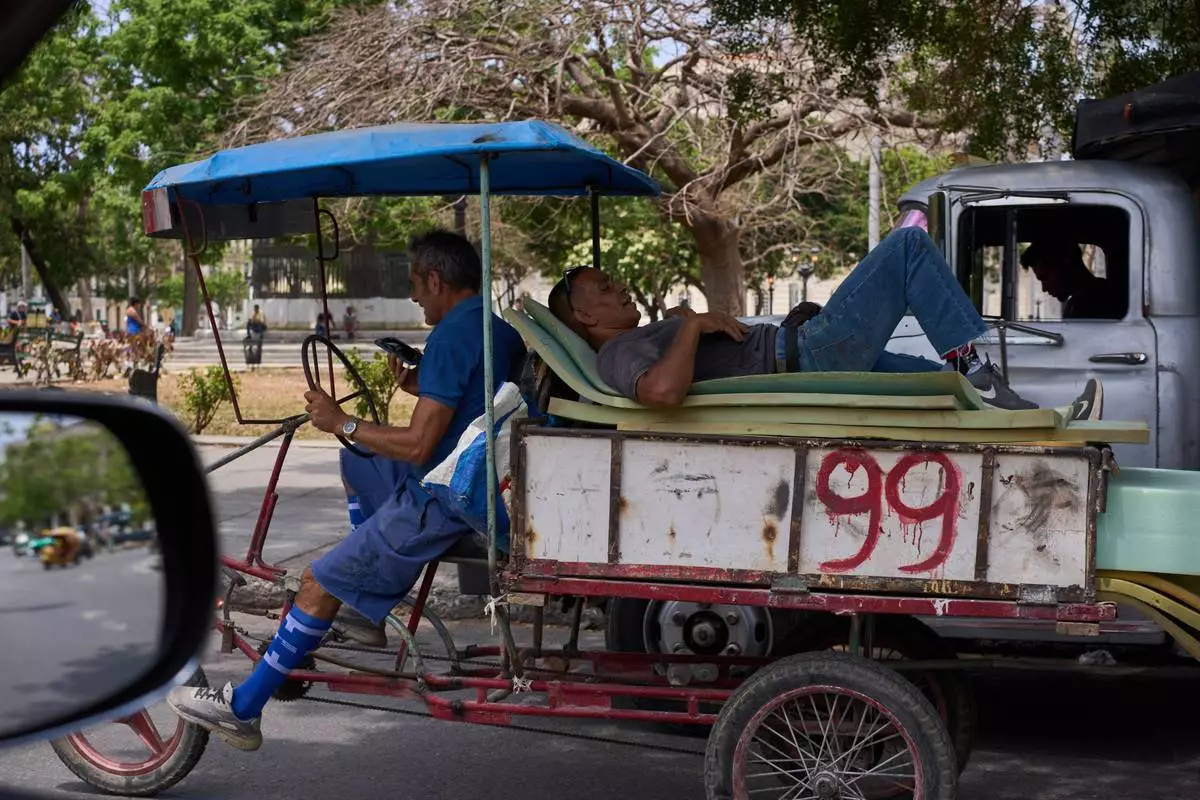
A man rests on mattresses atop a bicycle trailer in Havana, Wednesday, April 22, 2026. (AP Photo/Ramon Espinosa)
A man rests on mattresses atop a bicycle trailer in Havana, Wednesday, April 22, 2026. (AP Photo/Ramon Espinosa)

A pedestrian looks for items to salvage in a pile of trash on a street in Havana, Wednesday, April 22, 2026. (AP Photo/Ramon Espinosa)
A pedestrian looks for items to salvage in a pile of trash on a street in Havana, Wednesday, April 22, 2026. (AP Photo/Ramon Espinosa)

A nurse walks past trash and an abandoned classic American car on a street in Havana, Wednesday, April 22, 2026. (AP Photo/Ramon Espinosa)
A nurse walks past trash and an abandoned classic American car on a street in Havana, Wednesday, April 22, 2026. (AP Photo/Ramon Espinosa)

A barber cuts a boy's hair at his makeshift barbershop on the street in Havana, Wednesday, April 22, 2026. (AP Photo/Ramon Espinosa)

A barber cuts a boy's hair at his makeshift barbershop on the street in Havana, Wednesday, April 22, 2026. (AP Photo/Ramon Espinosa)
DUBAI, United Arab Emirates (AP) — President Donald Trump said Thursday he has ordered the U.S. military to “shoot and kill” small Iranian boats that deploy mines to choke traffic through the Strait of Hormuz.

Trump’s post on social media came shortly after the U.S. military seized another tanker associated with the smuggling of Iranian oil, ratcheting up a standoff with Tehran over the strait through which 20% of all crude oil and natural gas traded passes.

“I have ordered the United States Navy to shoot and kill any boat, small boats though they may be...that is putting mines in the waters of the Strait of Hormuz,” Trump posted. “There is to be no hesitation. Additionally, our mine ‘sweepers’ are clearing the Strait right now.”

“I am hereby ordering that activity to continue, but at a tripled up level!” Trump added.

He also said the military is intensifying mine clearing operations in the critical waterway.

The move comes a day after Iran’s paramilitary Revolutionary Guards attacked three cargo ships in the strait, capturing two of them.

The Defense Department released video footage earlier on Thursday of U.S. forces on the deck of the Guinea-flagged oil tanker Majestic X, which was seized in the Indian Ocean.

“We will continue global maritime enforcement to disrupt illicit networks and interdict vessels providing material support to Iran, wherever they operate,” a Pentagon statement said.

Ship-tracking data showed the Majestic X in the Indian Ocean between Sri Lanka and Indonesia, roughly the same location as the oil tanker Tifani, earlier seized by American forces. It had been bound for Zhoushan, China.

The vessel previously had been named Phonix and had been sanctioned by the U.S. Treasury Department in 2024 for smuggling Iranian crude oil in contravention of U.S. sanctions on the Islamic Republic.

There was no immediate response from Iran on the news of the seizure.

On Tuesday, Trump extended a ceasefire while maintaining an American blockade of Iranian ports. There was no immediate sign whether peace talks, previously hosted by Pakistan, would resume anytime soon.

The standoff between the U.S. and Iran has effectively choked off nearly all exports through the strait with no end in sight.

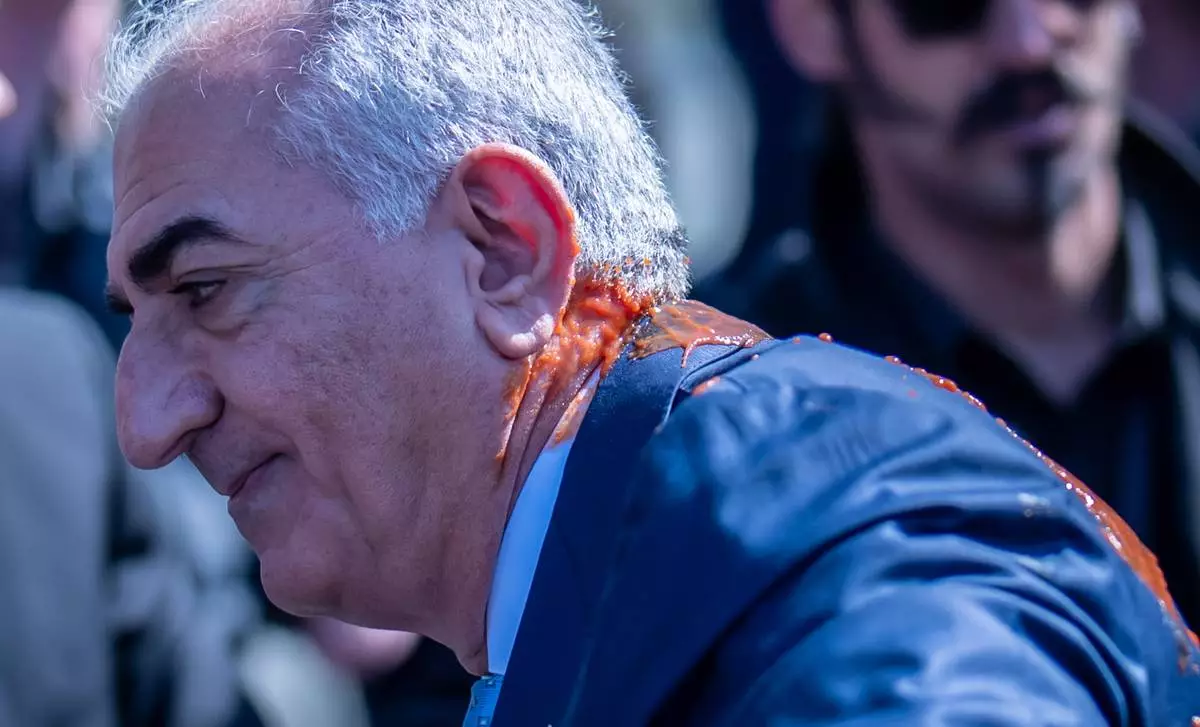
On Thursday, Iran’s exiled Crown Prince Reza Pahlavi was splattered with red liquid as he left a building after a news conference in Berlin. The alleged perpetrator was immediately detained by police.

During the event, Pahlavi criticized the ceasefire between the U.S. and Iran, arguing that the agreement assumes the Iranian government’s behavior will change and “you’re going to deal with people who all of a sudden have become pragmatists.”

Pahlavi, 65, has been in exile for nearly 50 years. His father, Iran’s shah, was so widely hated that millions took to the streets in 1979, forcing him from power. Nevertheless, Pahlavi is trying to position himself as a player in his country’s future.

Since the Feb. 28 start of the war between Iran, Israel and the United States, over 30 ships have come under attack in the waters of the Persian Gulf, the Strait of Hormuz and the Gulf of Oman.

The threat of attack, rising insurance premiums and other fears have stopped traffic from moving through the strait. Iran’s ability to restrict traffic through the strait, which leads from the Persian Gulf to the open ocean, has proved a major strategic advantage.

The ceasefire has been strained by dueling U.S. attacks on Iranian ships and those by Iran on commercial vessels. It also remains unclear when, or if, the two sides will meet again in the Pakistani capital Islamabad, where officials say they are still trying to bring the countries together to reach a diplomatic deal.

The conflict already has sent gas prices skyrocketing far beyond the region and raised the cost of food and a wide array of other products. Officials around the world have warned the impact to businesses, consumers and economies could be long-lasting.

Keaten reported from Geneva.

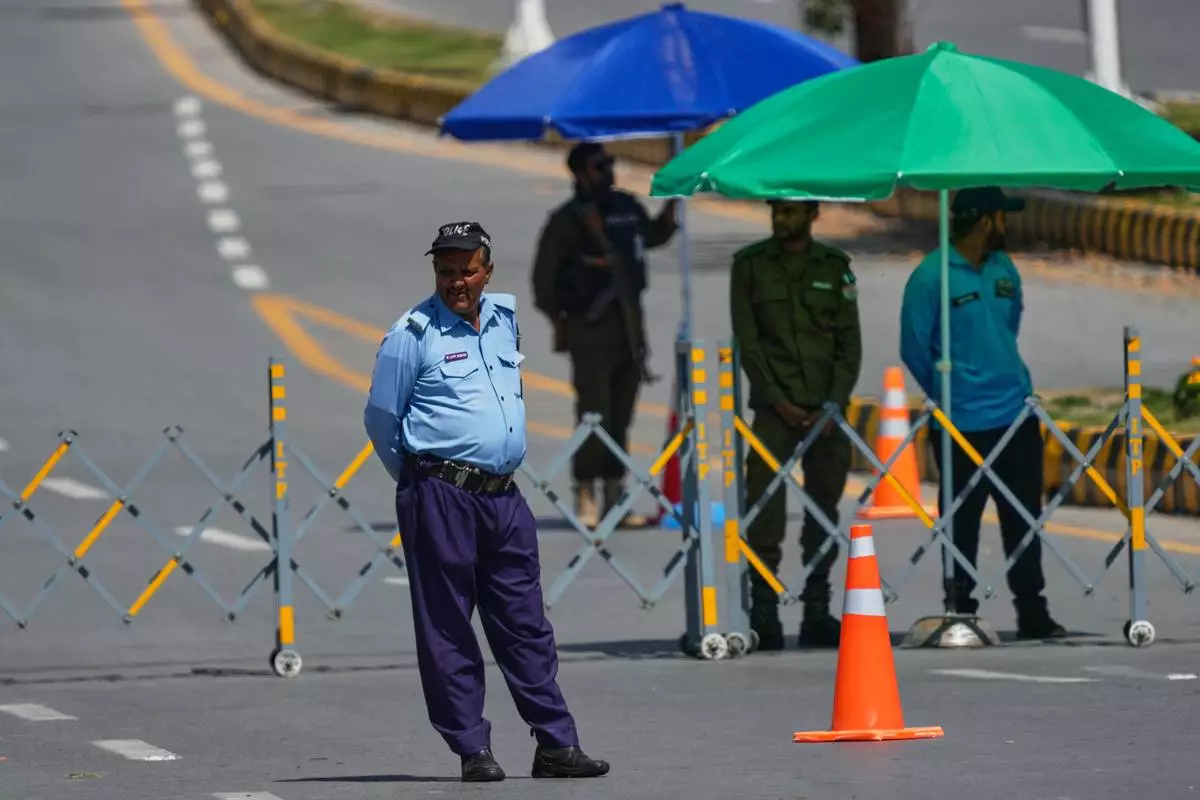
Police officers stand guard at a checkpoint to ensure security in Islamabad, Pakistan, Wednesday, April 22, 2026. (AP Photo/Anjum Naveed)

Police officers stand guard at a checkpoint to ensure security in Islamabad, Pakistan, Wednesday, April 22, 2026. (AP Photo/Anjum Naveed)

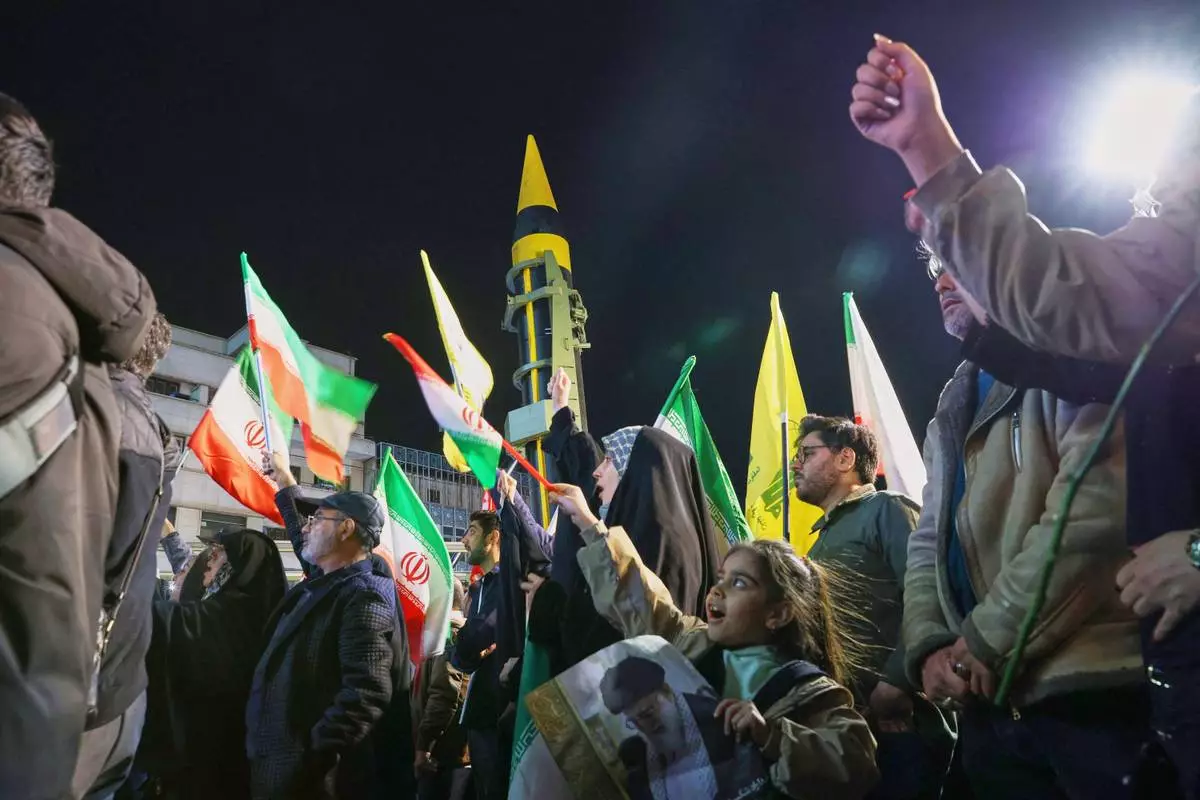
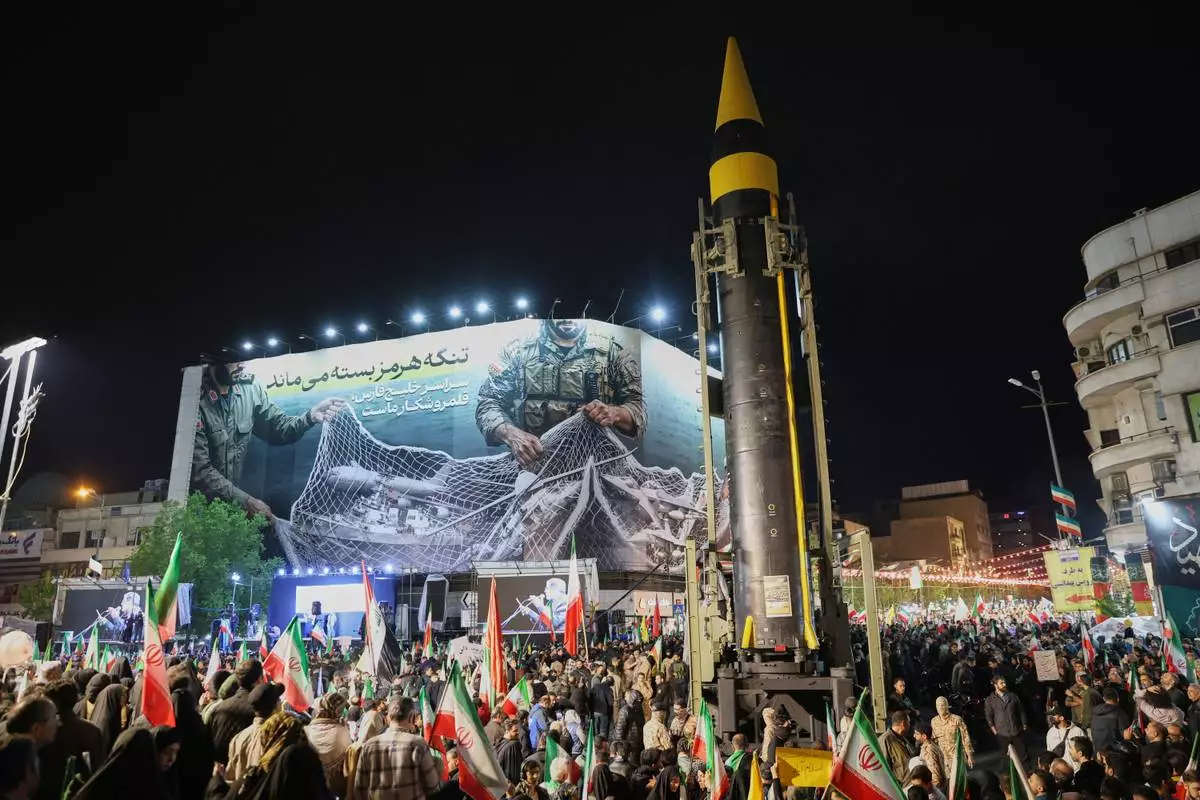
A ballistic missile is displayed by Iran's Revolutionary Guard during a pro-government demonstration at Enqelab-e-Eslami (Islamic Revolution) Square in downtown Tehran, Iran, Tuesday, April 21, 2026. (Alireza Masoumi/ISNA via AP)

A ballistic missile is displayed by Iran's Revolutionary Guard during a pro-government demonstration at Enqelab-e-Eslami (Islamic Revolution) Square in downtown Tehran, Iran, Tuesday, April 21, 2026. (Alireza Masoumi/ISNA via AP)

Iran's Reza Pahlavi, exiled son of Shah Reza Pahlavi, reacts after he was attacked with a red fluid following a news conference in Berlin, Germany, Thursday, April 23, 2026. (Michael Kappeler/dpa via AP)

Iran's Reza Pahlavi, exiled son of Shah Reza Pahlavi, reacts after he was attacked with a red fluid following a news conference in Berlin, Germany, Thursday, April 23, 2026. (Michael Kappeler/dpa via AP)

A ballistic missile is displayed by Iran's Revolutionary Guard during a pro-government demonstration at Enqelab-e-Eslami (Islamic Revolution) Square in downtown Tehran, Iran, Tuesday, April 21, 2026. (Alireza Masoumi/ISNA via AP)

A ballistic missile is displayed by Iran's Revolutionary Guard during a pro-government demonstration at Enqelab-e-Eslami (Islamic Revolution) Square in downtown Tehran, Iran, Tuesday, April 21, 2026. (Alireza Masoumi/ISNA via AP)

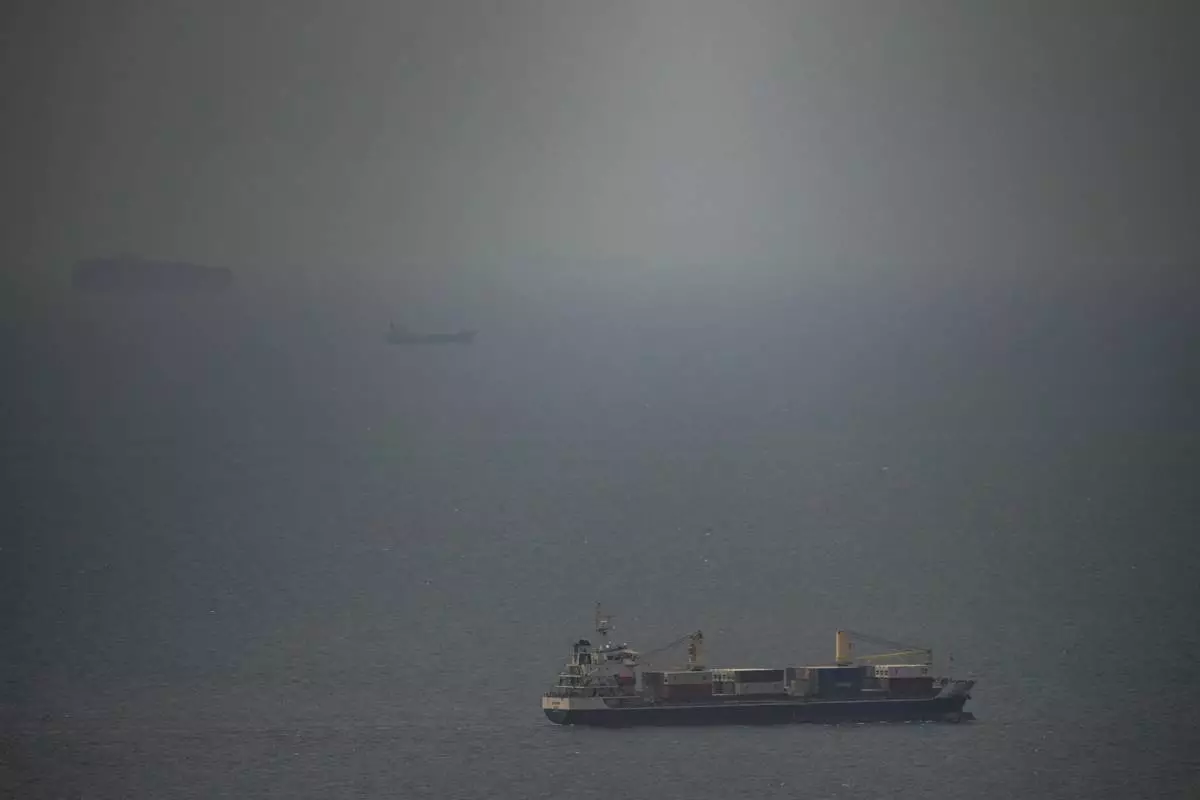
The Jordan flagged cargo ship "Baghdad" sails in Persian Gulf towards Strait of Hormuz in United Arab Emirates, Wednesday, April 22, 2026. (AP Photo)

The Jordan flagged cargo ship "Baghdad" sails in Persian Gulf towards Strait of Hormuz in United Arab Emirates, Wednesday, April 22, 2026. (AP Photo)

Recommended Articles