WASHINGTON (AP) — The criminal indictment of the Southern Poverty Law Center this week was met with much outrage but little surprise from civil rights leaders, who have for more than a year prepared for heightened legal scrutiny from the Trump administration, and how to mount a coordinated response.
In rounds of calls immediately following the indictment, advocates discussed how to support the SPLC, a Montgomery, Alabama-based civil rights group founded in 1971 that has tracked white supremacist groups and been outspoken on voting rights, immigration and policing. Organizers on one call agreed that winning in the court of public opinion would be crucial as judicial proceedings began, leading to dozens of public statements of support and planned rallies.
And legal advisors to civil rights groups urged organizers to prepare for similar criminal indictments, protracted legal action that may exhaust their resources and audits of their staff and internal documents.
The flurry of behind-the-scenes coordination represented a marked mobilization by activist groups that, like many universities, law firms and non-profits, have been at odds with the federal government since President Donald Trump's return to the White House last year.
“There’s a muscle that has been built among these organizations learned from the law firm debacle,” said Vanita Gupta, a former associate attorney general of the Justice Department during the Biden administration, referring to deals some major law firms made with the administration. Gupta led one of the calls that convened activists.
“The government's goal is often to shut down and paralyze an organization, so that their work has to stop while they defend themselves. And the hope here is that with this broad effort to defend the SPLC, that will not happen,” said Gupta.
Organizers say they are prepared to back the SPLC in its legal fight.
“It’s a blatantly obvious attack on civil rights and civil liberties to whitewash the foot soldiers of the great replacement theory and other extremists. This coalition isn’t going silent,” said Maya Wiley, president and CEO of the Leadership Conference on Civil and Human Rights, an umbrella organization of hundreds of civil rights groups.
Without addressing the indictment, a coalition of more than 100 activist groups on Tuesday published a letter vowing solidarity with groups that are “unjustly targeted” by the federal government. SPLC was a signatory to the pact.
“An attack on one is an attack on all,” the coalition declared. “We will share knowledge, resources, and support with any organization threatened by abuses of power.”
The Justice Department alleges that the SPLC, which rose to prominence for its work prosecuting and tracking hate groups like the Ku Klux Klan, violated federal law through its network of paid informants in extremist groups. The DOJ claims the payments funded hate groups and misled the SPLC’s donors.
The SPLC now faces charges of wire fraud, bank fraud and conspiracy to commit money laundering in the case brought in the federal court in Alabama, where the organization is based.
“The SPLC is manufacturing racism to justify its existence,” said Acting Attorney General Todd Blanche at a press conference announcing the charges. Blanche promised the department “will hold the SPLC and every other fraudulent organization operating with the same deceptive playbook accountable.”
Longtime civil rights activists found the claims to be a disingenuous and partisan move that may empower extremist groups.
“The indictment is nakedly political and represents the Justice Department turning on itself,” said Marc Morial, president of the National Urban League. “It places the Justice Department in the posture of, in effect, defending white supremacist groups like the Ku Klux Klan and others.”
Advocates also view the indictment as part of the administration's broader upending of civil rights law and the Justice Department's prosecution of Trump's political opponents.
The SPLC in recent years became a bogeyman among conservatives who resented that the watchdog designated several rightwing organizations that engage in Republican politics as hateful or extremist.
Tony Perkins, president of the Family Research Council, which the SPLC has designated as a hate group, said the government should not only pursue convictions, but also restitution for those the SPLC has harmed.
“For years, the SPLC has used its platform to label and target organizations with whom it disagrees, often blurring the line between legitimate concern and ideological attack,” Perkins said in a statement. “That kind of reckless characterization doesn’t just damage reputations, it has put lives at risk.”
In October, FBI Director Kash Patel cancelled the agency’s longtime anti-extremism partnerships with the SPLC and the Anti-Defamation League, which combats antisemitism. Patel at the time called the SPLC a “partisan smear machine.”
The Justice Department and SPLC did not respond to requests for comment.
Advocates dispute the DOJ's characterization of the SPLC's work.
“The problem is that the indictment essentially claims that it was a fraud on SPLC’s donors to use their funds to fight the Klan, the Neo Nazis and other white supremacist groups, when that is exactly why people gave to the organization,” said Norm Eisen, founder of Democracy Defenders Action, a group that works with organizations in legal disputes with the Trump administration.
Eisen added: “The notion that there’s something wrong with using informants and protecting their identities to prevent white supremacist violence is belied by the fact that that is not only what the SPLC did, but it is also the stock and trade of the FBI itself.”
Civil rights organizations are now preparing for further legal action. Organizations have reviewed their document retention, tax compliance and auditing policies over the last year to safeguard against any probes or lawsuits.
Some civil rights organizations have also floated creating new organizational structures that may better withstand legal scrutiny. On another recent call, activists floated restructuring some groups into for-profit entities, or potentially crafting new financial conduits for donors to ensure that staff could receive pay if an organization's assets were seized or frozen.
The preparations represent a marked shift for many civil rights leaders, who in recent years counted the Justice Department under both Democratic and Republican administrations as a reliable ally in key civil rights battles.
“What we are seeing in real time is an administration seeking to leverage its position to target individuals and organizations that do not agree with its political thought,” said NAACP President Derrick Johnson, who said the Justice Department has been “weaponized by dangerous forces."
But for other leaders, the SPLC indictment raised the specter of a return to a previous era, when the Justice Department monitored civil rights leaders to disrupt their activities.
“We're not backing down, but we are clear-eyed. Everyone could be in some form of jeopardy if you're in the crosshairs of this administration,” said Juan Proaño, CEO of the League of United Latin American Citizens, a civil rights group suing the Trump administration over executive orders addressing birthright citizenship and mail-in voting.
“That's what they’re looking for; they want this to have a chilling effect," Proaño said.
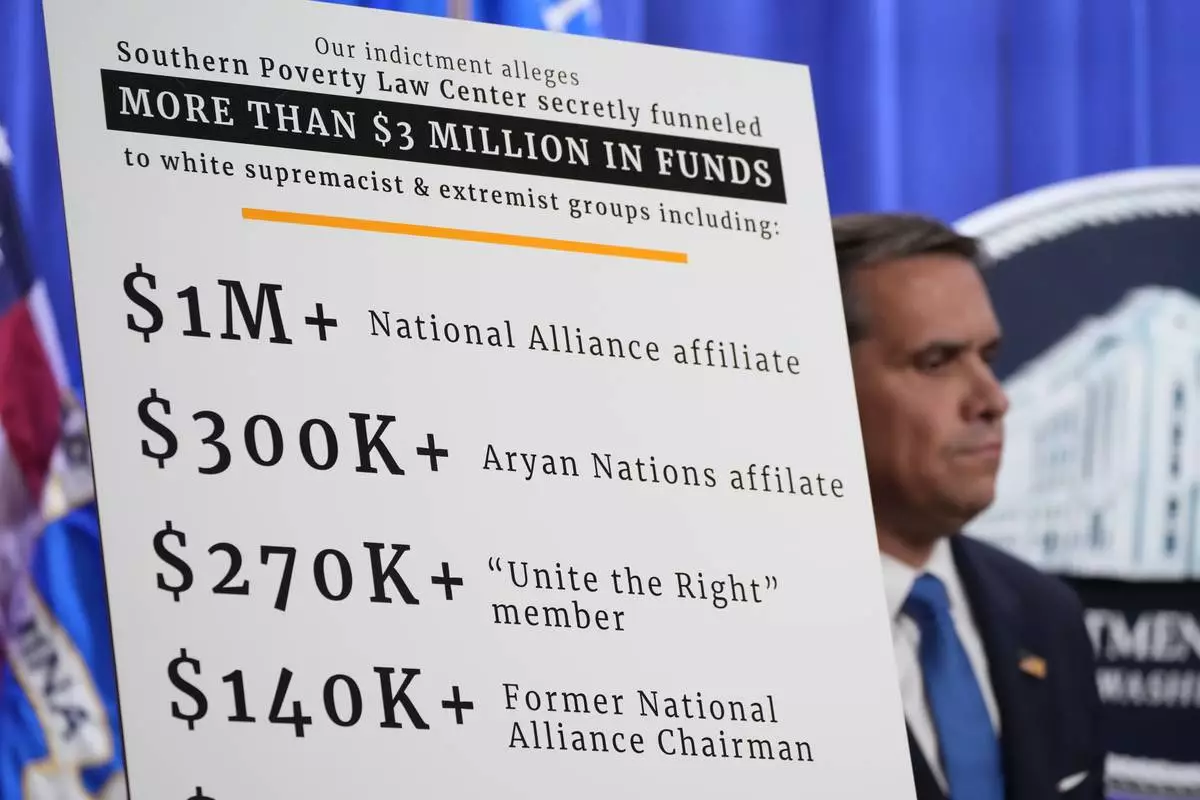
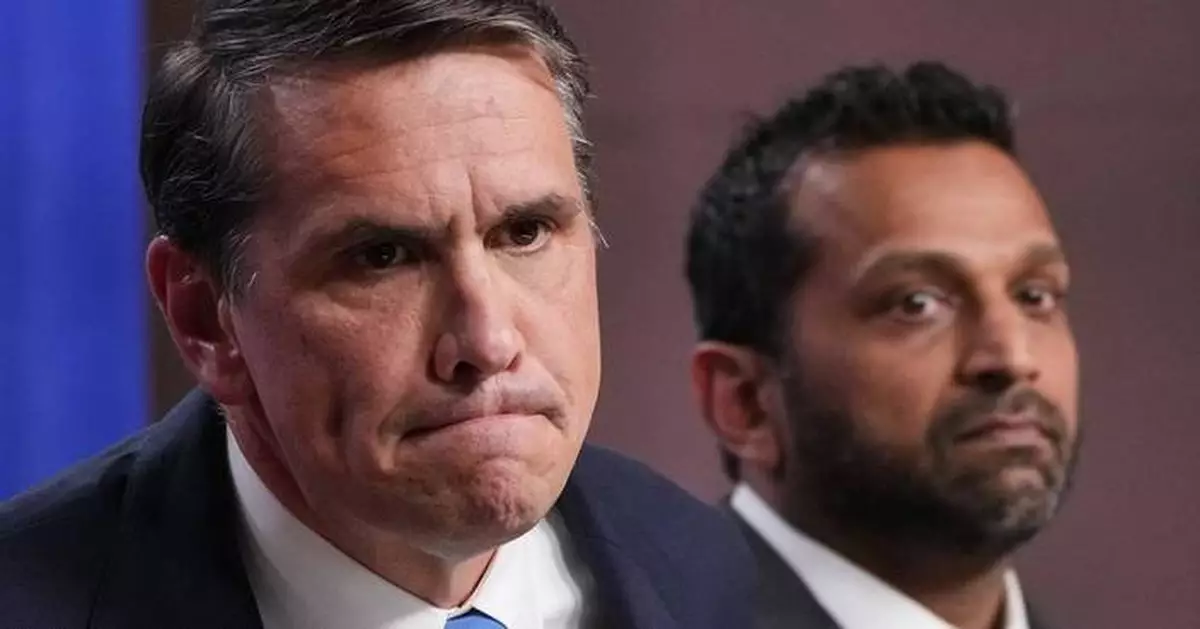
Acting Attorney General Todd Blanche listens during a news conference at the Justice Department, Tuesday, April 21, 2026, in Washington. (AP Photo/Jacquelyn Martin)
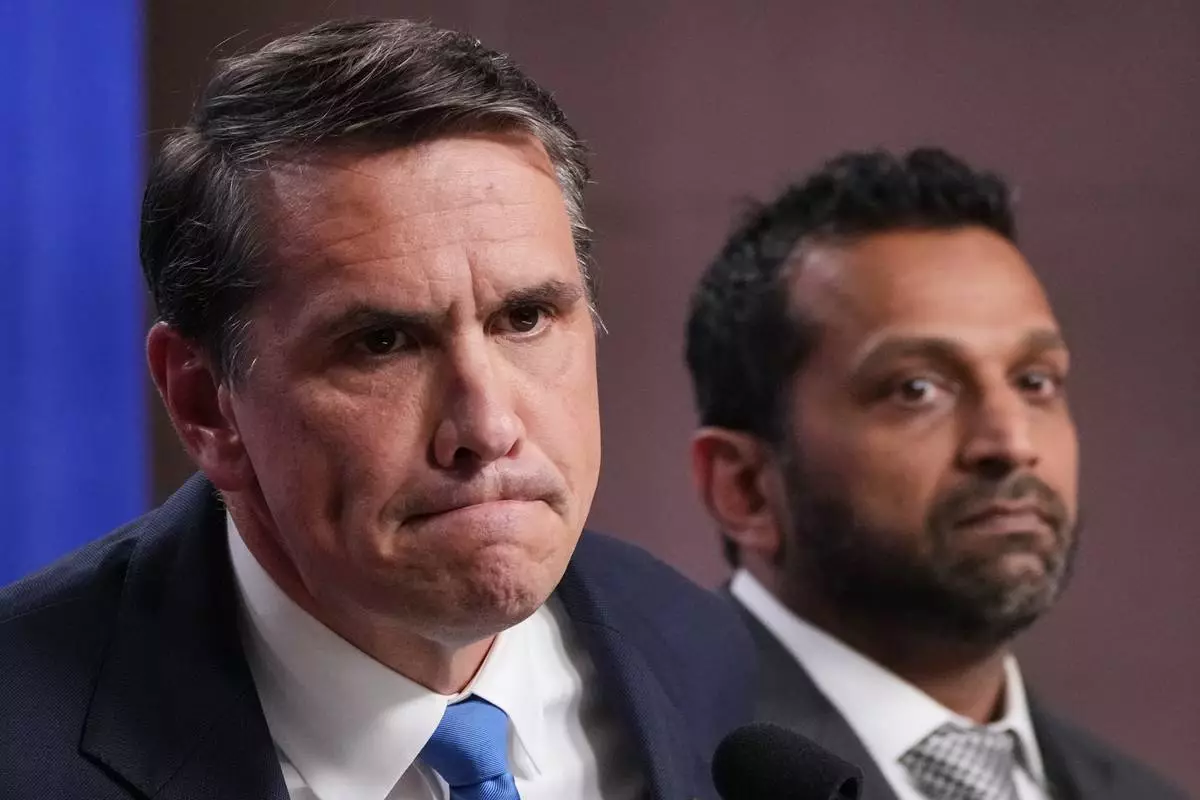
Acting Attorney General Todd Blanche speaks as FBI Director Kash Patel listens during a news conference at the Justice Department, Tuesday, April 21, 2026, in Washington. (AP Photo/Jacquelyn Martin)
DUBAI, United Arab Emirates (AP) — President Donald Trump has ordered the U.S. military to “shoot and kill” small Iranian boats that deploy mines in the Strait of Hormuz, he said Thursday, a day after Iran again displayed its ability to thwart traffic through the channel.
Trump also announced that a ceasefire in Lebanon would be extended by three weeks.
His post on social media about the small boats came shortly after the U.S. military seized another tanker associated with the smuggling of Iranian oil, ratcheting up a standoff with Tehran over the strait through which 20% of all crude oil and natural gas traded passes.
“I have ordered the United States Navy to shoot and kill any boat, small boats though they may be ... that is putting mines in the waters of the Strait of Hormuz,” Trump posted, adding that U.S. minesweepers "are clearing the Strait right now.”
“I am hereby ordering that activity to continue, but at a tripled up level!” he added.
The decision to extend a pause in fighting between Israel and the Hezbollah militant group in Lebanon came during a meeting at the White House between representatives from Israel and Lebanon.
Meanwhile, it was still unclear when, or if, the U.S. and Iran would meet again in the Pakistani capital, Islamabad, where mediators are trying to bring the countries together to reach a diplomatic deal ending that conflict.
Negotiations initially planned for this week have not happened. Iran insists it will not attend until the U.S. ends its blockade on Iranian ports and ships. America insists it will not take part until Tehran opens the strait to international traffic.
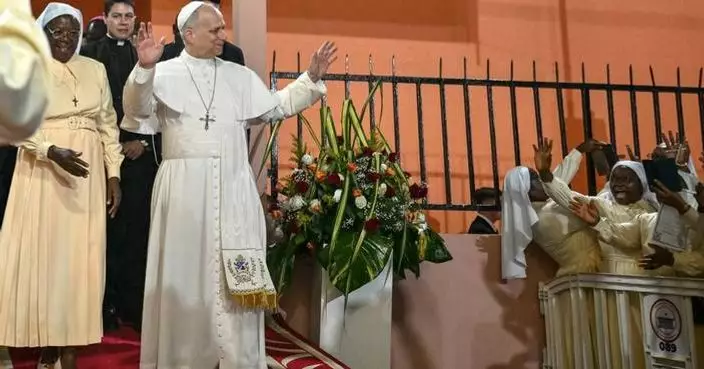
Pope Leo XIV, returning home from a trip to Africa, urged the U.S. and Iran to return to talks to end the war.
The Defense Department released video footage earlier Thursday of U.S. forces on the deck of the Guinea-flagged oil tanker Majestic X, which was seized in the Indian Ocean.
The footage emerged a day after Iran’s paramilitary Revolutionary Guard attacked three cargo ships in the strait, capturing two of them, in an assault that raised new concerns about the safety of shipping through the waterway.
The powerful head of Iran’s judiciary, Gholam Hossein Mohseni Ejei, said three “violating ships” in the strait were “subject to enforcement” on Wednesday.
“The show of strength by the armed forces of Islamic Iran in the Strait of Hormuz is a source of pride,” he wrote Thursday on X, claiming that the Americans “lack the courage” to approach the strait.
Ship-tracking data showed the Majestic X in the Indian Ocean between Sri Lanka and Indonesia, roughly the same location as the oil tanker Tifani, which was seized earlier by American forces. It had been bound for Zhoushan, China.
The vessel previously had been named Phonix and had been sanctioned by the U.S. Treasury Department in 2024 for smuggling Iranian crude oil in contravention of U.S. sanctions against the Islamic Republic.
There was no immediate response from Iran about the seizure.
Trump this week extended a ceasefire to give the battered Iranian leadership more time to come up with a “unified proposal” on ending the war, while maintaining an American blockade of Iranian ports.
In a separate post Thursday, Trump claimed a leadership rift between moderates and hardliners was confounding Iran.
“Iran is having a very hard time figuring out who their leader is! They just don’t know!” Trump said.
The president has repeatedly said over the course of the ceasefire that began on April 8 that his team is dealing with Iranian officials who want to make a deal, while acknowledging that his decision to kill several top leaders has come with complications.
Iran’s president and its parliament speaker posted almost identical statements on social media declaring that the country has no hard-liners or moderates.
"We are all Iranians and revolutionaries,” they said.
A spokesperson for the Iranian Foreign Ministry said Trump's claim of a leadership rift was “a form of deflection.” Other Iranian officials said on social media that the country was united.
Trump, while speaking to reporters at the White House, pushed back against questions about the conflict exceeding the four-to-six-week timeline that he and aides previously set for the war.
“I don’t want to rush myself,” Trump said.
He said the U.S. “took the country out” militarily in the first four weeks.
“Now all we’re doing is sitting back and seeing what deal" can be made. "And if they don’t want to make a deal, then I’ll finish it up militarily,” Trump said.
He said he would not use a nuclear weapon against Iran.
In other developments, the U.S. military said it now has three aircraft carriers in the region after the USS George H.W. Bush arrived in the Indian Ocean. One carrier was in the Arabian Sea and another was in the Red Sea, military officials said.
Elsewhere on the diplomatic track, Trump said a second round of talks between Israel and Lebanon in Washington “went very well” after they resulted in a ceasefire extension for Israel and the Hezbollah militant group.
“The United States is going to work with Lebanon in order to help it protect itself from Hezbollah,” Trump said on his Truth Social platform.
The latest war between Israel and Hezbollah started two days after Israel and the U.S. launched attacks on Iran, after the Tehran-backed militants fired rockets into northern Israel.
In a new show of the fragility of the ceasefire that first went into effect for a 10-day period starting Friday in Lebanon, Hezbollah said it attacked Israeli positions in southern Lebanon, targeting Israeli soldiers in the village of Taybeh.
Later, the Israeli military said its air defenses intercepted rocket fire from Lebanon, and Hezbollah said it fired at the town of Shtula in response to Israeli attacks on the Lebanese village of Yater.
Each side has accused the other of breaching the truce.
The standoff between the U.S. and Iran has choked off nearly all exports through the strait with no end in sight.
Also on Thursday, Iran’s exiled Crown Prince Reza Pahlavi was splattered with red liquid as he left a building after a news conference in Berlin. The person believed responsible was immediately detained by police.
During the event, Pahlavi criticized the ceasefire between the U.S. and Iran, arguing that the agreement assumes the Iranian government’s behavior will change and “you’re going to deal with people who all of a sudden have become pragmatists.”
Pahlavi, 65, has been in exile for nearly 50 years. His father, Iran’s shah, was so widely hated that millions took to the streets in 1979, forcing him from power. Nevertheless, Pahlavi is trying to position himself as a player in his country’s future.
Since the Feb. 28 start of the war between Iran, Israel and the United States, over 30 ships have come under attack in the waters of the Persian Gulf, the Strait of Hormuz and the Gulf of Oman.
The threat of attack, rising insurance premiums and other fears have stopped traffic from moving through the strait. Iran’s ability to restrict traffic through the strait, which leads from the Persian Gulf to the open ocean, has proved a major strategic advantage.
Jakob Larsen, the head of maritime security for BIMCO, the largest international association representing shipowners, said in a note Thursday that most shipping companies need a stable ceasefire and assurances from both sides of the conflict that the strait is safe for transit.
The threat of mines, he wrote, was a “particular concern” if traffic might return to normal levels one day.
Madhani reported from Washington, and Keaten reported from Geneva.
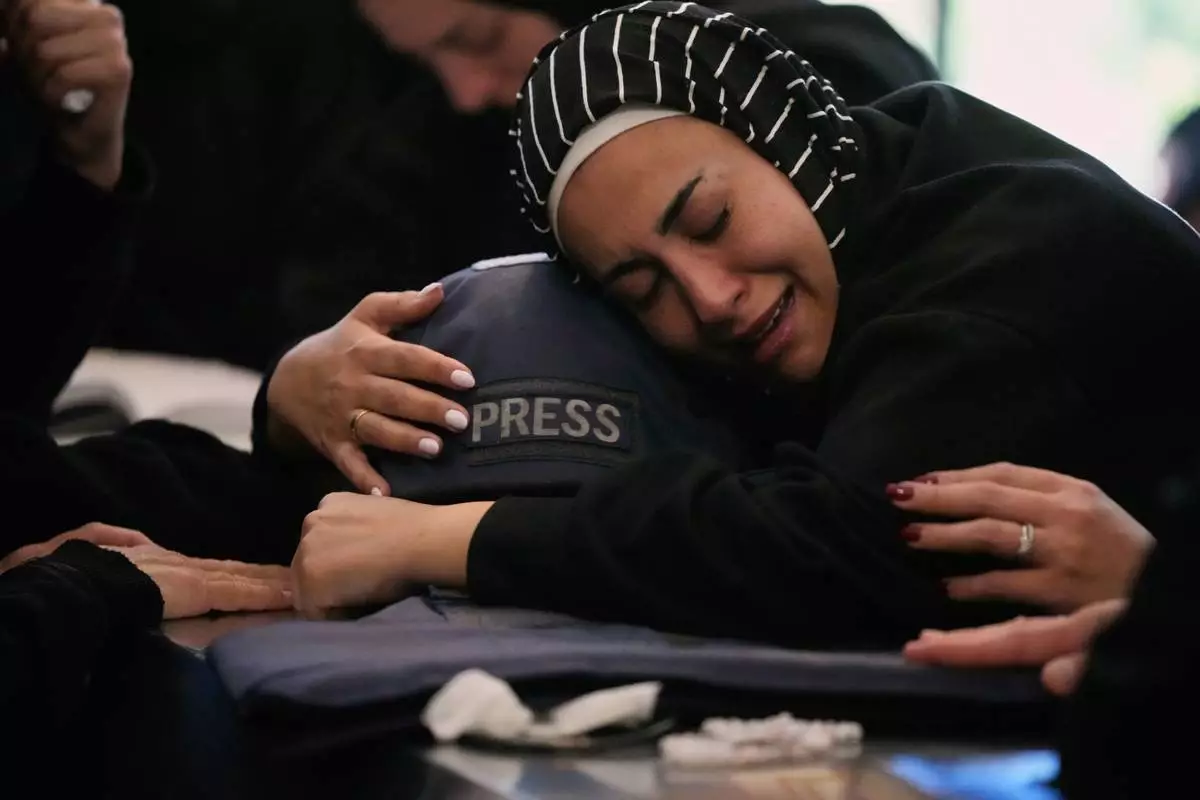
Zainab, the sister of Lebanese journalist Amal Khalil, who was killed on Wednesday in an Israeli airstrike, hugs her helmet as she mourns over her coffin in the village of Baysariyeh, southern Lebanon, Thursday, April 23, 2026. (AP Photo/Mohammed Zaatari)
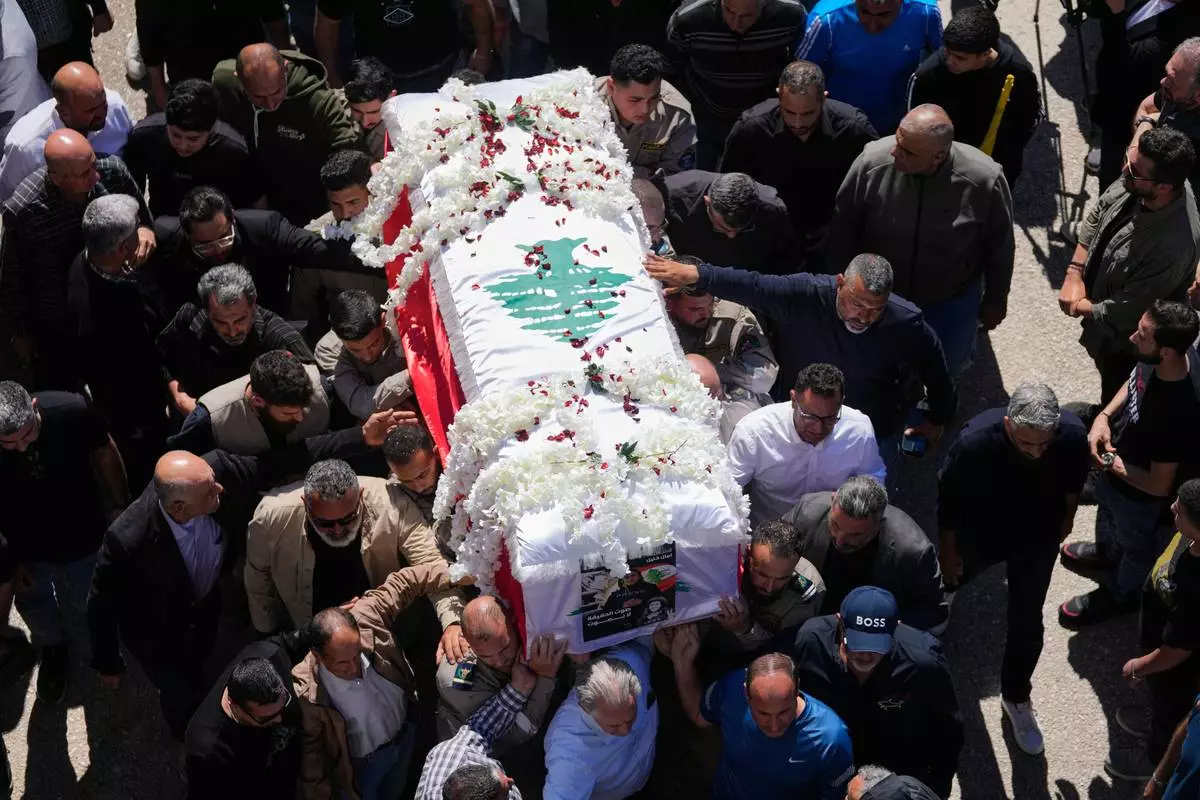
Mourners carry the coffin of Lebanese journalist Amal Khalil, who was killed Wednesday in an Israeli airstrike, during her funeral procession in the village of Baysariyeh in southern Lebanon on Thursday, April 23, 2026. (AP Photo/Mohammed Zaatari)
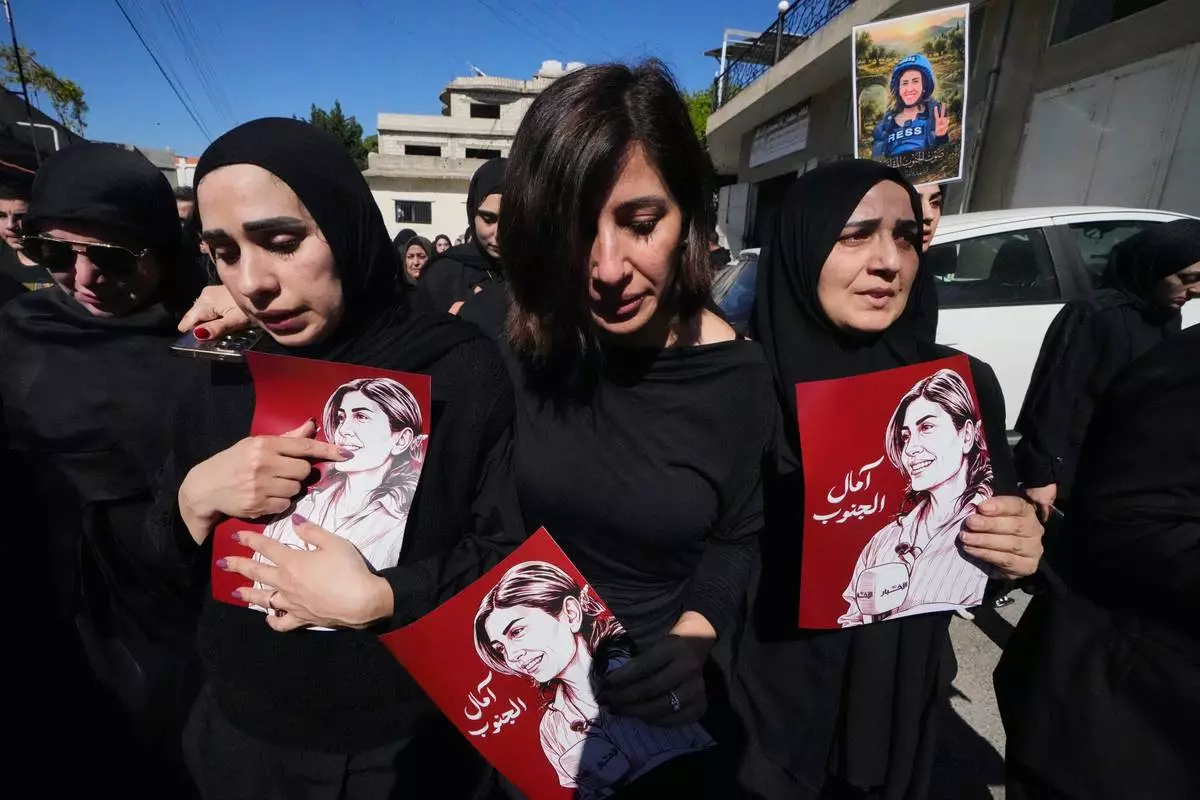
Mourners hold posters that show portraits of Lebanese journalist Amal Khalil, who was killed Wednesday in an Israeli airstrike, during her funeral procession in the village of Baysariyeh in southern Lebanon on Thursday, April 23, 2026. (AP Photo/Mohammed Zaatari)
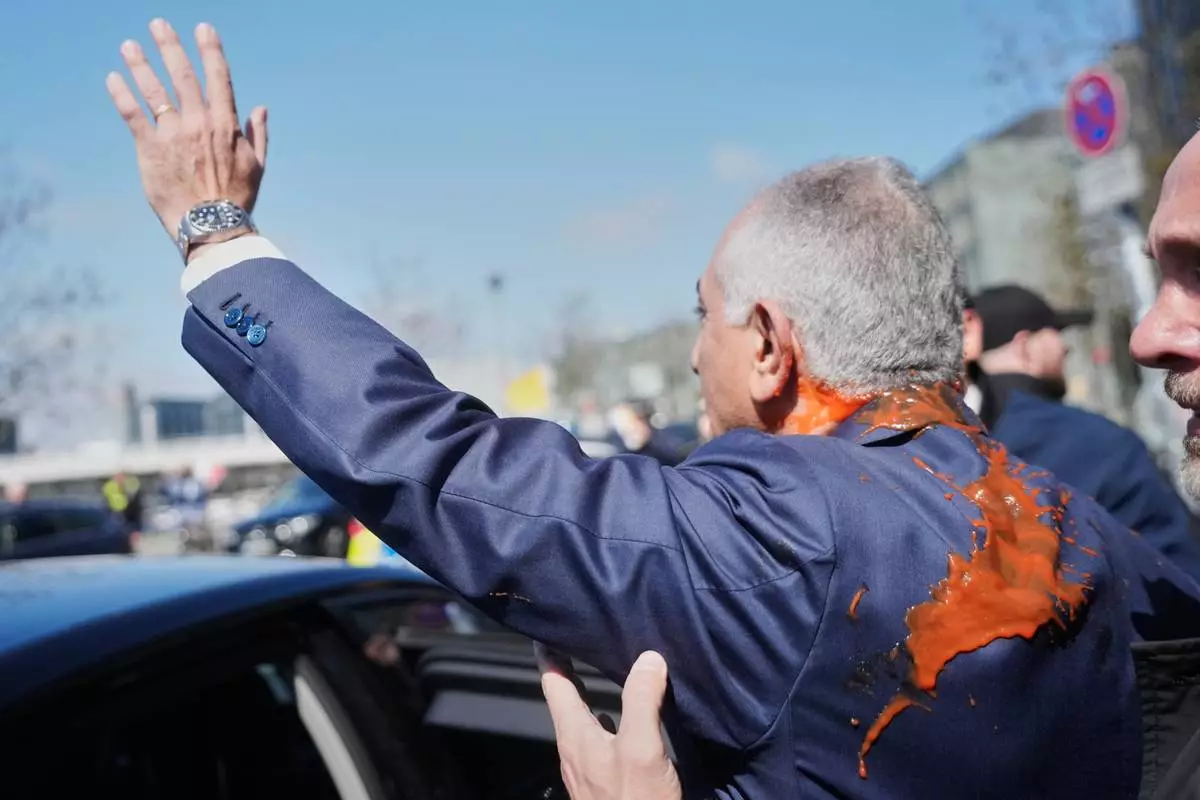
Iran's Reza Pahlavi, exiled son of Shah Reza Pahlavi, waves to supporters after he was attacked with a red fluid following a news conference in Berlin, Germany, Thursday, April 23, 2026. (AP Photo/Markus Schreiber)
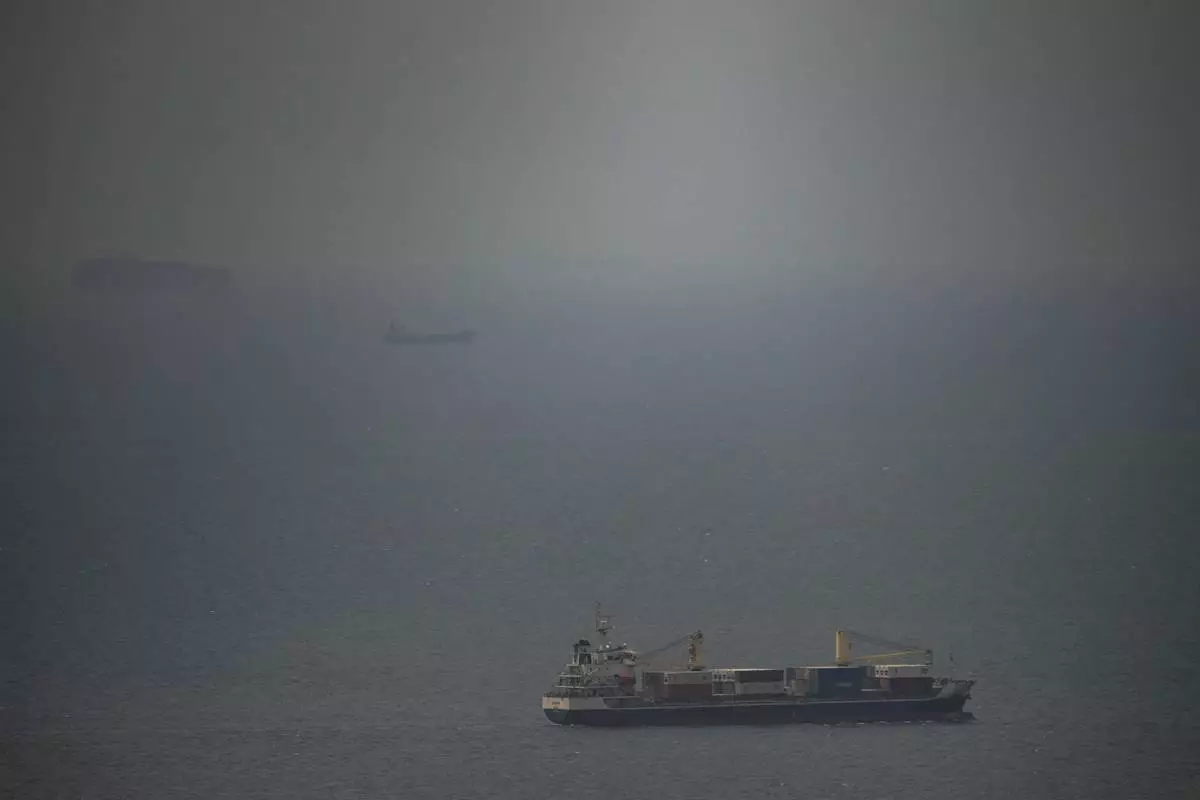
A cargo ship sails in the Persian Gulf toward the Strait of Hormuz, Wednesday, April 22, 2026. (AP Photo)
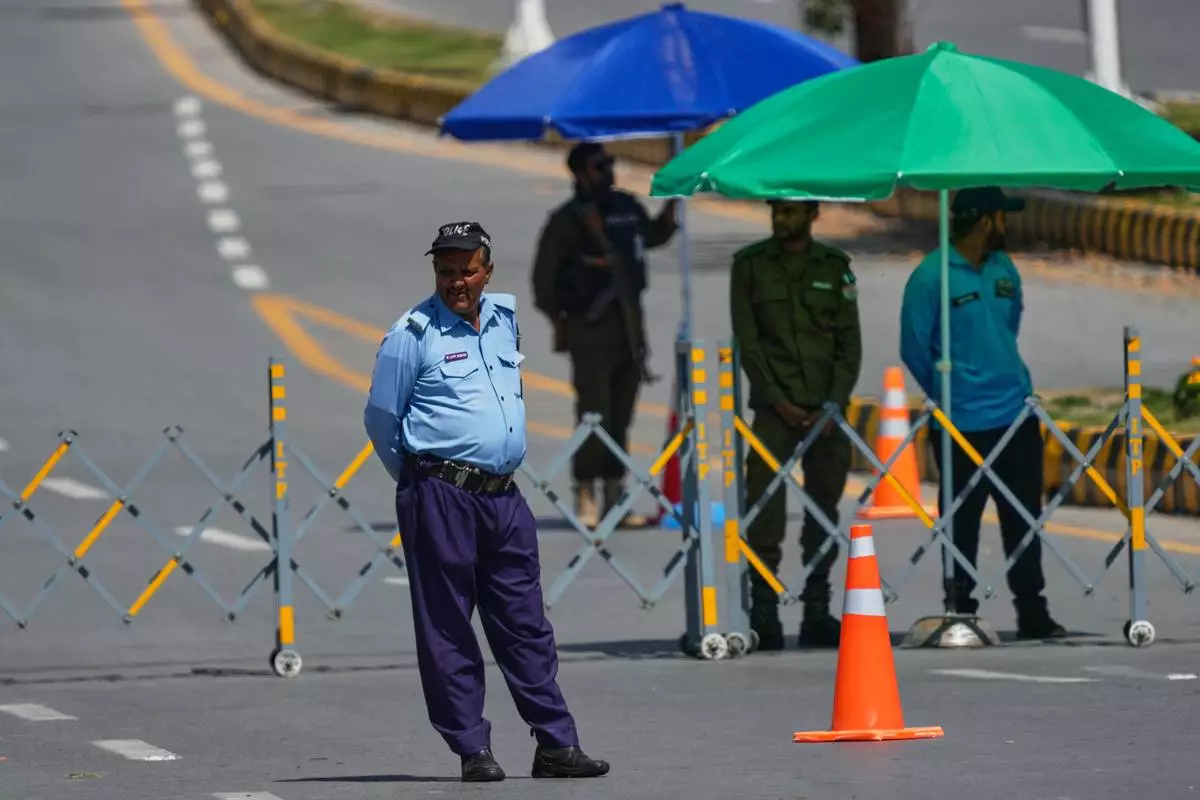
Police officers stand guard at a checkpoint to ensure security in Islamabad, Pakistan, Wednesday, April 22, 2026. (AP Photo/Anjum Naveed)
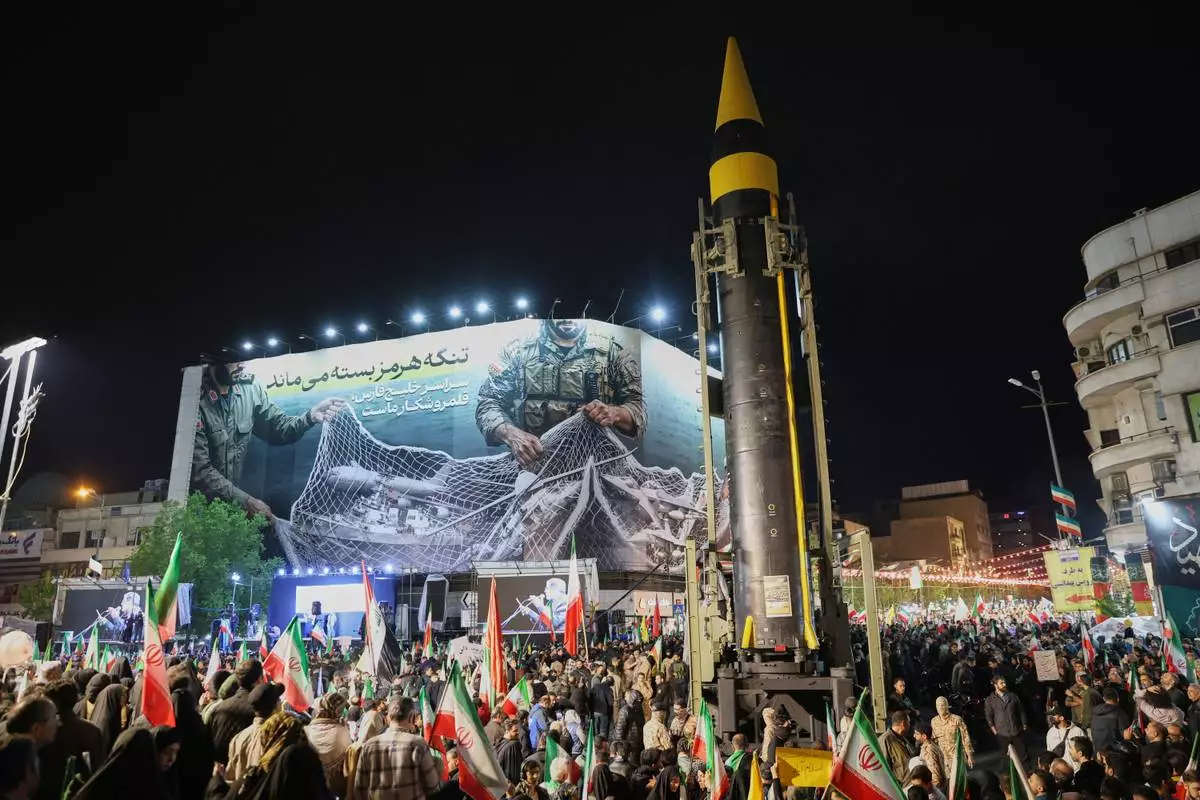
A ballistic missile is displayed by Iran's Revolutionary Guard during a pro-government demonstration at Enqelab-e-Eslami (Islamic Revolution) Square in downtown Tehran, Iran, Tuesday, April 21, 2026. (Alireza Masoumi/ISNA via AP)
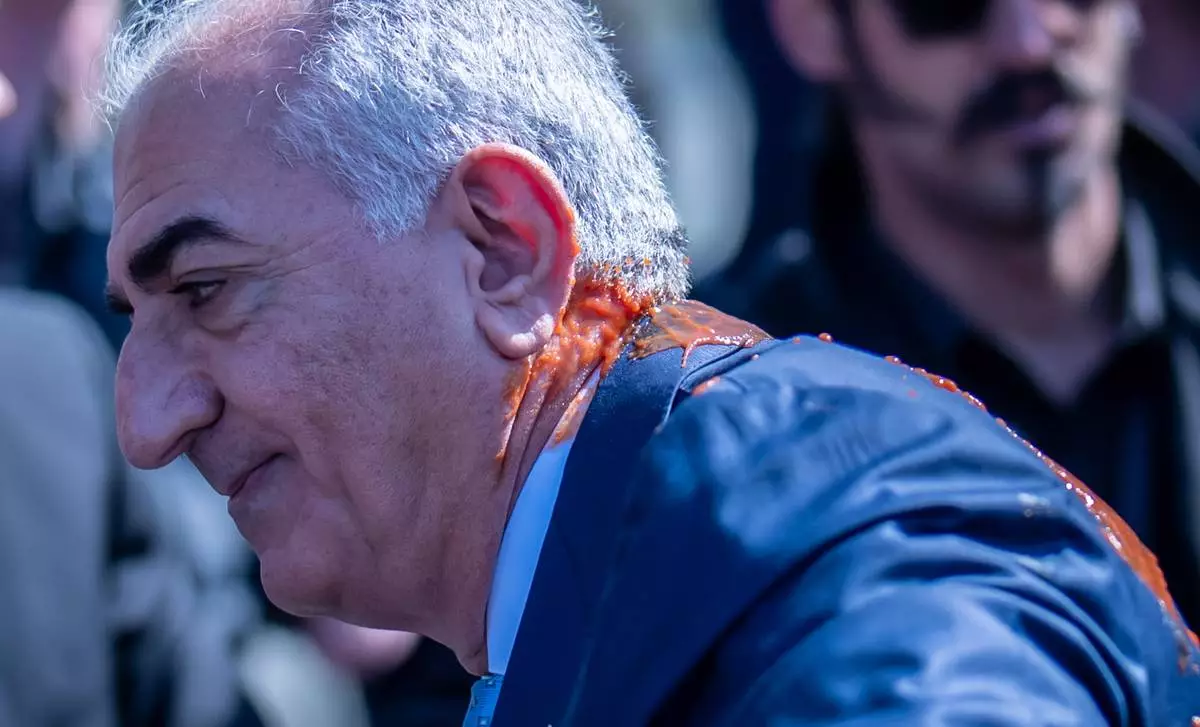
Iran's Reza Pahlavi, exiled son of Shah Reza Pahlavi, reacts after he was attacked with a red fluid following a news conference in Berlin, Germany, Thursday, April 23, 2026. (Michael Kappeler/dpa via AP)
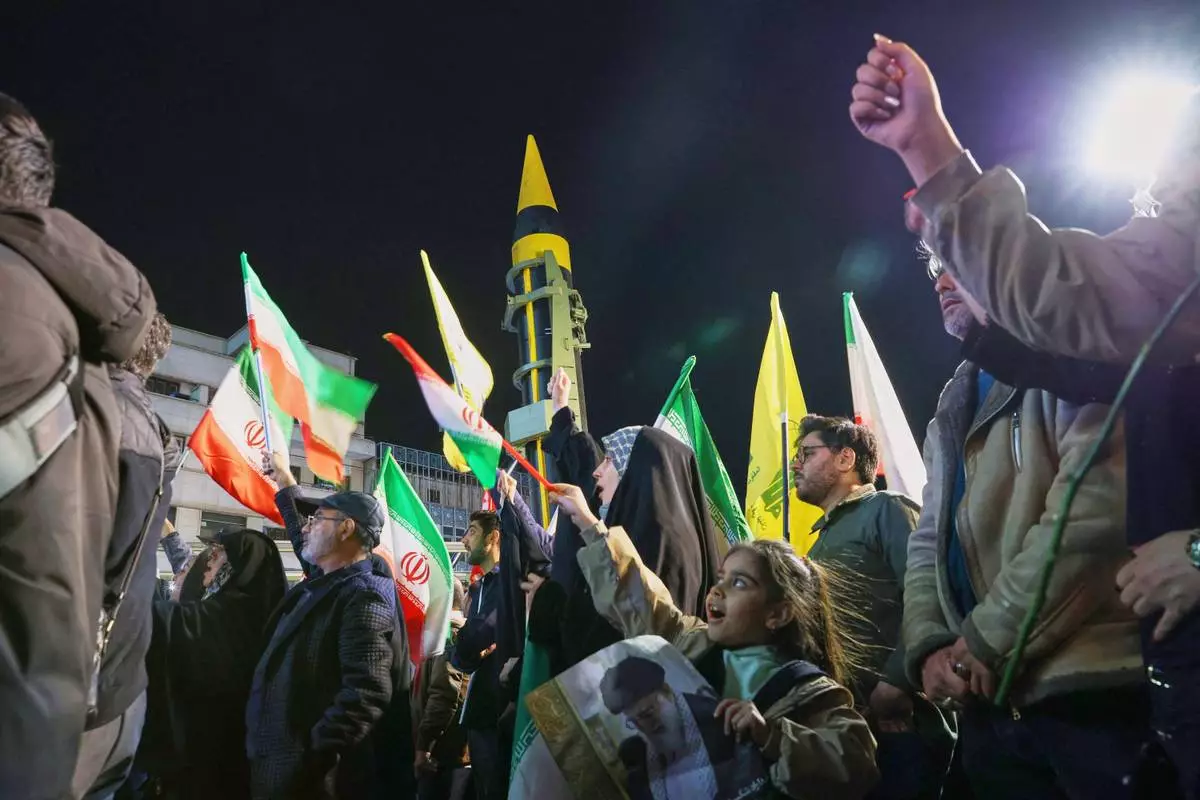
A ballistic missile is displayed by Iran's Revolutionary Guard during a pro-government demonstration at Enqelab-e-Eslami (Islamic Revolution) Square in downtown Tehran, Iran, Tuesday, April 21, 2026. (Alireza Masoumi/ISNA via AP)
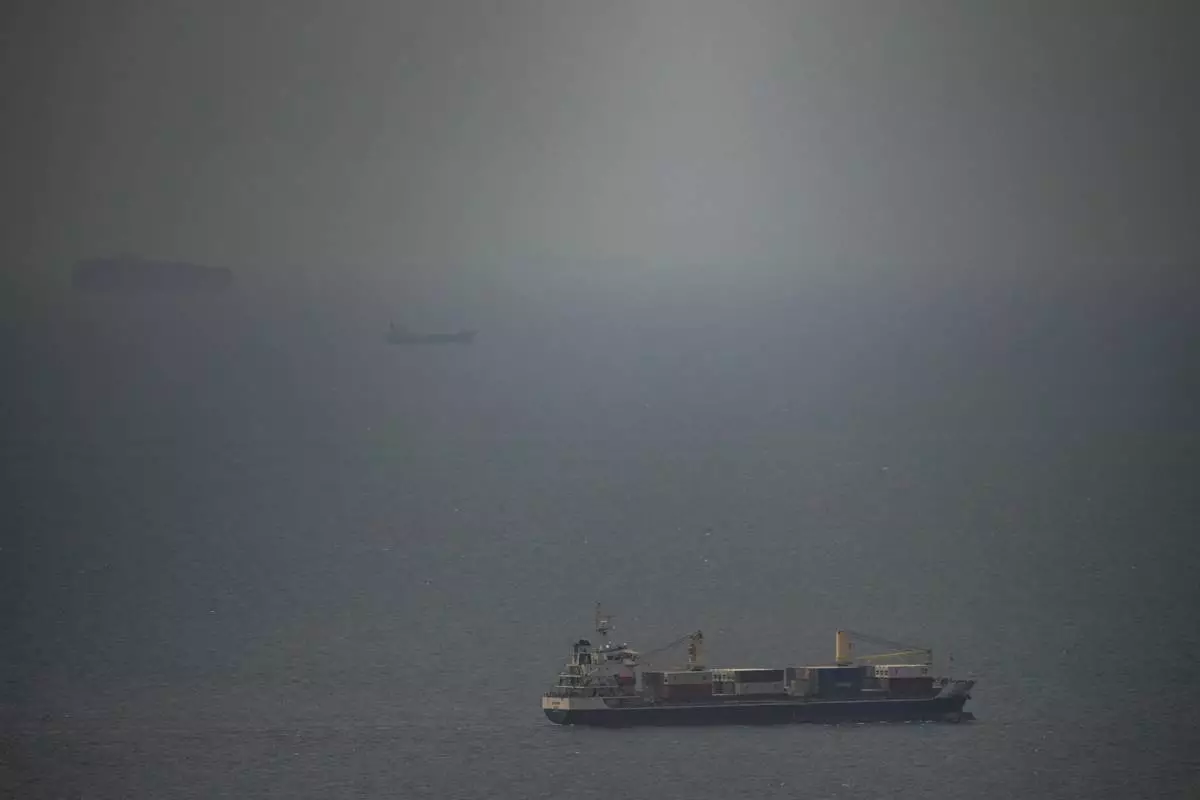
The Jordan flagged cargo ship "Baghdad" sails in Persian Gulf towards Strait of Hormuz in United Arab Emirates, Wednesday, April 22, 2026. (AP Photo)