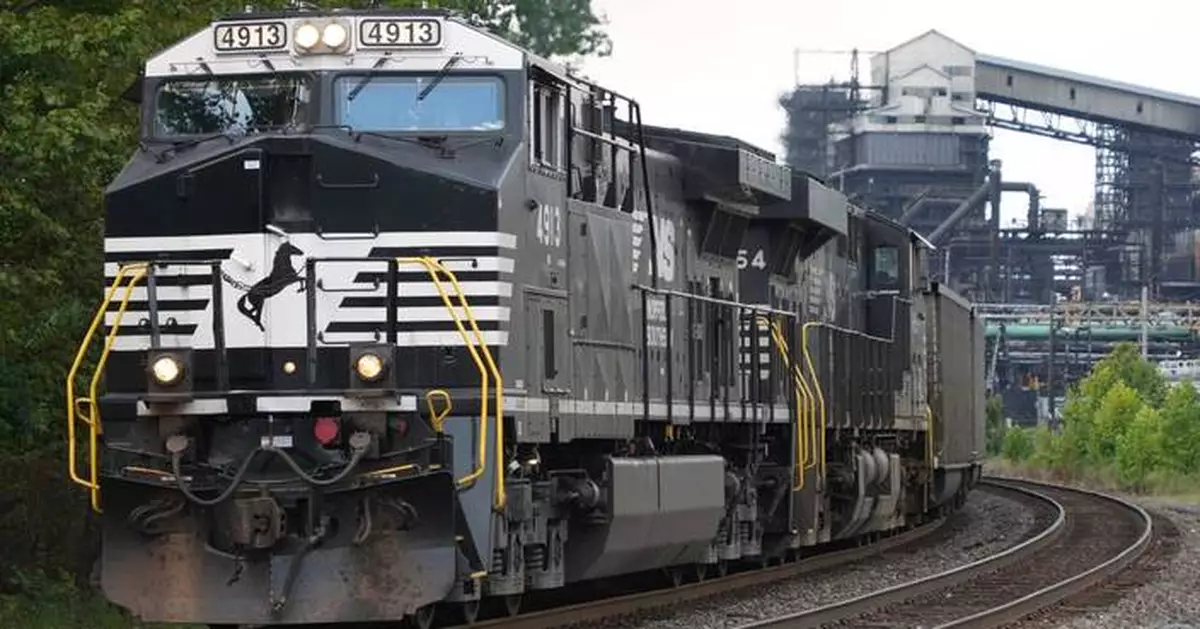
Norfolk Southern railroad's first-quarter profit fell 27% because it didn't collect big insurance payments related to the East Palestine, Ohio, derailment and its planned merger with Union Pacific added to its costs.
The Atlanta-based railroad said Friday that it earned $547 million, or $2.43 per share. That's down from $750 million, or $3.31 per share, a year ago. The disastrous derailment in the small town on the Ohio-Pennsylvania border has generally boosted earnings in recent quarters as the railroad collected insurance payments, but that wasn't the case this time, so it combined with planning costs related to the merger, earnings per share were reduced by 22 cents. Last year's results were also helped by some land sales.
Without those unusual costs, the railroad's profit would have beat Wall Street estimates. The analysts surveyed by FactSet Research predicted the railroad would earn $2.51 per share.
CEO Mark George said the railroad also dealt with the uncertain economy that reduced the shipments it delivered by 1%, along with severe weather and rapidly rising fuel costs.
“Despite these challenges, our employees safely delivered a solid service product, managed costs effectively, and earned the continued trust of our customers. As conditions improved, we captured momentum exiting the quarter, reinforcing the strength of our operating foundation and the dedication of the entire Norfolk Southern team,” George said.
The railroad's revenue was relatively flat at just under $3 billion. But its expenses jumped 15% compared to last year when insurance payments from the derailment added $185 million to Norfolk Southern's bottom line.
Norfolk Southern is working with Union Pacific to update its application to merge that the railroads plan to submit next Thursday. The U.S. Surface Transportation Board rejected the railroad’s first request to approve the $85 billion merger because the regulators wanted more information. The STB hasn’t yet decided whether the deal that would cut the number of major freight railroads down to five will enhance competition.
Norfolk Southern operates trains all over the eastern United States. Combining with Union Pacific's network west of the Mississippi River would create the nation's first transcontinental railroad.
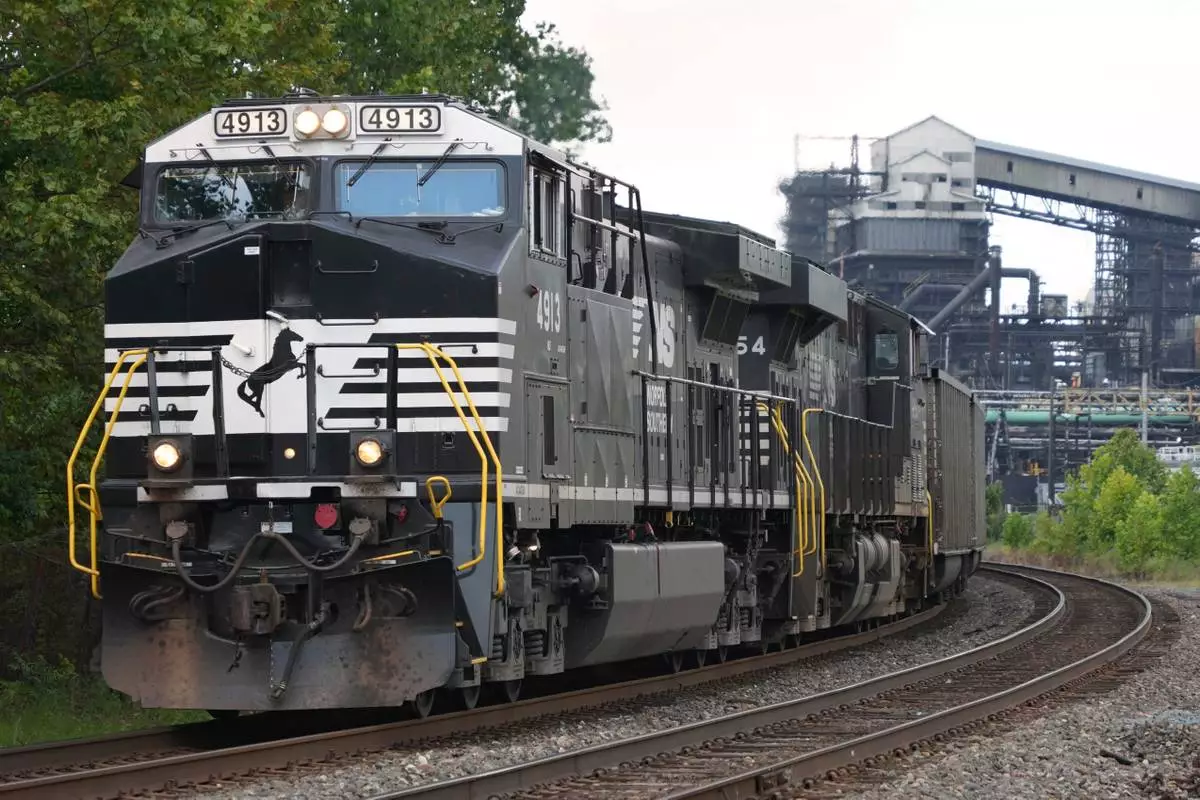
FILE - A Norfolk Southern freight train rolls past the U.S. Steel's Clairton Coke Works, in Clairton, Pa., Tuesday, Aug. 12, 2025. (AP Photo/Gene J. Puskar, File)
NICOSIA, Cyprus (AP) — Spanish Prime Minister Pedro Sánchez on Friday refused to be drawn into a dispute with the United States over reports that the Pentagon is weighing whether to punish members of NATO that fail to support American operations in the Iran war.
Among those in the firing line is Spain, which has refused to allow U.S. forces involved in the war to use bases on its territory or airspace. Spain says that U.S.-Israeli actions in the Iran war contravenes international law.
France and the U.K. also refuse to give U.S. forces free rein to use their territory for the bombing campaign.
The Pentagon is reported to be mulling whether to suspend Spain from NATO, according to an unidentified U.S. official referring to a U.S. Defense Department email, and quoted by the Reuters news agency. The Associated Press hasn't seen the email or had confirmation of its content. It has asked the Pentagon for comment, but received no immediate response.
“Well, we do not work with emails," Sánchez told reporters at a European Union summit in Cyprus. "We work with official documents and positions taken, in this case, by the government of the United States.”
“The position of the government of Spain is clear: absolute collaboration with the allies, but always within the framework of international legality,” he said.
The Trump administration has routinely floated plans or ideas that are neither acted upon nor become policy.
The email also suggested reassessing U.S. support for the United Kingdom's claim to the Falkland Islands, near Argentina, which are also known as Islas Malvinas.
Dave Pares, a spokesman for Prime Minister Keir Starmer, said the U.K. position on the islands is “longstanding and it’s unchanged: Sovereignty rests with the U.K., and the islanders’ right to self-determination is paramount.”
Pares noted “the Falkland Islands have previously voted overwhelmingly in favor of remaining a U.K. overseas territory.”
NATO operates by consensus, and all 32 member countries must agree for it to act.
The trans-Atlantic alliance's founding treaty has no mechanism for suspending or ejecting any of the members, although nations may leave of their own accord one year after notifying the other allies. As an organization, NATO has no direct role in the Iran war except to defend its own territory.
Asked for comment, NATO headquarters said: “NATO’s Founding Treaty does not foresee any provision for suspension of NATO membership, or expulsion.”
U.S. President Donald Trump has been angered by what he sees as the failure of some NATO members to back American actions in the Iran war and to help police the Strait of Hormuz, a major trade route. He has questioned the purpose of U.S. membership in the military organization.
EU foreign policy chief Kaja Kallas appeared perplexed by the U.S. criticism, given that the United Kingdom and France are leading an effort to help secure trade in the strait once the war is over.
“When we have had contacts with the American counterparts, then actually their asks for us have been exactly what we are able to offer after the cessation of hostilities,” she said. “Demining, escorting of ships, all of this that we have been discussing.”
But the United States has “long-standing arrangements and agreements with European allies on overflight, on basing” that should be respected, NATO Secretary-General Mark Rutte has said, in implicit criticism of some allies like Spain, but also France.
While Spain restricted U.S. military activity related to the Iran war, U.S. warplanes have flown over other NATO allies’ airspace and used U.S. bases in other NATO countries for war-related operations.
Trump has even threatened to cut trade with Spain over its refusal to allow the use of its bases and airspace. More broadly, Spain has also disappointed its allies by failing to commit to spend as much as they plan to do on defense.
As the reality sinks in that the U.S. commitment to NATO and Europe’s security under Trump has waned, the EU leaders debated how best to use European laws to come to each other’s aid should one of them come under attack.
Cypriot President Nikos Christodoulides, whose country holds the bloc’s presidency until July, said that the leaders had tasked the European Commission to “prepare a blueprint on how we respond” should a member seek help under Article 42.7 of the EU treaties.
It's only ever been used once, by France after the Paris terror attacks in 2015.
EU envoys and ministers are set next month to conduct “table-top exercises” to game out how the treaty article might be used, drawing on the bloc’s military capacities, but also other assets not available to NATO, like trade, border and visa policies.
Lorne Cook reported from Brussels. Jill Lawless in London contributed.
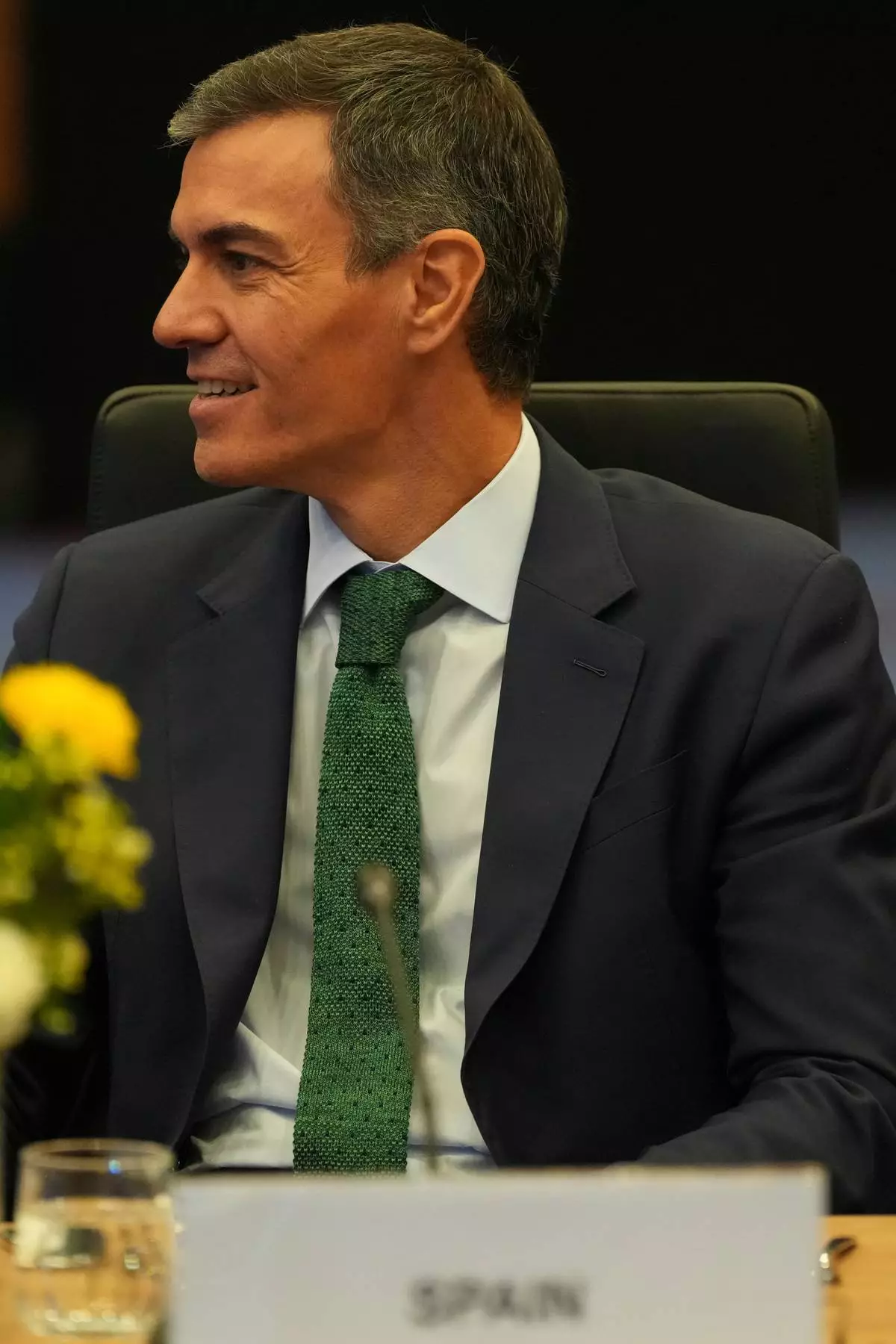
Spain's Prime Minister Pedro Sanchez attends the EU Summit in Nicosia, Cyprus, Friday, April 24, 2026. (AP Photo/Petros Karadjias)
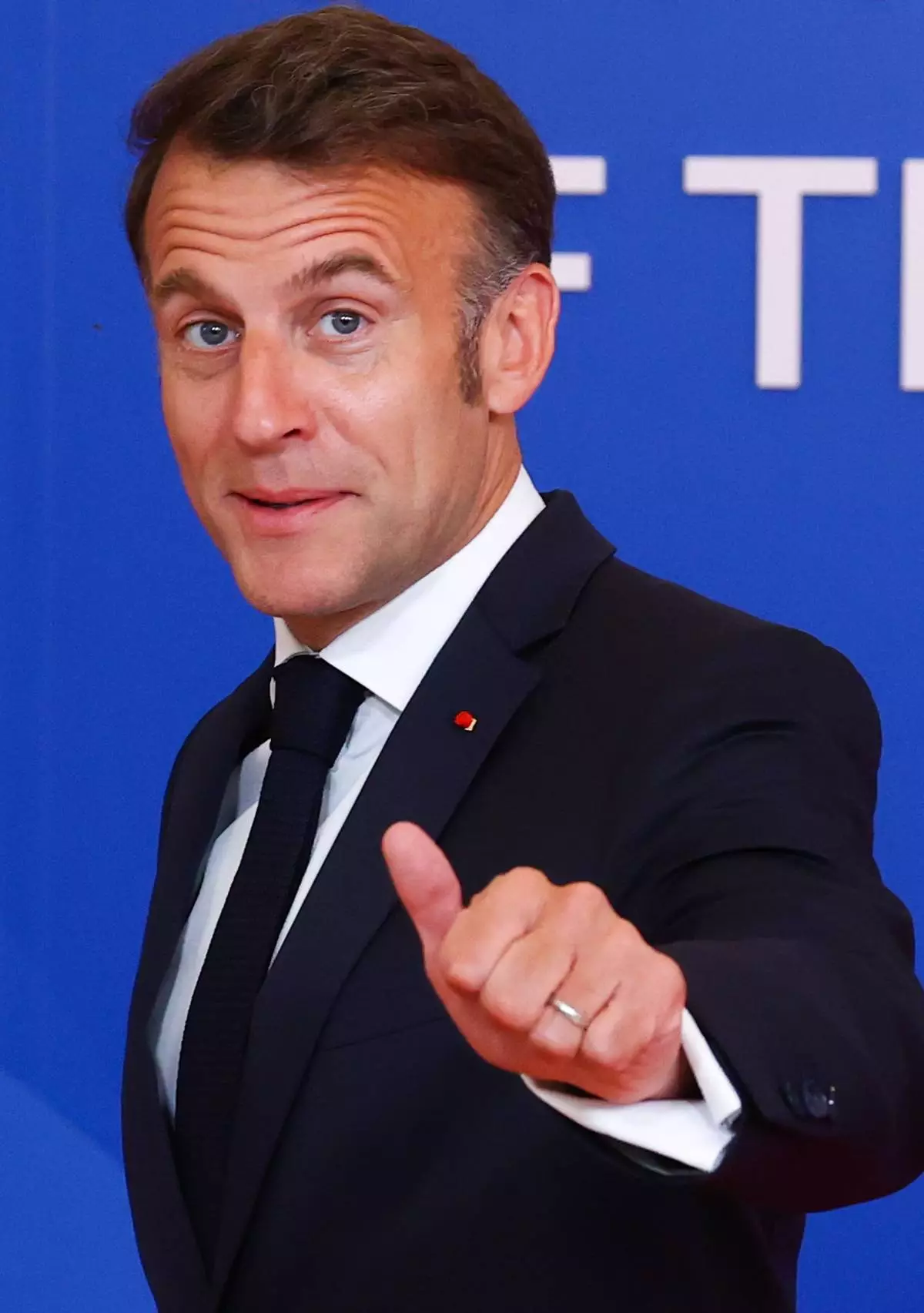
French President Emmanuel Macron arrives for the EU Summit in Nicosia, Cyprus, Friday, April 24, 2026. (Yves Herman, Pool Photo via AP)
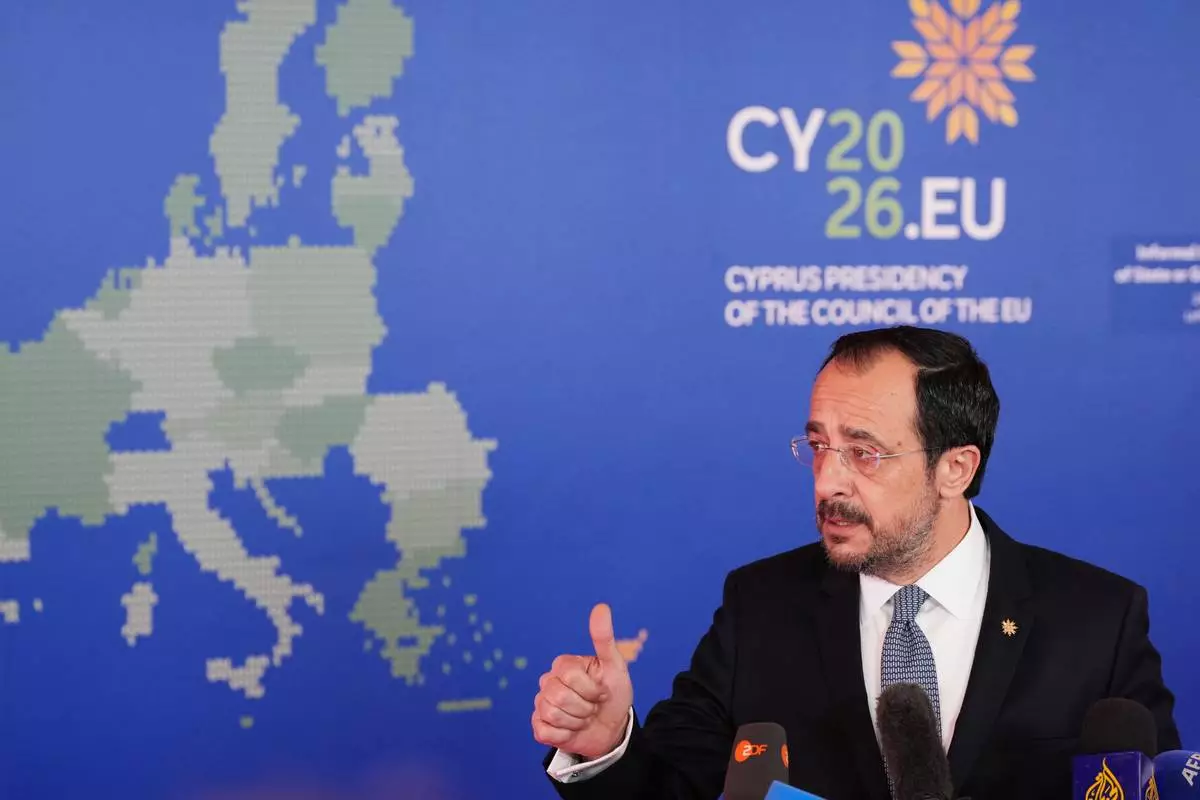
Cypriot President Nikos Christodoulides speaks with the media as he arrives for the EU Summit in Nicosia, Cyprus, Friday, April 24, 2026. (AP Photo/Petros Karadjias)
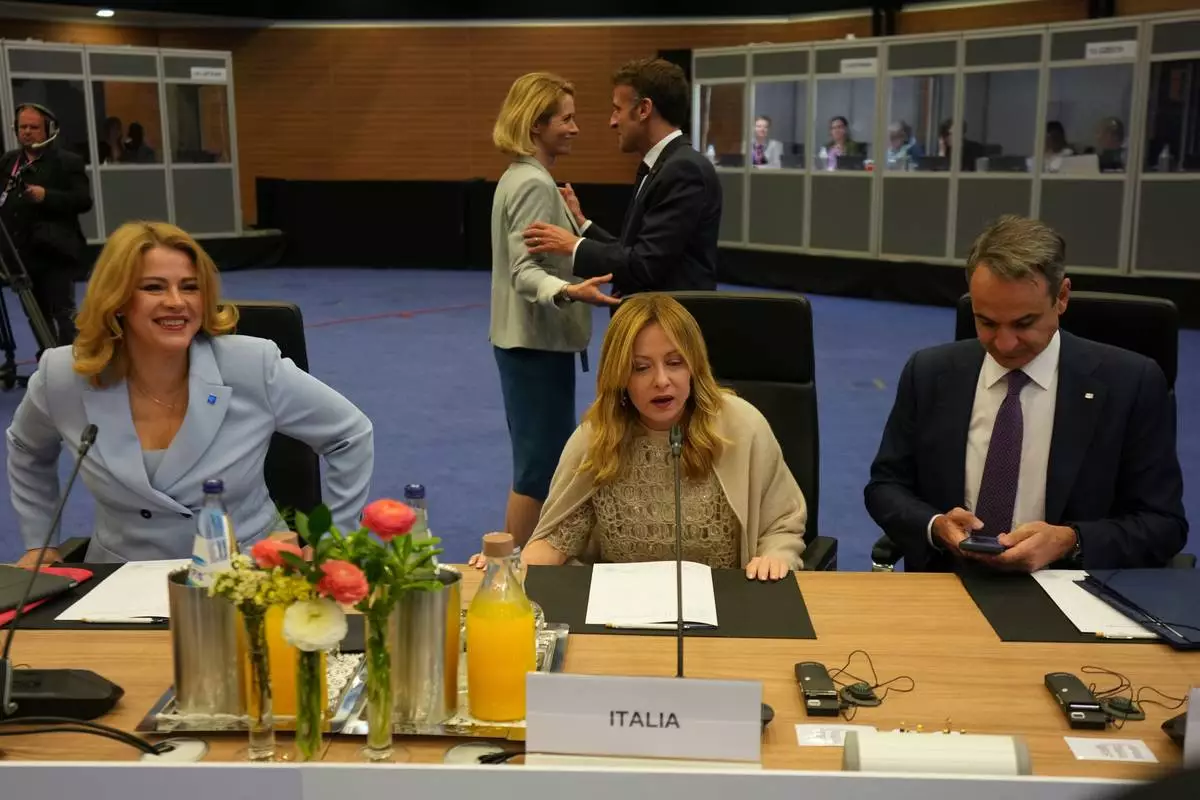
European Union foreign policy chief Kaja Kallas, background left, speaks with French President Emmanuel Macron, as Latvia's Prime Minister Evika Silina, foreground left, Italy's Prime Minister Giorgia Meloni, center, and Greece's Prime Minister Kyriakos Mitsotakis prepare for a roundtable meeting pf the EU Summit in Nicosia, Cyprus, Friday, April 24, 2026. (AP Photo/Petros Karadjias)
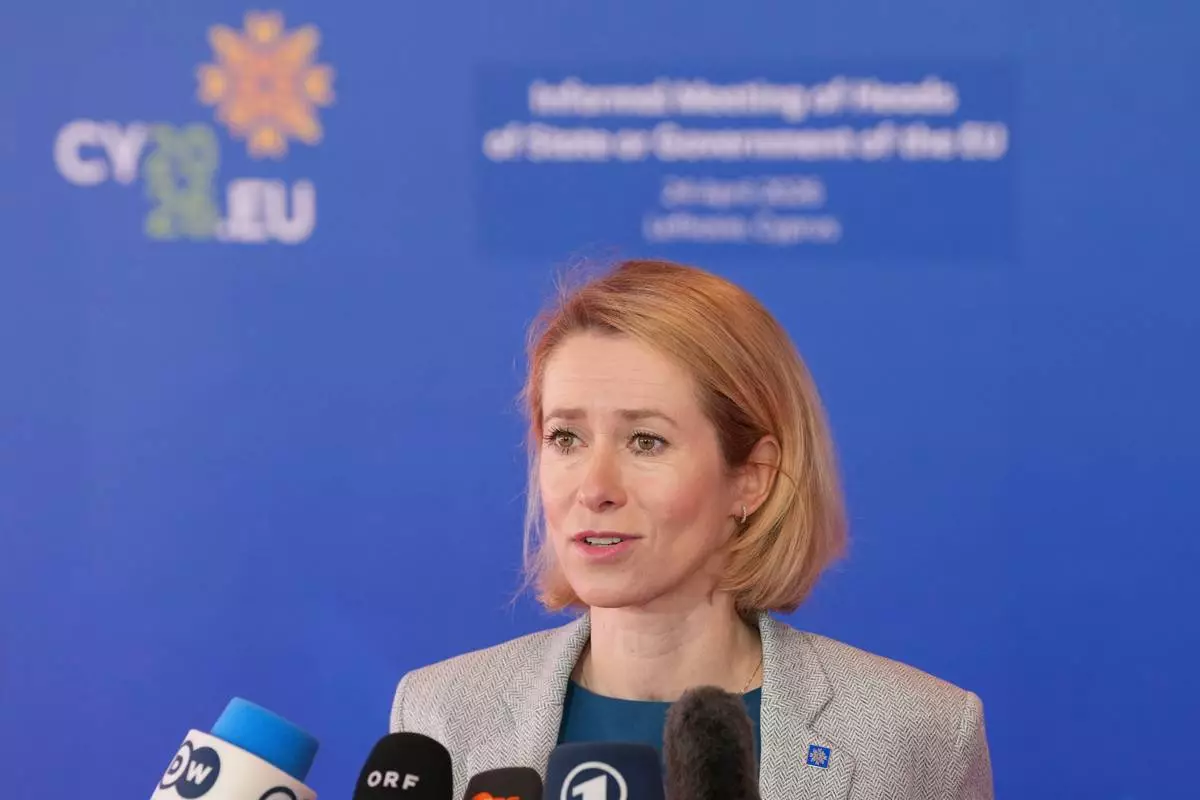
European Union foreign policy chief Kaja Kallas speaks with the media as she arrives for the EU Summit in Nicosia, Cyprus, Friday, April 24, 2026. (AP Photo/Petros Karadjias)
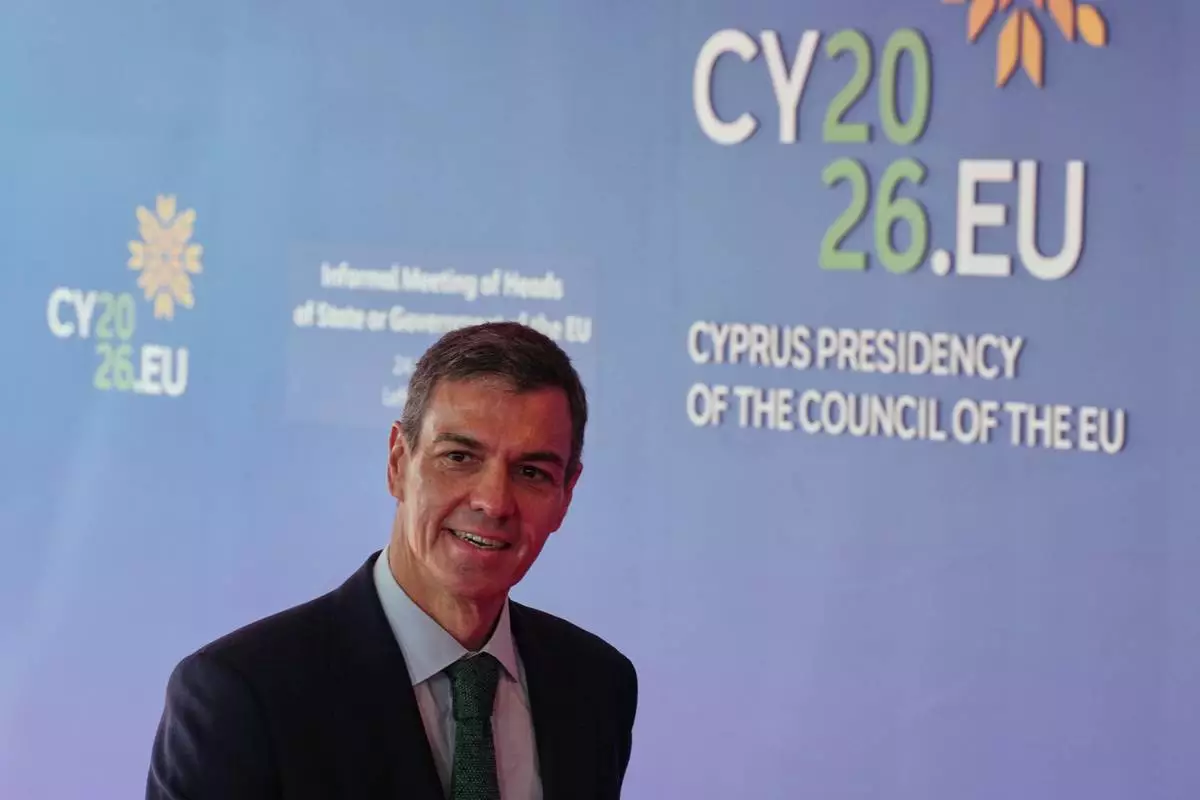
Spain's Prime Minister Pedro Sanchez arrives for the EU Summit in Nicosia, Cyprus, Friday, April 24, 2026. (AP Photo/Petros Karadjias)