Forty years after the Chernobyl disaster, the world's worst nuclear accident in the history of civilian nuclear energy, Belarus continues to bear some of the heaviest consequences of the radioactive fallout.
On April 26, 1986, Reactor No. 4 at the Chernobyl Nuclear Power Plant in the former Soviet republic of Ukraine exploded, releasing more than eight tons of highly radioactive material. Over 60,000 square kilometers of land were contaminated, and more than 3.2 million people were affected to varying degrees.
In Belarus' southern Gomel Region, near the Ukrainian border, more than 2,000 square kilometers remain a zone of alienation. The area now forms the world's only radiation-ecological reserve, the Polesie State Radiation-Ecological Reserve.
At first glance, parts of the reserve appear no different from ordinary countryside. In less contaminated areas, Belarusian scientists are conducting experimental activities, including horse breeding, forestry, and beekeeping.
"Today, the reserve is not only characterized by its radioactive elements, but also offers excellent conditions for the reproduction of many rare species, including ungulates, mammals, and various plants. Even the wild boar plays a role here, as it contributes to the transformation of radionuclides in the soil," said Sergei Kalinichenko, head of the Laboratory of Spectrometry and Radiochemistry of the Polesie State Radiation-Ecological Reserve.
However, deeper within the reserve, the scars of abandonment are clearly visible. Roads have deteriorated, and abandoned houses stand as silent reminders of the past.
Following the disaster, then-Soviet authorities evacuated all settlements within a 30-kilometer radius of the plant.
"Previously, there were 90 settlements here, with about 22,000 residents," said Alexei Kazakov, head of the Information Department of the reserve.
Since 2018, about 5,000 people have visited the reserve. Scientists accompany visitors, helping them understand radiation levels, risks, and the gradual recovery of the ecosystem.
Some eyewitnesses and liquidators in Belarus still recall the disaster vividly.
Nikolai Lysenko, who served in a helicopter squadron during the early days of the cleanup, was tasked with sealing the destroyed reactor from the air.
"Starting from April 28, as soon as the first helicopter arrived, we began the work. Why did they decide to seal it from above? Because the radiation levels on the ground were extremely high so people could not approach it on foot, so they decided to seal the reactor from above. They first made sandbags, and then put the sandbags into containers. One helicopter would come in, and drop the container, and then another, and then another. Three different types of helicopters were working non-stop," said Lysenko.
Sergei Shalkevich worked in the fire brigade and was part of the unit responsible for decontaminating the area. Until today, he still carries his old dosimeter out of habit.
"When you head out for the liquidation work, that's stress level one. Then, when you arrive and see just how massive the disaster really is -- that's level two. And the tension keeps building from there. When you arrive at the plant for the first time, you can't even tell where the danger is greater, here or over there. It's this uncertainty, this unknown, and the overwhelming feeling of serious danger," he said.
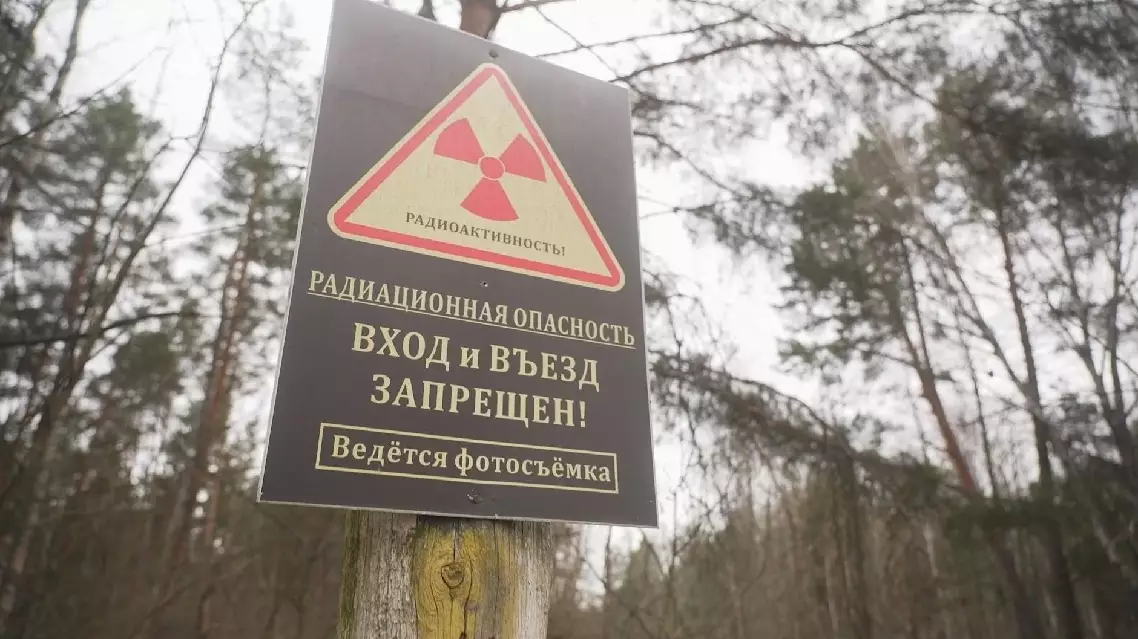
Belarus suffers nuclear fallout 40 years after Chernobyl disaster