Forty years after the world's worst nuclear disaster in Chernobyl, eyewitnesses have recounted the harrowing moments of the 1986 explosion and its enduring fallout, reflecting on a legacy that continues to shadow human history.
On April 26, 1986, Reactor No. 4 at the Chernobyl Nuclear Power Plant in the former Soviet republic of Ukraine exploded, releasing more than eight tons of highly radioactive material. Over 60,000 square kilometers of land were contaminated, and more than 3.2 million people were affected to varying degrees.
Oleg Genrikh was working as an operator in the main control room of Unit 4 when the explosions occurred. He suffered burns over 80 percent of his body.
"There was the first explosion, then after some time the second one. We can see nothing, and can only hearing the groans. My colleagues were saying 'it hurts, it hurts,'" said Genrikh.
At the accident site, every second counted amid extremely high radiation levels. The cleanup operation quickly took over by military, with soldiers shouldering the most dangerous decontamination work.
Major-general Nikolai Tarakanov commanded the military units on site.
"Because they had to be put into protective suits weighing 30 kilograms, including lead armor, shorts, and shoe covers. They were wearing these protective suits to do the decontamination work, which lasted for a month," said Tarakanov, head of the decontamination operation of the Chernobyl Nuclear Power Plant accident.
The town of Novozybkov in Russia's Bryansk region is located some 200 kilometers from the nuclear power plant and is one of the areas that was most severely damaged by the disaster.
Home to over 50,000 people, its environment is constantly monitored. During fire season, experts are especially vigilant, as radioactive elements can rise into the air with the smoke.
"We were told that we can't go to swim, can't have sunbathe. So we started to stay in the shade as much as possible. For a while, we were not allowed to go to the forests or the riverside," said Valentina Zabolotsky, a local resident.
"Our souls are already attached to this land. Where could we go? It's somehow scary to go to an unfamiliar place. Here, here, everything is ours, belongs to our ancestors," another resident Vera Valayeva said.
Svyatsk, a village on border with Belarus, suffered an even more devastating blow. Before the accident, it had a population of 3,000. Now, there are only few abandoned houses.
"There used to be a post office over there. My mom used to work there and I always went to see her. "My heart feels really heavy and it's very sad," said Nikolai Galyga, a local resident.
The accident at the Chernobyl Nuclear Power Plant became a lesson for generations for decades, but it also allowed people to show their best humanity.
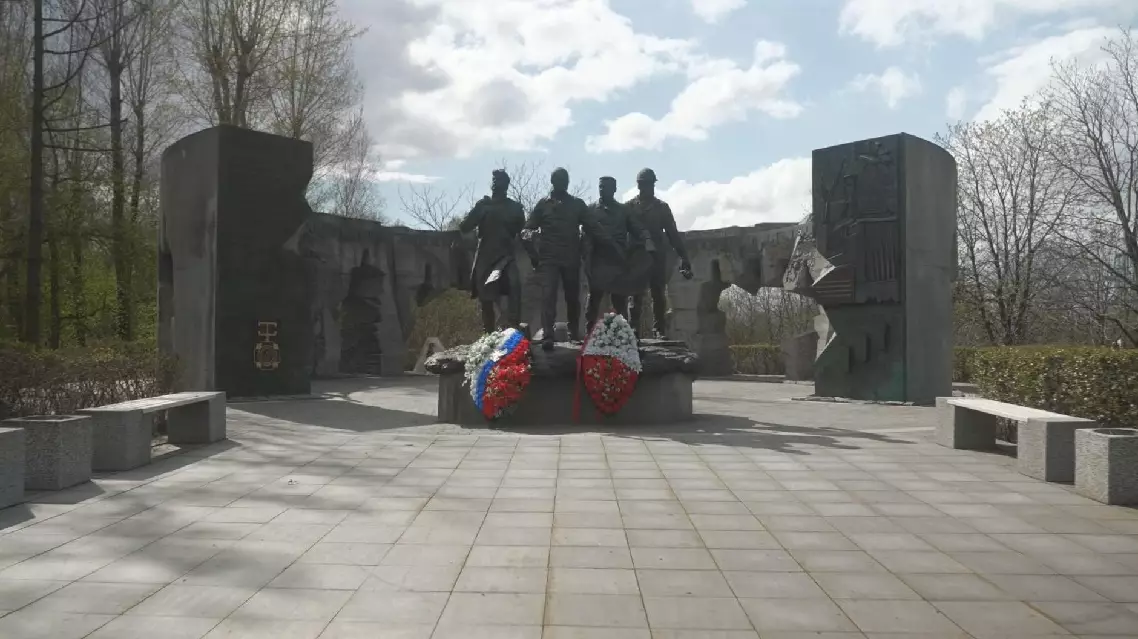
At the Mitinskoye Cemetery in Moscow, the original 28 victims of the Chernobyl disaster were buried, who were the firefighters and the staff members of the power plant.
"I didn't know a single case where someone refused to carry out the cleaning task. Everyone was trying their best for the job," said Alexander Vyazninsky, a liquidator of the decontamination operation of the Chernobyl Nuclear Power Plant accident:
"Those who took part in the cleanup in 1986 would do it again if they were asked," said Yuri Kamozin, another liquidator.
Eyewitnesses recount terrifying moments on 40th anniversary of Chernobyl disaster