Lesotho and South Africa have officially inaugurated the Senqu Bridge in Lesotho's highland district of Mokhotlong, marking a milestone in cooperation between the two neighboring countries.
South African President Cyril Ramaphosa and Lesotho's King Letsie III jointly declared the Senqu Bridge, the first extradosed bridge in Lesotho, open at a ceremony on Wednesday attended by dignitaries, engineers, workers and community members.
Addressing the ceremony, Ramaphosa described the bridge as a powerful symbol of the deep and enduring partnership between the two neighboring countries.
"This bridge is indeed a milestone in our long standing collaboration. South Africa is a water scarce country. And the waters of Lesotho's highlands are vital for our country's development. This project is more than infrastructure. It is indeed more than steel and concrete. It is a symbol of a deep and enduring partnership. Together, we are building bridges to the future," said Ramaphosa.
Ramaphosa said the Lesotho Highlands Water Project (LHWP) remains the largest investment South Africa has made outside its borders.
He also announced that South Africa would provide 30 million rand (about 1.81 million U.S. dollars) in humanitarian assistance to Lesotho through the African Renaissance Fund to support the country's response to HIV and tuberculosis amid declining international aid.
King Letsie III said the bridge represents more than an infrastructure achievement, adding that it would help connect communities, strengthen cooperation and support economic growth in both Lesotho and South Africa.
Noting that 2026 marks the 40th anniversary of the LHWP Treaty, the king called for renewed commitment to ensuring that the long-running water project continues to serve the interests of both countries.
Lesotho's Prime Minister Sam Matekane echoed that sentiment, reaffirming Lesotho's commitment to ensuring that the project's benefits reach ordinary citizens.
The government will ensure that every loop of return to Lesotho through Phase II is invested wisely in health, education, infrastructure and the future of young people, he said.
Built at an estimated cost of 2.4 billion maloti (about 145 million dollars), the bridge is the first extradosed bridge in Lesotho and forms part of the broader LHWP Phase II works, which also include the Polihali Dam, a transfer tunnel and related infrastructure such as roads, power lines and telecommunication facilities. The bridge project has created more than 1,200 jobs, most of them for Basotho workers.
Established in 1986, the LHWP is a multi-phased partnership between South Africa and Lesotho aimed at enhancing water security, hydropower generation and socio-economic development.
Once Phase II is completed, annual water supply capacity is expected to increase from 780 million cubic meters to 1.27 billion cubic meters, significantly strengthening South Africa's long-term water security while also boosting Lesotho's hydropower output.
LHWP, undertaken by Chinese enterprises, has trained a large number of skilled workers and created over 17,000 jobs for local residents under Phase II. It stands as a model of a win-win cooperation between China and Africa.
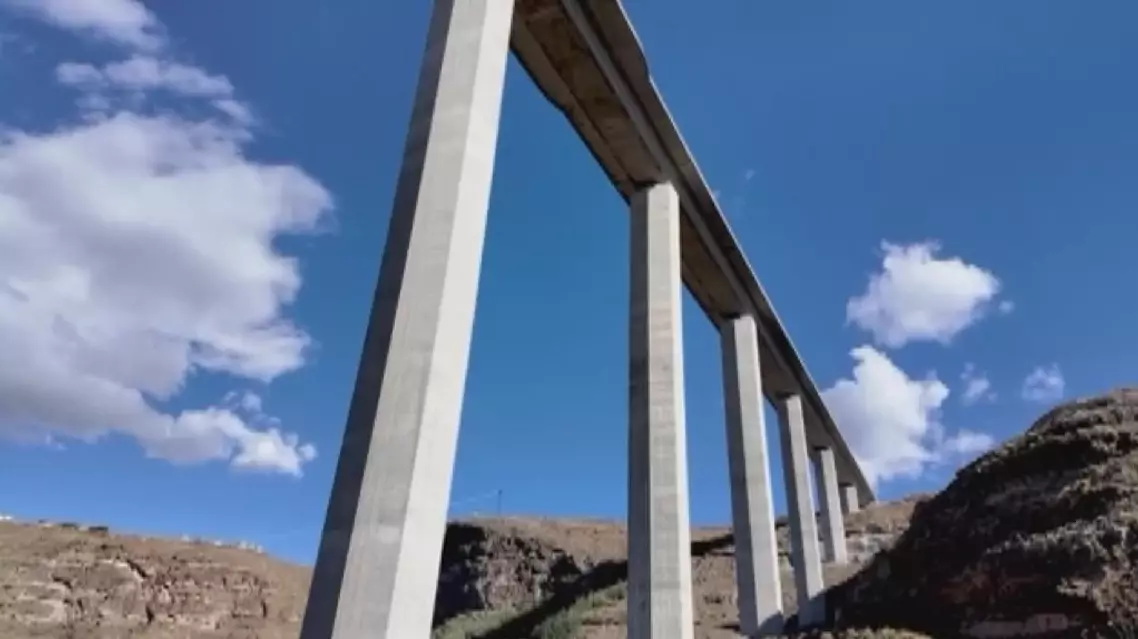
Lesotho, South Africa inaugurate Senqu Bridge