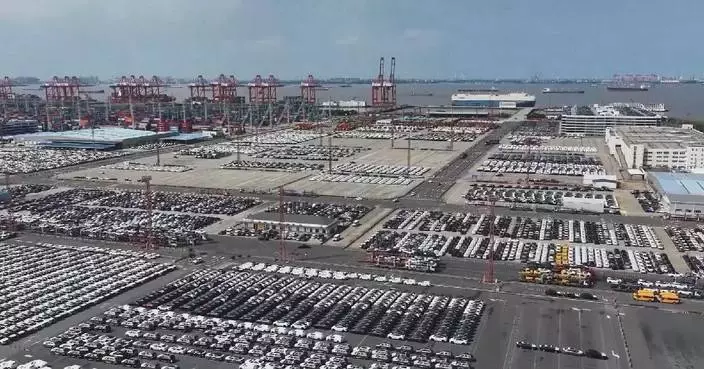
Global automakers at the ongoing 2026 Beijing International Automotive Exhibition (Auto China 2026) have demonstrated firm commitment to deepening their presence in the Chinese market, with many preparing to ramp up new energy vehicle (NEV) production and strengthen local partnerships.
The event kicked off in Beijing on Friday and will run through May 3. As the world's largest auto show, it has brought together over 2,000 companies from 21 countries and regions.
As the market pivots toward electrification, many international automakers have expanded their cooperation footprint in China.
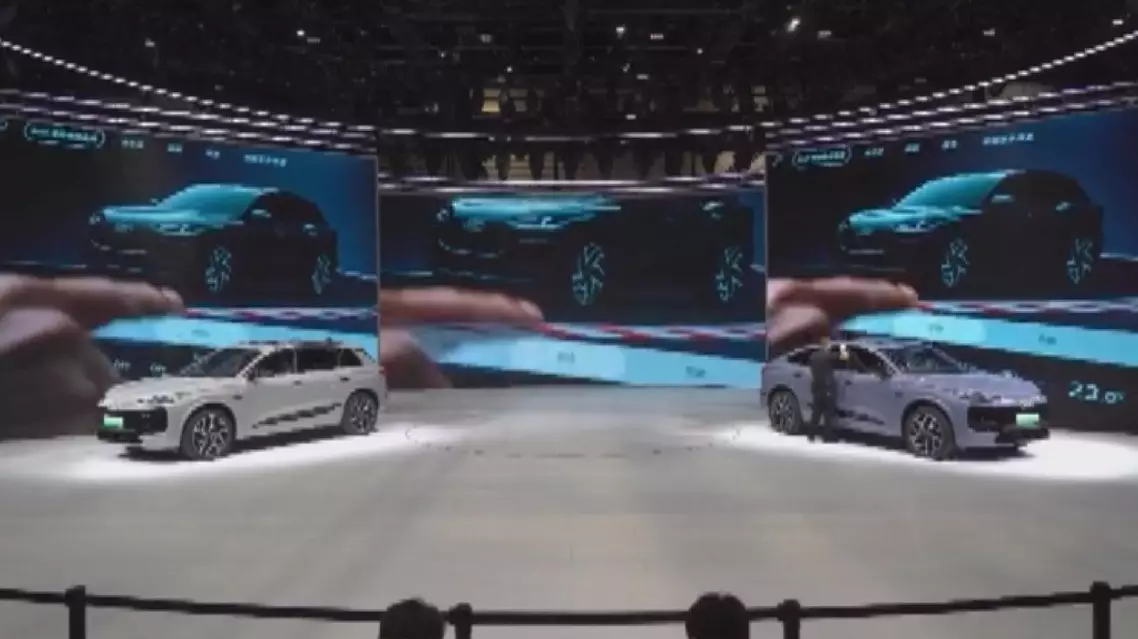
Recently, Volkswagen Group unveiled three new concept cars together with its Chinese joint venture partners and announced that it will launch 13 new NEV models in the Chinese market this year. "The elements of having local development, very strong partnerships and integrated supply chain allow us to develop a vehicle as fast as 24 months while still maintaining the standards that we set as Volkswagen globally. And the result is a clear advantage to customers. So we get the speed, the innovation from China, with the reliability from the German engineering side, so a product that customers can trust," said Robert Cisek, CEO of Volkswagen Brand China.
While implementing a dual-track strategy in the Chinese market, German automaker Audi is co-developing intelligent driving technology with Chinese tech giant Huawei and has signed a cooperation agreement with Shanghai-based SAIC Motor. It has also established an AUDI Innovation and Technology Center in Shanghai to jointly develop future generations of models.
"For each of the two brands, we really rely on Chinese technology and this is key to innovation in the market. We combine the strong Audi values and our heritage in the brand, in design, in chassis technology with leading-edge Chinese technologies from partners like Huawei or Momenta, and we have a lot of proof points we have in our combustion engine cars and in our NEV cars, level 2-plus-plus systems that are China specific and are leading-edge technology in the segments," said Gernot Döllner, CEO of Audi AG.
Meanwhile, Stellantis, through its joint venture Dongfeng Peugeot Citroen Automobile in China, will launch multiple NEV models over the next three years as part of its commitment to deepen its presence in the Chinese market. "China is number one for NEV technology, for electric vehicles, for intelligent mobility. So we're very happy to use this technology to be integrated in the ecosystem of China, both for access to technology and also for production and to use this for our transition to electrification of the future," said Alain Favey, CEO of Peugeot.
Global auto giants accelerate localization in China's new energy vehicle industry