A major international book fair in Astana has highlighted deepening ties between China and Kazakhstan in the publishing industry, a relationship that has increasingly flourished over the past decade.
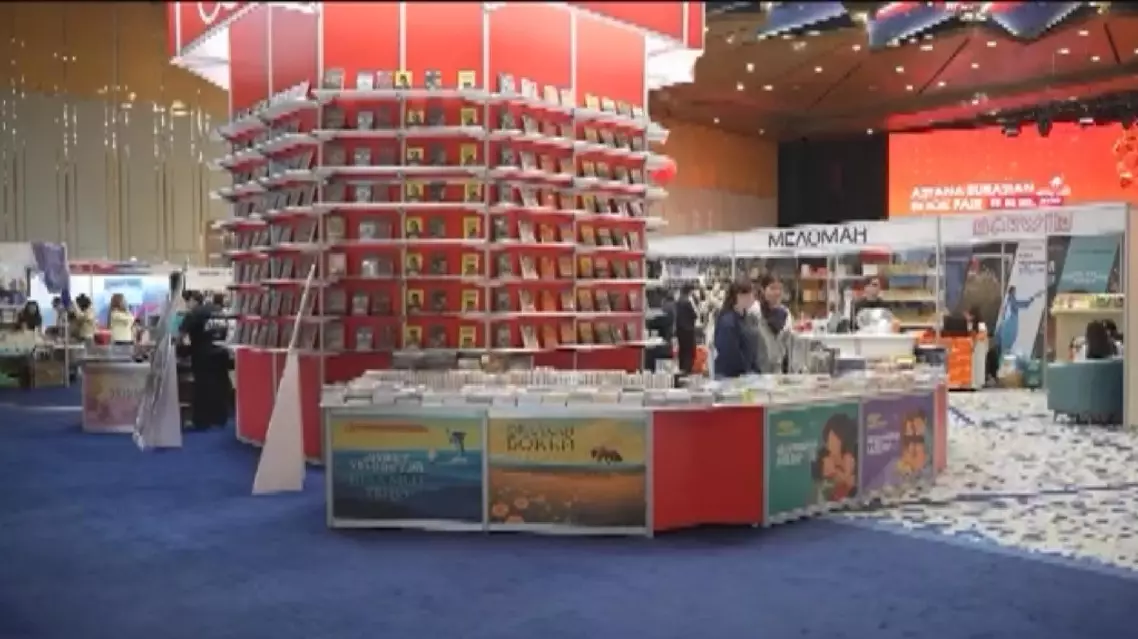
Over 80 publishers from 16 countries gathered in the Kazakh capital from Wednesday to Sunday for the city's ninth International Book Fair, also known as the Eurasian Book Fair. The exhibition brought together the literary worlds of Kazakhstan, Spain, China, Russia, Türkiye, and the UK.
"The Astana Eurasian Book Fair has become a prestigious exhibition, and international publishing companies are always trying to get into this exhibition. The main goal is to present the most significant books and publications. There is practically no free space in the hall. The main stage is packed from morning until evening," said Kuanadyk Kudaibergenov, the official representative of the Book Fair.
The five-day fair offered much more than book sales, with a wide array of programs including new book presentations, author meet-and-greets, and autograph sessions. New releases, rare editions, bestsellers, educational books and children's literature are all on display, ensuring that every visitor can find something to their taste.
For publishers and printers, the Astana Book Fair is about forging new business relationships. Among the Chinese exhibitors was Chen Xin, manager of the Nanjing Printing Group, who has watched the partnership mature firsthand.
"We have been partnering with Kazakhstan for about 15 years. In total, we produce about five million books a year, exporting to more than ten countries, including the UK, the U.S., Australia, and Italy," said Chen Xin, manager of the Nanjing Printing Group.
At some of these Chinese publishers' booths, visitors were struck by unexpected symbols of cultural respect and exchange. One Kazakh visitor was surprised to see a book containing writings by Abai Qunanbaiuly the revered 19th-century Kazakh poet, philosopher, and reformer whose writings remain foundational to Kazakh national identity.
"At the Chinese booth, the book that caught my eye was a work by Abai Qunanbaiuly. This shows respect for the Kazakh people. It shows that we are close," said a visitor.
Publishers exchange business cards and attract new customers, but they also share stories about the challenges of bringing literature across linguistic and cultural divides. Organizers said this has become the fair's quiet achievement, noting that it is now a trusted platform for fostering publishing partnerships and cross-cultural exchange.
Astana International Book Fair spotlights China-Kazakhstan cooperation