NEW YORK--(BUSINESS WIRE)--Apr 27, 2026--
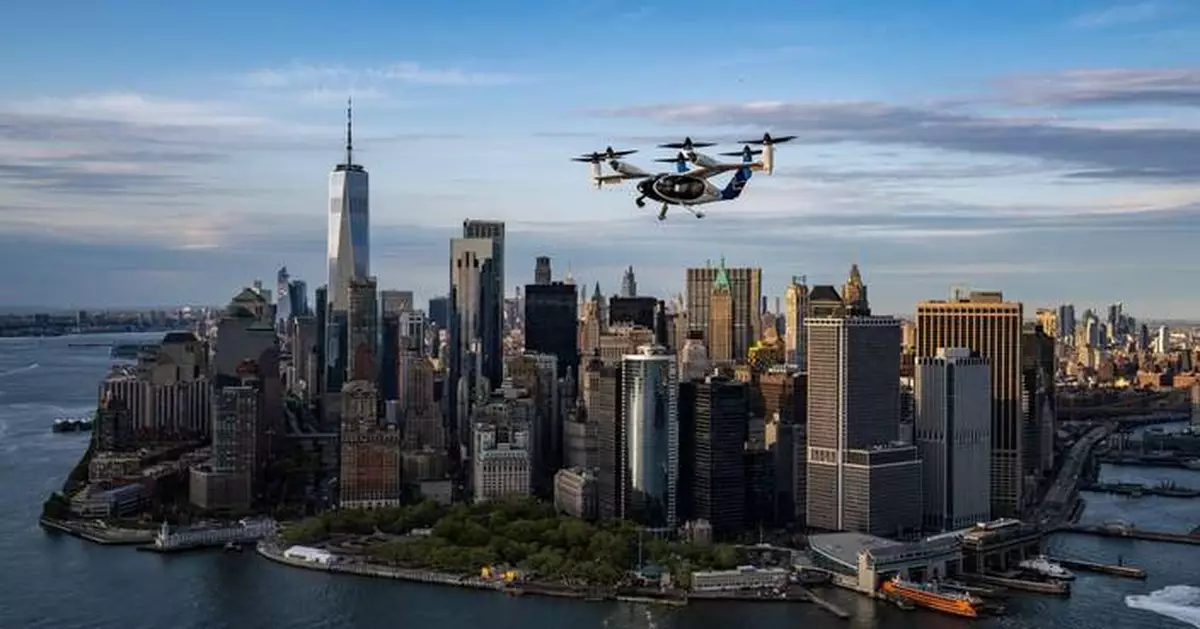
Joby Aviation, Inc. (NYSE:JOBY), a company developing electric air taxis for commercial passenger service, today announced the completion of the first-ever point-to-point electric vertical takeoff and landing (eVTOL) air taxi demonstration flights in New York City’s history, marking the start of a week-long public campaign across the city’s existing heliport network. Framed against the most iconic skyline in the world, the campaign offers the first real-world demonstration of how electric air taxis, which are quiet and produce zero operating emissions, will be able to connect the region, linking vertiports, international airports, and communities across the New York metropolitan area.
This press release features multimedia. View the full release here: https://www.businesswire.com/news/home/20260427586793/en/
Joby's aircraft (N545JX) departed from John F. Kennedy International Airport (JFK) and landed across the city’s existing heliport network, including Downtown Skyport, and the West 30th Street and East 34th Street Heliports in Midtown, home to Blade Air Mobility’s premium passenger lounges. Together, these sites trace some of the commercial routes the company envisions for New York, connecting Lower Manhattan and Midtown to JFK in under 10 minutes.
“New York has always been a city that defines the future by demanding better,” said JoeBen Bevirt, founder and CEO of Joby. “We first flew here in 2023, and now we’re showing what the next chapter looks like: a quiet, zero operating emissions air taxi service designed to better serve New Yorkers. This week, flying between JFK and Manhattan, we showed what the White House-backed eIPP initiative makes possible and offered New York a look at what’s coming.“
“The bridges, tunnels, airports, and rail lines that the Port Authority operates move hundreds of millions of people through this region every year, and our job is to make sure that network keeps pace with the future,” said Port Authority Chairman Kevin O’Toole. “This cutting-edge aircraft is exactly the kind of innovation we have a responsibility to test, understand, and help shape for the good of the region and the public. These flights advance our work to determine how next-generation aviation technology can serve the people of New York and New Jersey.”
“We operate some of the busiest airports in the world, and with that comes a responsibility to think seriously about what aviation looks like in the decades ahead for our passengers, for our communities, and for the environment,” said Port Authority Executive Director Kathryn Garcia. “These demonstration flights are one data point in a larger body of work we’re building around next-generation electric aviation, and it reflects our conviction that responsible exploration of these technologies now is how we prepare this region for the future.”
Led by the NYC Economic Development Corporation, and in partnership with Skyports Infrastructure and Vertiports by Atlantic, New York City's heliport infrastructure will be electrified in anticipation of the launch of commercial air taxi service.
“These historic Joby flights, linking our city-owned heliport to our airports, is proof that the future of advanced air mobility is no longer a Jetsons-esque fantasy – it’s already here,” said NYCEDC Interim President & CEO Jeanny Pak. “NYCEDC is thrilled to usher in New York City’s transition to electric flight, and these flights mark a real milestone in that journey. Building on the progress we’ve made alongside Downtown Skyport and Atlantic Aviation since Joby last flew in NYC skies by upgrading the city-owned heliports to support eVTOL charging infrastructure and Blue Highways maritime delivery, NYCEDC is making New York a more sustainable, greener, and innovative transportation landscape for all New Yorkers.”
Central to Joby’s New York strategy was the 2025 acquisition of Blade Air Mobility’s passenger business, now a wholly owned subsidiary of Joby. Blade’s operational expertise, broad base of passenger infrastructure in Manhattan and at key New York area airports enabled it to serve more than 90,000 passengers in 2025. Blade provides the foundation for commercial electric air taxi service at scale and will accelerate the city’s transition from the use of helicopters to quiet and emission-free aircraft.
In New York, Joby’s commercial vision is simple: turn one of the city’s most time consuming trips into one of its fastest. Through partnerships with Delta Air Lines and Uber, Joby aims to create a seamless, end-to-end experience that connects ground transportation and air travel in a single journey. In a city where a typical commuter lost, by one estimate, 102 hours to traffic congestion in 2025, Joby’s goal is to reclaim that time by transforming a 60-to-120-minute drive to JFK into a seven-minute flight.
Joby’s aircraft has been specifically designed with redundancies across multiple systems to enhance safety and reliability. Its proprietary design achieves a considerably lower noise footprint than similarly sized conventional aircraft or helicopters, and its acoustic signature blends into the ambient sounds of everyday city life.
These flights celebrate the March announcement of New York being selected under the federal eVTOL Integration Pilot Program (eIPP), established by executive order, which aims to accelerate commercial rollout of this next generation of air transportation across the U.S. Joby was named a partner on five selected projects, spanning 12 states. The Port Authority of New York and New Jersey — the lead partner behind one of the selected projects and the agency responsible for much of the region’s critical transportation infrastructure including airports, bridges, tunnels, and the seaport — worked closely with the FAA, Joby, and other eIPP partners to make these flights possible, bringing the program’s goals to life by integrating quiet, emissions-free air taxi service at one of the nation’s busiest airports.
Joby continues to make progress in the final stages of FAA certification, marked by the recent flight of its first conforming aircraft for TIA, which will pave the way for FAA pilots to carry out for-credit tests. Building on a series of piloted demonstrations across the San Francisco Bay Area, the New York campaign puts the aircraft in real flight routes and real environments in one of the world’s most dynamic cities, demonstrating the acoustics and performance metrics that are critical to unlocking the urban aerial ridesharing market.
The flights continue Joby’s 2026 Electric Skies Tour, a national showcase timed to celebrate the United States’ 250th anniversary, following the tour’s inaugural Bay Area flight campaign, which included a landmark flight over the Golden Gate Bridge.
About Joby Aviation
Joby Aviation, Inc. (NYSE:JOBY) is a California-based transportation company developing an all-electric, vertical take-off and landing air taxi. Joby intends to both operate its fast, quiet, and convenient air taxi service in cities around the world and sell its aircraft to other operators and partners. To learn more, visit www.jobyaviation.com.
About The Port Authority of New York and New Jersey
The Port Authority of New York and New Jersey is a bi-state agency that builds, operates and maintains many of the most important transportation and trade infrastructure assets in the country. For over a century, the agency’s network of major airports; critical bridges, tunnels and bus terminals; a commuter rail line; and the busiest seaport on the East Coast has been among the most vital in the country – transporting hundreds of millions of people and moving essential goods into and out of the region. The Port Authority also owns and manages the 16-acre World Trade Center campus, which welcomes tens of thousands of office workers and millions of annual visitors. The agency’s historic $45 billion capital plan for 2026-2035 advances a new generation of projects that will modernize, strengthen, and expand the agency’s infrastructure around the region, including: a new Midtown Bus Terminal, transformations at John F. Kennedy International Airport (JFK) and Newark Liberty International Airport (EWR), and a new era for PATH, with major service increases. The Port Authority’s annual budget of $10 billion includes no tax revenue from either the states of New York or New Jersey or from the city of New York. The agency raises the necessary funds for the improvement, construction or acquisition of its facilities primarily on its own credit.
About NYCEDC
New York City Economic Development Corporation is a mission-driven, nonprofit organization that works for a vibrant, inclusive, and globally competitive economy for all New Yorkers. We take a comprehensive approach, through four main strategies: strengthen confidence in NYC as a great place to do business; grow innovative sectors with a focus on equity; build neighborhoods as places to live, learn, work, and play; and deliver sustainable infrastructure for communities and the city's future economy.
Forward-Looking Statements
This release contains “forward-looking statements” within the meaning of the “safe harbor” provisions of the Private Securities Litigation Reform Act of 1995, including but not limited to, statements regarding the development and performance of our aircraft, the growth of our manufacturing capabilities, our regulatory outlook, progress and timing; our planned operations in New York and New Jersey, including potential routes and timing, along with the potential for our electric air taxi to replace conventional helicopter flights; expected benefits of and operations under the eIPP, including the expected timing and location of such operations; our business plan, objectives, goals and market opportunity; plans for, and potential benefits of, our strategic partnerships; and our current expectations relating to our business, financial condition, results of operations, prospects, capital needs and growth of our operations. You can identify forward-looking statements by the fact that they do not relate strictly to historical or current facts. These statements may include words such as “anticipate”, “estimate”, “expect”, “project”, “plan”, “intend”, “believe”, “may”, “will”, “should”, “can have”, “likely” and other words and terms of similar meaning in connection with any discussion of the timing or nature of future operating or financial performance or other events. All forward looking statements are subject to risks and uncertainties that may cause actual results to differ materially, including: our ability to launch our air taxi service and the growth of the urban air mobility market generally; our ability to produce aircraft that meet our performance expectations in the volumes and on the timelines that we project; participation in eIPP projects is subject to, among other things, the finalization of OTA contracts; the competitive environment in which we operate; our future capital needs; our ability to adequately protect and enforce our intellectual property rights; our ability to effectively respond to evolving regulations and standards relating to our aircraft; our reliance on third-party suppliers and service partners; uncertainties related to our estimates of the size of the market for our service and future revenue opportunities; and other important factors discussed in the section titled “Risk Factors” in our Annual Report on Form 10-K, filed with the Securities and Exchange Commission (the “SEC”) on February 27, 2026, and in future filings and other reports we file with or furnish to the SEC. Any such forward-looking statements represent management’s estimates and beliefs as of the date of this release. While we may elect to update such forward-looking statements at some point in the future, we disclaim any obligation to do so, even if subsequent events cause our views to change.
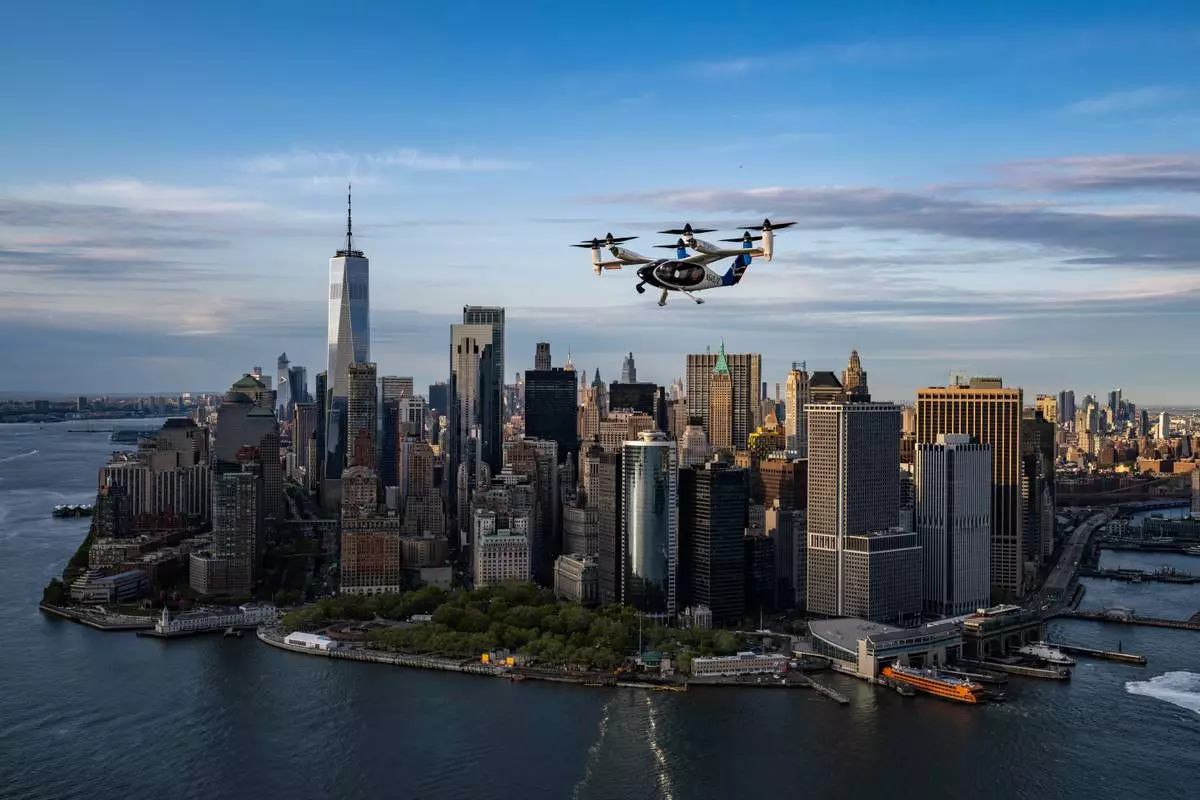
Joby’s electric air taxi flies over New York City during a 10-day flight campaign celebrating the FAA’s eVTOL Integration Pilot Program (eIPP), showcasing quiet, zero operating emissions air travel across the city, including flights to JFK. (Photo: Joby Aviation)