France's adoption of a draft law to facilitate the restitution of looted artworks and artifacts marks a positive step in French policy, but remains insufficient for Algeria, according to Algerian experts.
On April 13, the French National Assembly passed the bill unanimously, with 170 votes in favor. Those covered in the bill are artworks and artifacts "illicitly acquired" between 1815 and 1972 through theft, looting, transfers or gifts obtained by force, violence, or from someone without the right to dispose of it.
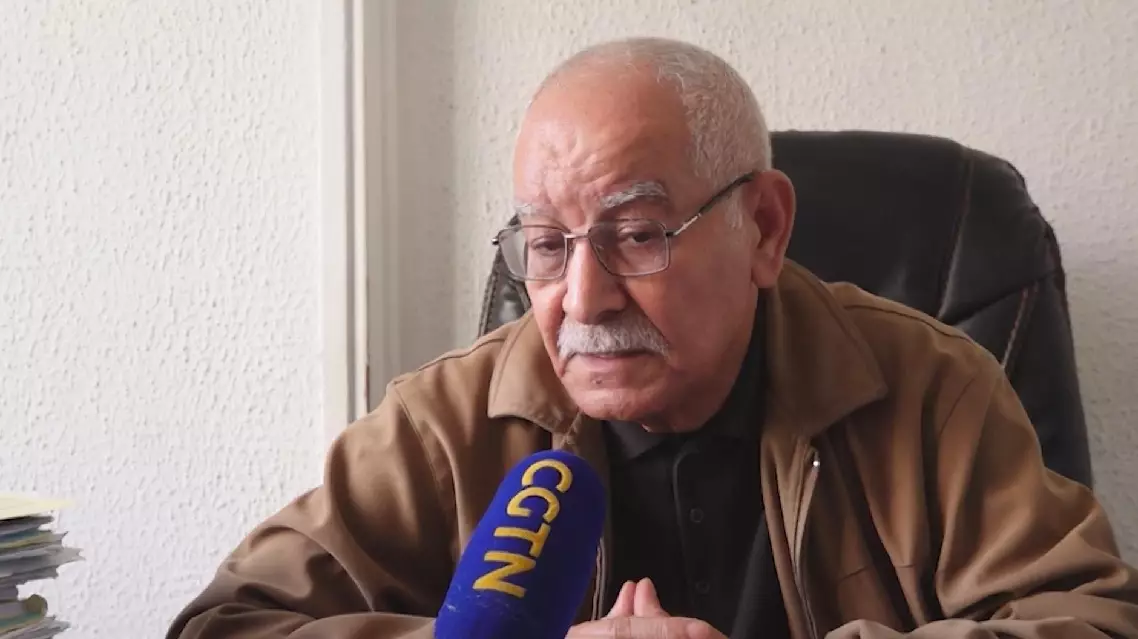
Ammar Rekhila, an Algerian historian and lawyer, considered that this law constitutes a positive progress in French policy, and called on Algerian diplomatic representatives to intensify their efforts with the French authorities regarding the restitution of Algerian cultural property in France.
"For us Algerians, we hope that this law, which is enacted by the French National Assembly, also concerns Algerians and Algeria. And in that case, political and diplomatic representatives must make efforts with the French authorities to study this matter. For my part, I see this as a new phase in French policy, a positive phase," he said.
For several years, Algeria has been intensifying its efforts to recover its cultural heritage, particularly from France. Some restitutions have already taken place, including archives and human remains.
But for many observers, these advances remain limited given the scale of property still held abroad, particularly archives, which are considered essential for reconstructing the country's history.
"To date, Algeria has been able to recover certain archives, particularly those concerning the period of the war of independence, and even long before that, French authorities have agreed to give Algeria either archives or copies. Algeria also recovered in 2021 the skulls of 24 former martyrs stored at the Musee de l'Homme in Paris, but much remains to be done. Algeria is demanding not only the restitution of archives, but also the restitution and recovery of geographical maps of bombs, or rather mines, laid along the Algerian borders, as well as archives of nuclear tests in the Sahara," said Ali Boukhlef, an independent Algerian journalist.
The former director of the Arabic-language France 24 channel, Nabil El Choubachi, said this law was "more symbolic than anything else." According to him, certain conditions limit its application, particularly for objects belonging to museums.
"This is a law, which, in my opinion, is more symbolic than anything else. That is to say, there are certain restrictions. The law says, for example, things that were looted. How can we know what was looted from what was not looted? There are still certain conditions. Namely, if something belongs to a museum, it will be difficult to dislodge them from those museums. But let's say perhaps this is a first step towards the restitution of some important objects," he said.
Between tangible legal progress and persistent unmet expectations, the issue of restitution remains central to Franco-Algerian relations. For Algiers, it concerns not only about cultural heritage but also historical memory and national sovereignty, making it a highly sensitive matter on both sides of the Mediterranean.
France's artwork restitution bill marks positive step, but still insufficient for Algeria: Algerian experts