Skip to Content Facebook Feature Image

African trade officials, SMEs eye gains from China's zero‑tariff policy

China

China

China

African trade officials, SMEs eye gains from China's zero‑tariff policy

2026-04-29 18:02 Last Updated At:04-30 00:07

Officials and business leaders in South Africa and Kenya welcomed China's zero‑tariff policy for 53 African countries, saying the measure will expand trade opportunities, lower costs for small enterprises, and strengthen bilateral cooperation.

In June 2025, Xi Jinping wrote in a congratulatory letter to the FOCAC coordinators' meeting, noting that China was prepared to negotiate and sign a China‑Africa Economic Partnership for Shared Development, extending zero‑tariff treatment on all tariff lines to 53 African countries with diplomatic ties to Beijing.

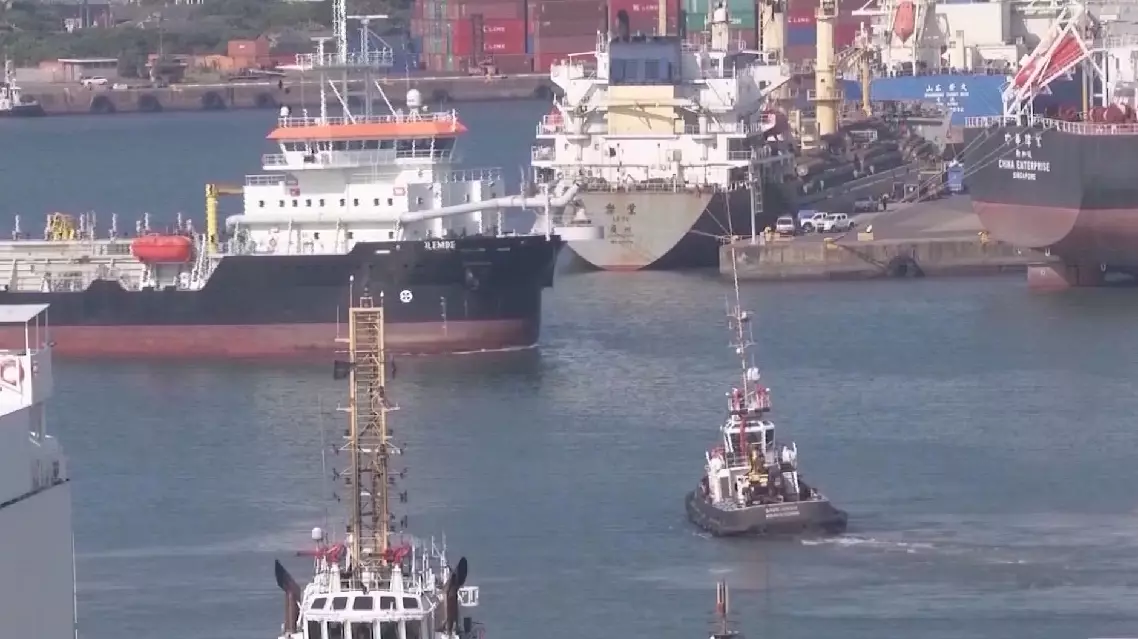
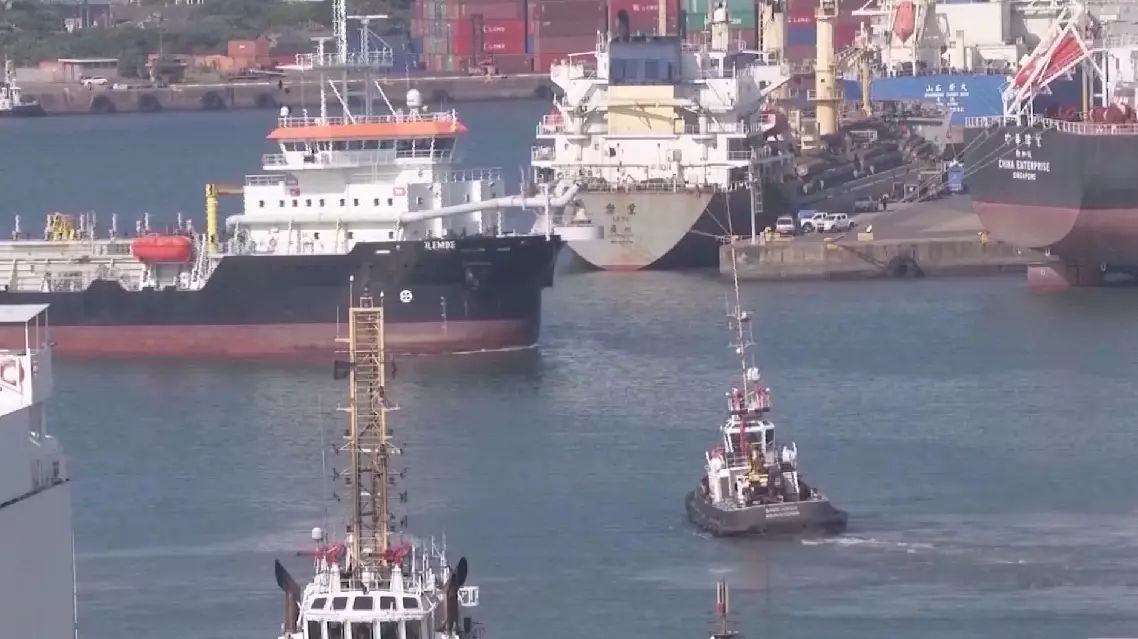
Starting May 1 this year, the zero‑tariff treatment for products from the 53 African countries will take effect. South African officials said the move will open new opportunities for trade and cooperation.

"That's a great opportunity. Starting from the first of May, we will take advantage of that. Going forward, products that we're sending into China duty-free will be increasing," said Parks Tau, the Minister of Trade, Industry and Competition of South Africa.

"First of all, we want to thank President Xi Jinping for the great initiative that he has implemented of initiating the zero-tariff for African countries. I think this is a huge milestone for us as a country, specifically for our traders in the city of Johannesburg. Such an announcement will obviously open up more opportunities for us to trade with China," said Amukelani Kubayi, acting director for Trade and Investment Promotion for the City of Johannesburg.

Kubayi noted that small and medium-sized enterprises (SMEs) will be the first beneficiaries. South African agricultural products, such as citrus fruits, wine, and aloe-based products, are expected to expand their export scale to China, supported by the zero-tariff policy.

South African businessmen who have long maintained trade ties with China have expressed similar expectations.

"It's going to be so important that things are zero rated for us, it means that there will be notable savings for us as an SME. We as a South African company welcome what the President of China, Xi Jinping, has done for South Africa. We are creating cooperation between the two countries and be able to do more from an innovation and from technology within South Africa," said Manelisa Bane, a South African businessman.

On Monday, the Embassy of China in Kenya, together with Kenya's Ministry of Foreign and Diaspora Affairs, hosted a seminar titled "Zero Tariffs, Infinite Opportunities." During the event, a Kenyan official expressed anticipation for the implementation of China's zero-tariff policy, stating that Kenya will seize this valuable opportunity to continuously improve product quality and the business environment, ultimately bringing tangible benefits to the Kenyan people. "Kenya-China partnership is permanent, versatile and resilient in an increasingly turbulent global, political and economic environment," said Josphat Maikara, director general for Political and Diplomatic Affairs at the Ministry of Foreign and Diaspora Affairs (of Kenya).
African trade officials, SMEs eye gains from China's zero‑tariff policy
African trade officials, SMEs eye gains from China's zero‑tariff policy

African trade officials, SMEs eye gains from China's zero‑tariff policy
African trade officials, SMEs eye gains from China's zero‑tariff policy
The United States' war with Iran has already been "terminated" ahead of a 60-day deadline by law due to the current ceasefire, U.S. media reported on Thursday, citing a senior Trump administration official.

Under the War Powers Resolution, U.S. President Donald Trump had until Friday to seek congressional authorization to continue the conflict or bring it to an end, with the option to extend the deadline by an additional 30 days.

"The hostilities that began on Saturday, Feb. 28 have terminated" between the United States and Iran for purposes of that law, the official, who spoke on condition of anonymity, was quoted as saying.

Washington and Tehran have not exchanged fire since a ceasefire began on April 7 and was later extended.

Earlier on Thursday, Defense Secretary Pete Hegseth argued at a congressional hearing that he believes the ceasefire "pauses or stops" the 60-day clock for congressional authorization of war.

"I do not believe the statute would support that," Democratic Senator Tim Kaine responded, "I think the 60 days runs (out) maybe tomorrow, and that's going to pose a really important legal question for the administration there."

"That deadline is not a suggestion; it is a requirement," said Republican Senator Susan Collins, who voted Thursday for a measure to end U.S. military action in Iran without congressional approval.

The White House notified Congress of the military campaign against Iran on March 2, making Friday the 60-day milestone for the president to start winding down the war unless he gets congressional authorization.

Iranian President Masoud Pezeshkian said on Thursday that any U.S. attempt to impose a naval blockade and maritime restrictions against Iran is "doomed to failure."

Pezeshkian made the remarks in a statement to mark Persian Gulf National Day, which falls on April 30. He said the "enemies" have changed their approach and shifted their pressure to the economic and maritime arenas, using a naval blockade on the Strait of Hormuz and restrictions on maritime trade as a new tool against the Iranian government and people, according to the statement published on his office's website.

The United States imposed its blockade on the Strait of Hormuz after post-ceasefire negotiations with Iran in Pakistan's capital Islamabad on April 11 and 12 failed to lead to an agreement.

The ceasefire between Iran, the United States and Israel took effect on April 8 following 40 days of fighting, which started on Feb. 28 when the United States and Israel launched joint attacks on Tehran and other Iranian cities, killing Iran's then-Supreme Leader Ali Khamenei, senior commanders, and civilians.

Iran responded with waves of missile and drone strikes targeting Israel and U.S. assets in the Middle East, and tightened its grip on the Strait of Hormuz, barring passage to vessels belonging to or affiliated with Israel and the United States.

Trump team says Iran war 'terminated' as ceasefire sparks clash over War Powers deadline

Trump team says Iran war 'terminated' as ceasefire sparks clash over War Powers deadline

Recommended Articles