NEW YORK--(BUSINESS WIRE)--Apr 30, 2026--
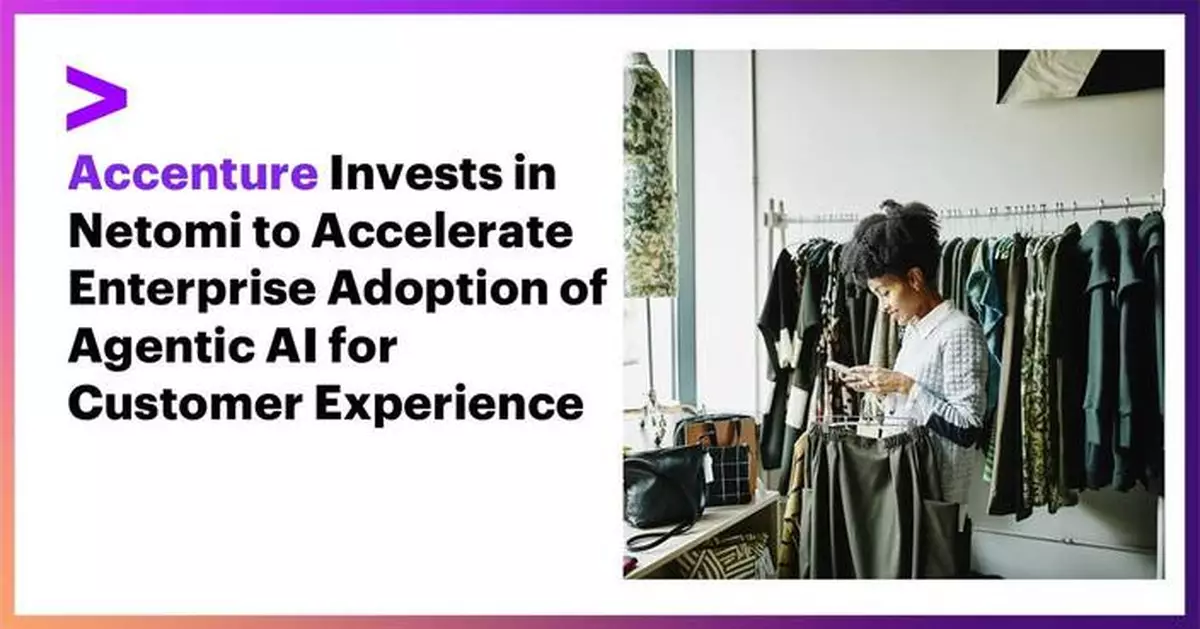
Accenture (NYSE: ACN) has made an investment, through Accenture Ventures, in Netomi, a leading customer experience AI platform company. As part of this investment, Accenture and Netomi are entering into a strategic partnership to help enterprises reinvent customer experience using agentic AI systems. This investment and partnership will further expand Accenture’s customer experience and service capabilities and embed Netomi’s agentic AI platform directly into existing technologies and customer touchpoints without operational disruption.
This press release features multimedia. View the full release here: https://www.businesswire.com/news/home/20260430477653/en/
As organizations face rising customer expectations and an increasing volume of support requests, the demand for smarter, more efficient service has become more critical than before. A recent Accenture report revealed that 87% of the respondents are likely to avoid a brand after just a single negative experience. Netomi’s platform is specifically designed to help organizations respond to customers with precision and speed, and free human agents to focus on complex, meaningful interactions.
At the core of Netomi’s technology is its conversational AI platform with a no-code orchestration layer that helps companies operate through a coordinated system of AI agents anticipating needs, taking action, and rewiring how companies serve, adapt, and grow. When armed with shared context and goals, these agents can drive measurable business impact across multiple channels, while maintaining governance and brand compliance.
“Agentic AI is opening an entirely new chapter for customer experience,” said Ndidi Oteh, CEO, Accenture Song. “One where brands can respond with greater empathy, consistency and intelligence at every touchpoint. Netomi’s platform doesn’t just make service faster; it strengthens the connection between people and the brands they trust. Together, we’re empowering our clients to reinvent how they serve their customers – seamlessly, responsibly and at scale – so they can grow with confidence in an era of continuous change.”
Netomi’s AI is designed to operate across a wide range of customer interactions—from resolving common requests to handling complex, multi-step workflows—enabling enterprises to deliver relevant, personalized experiences and fast resolutions.
“Our clients are looking for ways to deliver faster, more consistent customer service without increasing operational complexity,” said John Bolze global AI solutions lead at Accenture Song. “Netomi’s enterprise-ready agentic AI platform stands out because it acts as an intelligent extension of the human agents, improving response times and enhancing overall performance.”
“By partnering with Accenture, we’re equipping the firm that designs, implements, and operates customer experience inside the world’s largest enterprises with direct access to the Netomi platform—along with the playbooks and training that enable deployment at scale," said Puneet Mehta, founder and CEO of Netomi. “Bringing the two together creates an end-to-end system for transforming customer experience with AI—and will define the standard for how that transformation happens going forward.”
Jeffrey Katzenberg, Managing Partner of WndrCo and Board Director of Netomi shared, “Netomi is the rare company that actually delivers on the promise of enterprise AI—at scale and in the moments that matter most. There is no more fitting lead investor for this round than Accenture, the firm that understands enterprise complexity better than anyone on earth.”
Accenture continues to identify relevant investments and partnerships that bring the power of AI to customer experiences. Through investment in Netomi, Accenture is expanding its commitment to bring powerful, secure, and scalable AI-driven solutions to clients, enabling them to adapt, grow and gain competitive advantage in a rapidly changing environment.
Terms of the investment were not disclosed.
About Accenture
Accenture is a leading solutions and services company that helps the world’s leading enterprises reinvent by building their digital core and unleashing the power of AI to create value at speed across the enterprise, bringing together the talent of our approximately 786,000 people, our proprietary assets and platforms, and deep ecosystem relationships. Our strategy is to be the reinvention partner of choice for our clients and to be the most client-focused, AI-enabled, great place to work in the world. Through our Reinvention Services we bring together our capabilities across strategy, consulting, technology, operations, Song and Industry X with our deep industry expertise to create and deliver solutions and services for our clients. Our purpose is to deliver on the promise of technology and human ingenuity, and we measure our success by the 360° value we create for all our stakeholders. Visit us at accenture.com.
About Netomi
Netomi is the enterprise agentic CX platform built for the world's most complex environments. Global brands including United Airlines, Paramount, and DraftKings leverage Netomi to interact with their customers across chat, email, and voice. Netomi is building the intelligence layer for the digital experience — so that every brand can deliver the effortless, outcome-driven experiences their customers deserve. For more information, visit www.netomi.com.
Copyright © 2026 Accenture. All rights reserved. Accenture and its logo are registered trademarks of Accenture.
Accenture has made an investment, through Accenture Ventures, in Netomi, a leading customer experience AI platform company.
Black members of Congress are bracing for a crippling shake-up of their ranks after a Supreme Court ruling gutted a key section of the Voting Rights Act that had protected minority communities in political redistricting and helped boost their representation.
Wednesday's decision clears the way for Republican-led states to redraw U.S. House districts without regard to race, potentially creating many more GOP-friendly seats.
Rep. Yvette Clarke, chair of the Congressional Black Caucus, told reporters that its members and Democrats would fight the effects of the ruling.
“The Supreme Court has opened the door to a coordinated attack on Black voters across the country,” Clarke said. “This is an outright power grab.”
Under Section 2 of the Voting Rights Act, voters could challenge electoral maps that appeared to dilute the ability of minority communities to elect representatives of their choosing. The expected wave of congressional redistricting by Republican-controlled states after Wednesday's ruling, especially for the 2028 election and beyond, is likely to result in a much smaller Black Caucus.
Clarke was joined by over a dozen of the 60 Black Caucus members, including Democratic House Minority Leader Hakeem Jeffries. Their responses to the court's decision ranged from outrage to defiance to mourning.
It's not clear how many seats will ultimately be affected by the ruling, but redistricting experts predict that more than a dozen now held by minorities could be swept away.
Rep. Troy Carter, one of two Black Democrats from Louisiana, the state at the center of the case, called the ruling “a devastating blow to our democracy, plain and simple.”
Republican leaders in several Southern states already have been discussing how to apply the ruling and create new GOP-friendly congressional maps. In Florida, Republicans wasted no time approving a new U.S. House map, part of which redrew one district created to elect a Black representative.
“I would be surprised if we do not see former slave-holding states moving at lightning speed to target districts that provide Black voters and other voters of color an equal opportunity to elect candidates,” said Kristen Clarke, general counsel for the NAACP and the first Black woman to be assistant attorney general in the U.S. Department of Justice's civil rights division.
It's not clear whether state-level voting laws or constitutional prohibitions against racial discrimination will provide any protection, she added.
Republican officials and Black conservatives praised the decision as a victory against race-based mandates. Linda Lee Tarver, of the Project 21 Black Leadership Network, said in a statement civil rights laws were not intended “to institutionalize racial line-drawing as a default feature of our political system.”
The Congressional Black Caucus was formed in 1971 as court-ordered redistricting under the Voting Rights Act, passed just six years earlier, sent more minorities to Congress.
The number of Black representatives in Congress jumped from nine to 13. Shirley Chisholm, the first Black woman elected to Congress, decided to expand the Democracy Select Committee created in the 1960s by Democratic Rep. Charles Diggs into the more formal Congressional Black Caucus.
The CBC raised its profile in its first year when it boycotted President Richard Nixon's State of the Union address after he refused to meet with the group. Nixon eventually acquiesced. The group created a list of over 60 recommendations to help the Black community, including counteracting racism and building adequate housing. It earned the nickname the “conscience of the Congress.”
“That caucus has had such an important voice in American politics — the things that we’ve been able to achieve together, the creation of equity and access," Democratic Sen. Raphael Warnock of Georgia said during a separate news conference Wednesday. “And I’m afraid that with this ruling, we could see that caucus shrink in a hugely significant way.”
The ruling upset Thomas Johnson when he heard about it while visiting Louisiana's Capitol in Baton Rouge. Johnson, who is Black, is from New Orleans and represented by Carter. He fears Republicans could redraw the state’s congressional map in a way that dismantles predominately Black districts.
“I feel like this is an embarrassing attack upon the minorities, particularly the Black community,” Johnson said. “We have very little (voice) in Congress.”
Antjuan Seawright, a Democratic strategist who advises the Black Caucus, said he expects the group will be involved in multiple legal fights for members whose districts will be targeted after the Supreme Court ruling. He also said the ruling makes voter turnout efforts even more important "if we want to change course on some of the things that are likely to happen because of this decision.”
Democratic Rep. Terri Sewell of Alabama, whose state was at the center of a major Voting Rights Act case decided in favor of Black representation nearly three years ago, agreed that the party now needs to focus on getting voters motivated ahead of this year's midterm elections.
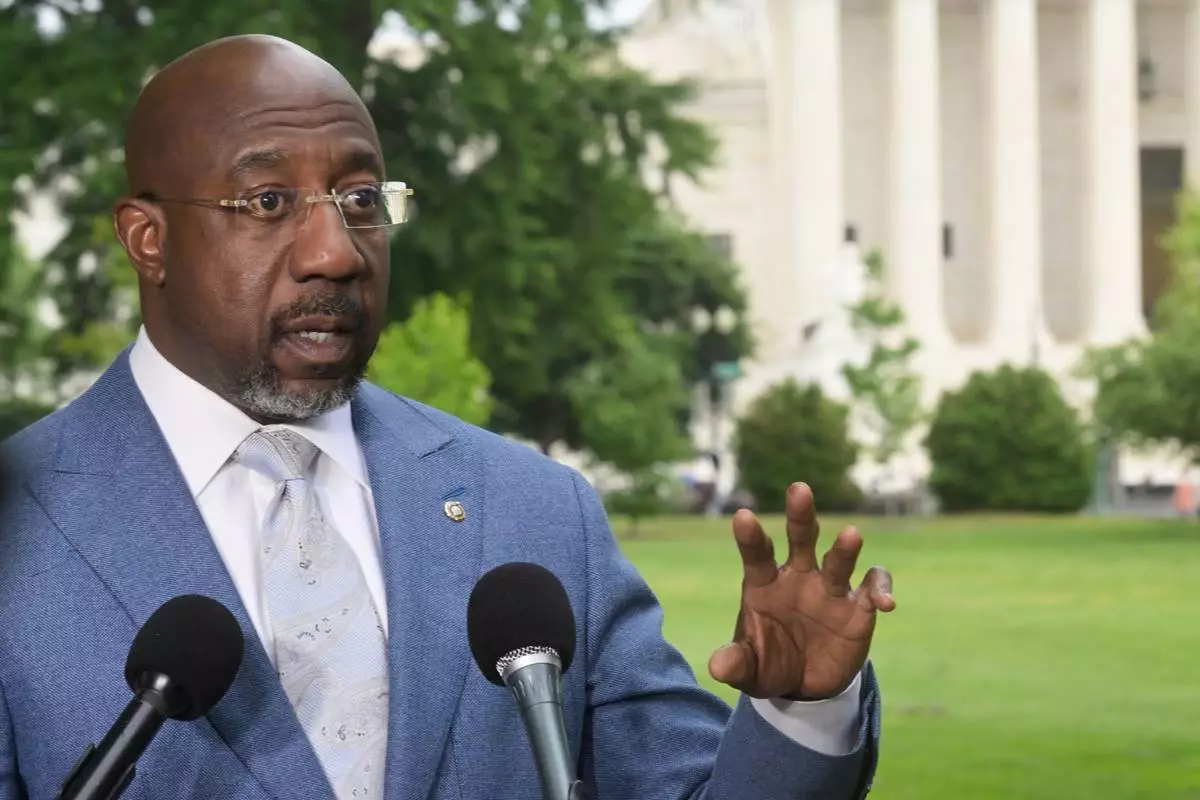
Sen. Raphael Warnock, D-Ga., holds a news conference regarding the Supreme Court Voting Rights decision on Capitol Hill, Wednesday, April 29, 2026, in Washington. (AP Photo/Rod Lamkey Jr.)
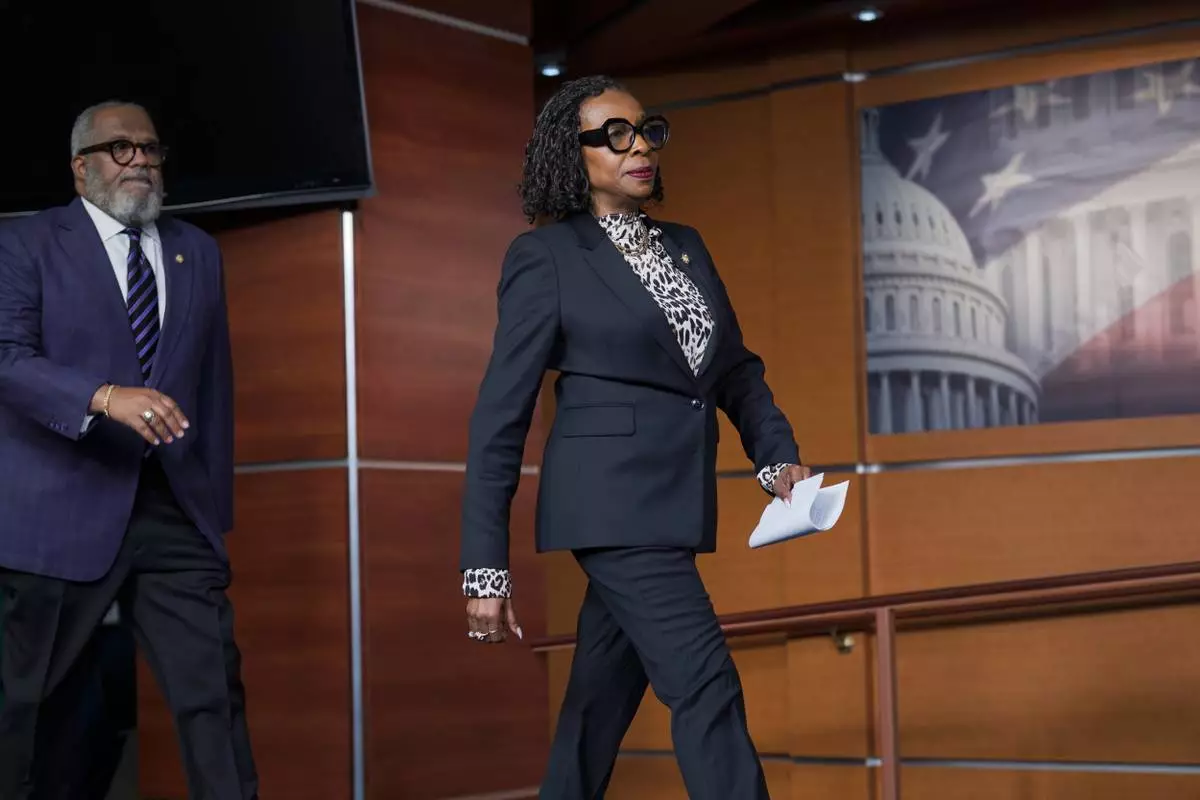
Rep. Yvette Clarke, D-N.Y., center, followed by Rep. Troy Carter, D-La., left, as members of the Congressional Black Caucus speak to reporters in the wake of the Supreme Court ruling to strike down a majority Black congressional district in Louisiana, at the Capitol in Washington, Wednesday, April 29, 2026. (AP Photo/J. Scott Applewhite)
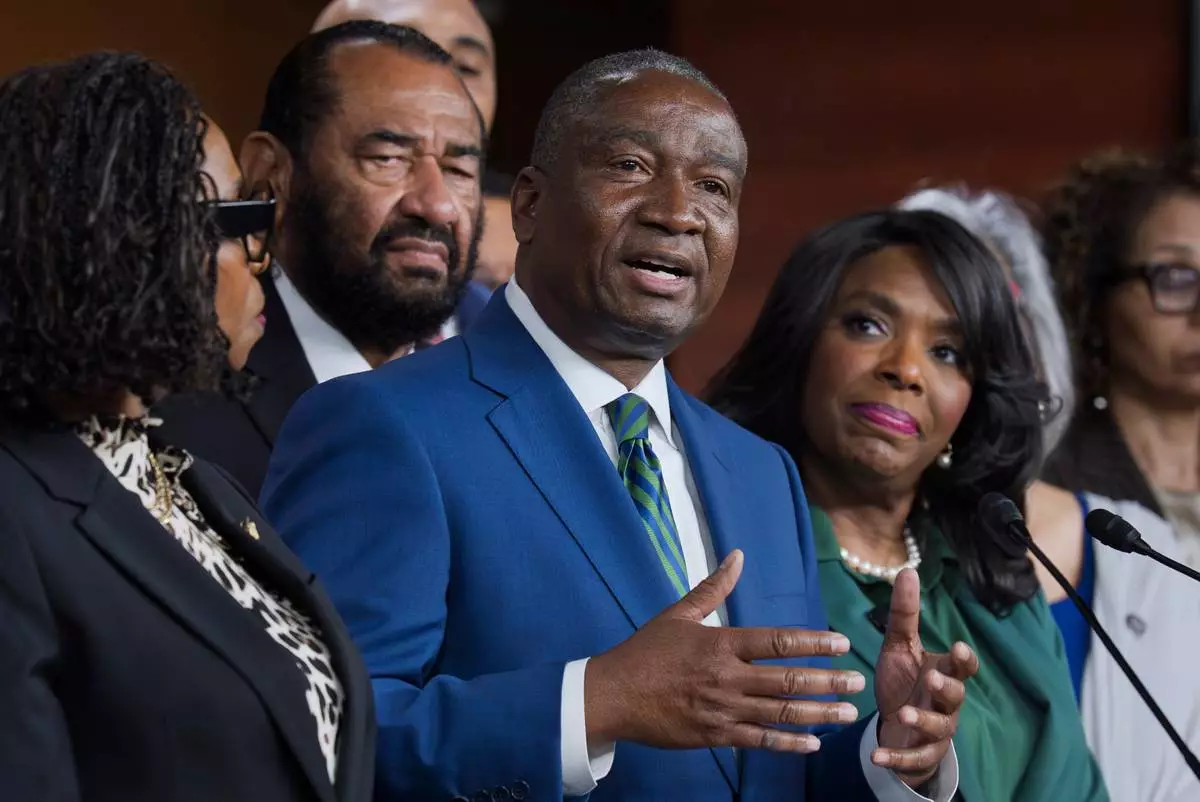
Rep. Cleo Fields, D-La., center, who represents Louisiana's 6th congressional district, is joined by members of the Congressional Black Caucus as they speak to reporters in the wake of the Supreme Court ruling to strike down his majority Black congressional district in Louisiana, at the Capitol in Washington, Wednesday, April 29, 2026. (AP Photo/J. Scott Applewhite)