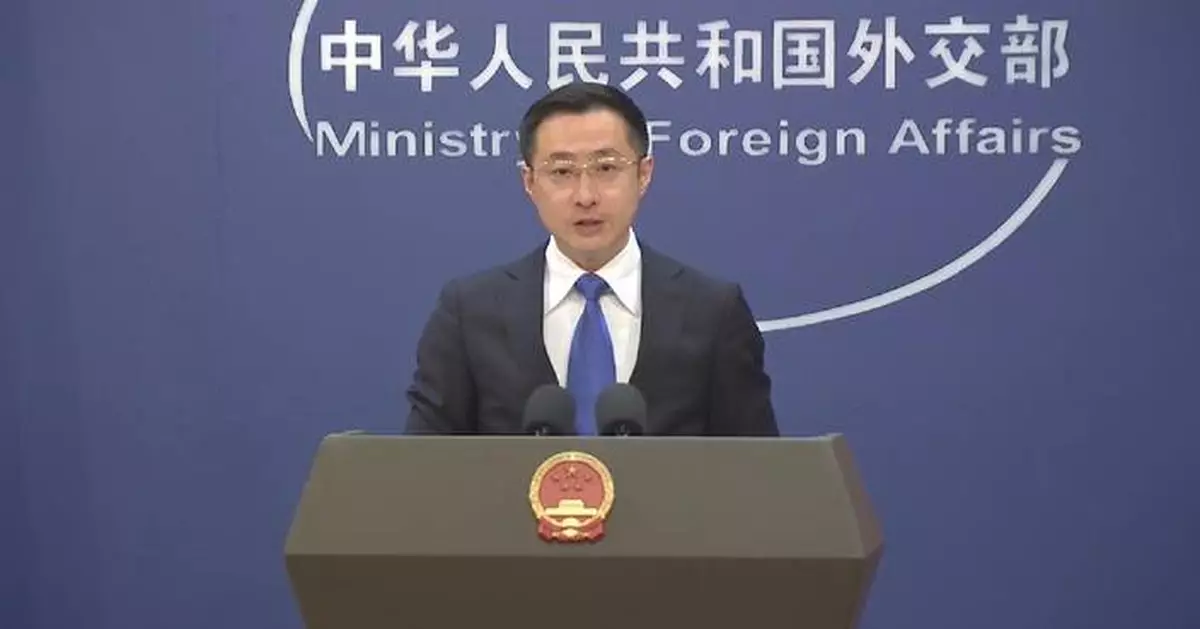
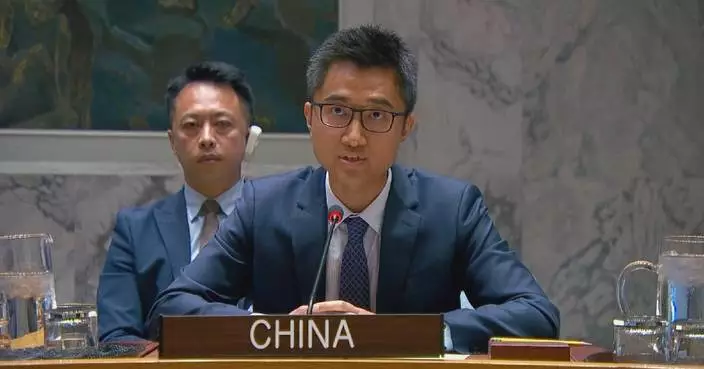
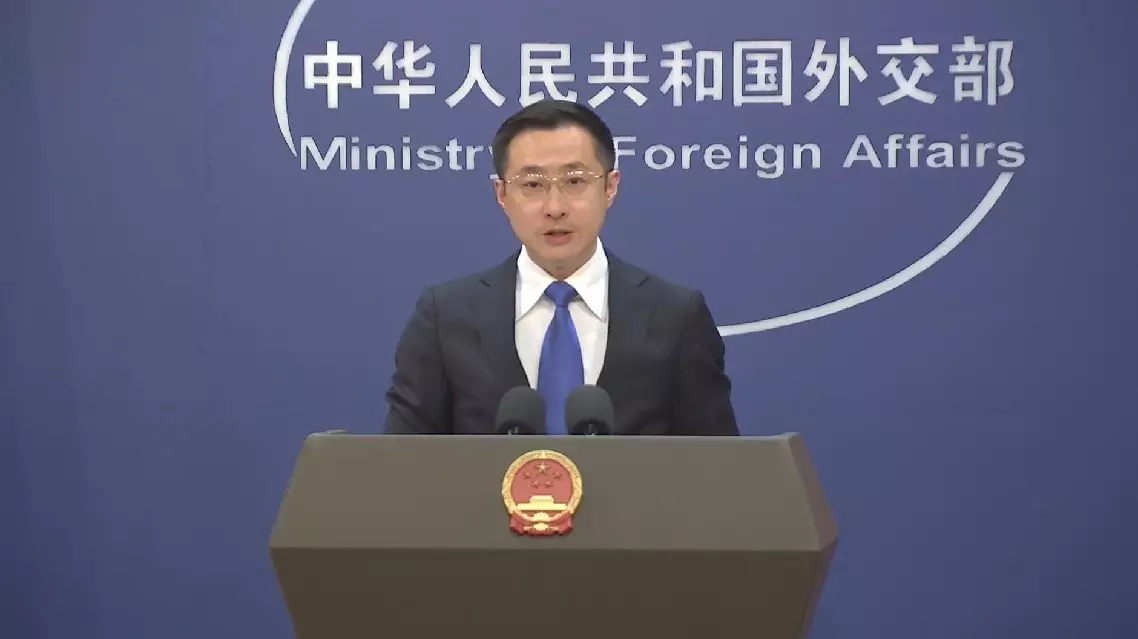
China will act responsibly and constructively as the rotating chair of the United Nations Security Council for May, a role that carries heightened expectations for maintaining international peace and security, Foreign Ministry spokesman Lin Jian said at a press briefing in Beijing on Thursday.
"China will assume the rotating presidency of the UN Security Council starting May 1. The current international situation is marked by intertwined changes and ongoing geopolitical conflicts. The Security Council bears primary responsibility for maintaining international peace and security, and so its role is closely watched. China attaches great importance to this role as rotating chair, and will work with a responsible and constructive attitude. It will promote unity and cooperation within the Security Council, uphold fairness and openness, focus on practical actions, facilitate political solutions, and faithfully fulfill the duties entrusted by the UN Charter," Lin said.
"We also look forward to the international community's support for China's presidency and its cooperation in advancing the various tasks on the Security Council's May agenda, jointly practicing true multilateralism and making greater contributions to the cause of peace and development," Lin said.
China to fulfill UNSC rotating presidency with responsibility, constructiveness: spokesman
The United Arab Emirates' decision to withdraw from the Organization of the Petroleum Exporting Countries (OPEC) signals a broader strategic recalibration as the Gulf producer seeks to diversify its energy export routes and reduce vulnerability to regional chokepoints, according to a Middle East affairs expert.
The United Arab Emirates (UAE) announced Tuesday it will withdraw from OPEC, marking the end of its decades-long alignment with the cartel.
Against this backdrop, the UAE is actively exploring alternative logistics pathways to safeguard its energy exports. A key focus is developing overland connections to bypass the strategically sensitive Strait of Hormuz.
"The UAE's primary energy loading and unloading ports are currently located in the Gulf region, within the Strait of Hormuz. However, given the increasingly uncertain security situation around the Strait of Hormuz, the UAE has gradually come to realize that its existing transportation system -- which relies on transit through the Strait of Hormuz to connect with international energy markets -- will be difficult to sustain over the long term. Consequently, the UAE hopes to establish overland connections linking its main inland energy production areas with the Fujairah Port, where crude oil can be loaded onto vessels for export to international energy markets," said Wang Jin, director of the Center for Strategic Studies at Northwest University in China.
While the strategic rationale is clear, implementation faces significant hurdles. Wang noted that infrastructure constraints could limit the effectiveness of this pivot, particularly given the UAE's ambitious production targets.
"However, this strategy involves two key challenges. First, the existing overland pipeline infrastructure cannot fully meet the UAE's so-called energy transport capacity requirements. According to current UAE projections, the country's average daily energy production may reach approximately 5 million barrels in the future. Yet the transport capacity of the existing pipelines falls far short of this anticipated volume. Therefore, the UAE must consider how to further expand the capacity of its overland energy pipeline network in the future, and whether new pipelines should be constructed to connect with the Fujairah Port," he said.
Beyond pipeline capacity, long-term success hinges on port infrastructure and sustainable financing -- questions that remain unresolved as the UAE weighs its next moves, according to Wang.
"More importantly, as the Fujairah Port -- a deep-water port -- gains increasing strategic significance, the UAE must also consider whether the port should be expanded and its capacity upgraded to accommodate more vessels for loading and unloading energy-related products. Thus, for the UAE, critical questions remain: how to develop effective planning, how to advance infrastructure construction, and where to secure funding for related projects. Consequently, although the UAE currently has proposals to bypass the Strait of Hormuz, whether and when these plans can be realized will likely require a long and complex process ahead," he said.
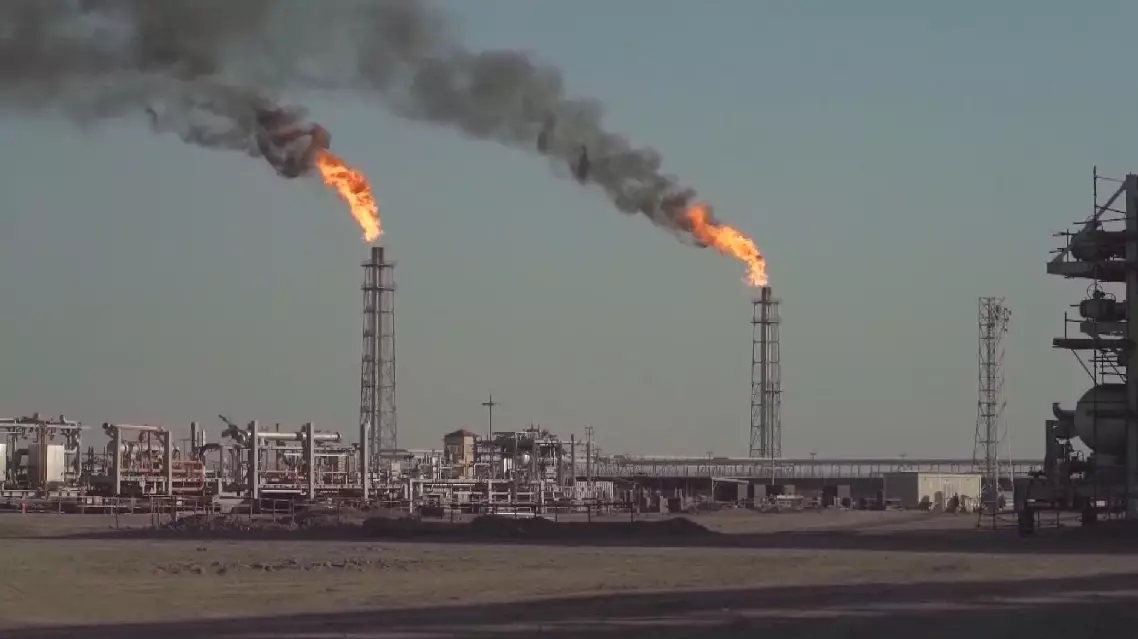
UAE's OPEC exit reflects strategic shift amid energy security concerns: expert