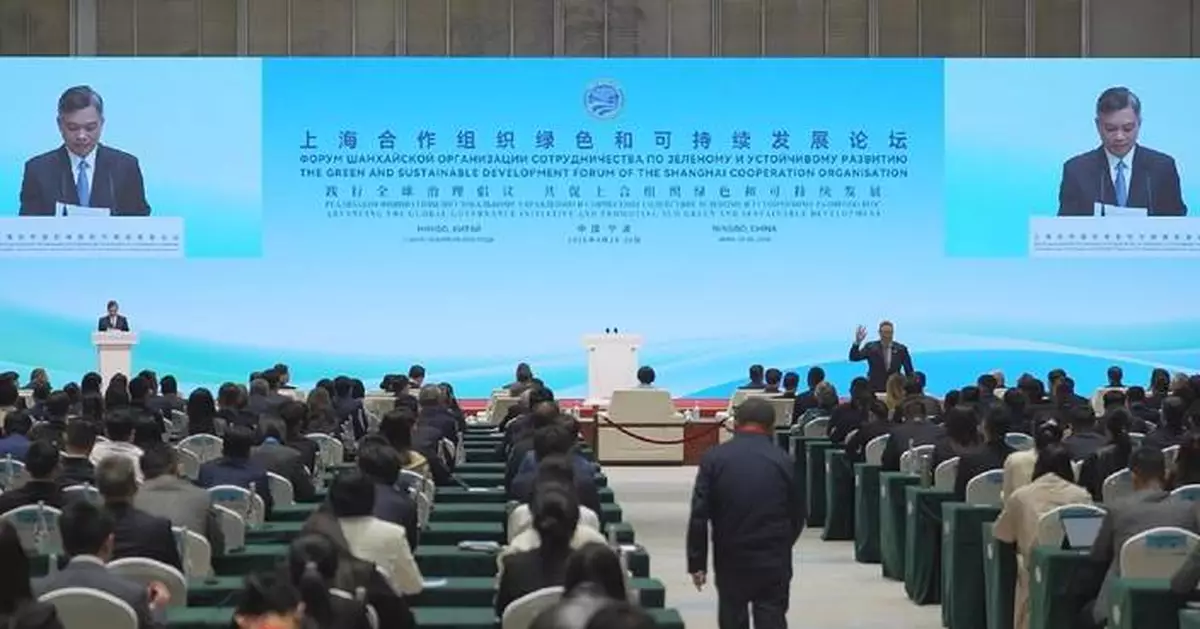
The Shanghai Cooperation Organization (SCO) Forum on Green and Sustainable Development wrapped up on Thursday in Ningbo, a coastal city in east China's Zhejiang Province, with attendees underscoring the new ideas and forward-looking visions shared at the gathering.
Organized by the Chinese SCO Committee on Good-Neighborliness, Friendship and Cooperation, the Ministry of Ecology and Environment, and the Zhejiang provincial government, the forum sought to once again highlight environmental issues, explore new avenues for cooperation, and allow attendees to share experiences.
The three-day event brought together not only representatives of the organization's 10 member countries, but also 16 more countries allied with the SCO. Among the guests were representatives of environmental agencies, entrepreneurs, experts, scientists, and politicians—a total of about 300 participants.
"I have a report on biodiversity conservation. In this framework, we propose creating ecological networks so that within specially protected areas, for example, nature reserves, parks, and ecological corridors are created between them," said Rakhatbek Toktaliev, head of the Naryn Regional Office of the Kyrgyz Ministry of Natural Resources, Ecology, and Technical Supervision.
Attendees stressed the importance of the host country's actions in regard to these efforts, saying that today, China is a global leader in reducing harmful emissions as well as forestation and the securing of carbon sinks.
"The achievements are clear. And, of course, we can say that China was the world's largest tree planter as of 2025, and we can say that more than half of all new energy vehicles are used in China," said Aleksandr Shevchenko, Consul General of Belarus in Shanghai.
During the event, ideas and opportunities to implement new projects were discussed at length. China's Dalian University of Technology presented the latest developments in clean energy, including advancements in wind turbines, energy storage, and scientific risk assessments – all presented in figures and diagrams at an open exhibit.
Meanwhile, the unique experiences of the other countries in attendance were also represented at the forum.
"Everyone who spoke there conveyed something new. Their speeches contained new ideas, their vision for a new future, and how to move in that direction. They simply revealed to you that such directions and possibilities exist," said Sohail Khan, SCO Deputy Secretary-General.
Among these possibilities are the local-level innovations in environmental management that member states have experimented with. Toktaliev offered an example from Kirghistan's capital, Bishkek, where is now being converted into electricity. Having studied the experience of their Chinese colleagues, they launched a unique project, the first waste incineration plant in Central Asia, capable of processing over 300,000 tons of waste per year.
"We had a problem with waste, specifically with a landfill in Bishkek. We built it and literally opened it last year, on Dec 27. The recycling plant is right in Bishkek. It's a truly unique experience. And now neighboring countries are showing interest," the Kyrgyz official said.
Another key outcome of the event was the Ningbo Initiative for Sustainable Development Cooperation. The document is expected to lay a solid foundation for joint projects and the exchange of experience and technologies not only among the Shanghai 10 countries but also among all friends of the association.
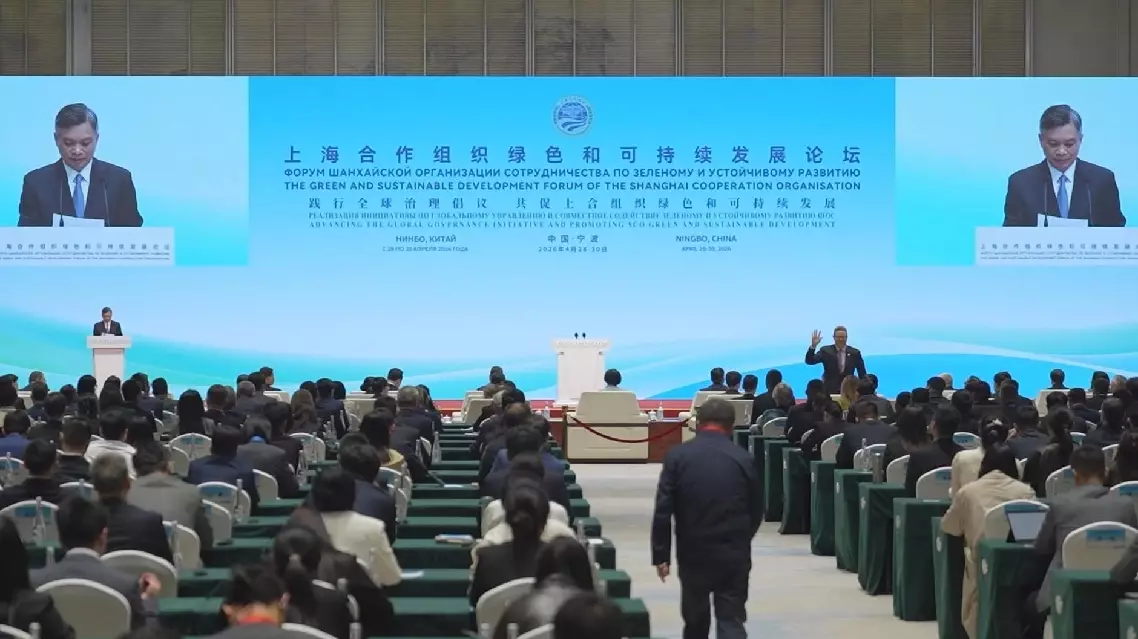
SCO green forum closes with Ningbo Initiative, eyes joint clean energy projects