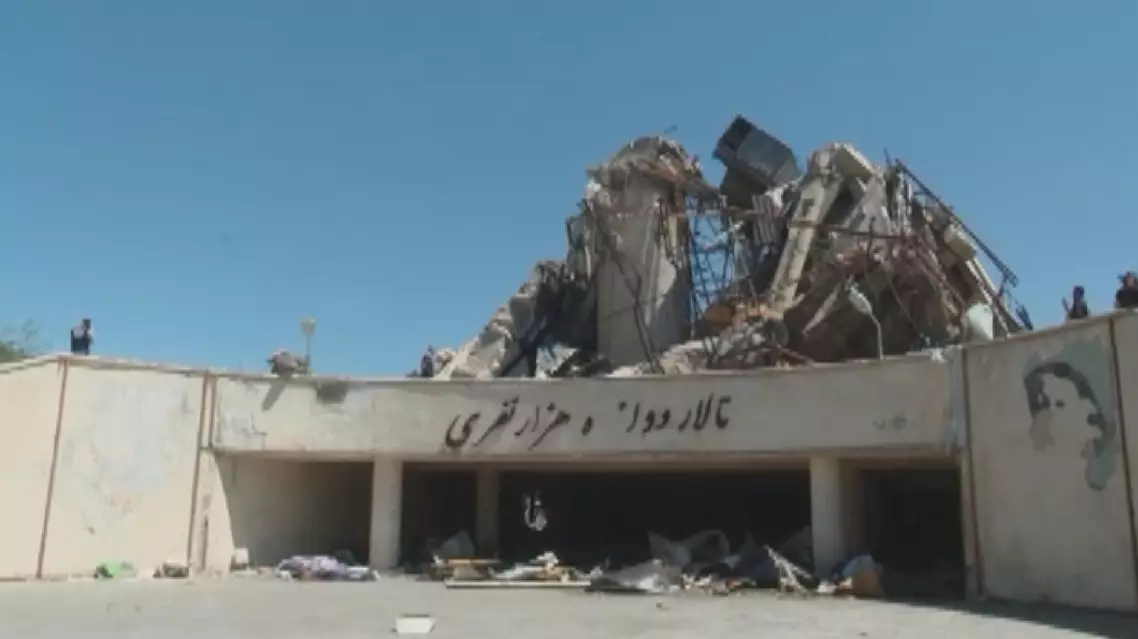
The U.S.-Israel strikes on Iran this year have carved lasting, visible wounds in several Iranian cities, with numerous civilian areas in Tehran left devastated.
Civilian targets in the capital city, including residential neighborhoods, healthcare, educational, and sports facilities, were hit throughout the war.
Authorities confirmed that homes became frequent targets of U.S.-Israeli attacks, causing casualties among innocent residents.
"This is a residential neighborhood in District 22 of Tehran Municipality, one of the areas attacked by the U.S.-Israeli enemy. This is a civilian area, inhabited by ordinary citizens. Other residential areas in Havaniruz and Sarvestan were also targeted. As you can see, this is a civilian area with houses where people live. We were surprised during this war by the support provided by popular volunteer teams to help those affected in these areas," said Hamed Bari, director of Public Relations and Media for Tehran Municipality's District 22.
Public civilian facilities also suffered heavy damage. A missile strike completely destroyed the covered arena within the Azadi Sports Complex. According to Iranian sources, nearly 1,000 schools were damaged, with 18 schools fully destroyed. Moreover, research centers and laboratories across 30 universities were hit by direct airstrikes.
"At Shahid Beheshti University, which was damaged along with at least 30 other universities across Iran, you can see the entire Physics and Laser and Plasma Research Institute destroyed. During the ruthless aggression in its third week, this university was hit by missile strikes," said Hassan Fartousi, secretary-general of the Iranian National Commission for UNESCO.
Statistics reveal that civilian sector damage accounted for 21 percent of the total destruction caused by airstrikes, which also struck Iran's military, industrial, and governmental sites.
Iranians describe the destruction as living proof of repeated targeting of civilian infrastructure, violating international laws and agreements.
On Feb. 28, Israel and the United States launched joint attacks on Tehran and other Iranian cities, killing Iran's then Supreme Leader Ali Khamenei, senior commanders, and civilians.
U.S. President Donald Trump notified Congress of the military campaign against Iran on March 2, making May 1 the 60-day milestone at which point the U.S. War Powers Act requires the president to start winding down a war unless he receives congressional authorization, according to media reports.
US-Israel war on Iran hits Iranian civilian areas hard: officials
China's zero-tariff policy is widely seen as a major opportunity for African countries, supporting their efforts to improve livelihoods, advance trade upgrading and promote regional stability, African officials and economic stakeholders said.
On Friday, China officially expanded its zero-tariff policy to cover all 53 African nations with which it maintains diplomatic relations. The move aims to create new pathways for African exports and industrialization at a time when global trade faces mounting pressures from protectionism.
The policy builds upon earlier measures: since Dec 1, 2024, China has already eliminated tariffs on 100 percent of tariff lines for 33 least developed countries in Africa. The latest expansion now includes economies that are relatively more developed, such as Kenya, Egypt and Nigeria, opening doors for a broader range of African products to enter the Chinese market duty-free.
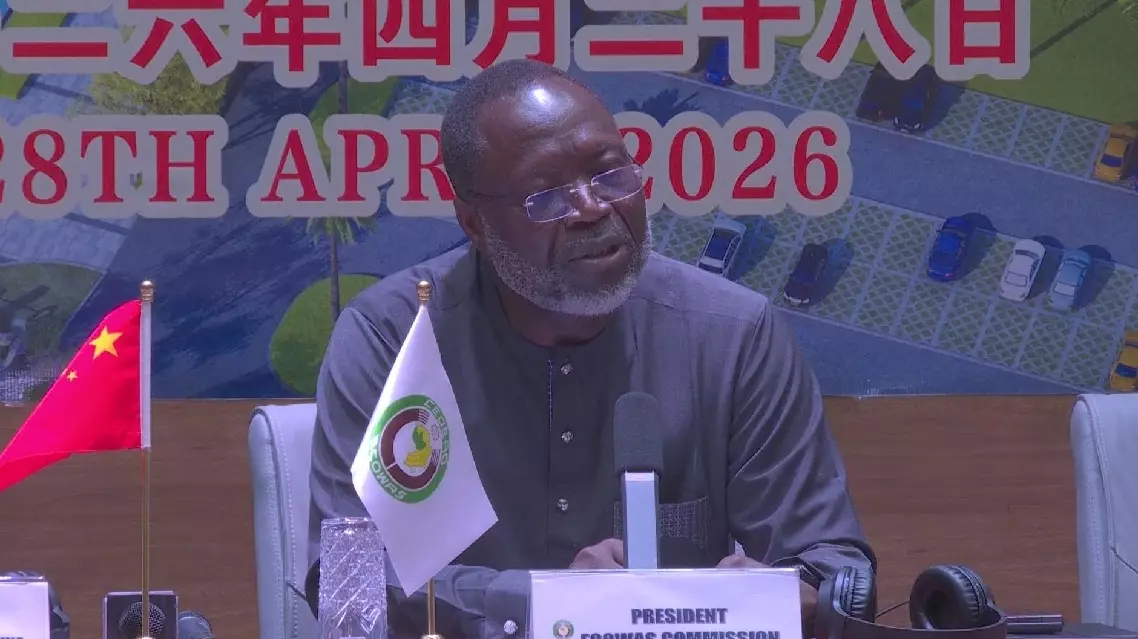
Omar Toure, president of the Economic Community of West African States (Ecowas) Commission, noted that economic growth and poverty reduction can contribute to greater stability and peace in the region.
"For us, this is a major opportunity for our countries because China is a massive market and having access to such a massive market for our produce and products is a major opportunity that we must all seize. It will have impact on overall development of our countries through enhanced productivity because as you know, poverty is a key driver of insecurity in our region. The zero tariff policy is likely to advance our development, to support our development, as well as help us entrench peace and security in our region and on the continent," he said.
Beyond expanding market access, the initiative is expected to strengthen Africa's industrialization and help upgrade regional industries, spurring ambitions to pursue global economic involvement.
"It will enhance trading relations between China and the rest of its partners. I think to a large extent, also within Africa itself, it's going to act as a great catalyst for improving trade, for enhancing the economic relations and also for industrialization," said Bianca Ojukwu, Minister of State for Foreign Affairs of Nigeria.
"China is a very big market, and if you supply to China, it means you will enhance the value of trade or the volume of your exports. And that in itself is monumental. In the sense that, apart from just the value of the export, you get more and more people getting higher incomes and also being able to upgrade their production facilities. So it's really going to benefit Africa in a way that Africa can also begin to participate in a global trade," said David Chewe, Fund Manager of Zambia Export Development Fund.
China‘s zero-tariff policy on Africa applauded as catalyst for boosting bilateral trade, peace