Skip to Content Facebook Feature Image

Experts hail Xi’s call to boost basic research

China

China

China

Experts hail Xi’s call to boost basic research

2026-05-01 17:27 Last Updated At:20:47

Chinese President Xi Jinping on Thursday emphasized the urgent need to strengthen basic research and enhance original innovation at a key symposium in Shanghai, drawing widespread support from experts and industry leaders.

Xi, who is also general secretary of the Communist Party of China (CPC) Central Committee and chairman of the Central Military Commission, called for greater efforts and more concrete measures to strengthen basic research, enhance China's capacity for original innovation, and further solidify the foundation for building the country's strength in science and technology.

Speaking at a symposium on strengthening basic research, Xi stressed the crucial role basic research plays as the origin of all scientific endeavors and the master switch for technological development.

Basic research, which improves scientific theories to better understand and predict natural and other phenomena, forms the bedrock of innovation.

"Looking at the entire history of global scientific and technological development, the entire innovation process starts with basic research, which leads to technological innovation and ultimately brings about profound changes that transform human society. This innovation pathway is very clear," said Fang Zhong, director of the Institute of Physics at the Chinese Academy of Sciences.

"From an enterprise perspective, I deeply appreciate the importance of applied basic research for business growth. In my field of mobile communications, many major innovations originate from market-driven applied research, which in turn continuously drives the prosperity of both companies and the entire industry chain," said Wang Xiaoyun, chief scientist at China Mobile, while underscoring the link to industry.

China has consistently prioritized technological development. Just a year ago, Xi visited an AI incubator in Shanghai, saying "AI is a nascent industry, and it's also an industry that belongs to young people".

At the symposium, Xi highlighted the need to integrate education, science and technology, and talent development by cultivating, introducing, and utilizing talent to expand the pool for basic research. Many delegates at the symposium were university representatives motivated by this vision.

"Time awaits for none. With a foundation and planning, we can act now. For example, in nuclear fusion--a field of future energy, once national directions are set, we'll bring in specialized teams. The core of AI is talent cultivation," said Ding Kuiling, president of Shanghai Jiao Tong University.

"Our primary mission is talent cultivation. In the AI era, we must reform with the goal of training people who have a strong foundational knowledge and sound AI literacy to meet the needs of the new era," said Chang Jin, president of the University of Science and Technology of China.

China marked historic innovation achievements in 2025, with record-high R and D investment and breakthroughs in humanoid robotics, AI, and biotechnology. The country's total R and D spending reached 3.92 trillion yuan (570 billion U.S. dollars), 2.8 percent of GDP.

Notably, basic research funding surpassed 7 percent of total R and D spending for the first time, hitting nearly 280 billion yuan, according to the Ministry of Science and Technology.

Experts hail Xi’s call to boost basic research

Experts hail Xi’s call to boost basic research

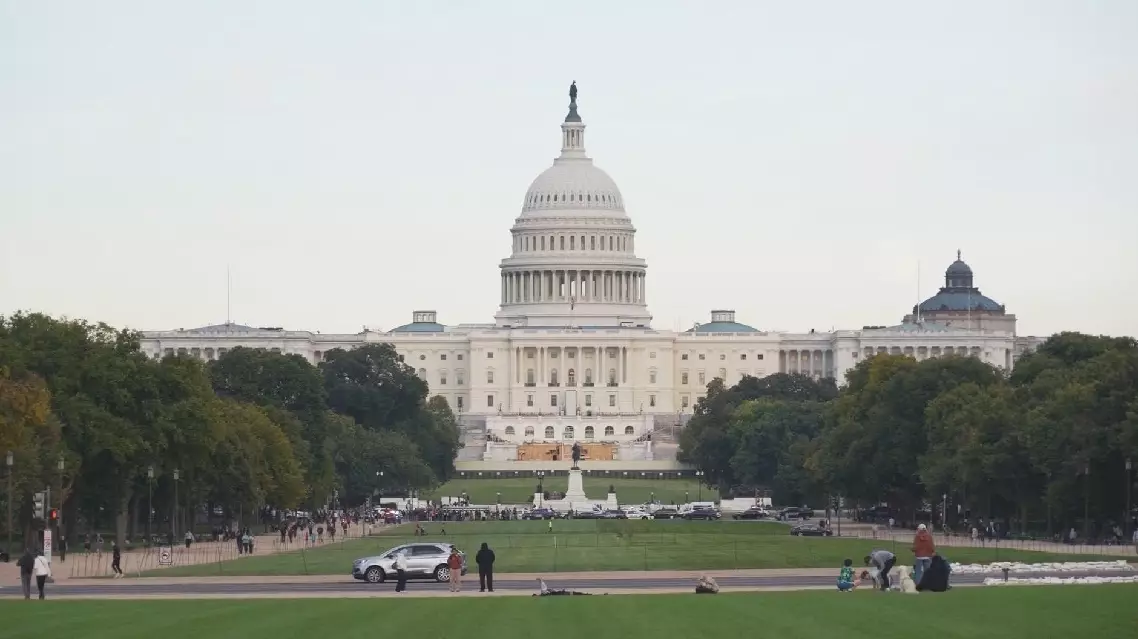
The United States' war with Iran has already been "terminated" ahead of a 60-day deadline by law due to the current ceasefire, U.S. media reported on Thursday, citing a senior Trump administration official.

Under the War Powers Resolution, U.S. President Donald Trump had until Friday to seek congressional authorization to continue the conflict or bring it to an end, with the option to extend the deadline by an additional 30 days.

"The hostilities that began on Saturday, Feb. 28 have terminated" between the United States and Iran for purposes of that law, the official, who spoke on condition of anonymity, was quoted as saying.

Washington and Tehran have not exchanged fire since a ceasefire began on April 7 and was later extended.

Earlier on Thursday, Defense Secretary Pete Hegseth argued at a congressional hearing that he believes the ceasefire "pauses or stops" the 60-day clock for congressional authorization of war.

"I do not believe the statute would support that," Democratic Senator Tim Kaine responded, "I think the 60 days runs (out) maybe tomorrow, and that's going to pose a really important legal question for the administration there."

"That deadline is not a suggestion; it is a requirement," said Republican Senator Susan Collins, who voted Thursday for a measure to end U.S. military action in Iran without congressional approval.

The White House notified Congress of the military campaign against Iran on March 2, making Friday the 60-day milestone for the president to start winding down the war unless he gets congressional authorization.

Iranian President Masoud Pezeshkian said on Thursday that any U.S. attempt to impose a naval blockade and maritime restrictions against Iran is "doomed to failure."

Pezeshkian made the remarks in a statement to mark Persian Gulf National Day, which falls on April 30. He said the "enemies" have changed their approach and shifted their pressure to the economic and maritime arenas, using a naval blockade on the Strait of Hormuz and restrictions on maritime trade as a new tool against the Iranian government and people, according to the statement published on his office's website.

The United States imposed its blockade on the Strait of Hormuz after post-ceasefire negotiations with Iran in Pakistan's capital Islamabad on April 11 and 12 failed to lead to an agreement.

The ceasefire between Iran, the United States and Israel took effect on April 8 following 40 days of fighting, which started on Feb. 28 when the United States and Israel launched joint attacks on Tehran and other Iranian cities, killing Iran's then-Supreme Leader Ali Khamenei, senior commanders, and civilians.

Iran responded with waves of missile and drone strikes targeting Israel and U.S. assets in the Middle East, and tightened its grip on the Strait of Hormuz, barring passage to vessels belonging to or affiliated with Israel and the United States.

Trump team says Iran war 'terminated' as ceasefire sparks clash over War Powers deadline

Trump team says Iran war 'terminated' as ceasefire sparks clash over War Powers deadline

Recommended Articles