A historic district in south China's Guangzhou not only harbors a rich heritage, but also forms a curious intersection of cinema and culinary delights.
The city's Liwan District holds no shortage of treasures pertaining to Cantonese art and tradition. It is home to iron and copper casting, Cantonese opera guild halls, lion dance heritage shops, herbal medicine and traditional tea shops. Recently, Lara Parpan, an editor at China Global Television Network, set out to explore these cultural heirlooms and more.
Parpan visited Wong Chun Loong, an unassuming shop that stands as one of Guangzhou's outstanding tea shops. The city's herbal tea shops date back to 1,700 years, reflecting the long-held belief that many teas may have medicinal value.
As an editor for CGTN's "Reel Views, Real Journeys," Parpan often finds connections between the delights of her travels and films in her collection. She tried the shop's bestseller, bansha, a bitter and complex tea that contains 28 herbal ingredients. The drink brought to mind "24 Flavors," a Chinese film directed by Elaine Huang from Guangzhou.
According to Huang, the name of "24 Flavors" is an analogy for life's experiences that can range from bitter to sweet.
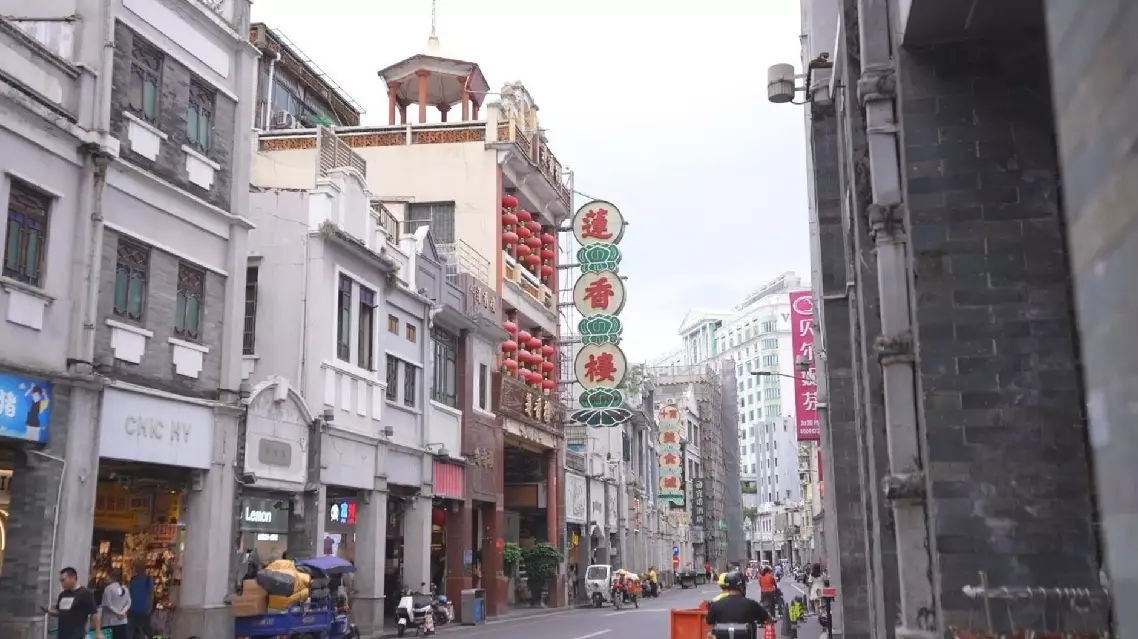
Parpan also visited Lianxianglou, a popular traditional Cantonese restaurant right across from the herbal tea shop. The restaurant opened as a pastry shop in 1889 during the Qing Dynasty (1644-1911).
The 2009 Chinese spy thriller "Qiuxi" sets a crucial scene in Lianxianglou. This was Guangzhou in the days before the founding of the People's Republic of China in 1949.
Parpan sampled several of the restaurant's dishes, including Winter Melon Pot, Pantang Water Chestnut Cake, Lily Buds and Steamed Lotus Seeds and their Signature Lotus Paste Bun with Salted Egg Yolk.
Because Guangzhou's climate is humid, most dishes at Lianxianglou are made with ingredients to alleviate dampness and detoxify the body.
At the end of her journey, Parpan encouraged travelers to visit Guangzhou's Liwan District.
"So here's my take: Visit Old Guangzhou, come to Liwan District. Have a meal at Lianxianglou, grab a bottle of Ban Sha herbal bitter tea and savor bitter and sweet. Because that's Guangzhou's all about: historical, cinematic and delightful," she said.
Guangzhou historic district comes into focus through films, food