American medical students and doctors have spoken warmly about their experiences in China, expressing admiration for China's public safety and efficient healthcare system during their exchange visit in China.
The delegation, consisting of 15 American medical students and doctors, is on a 10-day tour of leading hospitals in Beijing, Shanghai, and Changsha City in central China's Hunan Province.
During their visit at Peking Union Medical College Hospital in Beijing, members of the delegation shared impressions of their experience. They praised the professionalism of Chinese medical staff, the public safety, and the efficiency of the healthcare system.
"I have only been here for 10 days, but I really enjoyed my time in China. I found that Chinese people have a lot of hospitality and they are very kind. And I feel, for example, safe to walk down the street at night, which may not be the case in bigger cities in the U.S. I have also found that the healthcare system here is very robust," said Hanin Elhagehassan, a medical student in clinical medicine from the University of Michigan.
"We don't really have discussions necessarily about all of the transformation that you have here. We see some pictures of maybe drones and robots. But to see everybody living here, the streets are so clean, everyone is so safe and your group has been so nice, and the professors are so knowledgeable and fast and efficient. The patients all seem they are getting wonderful care. It's really nice to see," said Nina Yoh, a resident physician in neurosurgery at the New York-Presbyterian Hospital.
"One of the safest country I have ever been in, I think. I felt really comfortable the whole time, especially before the conference started, I got the chance to go for some vacation in Hangzhou and take some bullet trains to see some beautiful nature in China. And I felt quite comfortable and safe. We even had some people watch our bags on the streets at one point," said Jeremy Hogaboom, another medical student in clinical medicine from the University of Michigan.
Hogaboom was also struck by the lack of weapon-related injuries that occur in Chinese cities.
"We were talking with the emergency department here. There's only one single stabbing case at PUMC Hospital in the last year despite the hospital being more than twice size as my home institution. That was really crazy," the medical student said.
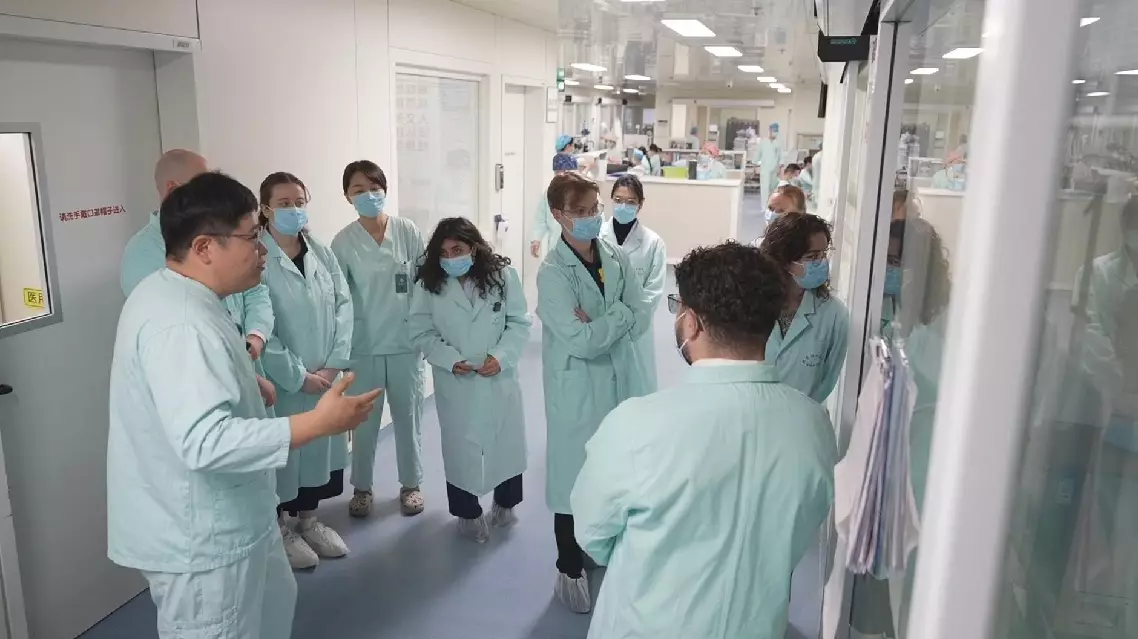
Exchange medical students impressed by China’s public safety, healthcare system