Skip to Content Facebook Feature Image

Immersive aerospace science center for youngsters launched in Beijing

China

China

China

Immersive aerospace science center for youngsters launched in Beijing

2026-05-03 16:24 Last Updated At:23:47

A major new hub for space education has opened in Beijing to offer young people a hands-on journey through China's space achievements and beyond.

The China (Beijing) Aerospace Science Center, located inside a huge park-style commercial complex in Changping District in northwestern Beijing, is designed to fill a gap in high-quality aerospace education in China, Science and Technology Daily reported.

With an area of 3,700 square meters, the center targets visitors aged 6 to 16, combining authentic space sci-tech resources with interactive entertainment.

The venue is structured around six themed zones that follow the logical timeline of human space exploration. A "time tunnel" section presents 100 major space milestones, with a strong focus on China's full-cycle space journey. Visitors can experience a realistic countdown simulation of a rocket launch, watch a step-by-step breakdown of satellite interiors, and learn about the engineering logic behind every link of a space mission.

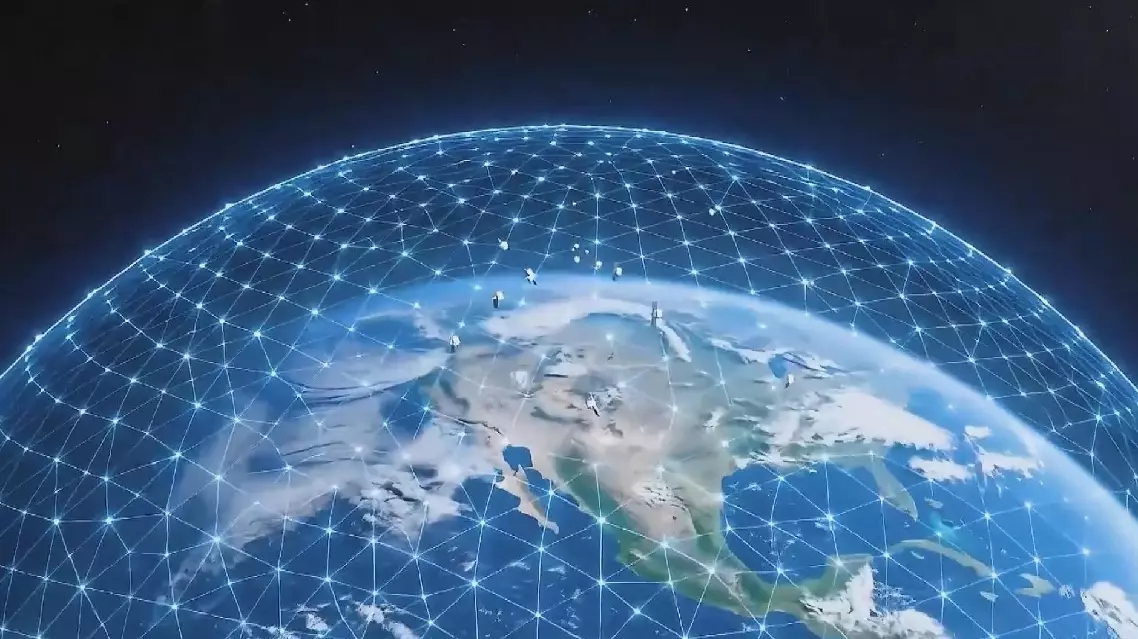
One of the most popular attractions is likely to be a life-size replica of the Tiangong space station core module. Next to it, a lunar surface experience area allows visitors to try on a moon landing suit, drive a simulated lunar rover, and observe a panoramic model of Martian weather. There are also deep-space digital simulation zones where visitors can take a virtual tour of the solar system.

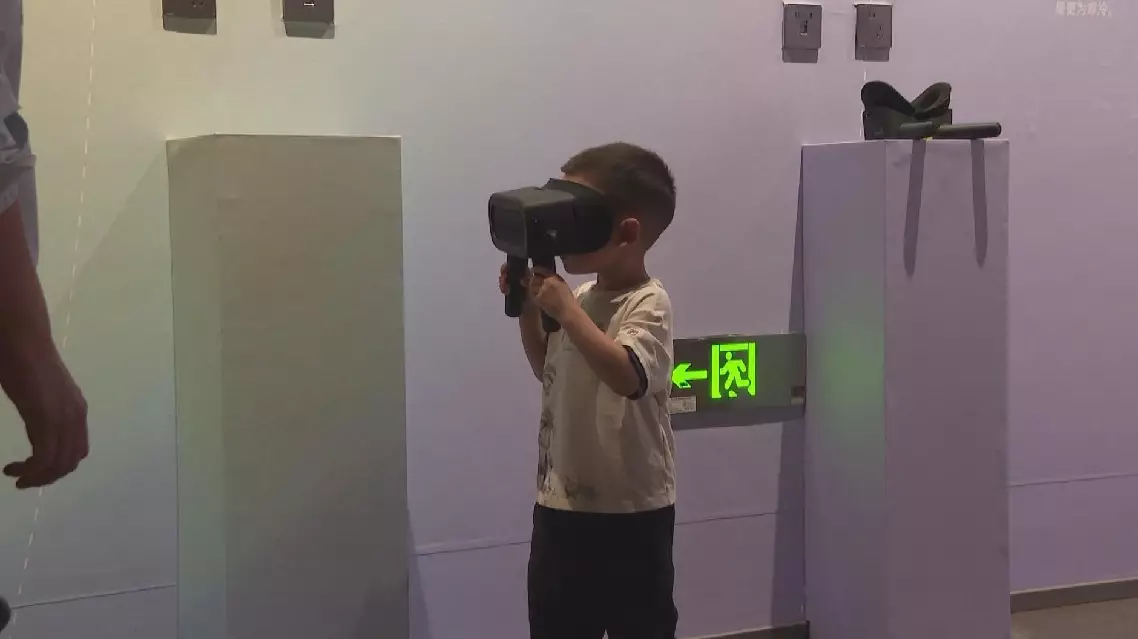
Additionally, the center boasts a role-play system where children can act as aerospace engineers, a nearly 30-meter-long disassembled rocket for public observation, a holographic display of the complete space station assembly, an interactive moon-base construction game, a life-size model of China's first Mars rover, Zhurong, and a virtual reality "interstellar tour" of planets.

Four dedicated aerospace laboratories have been built on site, featuring decommissioned but authentic research equipment used for teaching purposes.

"The little kid may not understand what's on display, but he can feel the wonder. You tell him that's the moon, he can feel like he's floating in space. And you tell him this is Earth, he then realizes he is still on this planet and gets that feeling. He's overjoyed today, and very overwhelmed," said Zhao Cuiying, a Beijing resident.

Content for this center is developed under the supervision of respected institutions such as the Deep Space Exploration Laboratory and the Beijing Institute of Space Science and Technology Information, ensuring that every explanation and hands-on activity is both accurate and rigorous.

The experience space brings together cutting-edge exhibition sci-tech means -- naked-eye 3D, digital multimedia, immersive projection, artificial intelligence (AI) interaction, and virtual reality (VR) -- to create a fantastical digital journey through deep space.

Aerospace science is seamlessly integrated into the interactive installations, offering an immersive environment that is both educational and highly entertaining.

"After extensive market research, we found that people are more eager to learn about the structure and knowledge system behind China's space program. So we've combined state-of-the-art exhibition methods with modern science education in one space -- giving visitors the feel of stepping into a mini aerospace city," said Yang Chunli, director of the China (Beijing) Aerospace Science Center.
Immersive aerospace science center for youngsters launched in Beijing
Immersive aerospace science center for youngsters launched in Beijing
Eighteen sets of precious archival materials related to David Nelson Sutton, a U.S. assistant prosecutor at the Tokyo Trials and one of the earliest international prosecutors to investigate the Nanjing Massacre, were officially donated on Wednesday to the Memorial Hall of the Victims in Nanjing Massacre by Japanese Invaders.

Sunday marks the 80th anniversary of the opening of the International Military Tribunal for the Far East (IMTFE, also known as the Tokyo Trials). To commemorate the milestone, six diaries written by Sutton between 1946 and 1948, when he was conducting investigations for the tribunal, were donated together with a series of reports titled Reports from China.

"It is necessary to let more Chinese, even people all over the world, to see these archival materials. Let all the world know why the Tokyo Trials 80 years ago were described as a trial of justice, and how the Nanjing Massacre nearly 90 years ago was unprecedentedly brutal and tragic beyond compare," said Zou Dehuai, the donor.

From May 3, 1946 to Nov 12, 1948, the International Military Tribunal for the Far East was held in Tokyo by 11 countries, including the United States, China, Britain and the Soviet Union, to try Japan's Class-A war criminals after World War II.

"Why do we say the Tokyo Trials were a trial of justice? It was a trial witnessed by the world, with judges from 11 countries. Major war criminals, such as Iwane Matsui, a crime culprit for the Nanjing Massacre, and Hideki Tojo, all ultimately received the punishment they deserved. That is why the Tokyo Trials are called a trial of justice. These archives are of immense importance," Zou said.

Sutton came to China with the International Prosecution Section in 1946 and was tasked with investigating Japanese war crimes in China, with a particular focus on collecting evidence related to the Nanjing Massacre.

The six diaries recorded many details of Sutton's work during the Tokyo Trials. In one entry, dated March 9, he wrote that he had received formal orders to go to Shanghai, Nanking (Nanjing), Peiping (Beijing) and other sites in the China theater to investigate war crimes and gather evidence. Another entry recorded his arrival in Nanjing at 11:20 on April 2. On May 3, the day the trial opened, he described the defendants as looking like "insignificant beaten men."

The donated materials also include Sutton's "Reports from China," which further exposed Japanese wartime atrocities in China, including mass killings, violence against civilians, germ warfare and the coercion of Chinese people into opium cultivation.

Zou is a collector born in the 1990s who has long searched for wartime historical evidence. He first found the Sutton materials in November 2025 on a U.S.-based auction website specialized in military artifacts. After confirming Sutton's identity and reviewing preview images that indicated the items were original archival materials, Zou placed a bid for the collection and later, ultimately paying a price nearly 100,000 U.S. dollars, far more than his original budget. And he arranged for its return to China, with assistance from others.

At the donation ceremony, Zou received a donation certificate. He said the Sutton archives were the most expensive items he had acquired in a decade of collecting. "These archives, these ironclad evidences, expose the crimes committed by the invading Japanese army in China and serve as a warning to all humanity. When you look at these documents, you cannot imagine that a human army could commit such massive and horrible atrocities. I believe that any Japanese person with conscience, after reading the Sutton archives, would firmly recognize what kind of a massacre took place in Nanjing. For the young people of future China, Japan and the United States, we must tell them the truth of history, and why we must cherish the hard-won peace, and how heavy the cost of peace truly was," Zou said.

Tokyo Trials prosecutor's diaries donated to Nanjing Massacre memorial hall

Tokyo Trials prosecutor's diaries donated to Nanjing Massacre memorial hall

Recommended Articles